
.svg)




Consumer Health
Shape the future of consumer health.














The consumer health market is still growing, but the sources of growth are changing. Speaking at the 62nd Annual AESGP Meeting in Berlin, IQVIA Consumer Health’s Thomas Heil outlined why prevention-focused products and ePharmacy channels are outperforming traditional treatment categories, and what that means for the future of the industry.
"Growth still exists," Thomas Heil, IQVIA Consumer Health’s VP of sales recently told the audience at the 62nd Annual AESGP Meeting in Berlin, "but it's not in the categories where you experienced growth potentially in the past."
Two things are happening that are changing where growth for the industry lies, consumer health's biggest categories are no longer its strongest performers with prevention‑led categories growing ~3x faster than traditional treatment categories, he pointed out, and the consumers themselves were moving online, with ePharmacies now growing "13 times faster than the traditional brick and mortar pharmacies".
This suggests, Heil stated, that consumer health is moving away from an industry built around episodes of illness and towards one built around the ongoing management of health.
However, this change can be easy to miss, Heil said, as the headline market numbers do not look dramatic. The European consumer health market continues to grow, albeit modestly, he highlighted, but more revealingly volume growth has been declining for some time (see Figure 1).
"Less and less packs are actually sold," he pointed out, with value growth increasingly supported by price increases and consumers trading into more expensive products.
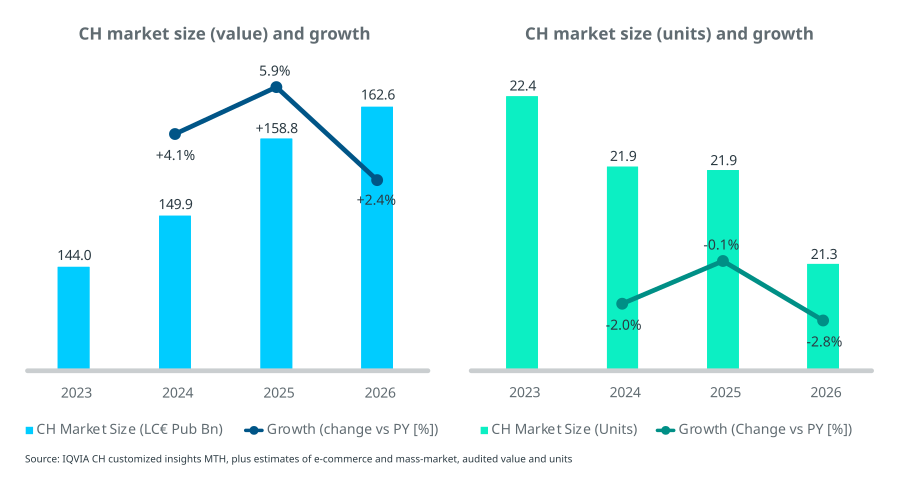
Figure 1: Europe CH market evolution (MAT March 2026) – Source: IQVIA Consumer Health Customized Insights
Using IQVIA Consumer Health Customized Insights data, Heil said that while cough and cold remedies remain the largest OTC category in Europe, the category was declining, while at the same time the vitamins, minerals and supplements category was growing nearly 7% (see Figure 2), with digestive health also expanding steadily.
For many organizations, this represents a significant change in where growth originates, he pointed out.
"We are seeing growth predominantly happening in prevention categories," Heil explained, and it was this distinction between treatment and prevention that was important as it reflects a broader change in consumer behaviour. Consumers are no longer engaging with health only when symptoms appear, he stated, increasingly, health management is becoming part of everyday life.
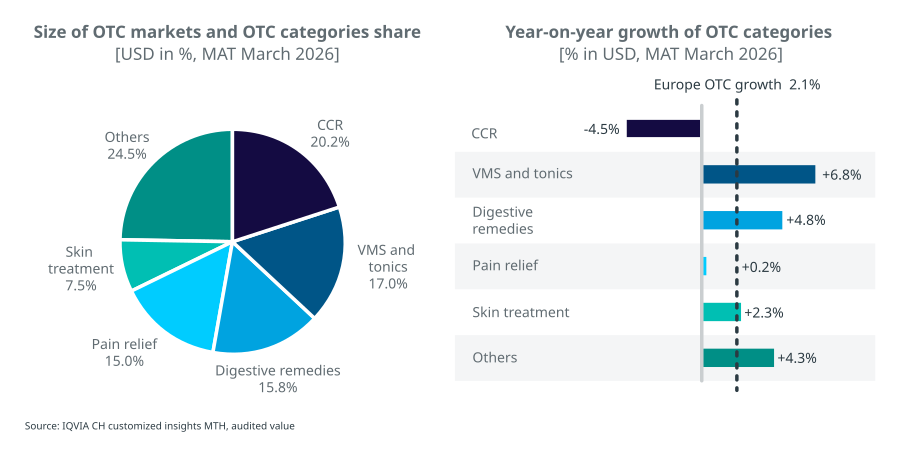
Figure 2: Europe OTC category performance MAT March 2026 – Source: IQVIA Consumer Health Customized Insights
That can be seen in the categories showing the strongest momentum. Probiotics, magnesium supplements, vitamin D, iron supplements and Omega-3 products all feature among the fastest-growing prevention segments in Europe.
Heil suggested this is not a short-term phenomenon, with four-year growth trends showing that vitamins, minerals and supplements and digestive health continue to outperform much of the market.
The longevity movement appears to be playing a role here, Heil pointed out, but so does a more general shift in consumer attitudes toward personal health.
"During the COVID pandemic, a lot of people are now much more self-aware and are taking a lot more care about their health," Heil observed, " and they're also using a lot more preventive medications."
Changing category dynamics are also reshaping competitive performance at a company level, Heil suggested, with many of the largest Consumer Health companies struggling to match overall market growth, while businesses with stronger exposure to nutrition, dermocosmetics and preventative health categories often growing faster.
"You can see that those companies who have a strong cough and cold portfolio are suffering the most," he said, referencing the category slowdown. Companies positioned around faster-growing prevention and personal care segments are benefiting from very different demand dynamics.
"Those [smaller, local] companies are typically showing a higher growth for several years now compared to the large global corporations," Heil added.
Accompanying this trend towards preventative healthcare, Heil pointed out, was the continued strong growth of ePharmacies across Europe.
Online pharmacies are growing around thirteen times faster than traditional pharmacies, he noted, and across every European market IQVIA tracks, online growth was outpacing offline growth.
Yet the more revealing finding is not the growth itself but what consumers are choosing to buy online, Heil stated.
Online category performance within ePharmacy looked very different from the broader OTC market, with vitamins, minerals and supplements emerging as the leading category online, ahead of cough and cold products (see Figure 3)
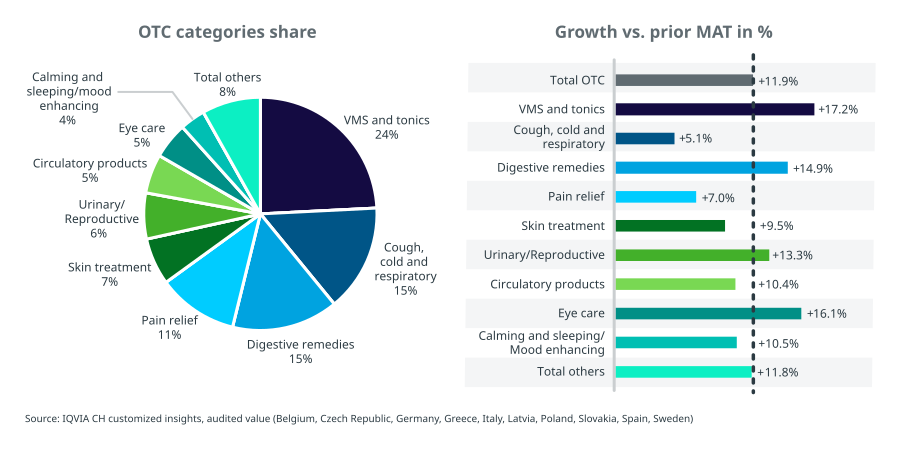
Figure 3: ePharmacy Sales selected European countries, MAT Mar 2026 - Source: IQVIA CH Customized Insights, Audited Value (Belgium, Czech Republic, Germany, Greece, Italy, Latvia, Poland, Slovakia, Spain, Sweden)
Explaining this was relatively simple, he pointed out. "If you're suffering from a cold, you want to have immediate access to your OTC products, whereas when it's more a preventive condition and you have time and you want to save money, then you're shopping online."
According to Heil, the relationship between prevention and ePharmacy therefore was not a coincidence and more like two manifestations of the same behavioral shift in consumers. People are building health routines rather than responding to health events, and those routines naturally lend themselves to repeat purchasing, product research and price comparison which is much more easily achieved online.
Collectively, these two key trend provide proof that the consumer health growth engine is changing, Heil concluded.
Trends such as wellbeing and longevity are reshaping behaviour, growth is increasingly concentrated in prevention categories, and ePharmacy is accelerating that shift, he stated, and seen through that lens the future of Consumer Health is not principally about treating illness more effectively, it is about helping consumers stay well for longer.
Want to dive deeper into the trends driving change in Consumer Health? Watch Thomas Heil’s full presentation to the AESGP here.
Shape the future of consumer health.
Illuminate a path to consumer health success
Unique launch strategies to make your products shine
Adapt fast, maintain momentum and stay relevant