
.svg)






Product and Claim Development
Compelling claims to capture the minds of consumers












An actually effective, safe and consumer-friendly treatment for obesity has long been a grail for consumer health companies. Many products, from questionable supplements to actual licensed medicines, have come to market and not met the expectations of consumers hungry to lose weight.
And then the long-awaited solution appeared. Not as a consumer product, but as a welcome side effect of a prescription drug used to manage type 2 diabetes.
The emergence of GLP-1s collided with an increasing consumer focus on optimizing health, a focus driven by social media, the new age of online influencers and off the back of a pandemic that had made health not something to just be maintained, but to be constantly striving to improve.
The new optimizing health consumer’s perception of GLP-1s - not as injectable diabetes drugs but a tool they should have access to aid their health, wellness and aesthetic journey - is the clearest representation yet of a fundamental shift in how ‘consumer health’ is defined and where success in the consumer market now lies.
For decades, weight management sat uneasily between medicine and lifestyle. Clinical interventions were episodic and often ineffective, while consumer solutions struggled to deliver sustained outcomes. GLP‑1s changed that balance because they work.
But that success created knock-on behavioral effects. When appetite falls, consumers eat less, snack less, and reassess their relationship with food and other aspects of their lifestyle.
The evidence already shows that these changes extend well beyond calorie reduction. Post-treatment behaviour shifts are measurable: consumption of fast food, alcohol, and snacks declines, while demand rises for supplements, dermo-cosmetics, and wellness products. In parallel, consumers begin to assemble new routines that cut across traditional category boundaries—nutrition, beauty, fitness, and mental wellbeing (see Figure 1).
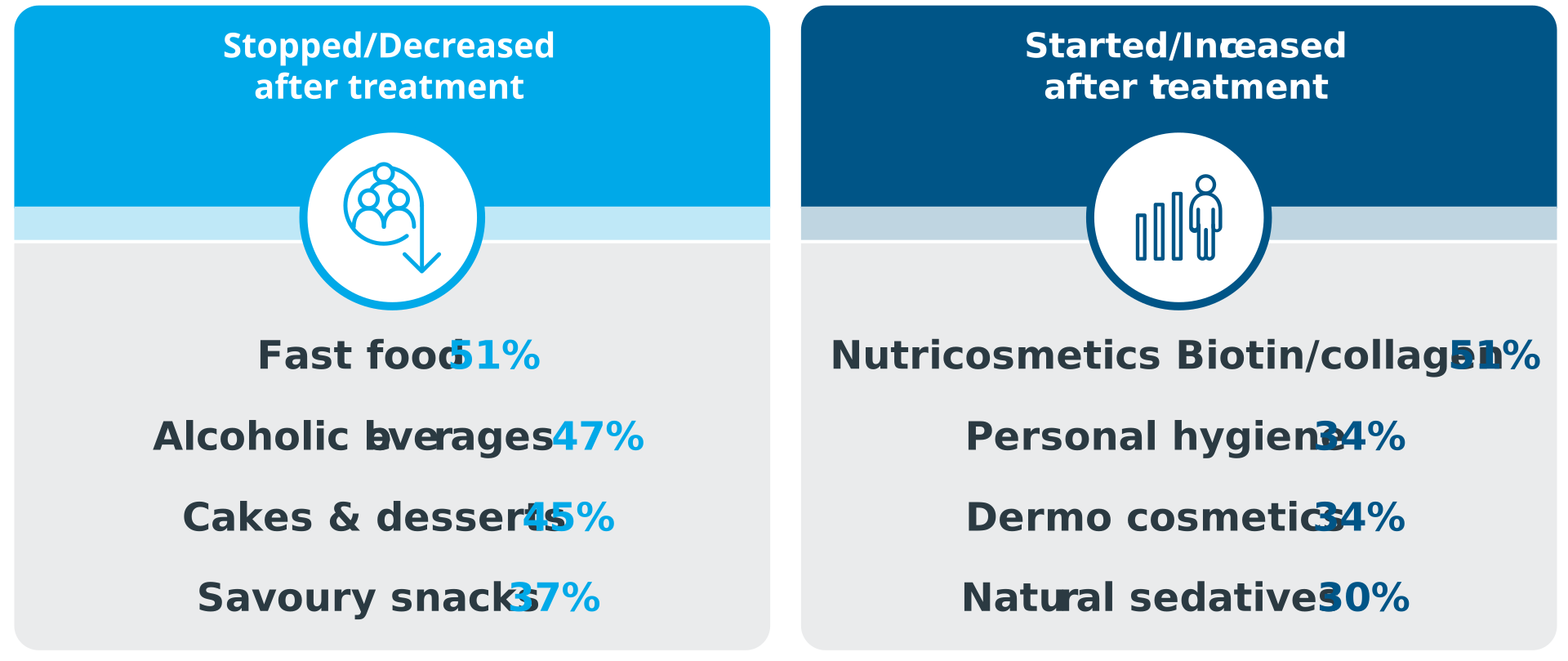
Figure 1: Changes in consumption behaviour in consumers after treatment with a GLP-1 medication (Source: IQVIA Consumer Health - Syndicated Study GLP-1 PANEL 1st wave – November 2025)
What emerges is a consumer building an identity around their use of GLP-1s and the impact weight-loss has on how they view themselves and how they present to the world. Optimizing this new image is now their key focus.
It is tempting to view GLP‑1s as a continuation of obesity care. In reality, they are accelerating a longer-running change: the transformation of health into a consumer-led, identity-driven space.
The underlying demand in weight-loss has been building for years. Global rates of overweight and obesity have risen continuously, while at the same time, wellness has expanded into a multi-trillion-dollar business, driven by spending on self-optimization, aesthetics, and personal performance.
GLP‑1s sit precisely at the intersection of those forces. They deliver clinical outcomes, but also visible, socially validated transformation. That dual value explains why the user base is already shifting. What began as health management linked to diabetes has quickly become aesthetics-based weight management; what began as a clinical journey has become a lifestyle one (see Figure 2).
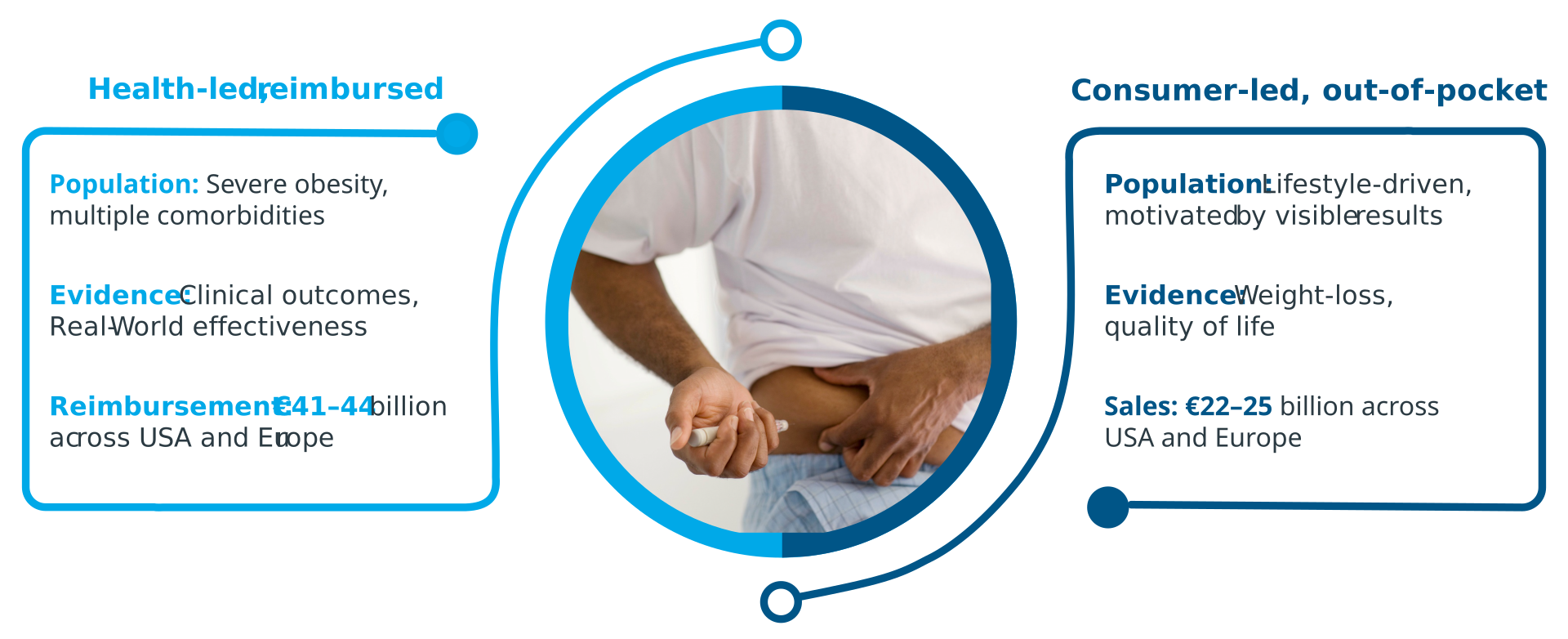
Figure 2: Split between health-led and consumer-led use of GLP-1s (Source: IQVIA Consumer Health research)
This is the point many industry observers still underestimate. The growth of GLP‑1s is not being driven solely by clinical need. It is being accelerated by consumer demand—by people willing to pay out-of-pocket for results that align with both health and identity.
GLP-1s are currently prescription-only medicines, despite the seeming ease of access consumers have to them reflected in the growing out-of-pocket market.
Yet as the optimizing consumer utilizes this access to drive aesthetic weight loss, they unwittingly show us a glimpse of the consumer health market of the future – one built around an ecosystem of products from different categories all put together by the consumer to address their health ambitions.
With GLP-1s the opportunity lies in the nutritional deficiencies caused by there use.
GLP‑1 therapies are highly effective at reducing weight, but in doing so they also reduce appetite to a level that makes adequate nutrition harder to maintain creating a nutrition gap that needs to be closed.
The science is clear, with energy intake in GLP-1 users typically falling by 16 to 39% according to IQVIA research. That reduction drives weight loss, but it also compresses the total nutritional “budget.” Without active intervention, diets do not automatically improve in quality, they simply shrink.
The consequences are predictable. Micronutrient intake declines, protein consumption often falls below target, and a meaningful proportion of weight loss can come from lean mass rather than fat. Over time, this can translate into fatigue, reduced function, and compromised health outcomes (see Figure 3).
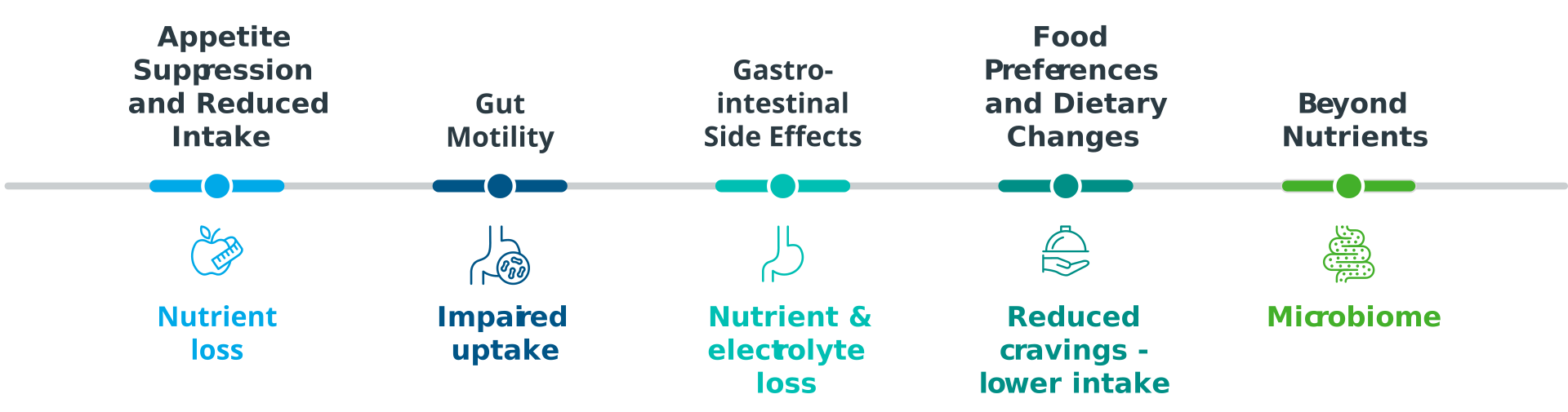
Figure 3: Nutrient deficiencies driven by underlying GLP-1 mechanisms (Source: IQVIA Consumer Health)
Appetite suppression changes what people eat, how often they eat, and what they prioritize within a smaller intake window, opening up the opportunity for consumer health manufacturers to help ensure that weight loss remains nutritionally and metabolically healthy.
GLP 1s create a clear and predictable gap. People eat less, but what the body needs does not change. Over time, that shows up in lower protein intake, micronutrient deficiencies, and reduced function. Consumers are already adapting and are not relying on a single solution. They are building around the gap—adding supplements, adjusting diets, and combining products to maintain energy, strength, and results.
This is where the immediate opportunity in the weight-loss category sits for consumer health. Not in the drug itself, but in everything that needs to sit around it, creating a set of criteria for capturing this opportunity:
What GLP 1 users are doing is not unique, it is quickly becoming the norm for health-focused consumers.
Consumers are building their own solutions, combining medications, supplements, nutrition, fitness, and beauty into routines designed to deliver specific outcomes.
Broadly, this creates a new consumer health world, one where:
To further explore how IQVIA Consumer Health can help your business take advantage of the GLP-1 opportunity or ensure you ahead of your competitors in the new consumer health landscape contact the team today.
Compelling claims to capture the minds of consumers