














Thought Leadership & Innovation
Leapfrog the competition by proving the value of your products
This blog is part of an ongoing series, A Brave New World: State of the Industry, on modern market dynamics influencing the life sciences industry.
Vaccination remains a foundational preventive intervention. For decades, relatively consistent seasonal patterns and established care pathways helped manufacturers, providers, pharmacies, and public health organizations anticipate demand and coordinate planning, outreach, and engagement efforts.
Vaccine leaders now face a wider range of interconnected forces. Demand patterns can shift unexpectedly, utilization trends are becoming more difficult to interpret, and forecasting future vaccination activity has grown increasingly complex. At the same time, broader changes in how patients engage with healthcare are reshaping the conditions under which preventive care is delivered.
These developments complicate decisions for manufacturers, providers, pharmacies, and public health organizations alike as they assess which factors are influencing utilization, how evolving delivery models are affecting access and uptake, and where additional support may improve coverage. If historical patterns are becoming less reliable, what factors are now influencing vaccine utilization? How are evolving healthcare delivery models affecting access and uptake? And what do these shifts mean for organizations seeking to improve vaccination coverage in an increasingly dynamic healthcare environment?
Planning for future vaccine utilization therefore benefits from a connected view of demand signals, site-of-care behavior, and healthcare access. Each provides a different dimension of the market, and their interaction may increasingly influence how organizations plan for and support vaccination uptake.
Seasonal vaccine uptake has traditionally drawn on recurring patterns in respiratory illness activity. Familiar cycles helped stakeholders anticipate heightened demand and align inventory, staffing, provider outreach, and patient engagement with expected periods of need.
In recent years, that predictability has weakened. The respiratory illness landscape that emerged following the COVID-19 pandemic has introduced new dynamics that are reshaping traditional utilization patterns. Insights from IQVIA's Flu/Cold/Respiratory Illness Activity Notification (FAN) dataset, which tracks and projects respiratory illness activity and seasonal trends, show that activity related to cough, cold, and flu-like illnesses has remained below the levels observed during peak pandemic years, while the timing and intensity of seasonal surges have become less consistent. Organizations accustomed to planning around historical patterns increasingly face an environment where past performance may not provide the same level of guidance for future demand.
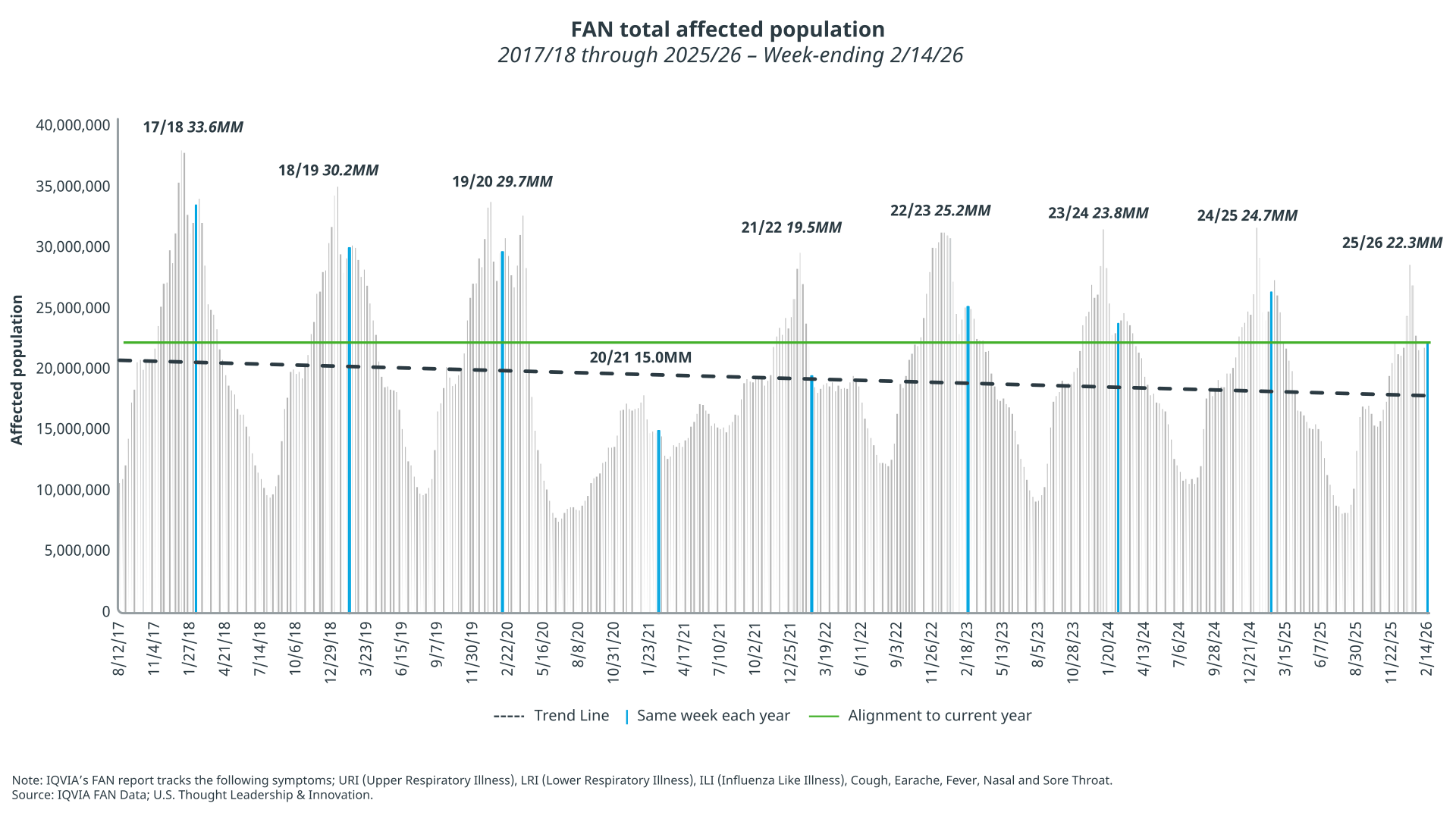
Changes in the timing of illness activity carry implications across the vaccine ecosystem. When seasonal peaks occur differently than anticipated, decisions regarding inventory allocation, provider outreach, marketing investments, and patient engagement become more complex. In some cases, periods of heightened activity may arrive earlier or later than expected. In others, demand may be distributed more evenly throughout the season rather than concentrated within a well-defined peak period. As a result, forecasting models that rely heavily on historical averages may not fully capture current market conditions.
Patient behavior adds another dimension. Heightened public attention surrounding vaccination observed during the pandemic has diminished, and many healthcare stakeholders have identified vaccine fatigue and hesitancy as ongoing considerations influencing uptake across several vaccine categories. The impact varies among patient populations and local markets, contributing to a demand environment shaped by several overlapping signals.
These conditions increase the value of timely market visibility. Historical trends continue to provide important context, while near-real-time information on utilization, disease activity, and local market conditions can help organizations recognize emerging changes earlier. Bringing these signals together can support more responsive decision-making throughout the vaccination season.
Timing, however, represents only one dimension of utilization. As vaccine delivery expands beyond traditional clinical settings, understanding demand also requires a closer view of where patients receive care and which access points are most likely to support uptake.
Vaccination delivery has steadily expanded beyond the traditional physician office into retail and community-based settings, creating a more distributed model of preventive care. Pharmacies are especially important within this model, evolving from a supplemental vaccination channel into a primary destination for routine immunization.
Pharmacies now administer 64% of adult influenza vaccinations and more than 90% of adult COVID-19 vaccinations. These category-specific shares show how closely adult influenza and COVID-19 vaccine utilization has become connected to pharmacy-based care. Several characteristics have supported this shift. Pharmacies offer broad geographic reach, extended hours, walk-in availability, and locations that align with patients’ daily routines. These features create opportunities to engage patients at accessible community touchpoints and support vaccination as part of a more consumer-oriented healthcare experience.
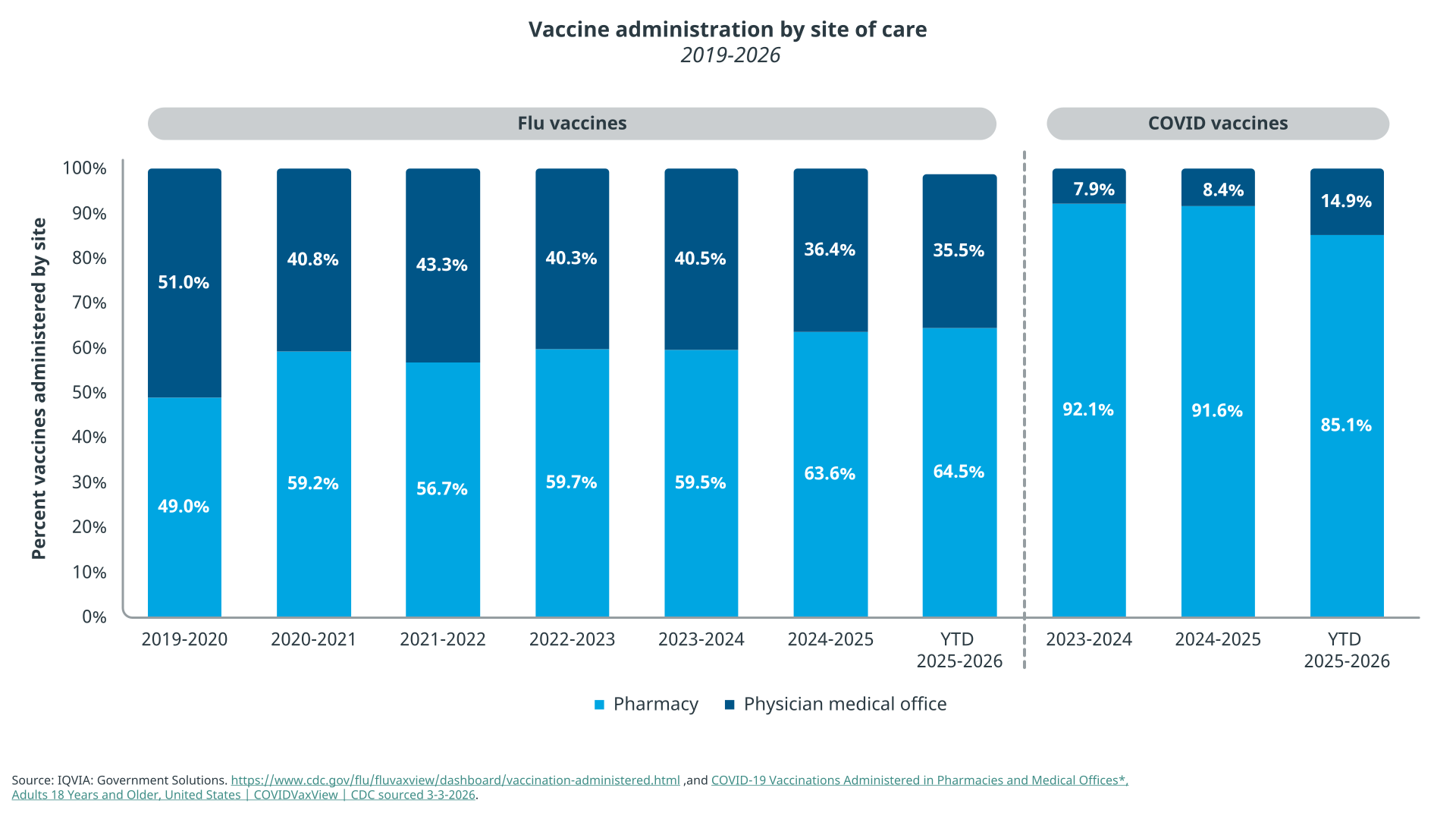
The expansion of pharmacy-based vaccination is part of a broader shift in healthcare delivery. Patients increasingly engage with services across retail health, urgent care, and other community settings that offer greater flexibility. Pharmacies have established a central role in the vaccination effort because of their scale, convenience, and ongoing contact with patients.
Beyond dispensing medications, pharmacies have become important access points for preventive services, supporting vaccination efforts at both the community and population health levels. Their scale, geographic reach, and ability to engage patients at regular touchpoints have positioned them as a critical component of the nation's vaccination infrastructure.
For manufacturers and other healthcare stakeholders, this shift changes the variables associated with vaccine performance. Demand forecasting now intersects more directly with channel planning, pharmacy engagement, inventory placement, and local market access. Understanding where vaccination opportunities occur can help organizations align outreach and resources with the settings through which patients are most likely to receive care.
This shift tightens the relationship between vaccination activity and pharmacy infrastructure. As more vaccinations take place in these settings, the availability of local pharmacy access becomes increasingly relevant to patient engagement and uptake. The movement toward pharmacy-based delivery has expanded the reach of vaccination while elevating the importance of preserving convenient community access.
Pharmacies provide an increasingly important pathway to vaccination, particularly for patients who value convenient locations, flexible hours, and proximity to their daily routines. Their role places pharmacy access at the center of the broader effort to sustain preventive care engagement.
At the same time, pharmacy networks are adapting to economic pressures and shifting market conditions. As the pharmacy footprint evolves, some communities may experience changes in the availability of nearby vaccination sites and other essential healthcare services. These developments have particular relevance for populations already navigating transportation constraints, limited provider availability, or fewer opportunities to engage with the healthcare system.
The implications extend beyond vaccination alone. IQVIA research into pharmacy deserts further illustrates the important role that local healthcare infrastructure plays in supporting access to care. Community pharmacies serve as recurring points of contact for medication services, vaccination, and other preventive health needs. Changes in that infrastructure can therefore have implications extending across the patient care journey.
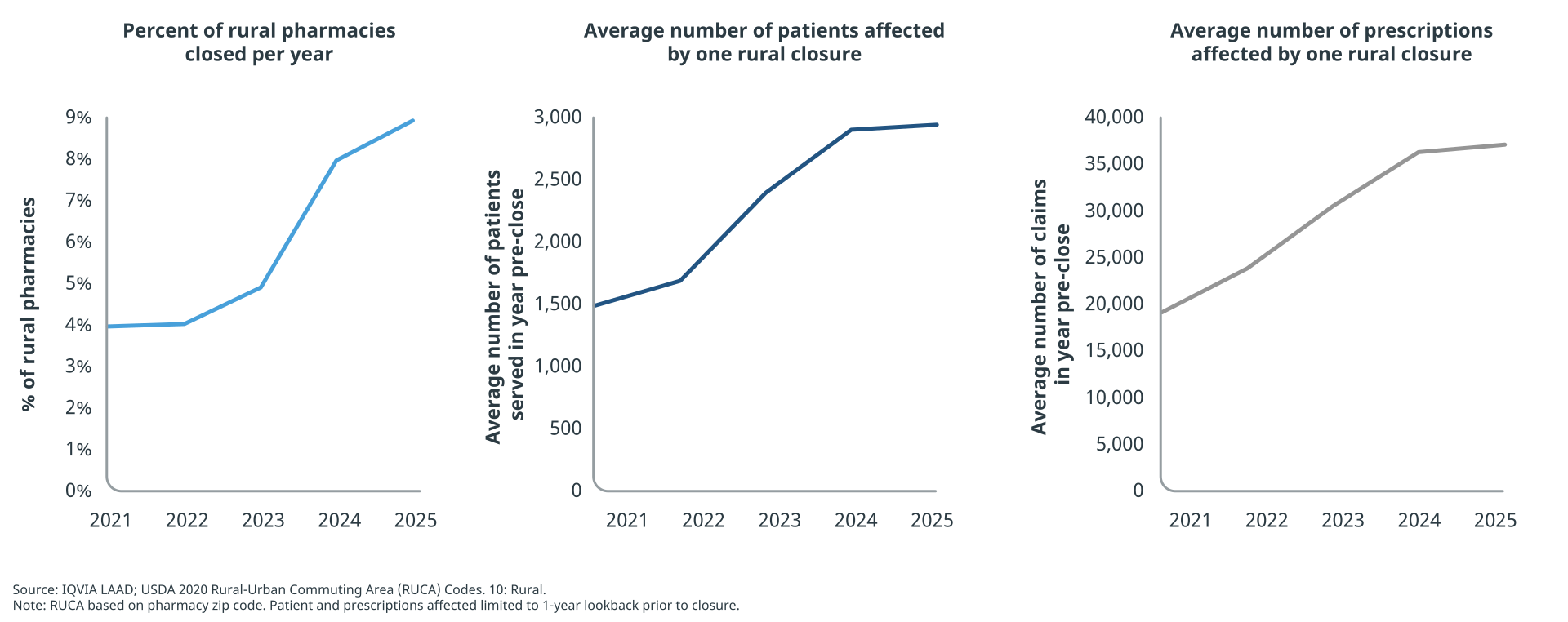
Viewed through this lens, recent utilization trends likely reflect the interaction of multiple forces rather than a single underlying cause. Changes in patient attitudes, evolving care-seeking behaviors, and shifts in healthcare delivery infrastructure may all be influencing vaccination activity simultaneously. These factors can reinforce one another. Patients who are less motivated to seek vaccination may be even less likely to do so when convenient access points become harder to reach, while communities experiencing reduced healthcare access may face additional challenges sustaining preventive care engagement over time.
For manufacturers, providers, pharmacies, and public health organizations, this evolving landscape points to the need to pair traditional awareness and education efforts with access planning. Improving vaccination uptake depends not only on encouraging vaccination but also on ensuring that patients retain accessible opportunities to act on that intent. As the market continues to evolve, access strategy and demand generation will play increasingly connected roles in shaping vaccination outcomes. Organizations that monitor both can develop a clearer view of where engagement opportunities exist and where additional support may help sustain uptake.
Vaccine utilization is increasingly shaped by the interaction of several market forces. Seasonal disease activity influences when need emerges. Patient behavior affects willingness and timing. Site-of-care preferences determine where vaccination occurs, while the surrounding access infrastructure shapes the convenience and availability of those opportunities.
These connections expand the information organizations need to guide vaccine strategy. Historical utilization offers a valuable foundation, and its value increases when combined with timely disease activity, site-of-care trends, pharmacy dynamics, and local access conditions. Together, these signals can provide a more holistic view of how vaccination demand is developing across markets and patient populations.
The shift toward pharmacies illustrates why this integrated perspective matters. Pharmacies have broadened the reach of vaccine delivery and aligned preventive care more closely with consumers’ daily lives. Their expanding role also means that changes in pharmacy availability can carry wider implications for vaccine engagement.
For manufacturers, providers, pharmacies, and public health organizations, supporting uptake may increasingly depend on connecting insights that have often been examined separately. Disease activity can help identify when vaccination need is rising. Site-of-care behavior can indicate where patients are most likely to respond. Access infrastructure can show whether convenient opportunities are available within the communities organizations aim to reach.
Bringing these dimensions together can support more precise planning, responsive engagement, and locally relevant access strategies. As vaccination continues to evolve within a more decentralized and consumer-oriented healthcare system, organizations can better support uptake when they understand how demand, delivery, and access work together.
Contact your IQVIA representative to discuss how demand signals, site-of-care trends, and local access conditions may inform more precise vaccine planning.

Related solutions
Leapfrog the competition by proving the value of your products