














Commercial Solutions
Data, AI, and expertise empower Commercial Solutions to optimize strategy, accelerate market access, and maximize brand performance.
This blog is part of an ongoing series, A Brave New World: State of the Industry, on modern market dynamics influencing the life sciences industry.
Pharmacy economics are under sustained pressure, with reimbursement increasingly misaligned to the cost of dispensing. A model built on stable margins is now operating with far less tolerance for variation, forcing pharmacies to make continuous decisions about the business and operating model. Under those conditions, what appear to be isolated disruptions begin to accumulate, as adjustments in footprint, participation, and fulfillment reflect the same underlying constraint. The effect is a shift in where prescriptions are filled, driven primarily by pharmacy closures and operating pressure, with volume concentrating in channels that can sustain current economics. For manufactures, this changes the decision window by narrowing the set of viable dispensing points. Pharmacy participation can no longer be assumed, and access depends on earlier and more deliberate alignment of distribution and contracting with the channels best positioned to sustain dispensing.
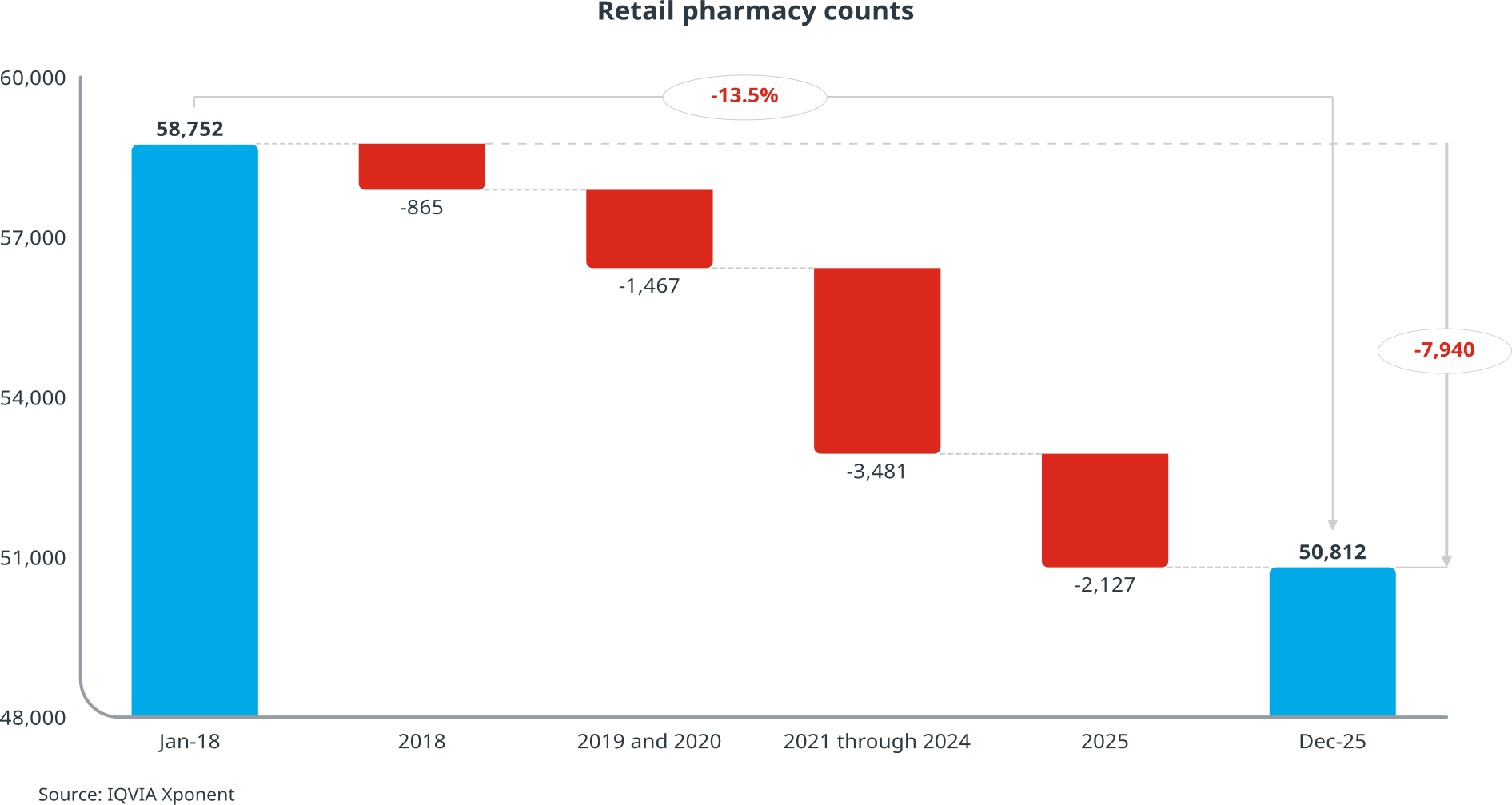
Structural margin pressure is fundamentally reshaping how pharmacies operate and, in turn, how manufacturers must think about channel strategy and access. Across both branded and generic products, core dispensing has become increasingly unprofitable, with many pharmacies operating at or below breakeven. To offset these losses, pharmacies have leaned heavily on alternative revenue streams such as vaccines and 340B participation, creating a surface-level sense of stability that masks deeper economic fragility. This strain is already visible in the footprint itself, with approximately 7,940 fewer pharmacies in operation across the U.S. since 2018, signaling that financial pressure is translating into entrenched market contraction.
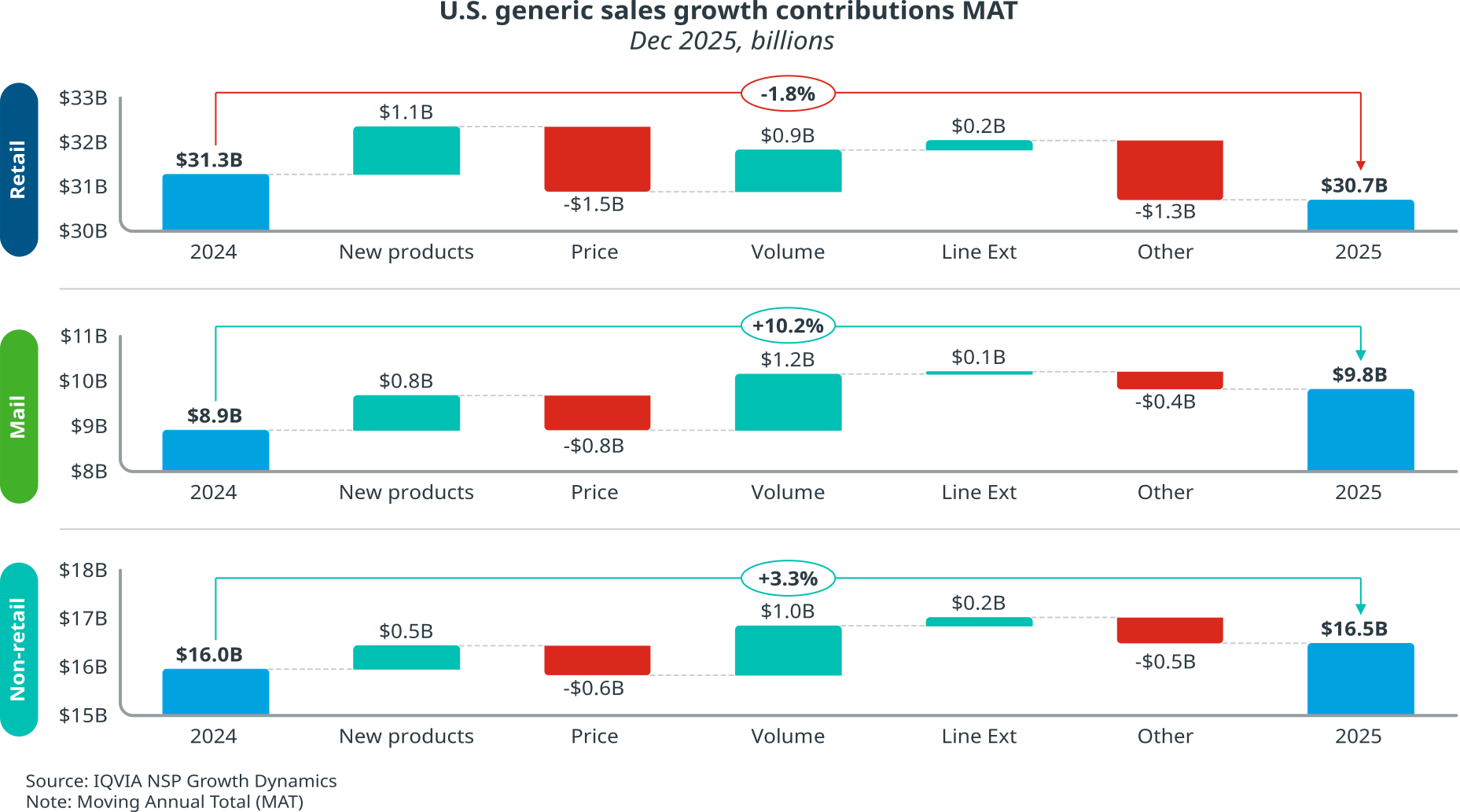
This pressure is particularly apparent in the retail channel, where a disproportionate share of generic volume is concentrated, and ongoing deflation continues to erode margins. Recent prescription channel performance underscores this divergence: retail has seen a 1.8% decline in generic sales growth from 2024 to 2025, while non-retail and mail channels have experienced growth of 3.3% and 10.2%, respectively. As financial performance diverges by channel, manufacturers need to reassess the role of each channel within their distribution strategies for high-volume therapies, particularly as access and economics evolve for mature brands.
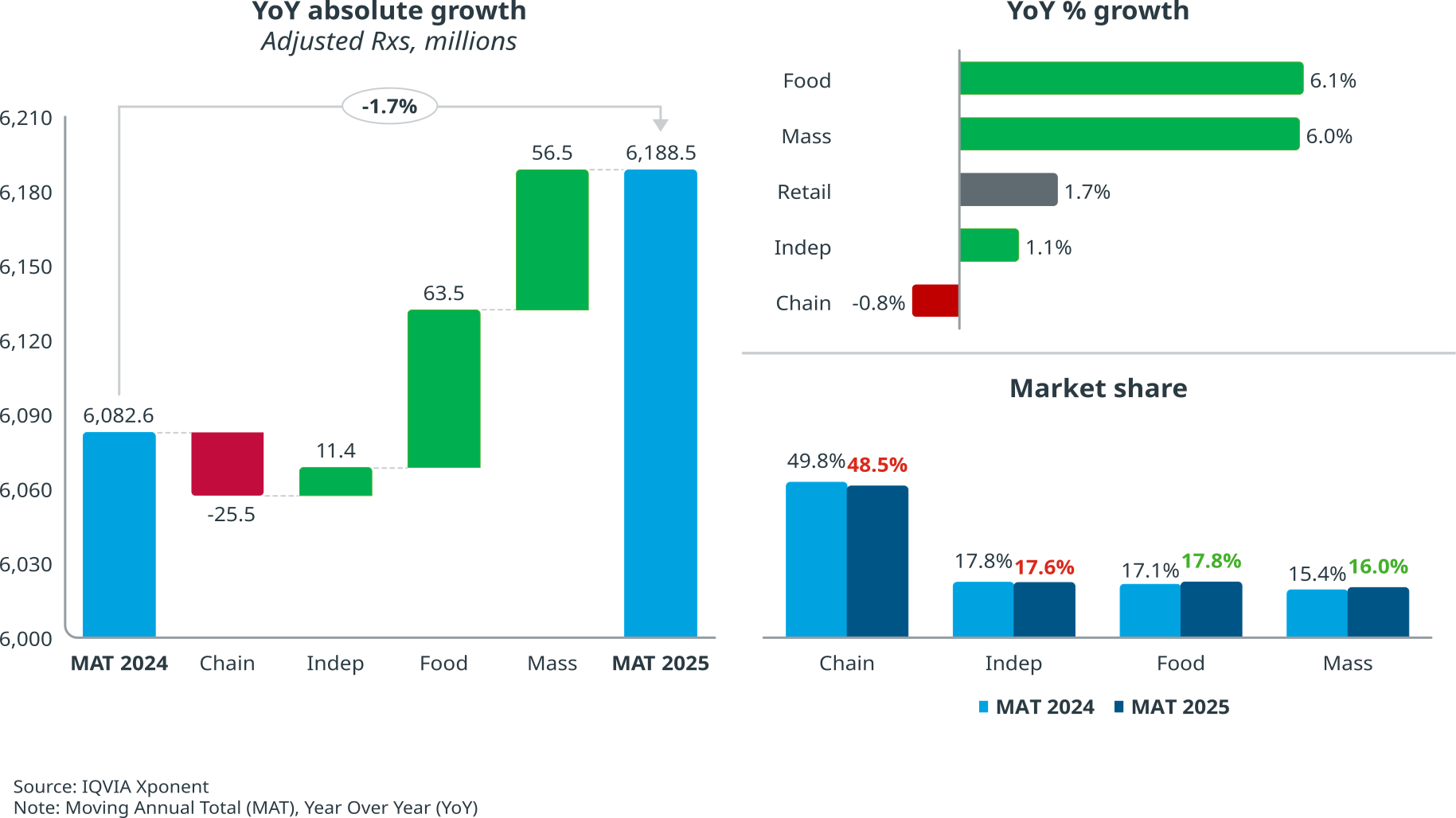
As pressure persists, market exit becomes a possible outcome. As weaker locations close or pull back dispensing, the system narrows and the remaining infrastructure absorbs a growing share of demand. Volume does not disappear, but instead consolidates into the channels that can sustain current reimbursement and cost structures, increasing reliance on a smaller set of viable pathways. This creates a different industry constraint. Access is no longer defined by total footprint, but by the durability of the channels that remain, placing greater weight on anticipating where volume will concentrate as the landscape continues to rebalance.
While store closures could be attributed to reduced patient demand, pharmacy dynamics tell a different story. The reduction in chain footprint is primarily a function of economics, not diminished patient need or utilization. Despite reductions in physical infrastructure, prescriptions continue to be written and filled at steady rates, indicating that demand is unchanged. What is changing is the ability of certain locations to operate viably within current reimbursement and cost structures.
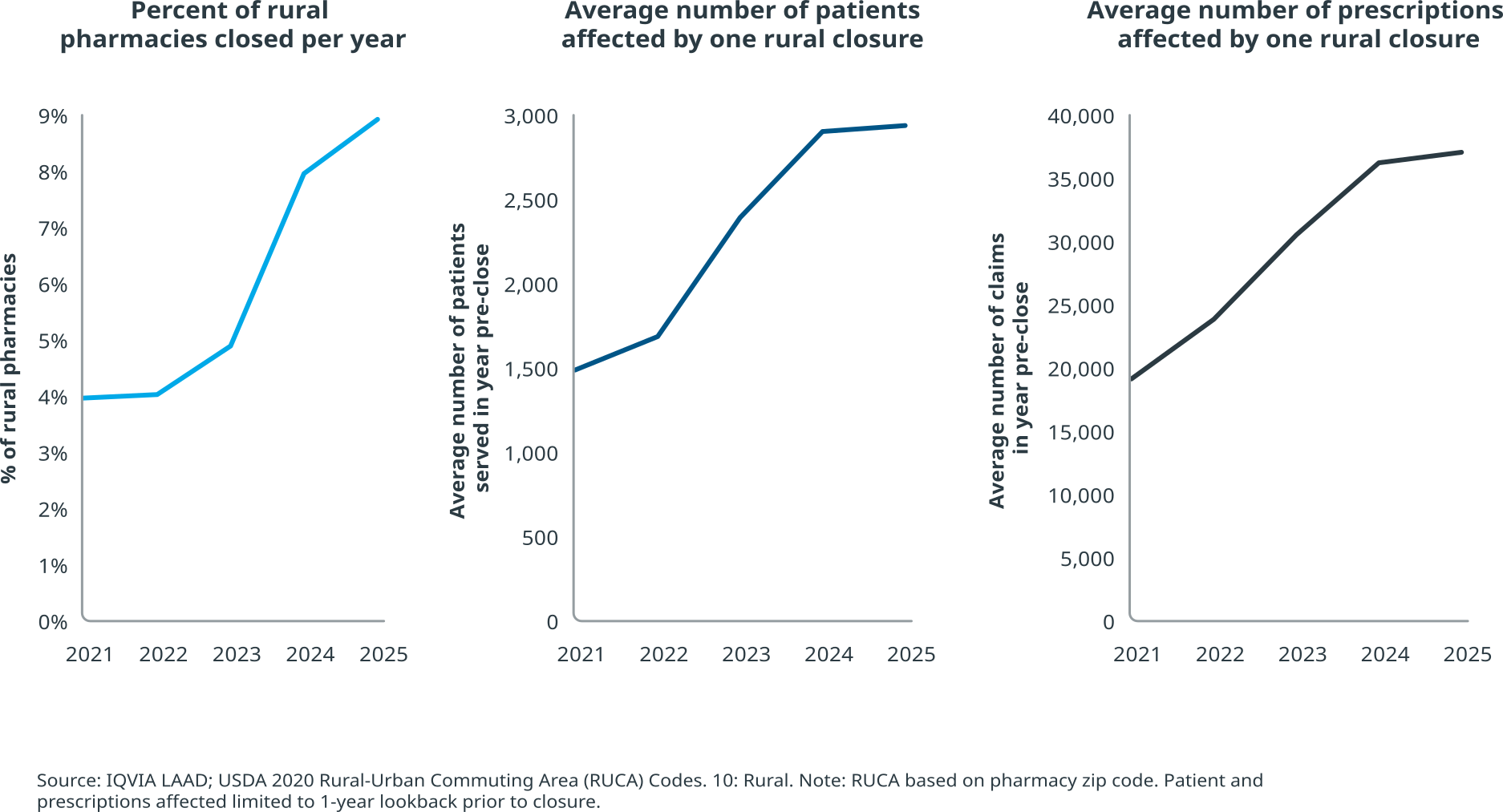
The impact of closures is not uniform. They tend to be geographically concentrated, creating localized access gaps that disproportionately affect certain populations, particularly in rural areas already operating with limited healthcare infrastructure. In these settings, the closure of a single pharmacy can disrupt care for an entire community, affecting a disproportionately large share of local patients and prescriptions. Unlike more urban markets, where volume can be redistributed across multiple nearby alternatives, rural closures often leave few immediate substitutes, forcing patients to travel longer distances, delay therapy, or shift to less preferred fulfillment channels.
As these gaps emerge, demand does not dissipate, but instead, shifts to the most accessible and economically resilient alternatives. Remaining chain pharmacies absorb incremental volume, while mass retail, grocery pharmacies, and non-traditional channels increasingly capture share. Mail-order and digital pharmacy models, in particular, are well positioned to scale in areas where physical access declines.
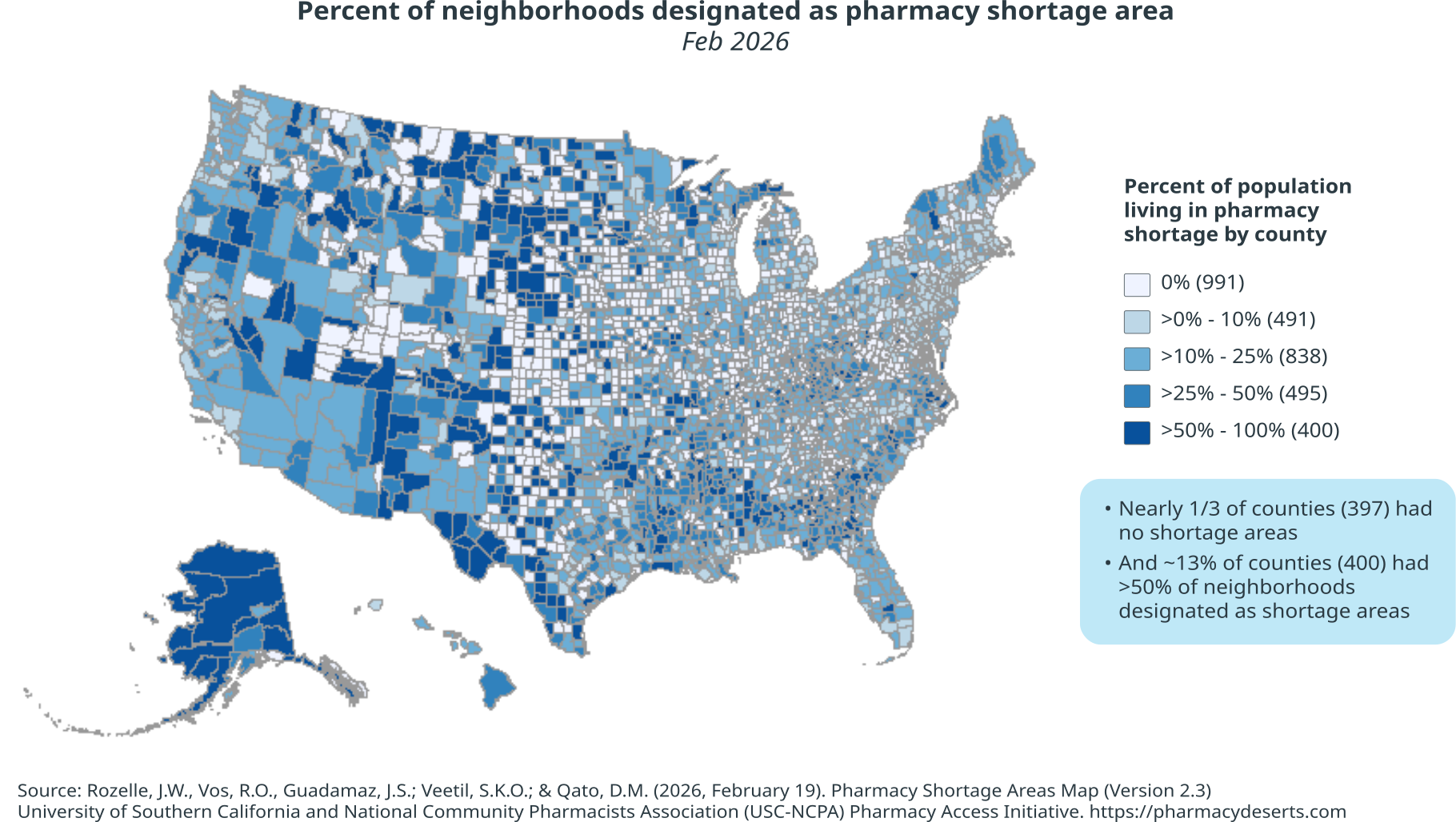
This redistribution of volume fundamentally changes the functional role of each distribution channel. Rather than serving as interchangeable points of access, channels are becoming more specialized based on their ability to absorb demand under economic pressure. As volume consolidates into fewer, more financially stable pathways, manufacturers face increasing exposure to channel concentration, variability in patient access, and risk from disruption. Ensuring continuity of access requires a more dynamic understanding of where prescriptions are actually being fulfilled, with contracting, distribution, and patient support strategies increasingly dependent on anticipating how volume will migrate as the pharmacy landscape continues to evolve.
Fulfillment models are evolving quickly as pharmacy dynamics continue to reflect sustained economic pressure across the system. The growing role of 340B programs and hospital-owned specialty pharmacies is reshaping where and how prescriptions are fulfilled, with volume increasingly routed through entities better positioned to capture margin and navigate reimbursement complexity. While 340B participation can provide short-term margin relief for participating pharmacies, it also contributes to longer-term structural shifts by redirecting volume toward institutionally aligned entities that are better positioned to capture and retain that margin. This shift is not just changing ownership of dispensing, but influencing network design, as manufacturers encounter a growing share of prescriptions flowing through institutionally aligned channels with distinct contracting dynamics and access considerations.
At the same time, central fill models are expanding across both retail and 340B-driven environments, altering traditional dispensing workflows. By decoupling dispensing from the point of patient interaction, these models allow pharmacies to manage costs more effectively while maintaining front-end presence where viable. For manufacturers, this creates increased complexity within fulfillment processes and diminishes the reliability of inventory locations and product distribution patterns. As a result, it is essential to gain insight into the foundational infrastructure that supports dispensing, rather than depending solely on basic channel classifications.
Digital and alternative fulfillment models are also accelerating, particularly in markets where physical access is declining or operational pressures limit in-store viability, and in patient-driven categories where convenience, speed, and control increasingly influence how prescriptions are filled. These models are gaining traction not solely due to consumer preference, but because they offer a scalable solution to margin compression and access gaps. As a result, distribution is becoming less retail-centric and more fragmented, with volume increasingly flowing through a mix of centralized, institutional, and digitally enabled pathways. Manufacturers that adapt to this shift by aligning distribution strategy, patient support, and channel engagement with these emerging models will be better positioned to maintain consistent access as the traditional pharmacy landscape continues to evolve.
Pharmacy dynamics are defined by modern economic constraints rather than traditional channel roles, requiring manufacturers to rethink how access, distribution, and channel engagement are structured. As margin pressure reshapes the viability of dispensing locations and fulfillment models continue to evolve, these shifts are no longer peripheral, but central to commercial decision-making.
As economic pressure continues to reshape pharmacy dynamics, maintaining access will depend less on legacy channel presence and more on aligning with where dispensing can sustainably occur. Manufacturers that proactively adjust to these structural shifts will be better positioned to navigate channel volatility and ensure consistent patient access.

This blog is part of a series exploring the evolving dynamics of pharmaceutical brand commercialization. Posts delve into critical themes such as patient engagement, resource-constrained uptake, HCP adoption, investment analysis, payer control, strategic promotion, and the shifting provider landscape. You can find all of our Brave New World content in the U.S. Insights Library.
Data, AI, and expertise empower Commercial Solutions to optimize strategy, accelerate market access, and maximize brand performance.
Gain high value access and increase the profitability of your brands