














Market Access
Gain high value access and increase the profitability of your brands
This blog is part of the series, A Brave New World: State of the Industry, on modern market dynamics influencing the life sciences industry.
Rural health transformation depends on more than new programs, new funding streams, or new technologies. It depends on whether the healthcare system can preserve and strengthen the access points that rural communities already rely on. Among the most important of those access points is the local pharmacy.
In many rural areas, pharmacies are not simply places where prescriptions are filled. They are among the most accessible, trusted, and consistently used healthcare touchpoints in the community. For patients living far from primary care, hospitals, specialists, or urgent care centers, the local pharmacy may be the most immediate entry point into the healthcare system. It is where patients seek medication counselling, vaccines, adherence support, chronic disease guidance, and increasingly, testing and treatment services where state law allows.
However, the foundation is under strain. Retail pharmacy closures are accelerating, and the effects are especially acute in rural communities where there are fewer alternatives. Addressing pharmacy sustainability, modernizing reimbursement, and enabling patients to benefit from the full extent of pharmacists’ education should be viewed as central rural health strategies, not peripheral pharmacy policy issues.
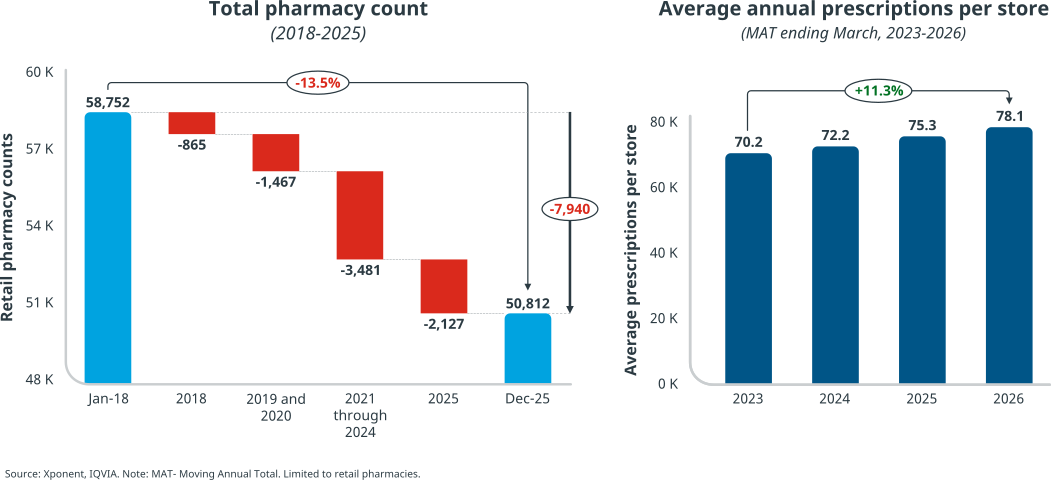
The number of retail pharmacies in the United States has been falling each year, with almost 8,000 fewer locations in 2025 compared to 2018. The pace of closures has increased, with more than 2,000 pharmacies shutting down in 2025 alone. This decline is occurring while prescription volume per remaining pharmacy continues to rise by about 3,000 scripts per year on average, from approximately 70K in 2023 to 78K in 2026, representing an 11.3% increase. The divergence is clear: fewer pharmacy access points are being asked to provide care for more patients.
The reasons pharmacies are closing are complex. Reimbursement for prescription drugs often does not reflect the cost of acquiring and dispensing products, particularly for branded treatments while low-margin operating models are susceptible to inflationary pressure. At the same time, pharmacy benefit manager (PBM) dynamics, including preferred networks, vertical integration, and opaque payment models, can affect whether community pharmacies are financially viable. Clinical services provided by pharmacists are also under-reimbursed or not reimbursed at all, even when those services reduce downstream healthcare utilization. The combination of these trends means that increased prescription volume does not equate to increased economic value. More volume at low or negative margins only adds to the constraints rather than providing relief.
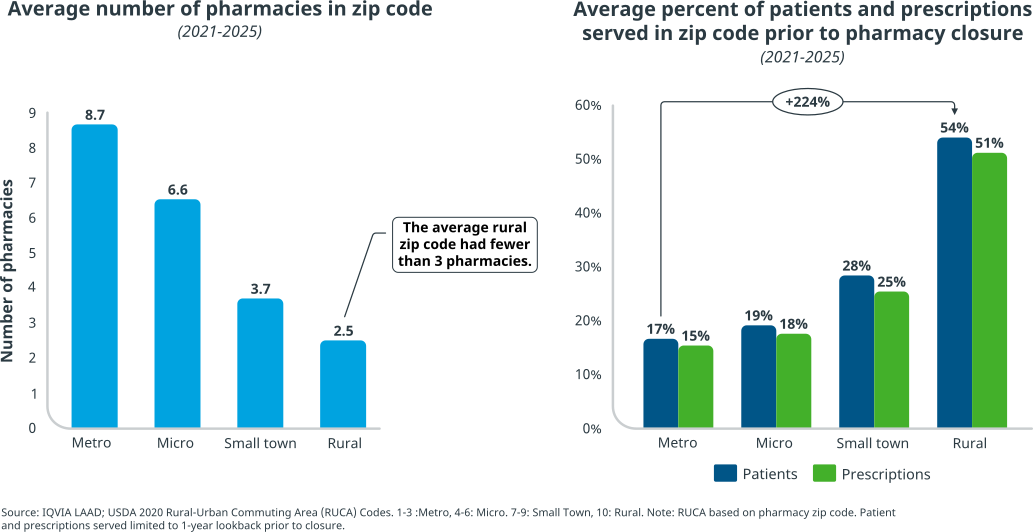
Every pharmacy closure matters. In rural communities in particular, each closure can have an outsized impact because there are fewer nearby alternatives. Pharmacy density in rural areas is sparce, with rural zip codes typically containing fewer than 3 pharmacies on average, compared to 9 in metro areas. This means that each closure results in a substantial reduction in local access. The same pattern appears when examining the share of local patients and prescriptions served by a pharmacy prior to closure. The closure of a single rural pharmacy impacts a higher proportion of patients and prescriptions compared to those in metro, micro, or small towns, as there are often few or no alternative pharmacies available. When one pharmacy closes in a metro zip code, 15% of people in the zip code received care at the pharmacy in the year prior to closure, compared to 54% in rural zip codes.
In practical terms, while consolidation may pose challenges within urban areas, it can escalate into an access crisis for rural communities. Pharmacies hold patient relationships, medication histories, counseling touchpoints, vaccine records, refill patterns, and adherence signals. When a pharmacy closes, patients must navigate a new location, a new workflow, a new pharmacist, and often a longer trip. For some, that transition is manageable. For others, the disruption can lead to delayed refills, missed doses, or foregone care. For the remaining pharmacies, the increased volume from other closures only adds to the economic strain. More prescriptions filled at low or negative margins further stresses the already fragile financial model. Patients are also acutely aware of the impact of pharmacy closures with 97% of surveyed adults reporting it is important for steps to be taken to reduce the rate of pharmacy closures in the U.S.
Even one pharmacy closure in a rural area can rapidly disrupt local healthcare dynamics as thousands of patients and prescriptions that were previously serviced within that community are abruptly displaced. The loss of each pharmacy makes it harder for patients to get the care they need and deserves careful attention.
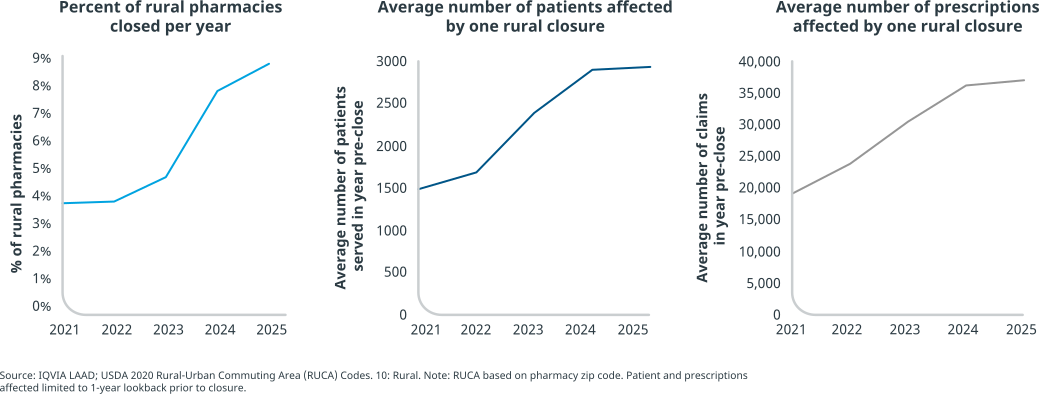
Since 2021, the proportion of annual rural pharmacy closures has more than doubled from 4% to 9%. The accelerating rate of closures resulted in twice as many patients and prescriptions being affected during this period, reaching as many as 3,000 patients and 35,000 prescriptions by each closure in 2025. Beyond this, some downstream patient impacts are not straightforwardly quantifiable. A pharmacist answering a medication question, identifying and reconciling a potential interaction, helping a patient understand a new therapy, recommending a vaccine, or encouraging follow-up with a clinician may not generate a claim that fully reflects the value of the intervention.
Yet those moments can prevent complications, improve adherence, and reduce unnecessary utilization, ultimately reducing costs for the health system.
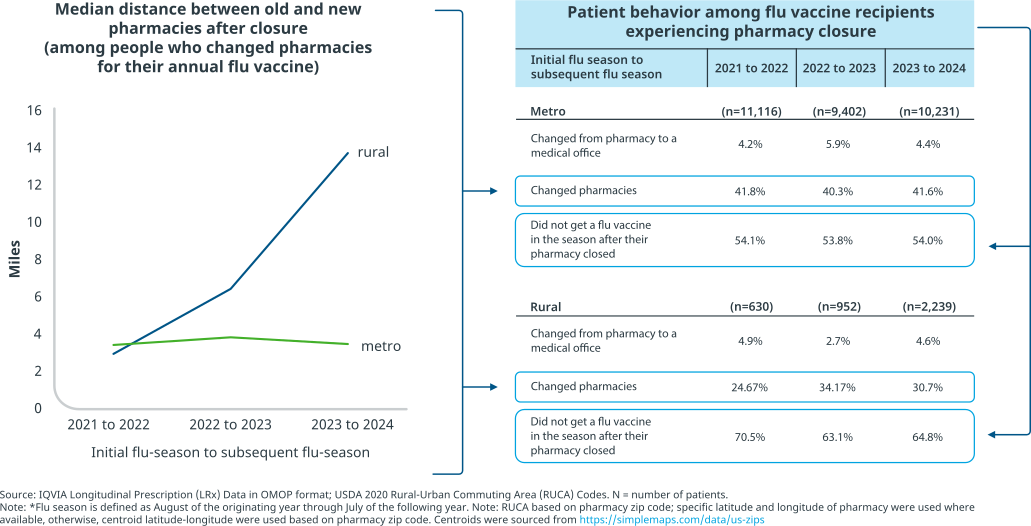
The impact of closures is especially visible in vaccination patterns. Pharmacies are a central part of adult immunization infrastructure, representing the site of care for 1 in 2 or more vaccinations for influenza (flu), COVID-19, and Respiratory Syncytial Virus (RSV) 1–3. Pharmacies provide convenient access without the need for a provider appointment, and they are often open during hours that better fit patient schedules. Since the 2021 flu season, rural flu vaccine recipients who experienced a pharmacy closure were more likely than metro patients to stop receiving flu vaccination in the subsequent flu season. Among rural flu vaccine recipients whose pharmacy closed between 2021 and 2025, 63% to 70% of patients did not get a flu vaccine in the season after the closure, depending on the flu-season transition analyzed. By comparison, approximately 54% of metro patients did not get a flu vaccine in the subsequent season over the same timeframe.
For rural patients who did continue vaccination by changing pharmacies, the distance burden increased sharply. The median distance between the old and new pharmacy among rural flu vaccine recipients who changed pharmacies more than quadrupled (from approximately 2.9 miles for the 2021 to 2022 season to 13.6 miles for the 2023 to 2024 season). Metro distances remained relatively stable at roughly 3 to 4 miles.
This pattern illustrates the choice many rural patients face after closure: travel farther or go without. IQVIA analysis shows that demand for adult vaccinations in rural areas, including flu, Tetanus, Diphtheria, Pertussis (Tdap), pneumococcal, and Shingles vaccines, remains steady since 2018. As pharmacy closures continue to rise, they pose a growing risk to vaccine access for these patients. The vaccine findings are also a warning signal. Vaccination is a discrete, observable service that helps reveal how patients respond when a pharmacy disappears. If many patients stop getting vaccinated after a closure, similar drop-off may be occurring in less visible areas, including medication adherence, disease monitoring, and preventive counseling.
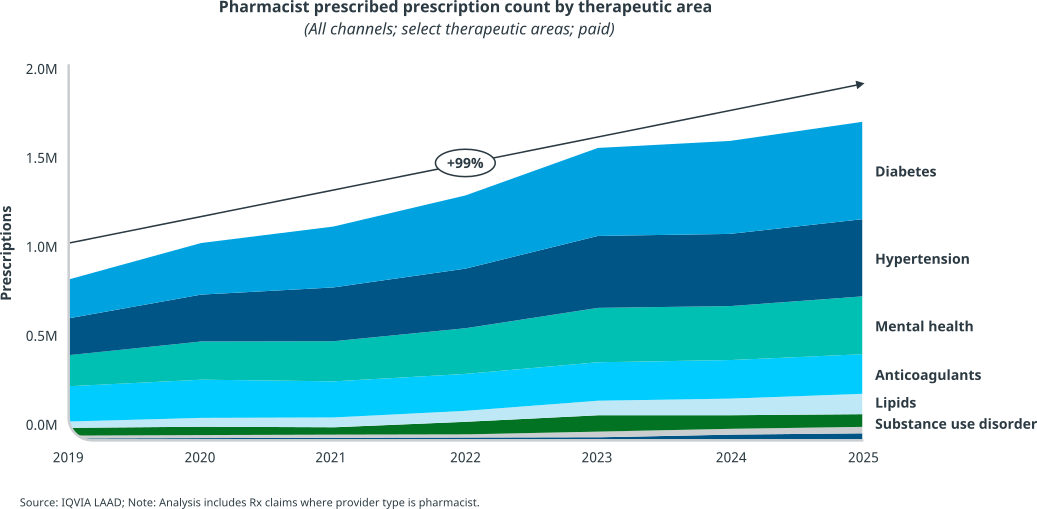
The traditional view of pharmacies as medication dispensers no longer reflects the full role they play in healthcare delivery, particularly for chronic disease management. Studies show pharmacist involvement in chronic disease management improves medication adherence, reduces hospital and emergency department visits, and improves outcomes4–7. Pharmacists exhibit a growing role in chronic disease management for conditions such as diabetes, hypertension, mental health, and anticoagulation. From 2019 to 2025, pharmacist prescribing for related products has doubled, highlighting the direct role they have in managing chronic diseases for patients. These conditions are among the most common and consequential health challenges in rural communities. Further, each of these conditions is multifaceted and requires ongoing management, monitoring, patient education, medication optimization, and adherence support. Pharmacists are well positioned to contribute to each of these needs, particularly when they are integrated into care teams.
Rural health transformation requires improving the pharmacy infrastructure to prevent further closures that produce outsized impact in the communities that the Rural Health Transformation Program is designed to serve. Stabilizing access to rural pharmacies starts with sustainable medication reimbursement, including cost-based payment models, fair reimbursement standards, and greater transparency in pricing and reimbursement. Without these changes, pharmacies will continue to face pressure to dispense medications below the cost of acquisition and service delivery. Comprehensive PBM reform is also critical, especially policies that address opaque reimbursement practices, network design, vertical integration, and pharmacy payment methods. These reforms should be evaluated not only by their effect on drug spending, but also by their impact on local access and continuity of care.
Policies must also enable pharmacies to meet the needs that rural communities already rely on them to address. Patients should be able to benefit from pharmacists’ full expertise and clinical training through more standardized and expanded scope-of-practice laws, including test-and-treat authority, and by moving toward a standard-of-care model similar to other healthcare providers. Consistent and reliable insurance coverage for pharmacist-delivered clinical services as part of the medical benefit would strengthen financial sustainability while most importantly, expanding access to care for valuable healthcare services like chronic disease management, treatment of common respiratory illnesses, and much more. Allowing pharmacy technicians to take on appropriate non-clinical responsibilities and integrating pharmacists more fully into care teams and data systems, would further improve efficiency, coordination, and visibility into pharmacy-led interventions.
Pharmacies are central to rural healthcare, serving as critical access points for care delivery and service coordination. Patients rely on pharmacists for clinical guidance and care coordination, and many view them as trusted leaders in their communities. As pharmacy closures continue to rise, addressing this trend will be essential to strengthening rural healthcare access and continuity of care.
Supporting pharmacies and expanding the clinical role of pharmacists represents a practical, immediate, and scalable solution aligned with state and federal rural health priorities. The question is not whether pharmacies can contribute to rural health transformation. They already do. The question is whether policy, payment, and data systems will recognize that role before more communities lose it.
References:

This blog is part of a series providing evidence-driven insights into the factors shaping health outcomes, access, and quality in rural communities in the U.S. It explores how stakeholders across the healthcare ecosystem, including providers, payers, life sciences companies, and governmental agencies, can advance change to improve rural health. Other blogs in this series will analyze care delivery, patient dynamics, and disease burden along with strategies for sustainable improvement. Follow the series for applied analyses that connect rural landscape metrics, provider and patient dynamics, and therapeutic outcomes to measurable strategies that improve access.
Gain high value access and increase the profitability of your brands
Effectively engage with patients to help improve adherence, drive better disease understanding, and deliver treatment value.