














Market Access
Gain high value access and increase the profitability of your brands
This blog is part of the series, A Brave New World: State of the Industry, on modern market dynamics influencing the life sciences industry.
Rural health is entering a pivotal moment shaped by two forces moving in parallel. The One Big Beautiful Bill Act of 2025 (OBBA) introduces both risk and opportunity, tightening access through Medicaid policy changes while simultaneously directing new investment into rural areas through the Rural Health Transformation Program (RHTP). Policy shifts such as new Medicaid work requirements may reduce coverage for some individuals, which can translate into decreased access to care and create additional strain on local health systems. At the same time, RHTP creates a rare opportunity to test new care models, expand the workforce pipeline, and rethink how interventions are implemented and measured in underserved areas. With emphasis on innovative ways to improve care delivery, workforce development, and technological adoption, the RHTP allocates $50 billion over five years to fund new solutions.
Together, these dynamics make this a critical window to apply data with greater precision to understand local impacts, monitor how policy shifts affect access and outcomes, and evaluate which innovations are truly improving care.
Prescription and patient measures turn utilization patterns into signals that help track high-burden conditions, quantify treatment intensity, and detect early access disruption as coverage changes affect initiation and adherence. Improving rural health outcomes requires this kind of visibility into need, affected populations, and intervention performance in real time. However, current public health surveillance systems are built primarily to monitor infectious diseases rather than chronic disease management. As a result, infectious diseases such as human immunodeficiency virus (HIV), tuberculosis, and salmonella poisoning are monitored in a systematic manner across the country.
Chronic diseases do not have the same standardized, reportable surveillance infrastructure, even though they drive healthcare utilization due to the high prevalence of conditions like hypertension, obesity, and diabetes1-4. The prevalence is even higher for the 61 million people living in rural, tribal, and geographically isolated communities5. Moving the needle towards improvements in rural areas requires a population level understanding of the disease burden, access to care, treatment gaps, and how social factors may also shape access.
The distribution of prescriptions across therapeutic areas highlights where rural healthcare systems face the greatest demand. Cardiometabolic diseases, including diabetes, hypertension, and lipid disorders, affect millions of rural patients and account for the highest prescription volumes across the largest patient populations. Mental health treatments, reflecting a growing public health challenge, along with pain management for chronic conditions such as osteoarthritis, round out the top five therapeutic areas in rural communities, each exceeding 10 million prescriptions in 2025. Hypertension alone accounted for the highest volume, approaching 30 million prescriptions.
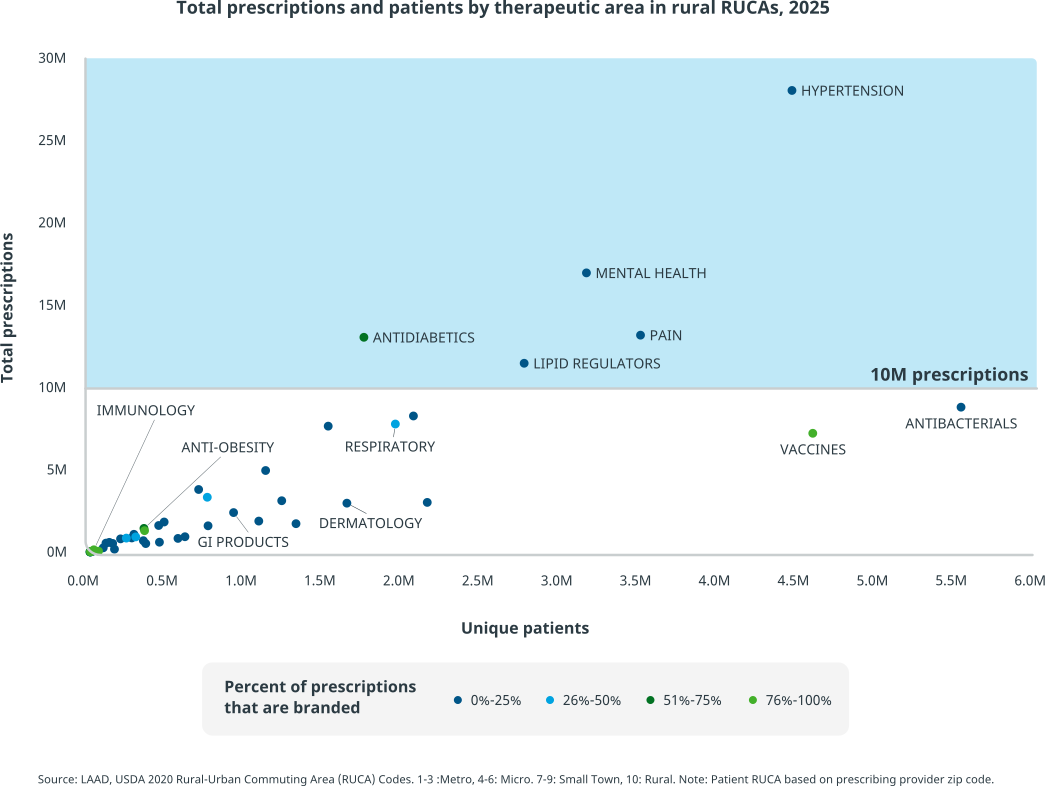
The volume of prescriptions reflects the scale of chronic disease management in rural healthcare systems, where millions rely on consistent access to medications. These conditions require sustained treatment, making continuity of care and medication access essential for population health.
Even when patients in rural areas can access care for chronic conditions, differences in care quality remain. Disparities in access to glucagon-like peptide-1 (GLP-1) treatments despite their rapid adoption is a recent example that is illustrative of a broader pattern of delayed innovation diffusion to rural settings. An analysis of GLP-1 utilization in the 12 months ending January 2026, compared to the previous 12 months, shows that states with a higher share of rural residents experienced slower growth in use. Lower growth rates may reflect slower adoption, access barriers, or challenges with adherence after initiation. Vermont and Maine stand out as exceptions, with both high rurality and strong growth, pointing to the importance of local factors and the need to design community-specific approaches rather than treating rural populations as uniform.
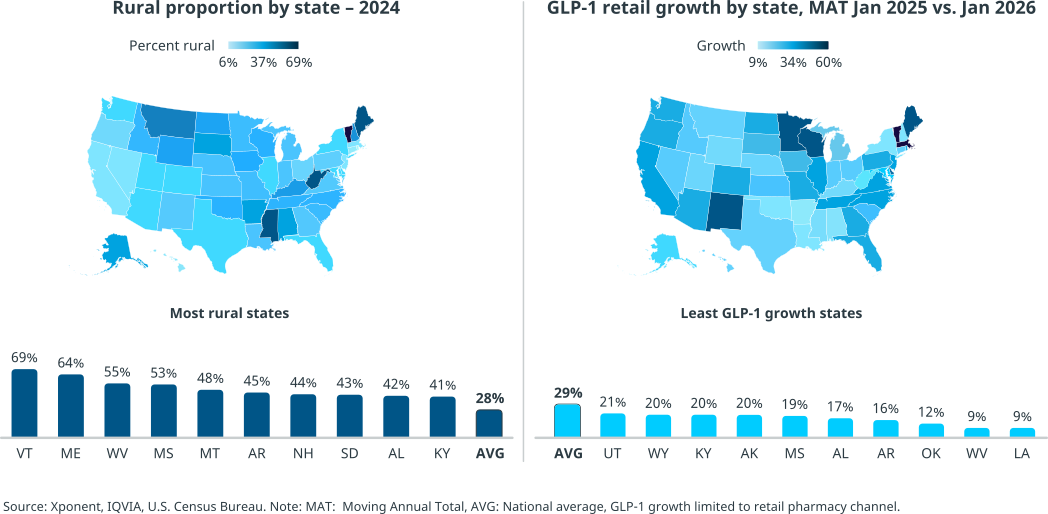
GLP-1 growth is driven by a growing body of research demonstrating their effectiveness across multiple chronic conditions with a key role in prevention. This is particularly important in rural communities, where the most commonly treated conditions, including hypertension, diabetes, and hyperlipidemia, are major risk factors for adverse events such as stroke, heart attack, and chronic kidney disease, which these treatments can help prevent. Despite this alignment between need and potential benefit, access to GLP-1 therapies remains more limited in rural areas, reducing their impact as a preventive tool. Expanding access to these treatments represents an important opportunity to address upstream risk, improve long term outcomes, and reduce the burden of avoidable complications in rural populations. To improve gaps in access, further research should examine time to adoption, adherence rates, treatment escalation when clinically appropriate, comorbidity burden, and the underlying drivers of these patterns to inform more targeted and effective interventions.
Examining prescriptions per patient also reveals meaningful differences in treatment intensity between rural and metro areas. Across several chronic conditions, including diabetes, hypertension, and hyperlipidemia, the number of prescriptions per patient in rural areas is approximately 10% lower than metro areas.
Gaps in treatment intensity are even more pronounced in specialty therapeutic areas, highlighting the challenges rural patients face in accessing specialized care. Immunology prescriptions decline from 7.8 prescriptions per patient in metro areas to 6.6 in rural areas, a 15% decrease. Dermatology prescriptions are similarly affected, with rural patients receiving 23% fewer prescriptions per patient. The largest disparity is seen in HIV treatment, where rural patients average 5.6 prescriptions per patient compared to 8.2 in metropolitan areas, a 31% gap.
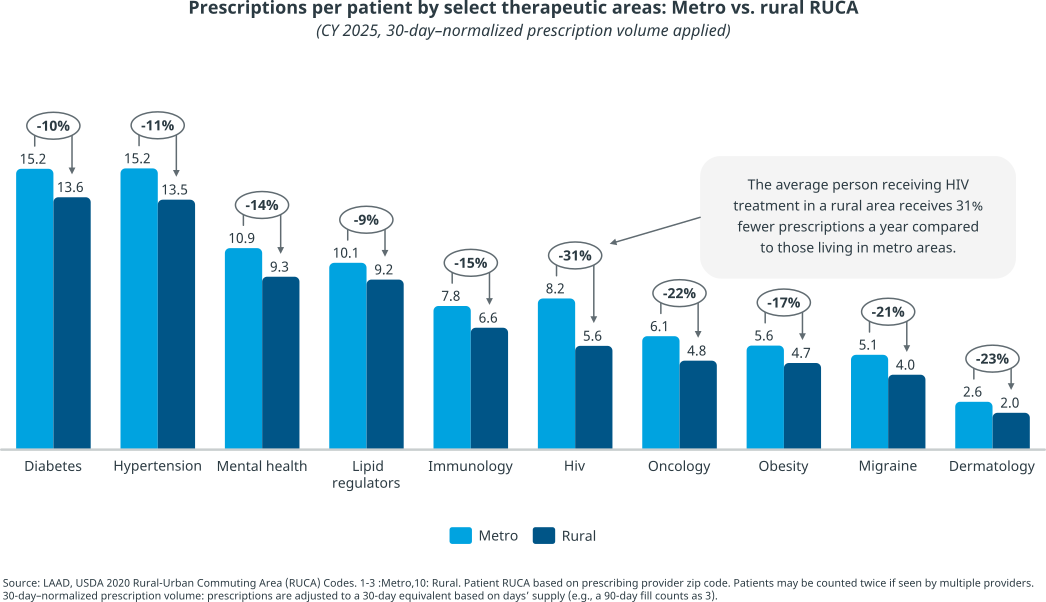
These specialty therapeutic area disparities reflect structural barriers in rural healthcare delivery that leads to limited access for patients6,7. Specialty care often requires referrals to providers located in distant metropolitan areas. Travel distances create access barriers, particularly for patients with limited transportation options or inflexible work schedules. The shortage of specialty providers in rural areas means fewer prescribers are available to initiate and monitor specialty medications. Technological gaps, including inconsistent broadband coverage and physician practices’ ability to afford and use advanced EHR systems, also limit the reach and effectiveness of telehealth, even as virtual care emerges as a critical tool for expanding access8.
The changing payer landscape presents another serious hurdle. Rural provider revenue depends heavily on public payers, particularly Medicare Part D and Medicaid, increasing exposure to financial instability as policies shift9. The changing payer landscape, including Medicaid cuts, will lead to limited access if patients transition to paying for treatment out-of-pocket.
The share of branded diabetes prescriptions in 2025, a proxy for access to new evidenced-based treatment, appears similar across geographies, at 62% in metro areas and 60% in rural areas. However, a closer look at the branded proportion by payer type in rural areas highlights stark differences. Patients covered by Medicaid have the same proportion of branded prescriptions as those that live in metropolitan areas. On the other side of the spectrum, only 40% of cash prescriptions were for branded prescriptions, a rate that was 35% less than patients using Medicaid. As Medicaid work requirements under the OBBB are implemented, some patients may lose coverage, increasing the likelihood of shifting to cash pay or forgoing treatment altogether due to cost.
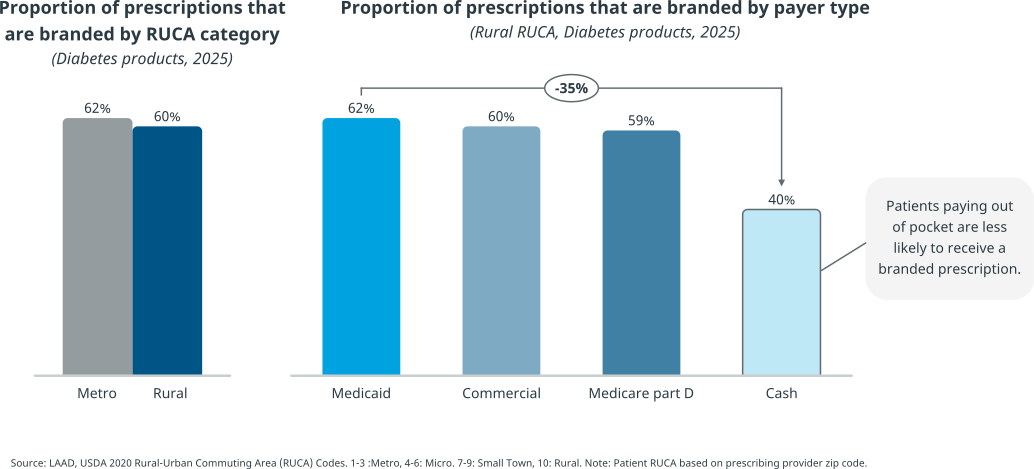
The economic implications extend beyond individual patient outcomes. Rural healthcare facilities, including hospitals, outpatient centers, and pharmacies, rely heavily on Medicaid funding as a significant revenue source10. Reductions in covered lives translate directly to revenue loss, threatening the sustainability of these essential access points. The loss of even a single hospital or pharmacy in a rural area can create healthcare shortages where residents must travel significant distances for basic care. Healthcare providers also represent major employers in many rural communities. Hospital closures not only eliminate access to medical services but also remove stable and well-paying jobs that anchor local economies. The ripple effects include reduced tax revenue for counties, diminished economic activity, and out-migration of skilled workers, creating downward economic spirals that prove difficult to reverse10.
Rural communities are not a homogeneous population facing a single challenge. They span vast regions of the United States with diverse demographics and disease burdens. While common barriers to care exist, local context shapes how those barriers appear, making one-size-fits-all solutions ineffective and difficult to sustain.
Amid all the challenges lie real opportunities for improvement and transformation. Whether this opportunity translates to tangible improvements will depend on sustained commitment from multiple stakeholders: policymakers ensuring funding reaches communities with greatest need, healthcare providers embracing new delivery models, life sciences companies designing inclusive market access strategies, and data organizations building surveillance systems enabling evidence-driven decision making.
Given the scale and complexity of rural health issues, progress requires a practical playbook: one that aligns policy, data, and innovation across stakeholders and translates investment into tangible outcomes. The data, the policy context, and the investment resources are all aligned. The question is whether stakeholders will seize this moment to bend the curve toward health equity for rural America. To meet the moment stakeholders should:
References:

This blog is the first of a new series providing evidence-driven insights into the factors shaping health outcomes, access, and quality in rural communities in the U.S. The series will explore how stakeholders across the health care ecosystem including providers, payers, life sciences companies, and governmental agencies can advance change to improve rural health. Future blogs in this series will analyze care delivery, patient dynamics, and disease burden along with strategies for sustainable improvement. Follow the series for applied analyses that connect rural landscape metrics, provider and patient dynamics, and therapeutic outcomes to measurable strategies that improve access.
Gain high value access and increase the profitability of your brands
Improve healthcare for all with actionable insights and predictive analytics