This blog is part of the ongoing series, A Brave New World: Finding Life Sciences Success in Modern Markets
Medical Affairs leaders often need to make decisions before the full impact of an engagement strategy is visible. Execution needs to happen almost immediately and outcomes surface much later, but the decisions that shape the strategy are made in the gap between the two. Leaders still need to determine whether the strategy is moving a medical objective forward, how confidently the available signals can be interpreted, and whether to continue, refine, or redirect the work. Getting that judgment right helps keep budget, field capacity, and scientific priorities pointed at the medical objective while giving Medical Affairs a clearer basis for explaining its decisions and use of resources.
These decisions are becoming more difficult as stakeholders access and evaluate scientific information in new ways, including through AI-enabled tools. As more scientific engagement occurs outside structured medical interactions, less of it is visible through the channels and data Medical Affairs traditionally monitors. Medical Affairs therefore needs stronger, more connected measures to interpret emerging impact and support decisions with confidence. At the same time, execution measures, stakeholder insights, and longer-term outcomes often remain separated, leaving leaders to reconcile an incomplete picture while decisions are already in motion. Bringing those disparate inputs into a shared context reveals where movement is developing, where uncertainty remains, and what the organization needs to adjust.
Decision-led measurement creates a basis for acting while the available information is still developing. It allows teams to test an emerging interpretation and make proportionate adjustments while execution can still be influenced, without implying perfect attribution or encouraging constant intervention.
Activity and outcomes are both necessary, yet neither is sufficient
Activity metrics establish whether the organization executed the plan, reached the intended stakeholders, and delivered the engagement strategy as designed. Without confirming that the plan was executed as designed, it is difficult to know whether a strategy needs to change or whether execution needs to improve.
Activity can be misleading when it is treated as impact. Interaction counts, content use, channel engagement metrics, publications produced, and field engagement describe what happened, but not whether the work advanced the medical objective.
Outcomes data show changes that matter to patients and the healthcare ecosystem, including changes in diagnosis, testing, treatment timing, clinical decision-making, and care patterns, where those measures fit the objective. Yet many outcomes take longer to emerge than the timeframe in which Medical Affairs decisions need to be made. Waiting for them can strengthen a retrospective assessment while offering limited guidance for work in progress.
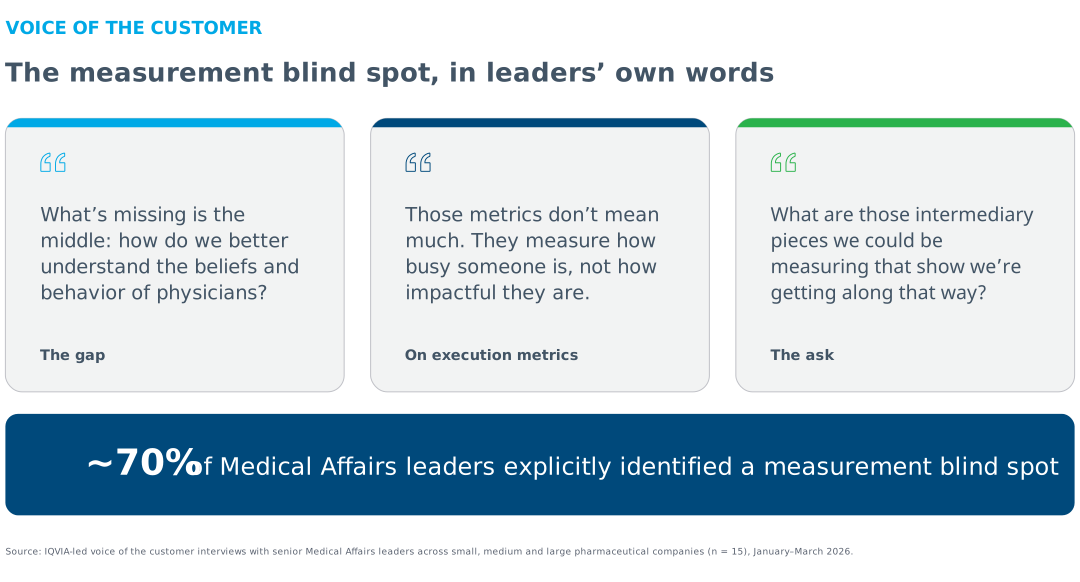
The more difficult judgment lies between activity and outcomes: determining whether engagement is associated with changes in awareness, perception, scientific understanding, confidence, discussion, or behavior relevant to the medical objective. Some of these changes may precede longer-term outcomes; others may reflect the immediate objectives of scientific engagement. Their meaning becomes clearer when related evidence is interpreted together in relation to that objective.
The gap is usable, connected data
In practice, the constraint is often whether the organization can bring the relevant data from a fragmented landscape into a form that can be consistently captured, interpreted, and connected to the decision at hand. Those data span engagement, scientific, and healthcare sources, often with different definitions, levels of completeness, owners, and analytical requirements. Credible impact assessment therefore depends on consistent capture of the activity and scientific exchange relevant to the objective. Closing that gap requires connecting the relevant data, analytical expertise, and decision rights rather than addressing each element separately.
Adding metrics first often makes the problem harder by multiplying disconnected views. A more useful starting point is the decision at hand: which changes would inform it, when those changes could become visible, and whether they can be observed consistently. Starting with the decision clarifies what data are relevant and where gaps could limit interpretation.
Ownership shapes whether data issues are resolved, interpretations are tested, and findings reach a decision. The accountable role will vary by organization, but the handoffs and decision rights need to be clear enough for findings to be evaluated, challenged, and carried into a decision.
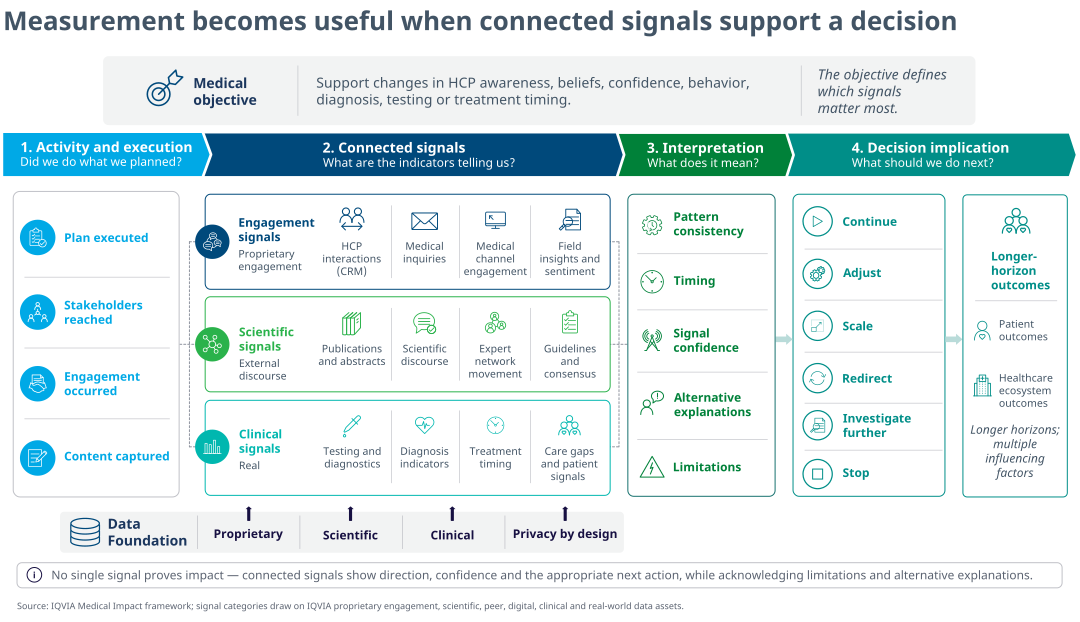
Impact becomes visible through connected signals
Different sources illuminate different aspects of movement toward a medical objective. Field medical insights surface shifts in stakeholder understanding, confidence, and clinical decision-making. Publications and scientific discourse show how concepts are being adopted and debated across the healthcare community. Digital engagement can show where attention is moving, while clinical data can reveal later changes relevant to the objective.
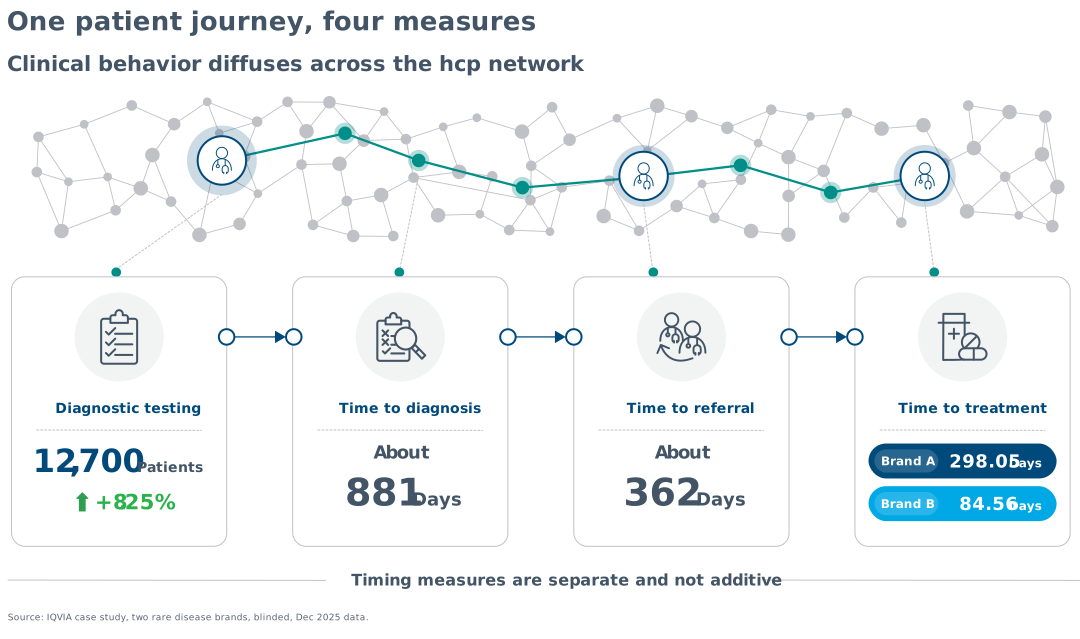
Because each source provides only part of the picture, movement in one measure may reflect the intended change, a broader market shift, inconsistent data capture, or normal variation. Greater confidence comes when changes in stakeholder understanding, scientific dialogue, engagement patterns, and clinical behavior tell a consistent story. Triangulation strengthens judgment by showing where patterns converge, conflict, or remain uncertain; it does not create perfect attribution.
Analytics clarify where different sources converge and where the interpretation remains limited by timing, coverage, or data quality. The strength of that interpretation can then guide the scale of the response.
Timing and confidence determine when data becomes useful
The meaning of a metric depends partly on when it appears and when it is assessed. Execution data are often available soon after an engagement and can confirm whether scientific exchange occurred as intended. Shifts in stakeholder awareness, scientific understanding, perception, confidence in applying new scientific information, or clinical decision-making may emerge later and at different rates. Changes in clinical behavior, patient outcomes, or healthcare ecosystem outcomes often require a longer observational period and may vary significantly by disease area, medical objective, and data availability. Where relevant benchmarks or analogous examples exist, they inform expectations without replacing judgment about the medical context.
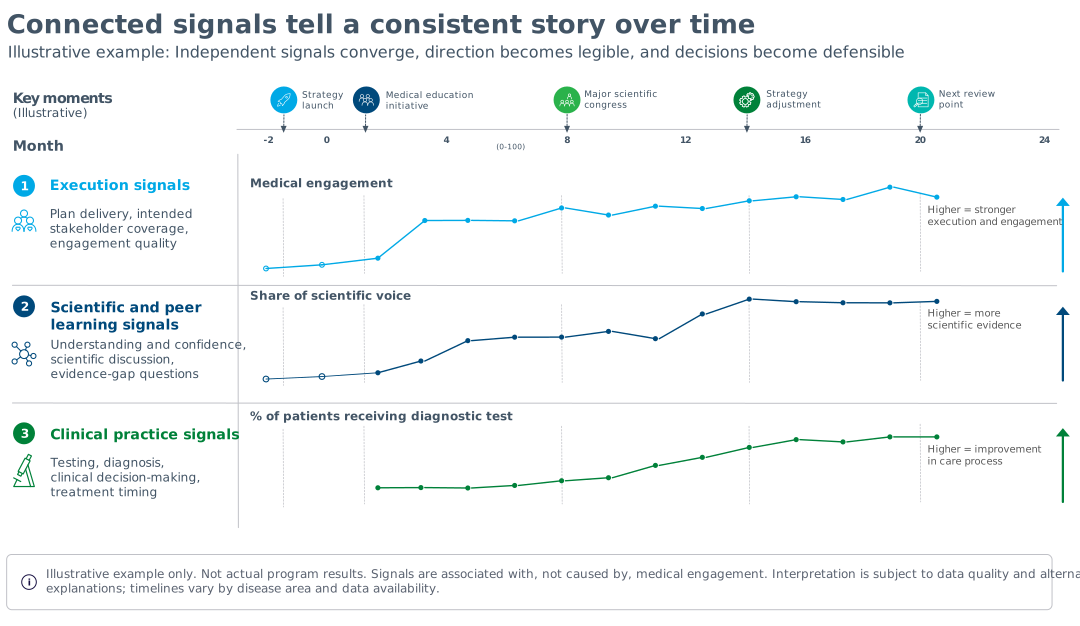
Applying the same timeline to every measure can create unrealistic expectations. A lack of early change in diagnosis or treatment patterns reveals little about whether a medical strategy is progressing as intended. Similarly, an initial increase in stakeholder engagement or scientific discussion does not necessarily indicate meaningful or lasting impact. Each measure becomes informative on a different timetable.
Reading the information in sequence helps prevent early indicators from carrying more weight than they support. Execution measures establish delivery, intermediate indicators show whether relevant understanding or clinical behavior is beginning to shift, and longer-horizon measures show whether that direction appears in outcomes suited to the medical objective. Together, they create a structured basis for refining the strategy as the available information develops.
Making measurement an operating discipline
Making measurement operational requires a repeatable process for reviewing signals, interpreting their meaning, and carrying that interpretation into decisions. Medical Affairs teams need a regular forum to interpret emerging patterns against the medical objective and decide whether the engagement strategy should continue, be refined, or change direction. Reviews may consider shifts in scientific understanding, stakeholder confidence, evidence gaps, or clinical practice. Named owners, clear decision rights, and timely reporting ensure that findings reach leaders while the strategy can still be influenced.
Not all measures should be reviewed on the same cadence. During a launch, congress, or major data readout, teams may want to review stakeholder questions, scientific discussion, medical information inquiries, and field insights more frequently. Measures such as testing patterns, diagnosis rates, treatment adoption, or patient outcomes may require less frequent review because meaningful change often develops over a longer period.
This approach also helps teams avoid drawing the wrong conclusions. If expected changes are not observed, leaders need to determine whether the issue stems from the strategy itself, execution challenges, data limitations, or simply insufficient time for impact to emerge. Without that context, a sound strategy may be redirected too early, or work that is no longer advancing the objective may continue.
Executive communication should preserve this logic rather than reduce impact to a collection of metrics. An executive narrative should begin with the medical objective, describe what changed and why it matters, identify the information supporting that interpretation, and outline the recommended action. Material limitations and unresolved questions should remain visible so leaders can judge the strength of the recommendation.
Decision-led measurement connects interpretation to action
Taken together, these practices give Medical Affairs a more disciplined basis for judging whether an engagement strategy is advancing the medical objective and determining how the strategy should evolve. Organizations can start narrow: pick one medical objective, identify the few measures that would indicate meaningful movement, and establish when each could reasonably inform a decision.
As teams review those findings and apply them to execution, measurement becomes part of how the strategy is managed. The immediate opportunity is to connect the data, analytical capabilities, and decision processes already in place so emerging patterns can inform action while leaders still have the opportunity to adjust strategy.
To explore how IQVIA can support a more connected approach to medical impact measurement, contact your IQVIA representative.