This blog is part of an ongoing series, A Brave New World: Finding Life Sciences Success in Modern Markets.
Data and analytics are now central to expert engagement in Medical Affairs, as familiarity and visibility alone no longer provide a reliable signal of relevance. In today’s fragmented landscape, maintaining alignment on which key thought leaders are most relevant, and when, has become significantly more challenging. Many teams still rely on approaches that do not carry context forward, leading to disconnected engagement strategies across teams.
As a result, expert context is repeatedly recreated rather than carried forward, limiting continuity from one decision to the next.
The issue is not a lack of data, but rather effectively linking information to demonstrate relevance, timeliness, and identification of key influencers. Without that connection, engagement defaults to static lists that miss key contributors and arrive too late to influence decisions. Gaining a competitive advantage, now more than ever, depends on understanding how influence and decisions develop within networks, and on channeling those insights efficiently into a collective foundation of expertise. This gives teams a more consistent way to stay aligned on who matters, when, and in what role across functions and time.
From identification to intelligence
The focus of expert engagement has moved from building a comprehensive list of experts to connecting the right people with each specific engagement need. Experts differ in scientific depth, clinical perspective, and reach, so planning now defines clear personas tied to a specific objective, topic, and moment. Those role definitions need to persist and evolve over time, rather than resetting with each initiative or team. Historically, engagement began with identification: find the experts who publish, present, or lead trials, as well as providers seeing and treating high patient volumes, then build plans around them, document activity, and repeat. Those signals still matter, but they do not explain how new evidence moves into practice and how treatment paradigms vary across physician networks and communities.
Analytics brings that into view by combining scientific contribution, real-world practice, and peer connectivity to clarify what each expert is positioned to do. When the role is clear, the objective, interaction, and measure of success align naturally, creating a continuous model, where each interaction builds on prior context rather than starting from scratch.
Often in therapeutic fields, key publications and major conference presentations highlight a few academic leaders. However, prescribing habits and local society involvement reveal clinicians who turn protocols into everyday routines within community practice. Bridging these perspectives ensures scientific knowledge is more effectively translated into practical implementation, leading to better consistency in patient care. This approach fosters alignment between evidence creation and real-world application, moving beyond reliance on only high-profile experts.
Trust travels through peers
Adoption of new innovations or treatment paradigms rarely move in a straight line. Engagement strategy improves when teams are explicit about how information moves through peer relationships before plans are locked. A network view provides that clarity and creates a consistent way to align roles to how evidence is understood, tested, and applied.
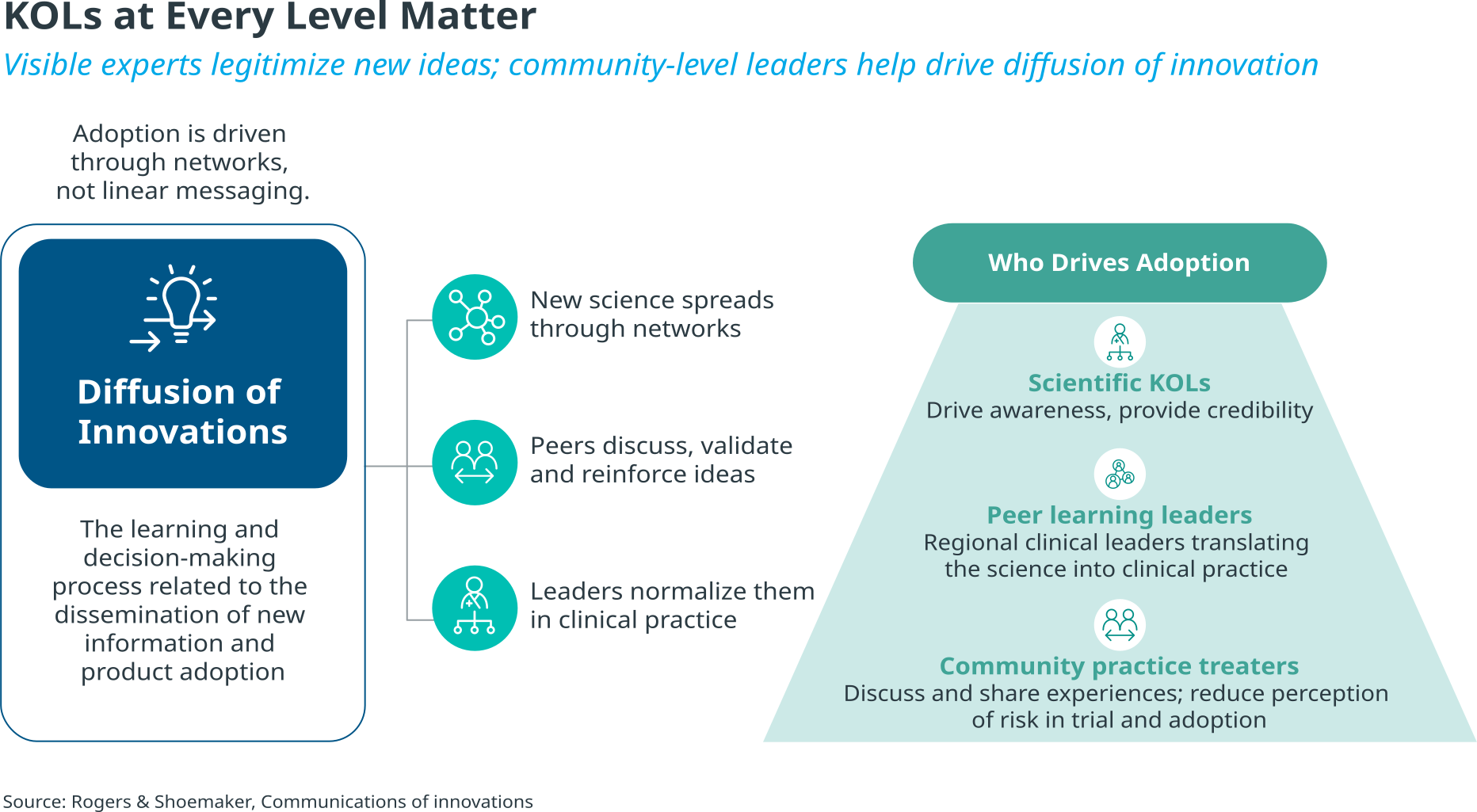
When network analysis makes peer dynamics visible, it changes how expert engagement is understood. It shows how clinicians interpret data, test decisions, and carry new evidence into practice through interactions with peers.
This view brings an important distinction into focus. Some experts are widely visible, while others operate within tightly connected groups that shape how evidence is understood and applied day to day. These “hidden leaders” combine scientific understanding with practical experience, guiding decisions through trusted relationships rather than formal channels, often determining whether and how new evidence takes hold in practice.
Focusing only on visible experts creates only a partial view of the market.
Integrating network context with traditional data sources provides a more comprehensive perspective by revealing not only participant activity but also the dynamics of information flow and points where decisions are reinforced. National experts may define the scientific narrative, but local peers carry that narrative into practice and determine how consistently it takes hold.
Planning now shifts to an earlier starting point. Instead of building around a fixed set of visible experts, teams can align to the pathways through which decisions and behaviors flow. When those pathways are clear, planning can begin with a more realistic understanding of how decisions form and spread.
Why networks matter: A network lens makes informal influence visible
A network lens makes it easier to see how information and behavior move through professional relationships and where decisions are reinforced. It shows which peers clinicians turn to for context and validation. When this context is captured and reused, it strengthens subsequent engagement decisions rather than requiring teams to rediscover the same patterns. In many settings, a small number of connectors link academic centers and community care. When those connections are overlooked, engagement leans too heavily on visible experts and misses more direct paths into routine practice.
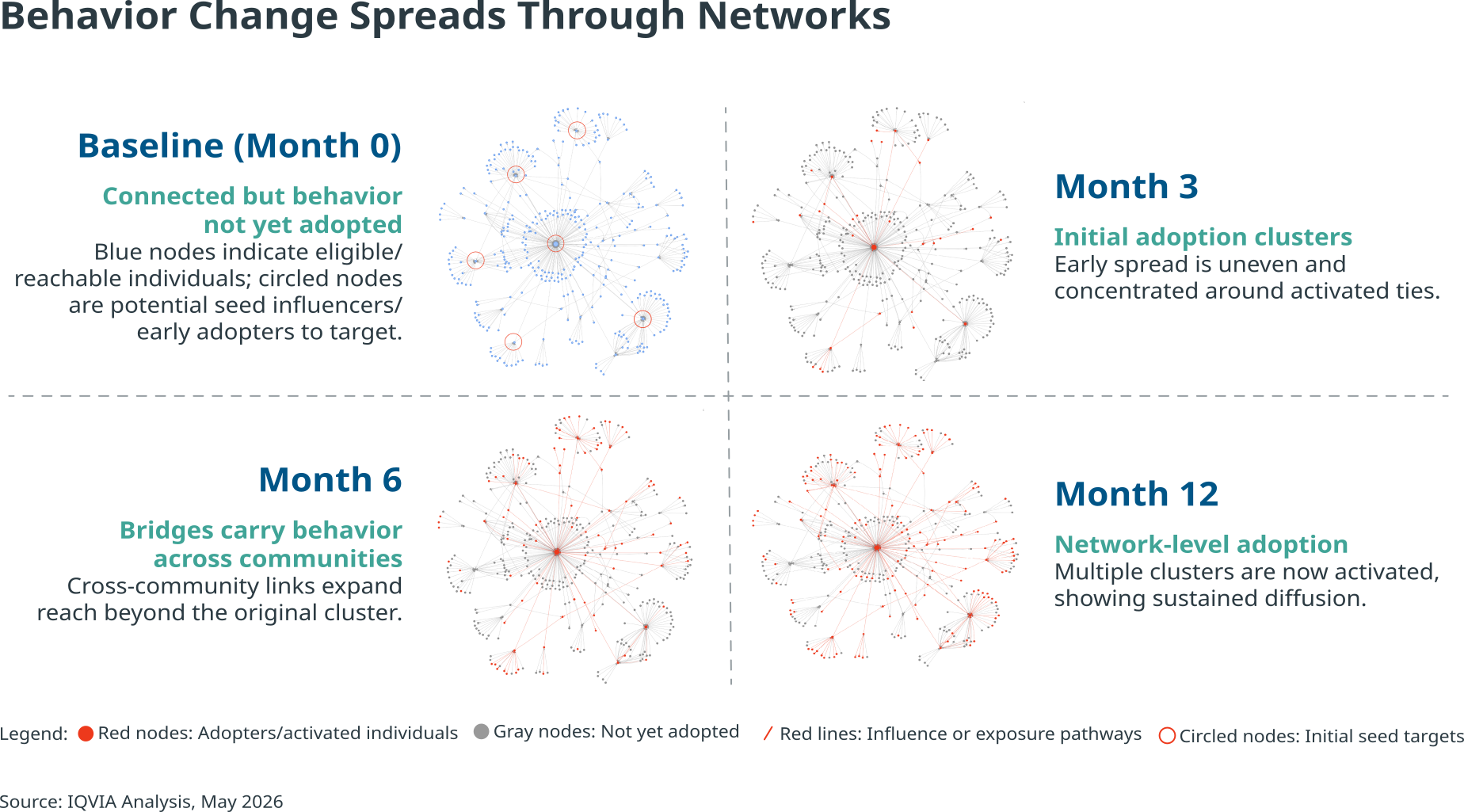
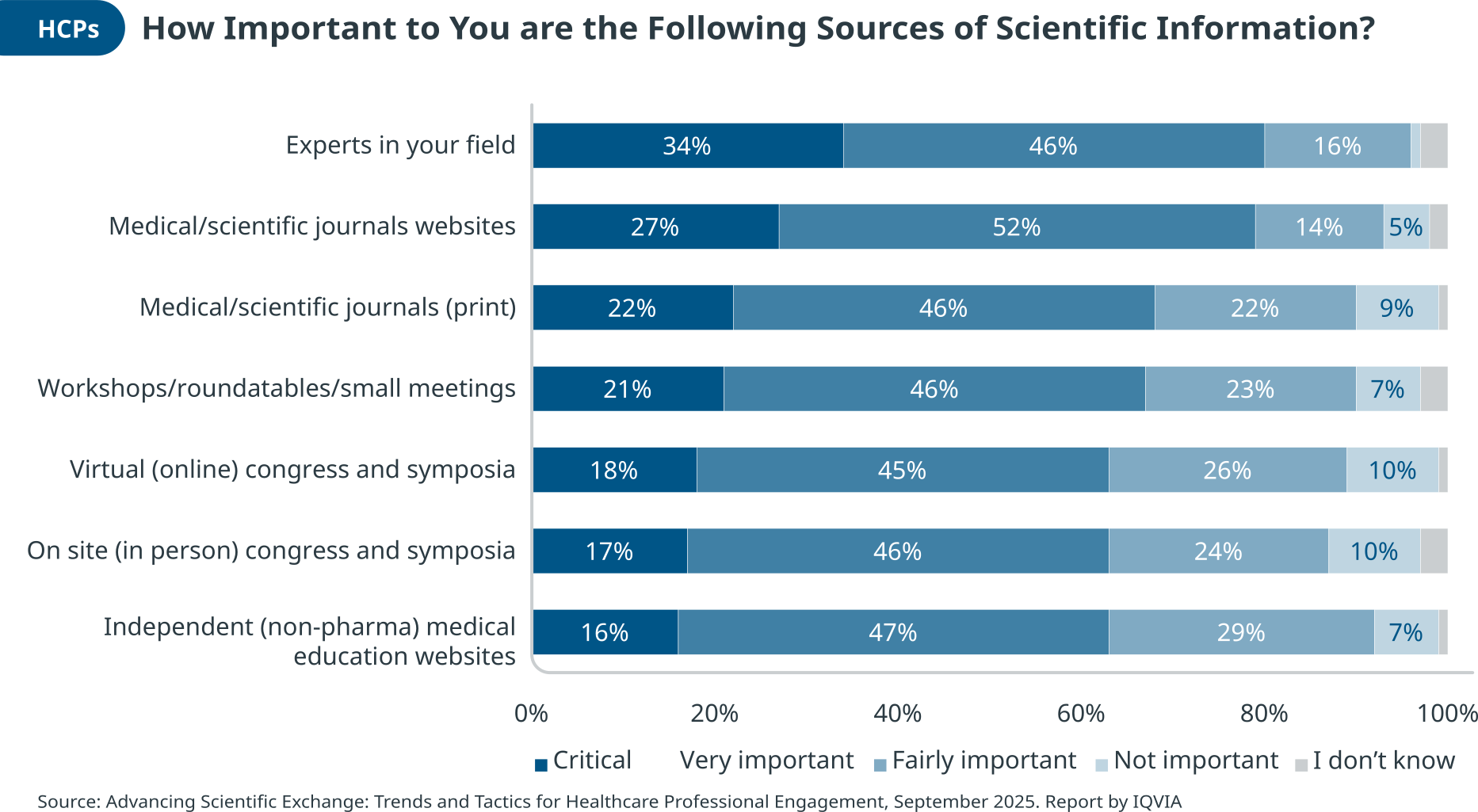
Across surveys in literature and industry research, clinicians often cite peers among their most trusted sources for interpreting new scientific information. Mapping peer connectors and influence clusters by region, site type, or practice setting gives teams clearer starting points and sharper prioritization that fit the objective.
Turning data into decisions starts at the planning stage
The value of analytics is highest before plans are locked, when personas, topics, and priorities are still being set. At that stage, clarity on where attention is shifting, where unmet evidence needs are emerging, and which experts are best positioned to shape understanding enables teams to focus effort where it matters most.
As evidence evolves, roles shift. Early engagement centers on shaping the science, while later engagement depends on those who apply it into practice. Maintaining continuity in how those roles evolve allows teams to adjust engagement strategies without rebuilding their view of the landscape each time. Such a shift makes precision essential.
Why this shift is urgent: precision matters more than volume
Precision is now a practical requirement as the field becomes more fragmented and the cost of misalignment rises. Engagement activity is easy to measure, but impact depends on fit. The right role, aligned to the right objective, topic, and timing, produces more consistent outcomes than broader outreach. When plans reflect fit, teams spend less time reworking outreach and more time addressing the barriers that slow adoption. The shift is not toward more activity, but toward enhanced alignment.
Legacy planning often relies on local knowledge, manual lists, and fragmented tracking, which gives teams a clearer view of where to focus and how to structure engagement. Evidence-based prioritization strengthens judgment with shared inputs and clear rationale, supporting coordination across functions that engage the same experts from evidence generation through launch and beyond.
Evidence builds trust, and trust enables scale
Building on that foundation, evidence-grounded decisions keep outreach closer to experts’ current interests and ensure teams act on an accurate view of experts rather than competing interpretations keeping engagement aligned as priorities shift. That stronger foundation makes engagement more effective in supporting learning and translation.
Value comes from connecting analytics to execution. When identification, profiling, planning, and engagement operate from a shared and continuously evolving understanding of experts and their roles, each interaction builds on prior context. Insight capture then reflects what changed, not just what occurred, enabling meaningful decisions to improve over time.
Key questions for Medical Affairs leaders
As data sources expand and expectations rise, it is important to address several strategic considerations during planning cycles:
- Definition of influence by therapeutic area and topic, including differences across academic centers and community settings
- Approach for separating visibility from relevance and global leaders from local peer connectors
- Signal set required for decision-grade prioritization, including refresh frequency as evidence evolves
- Approach for aligning expert roles across the adoption lifecycle, including which personas matter in each stage
The path forward
Modern expert engagement still depends on scientific judgment, but stronger data foundations determine how consistently and quickly that judgement can be applied. When analytics connect scientific contribution, clinical context, and peer relationships to specific decisions, engagement aligns more closely to how evidence translates into practice. Networks make that movement visible and allow teams to act on it with greater precision. The shift is toward a more continuous model, where understanding builds over time and each decision draws on a shared, evolving view of experts and their roles.
The next piece in this series focuses on execution, specifically the gap between insight and action. In volatile environments, the real constraint is determined less by access to data and more by how quickly organizations can act before insights lose relevance. This challenge is amplified when teams are not working from a shared, continuously evolving understanding of experts and their roles.
Please contact your IQVIA representative for more information.