This blog is part of an ongoing series, A Brave New World: Finding Life Sciences Success in Modern Markets.
In today’s rapidly evolving life sciences landscape, Medical Affairs is under real pressure to change how it engages with healthcare professionals or risk falling behind a market that now demands faster, more coordinated, and more measurable scientific engagement. Scientific complexity is increasing, therapeutic areas are expanding, and healthcare professionals (HCPs) expect interactions that are timely, relevant, and grounded in context. Meeting those expectations requires more than incremental fixes or one-off technology upgrades. It calls for a deliberate shift in how expert engagement is planned, executed, and measured across the organization.
Many organizations are still operating within engagement models that were never designed for today’s level of complexity. Teams operate in parallel using approaches that may “work well enough” in isolation, but break down when viewed across the organization. The lack of shared workflows and visibility creates organizational friction, resulting in slower decisions and weaker scientific continuity, making it harder to measure what actually changed as a result of the engagement. Over time, these disconnects limit Medical Affairs’ ability to coordinate effectively and demonstrate meaningful impact.
Enter modernization. What exactly is it? In medical engagement, modernization is not about shiny technology; rather, it is about creating a connected model where workflows are standardized, data are unified, and teams can personalize scientific exchange with speed and precision. This is not a “technology upgrade” for its own sake; rather, it represents a shift from fragmented execution and retrospective reporting to transparent, evidence-led engagement that scales across teams and channels.
The challenge? Despite the clear need to modernize, most teams still feel the drag of slow, inconsistent execution, creating gaps that make it harder to coordinate scientific exchange at the speed that today’s environment demands. The issue is not intent; rather, the pressures reshaping Medical Affairs are now outpacing the systems supporting it. Medical Affairs teams cannot deliver the optimal level of precision, transparency, or strategic agility required today without a modern, connected engagement model. And the pressures are only getting stronger.
The tipping point for Medical Engagement
Medical Affairs has reached a decisive tipping point as external expectations now exceed the capabilities of long-standing engagement models. Scientific information is now disseminated across more channels, more quickly, and to more diverse stakeholders than ever before, creating an environment where even small inconsistencies can erode trust or slow decision-making. At the same time, challenging launch environments, regulatory scrutiny, and healthcare system pressures are demanding new levels of coordination and clarity. These dynamics are reshaping what “good” looks like and revealing structural gaps that legacy engagement approaches were not built to address. This inflection point marks a transition from incremental improvements to the need for comprehensive modernization.
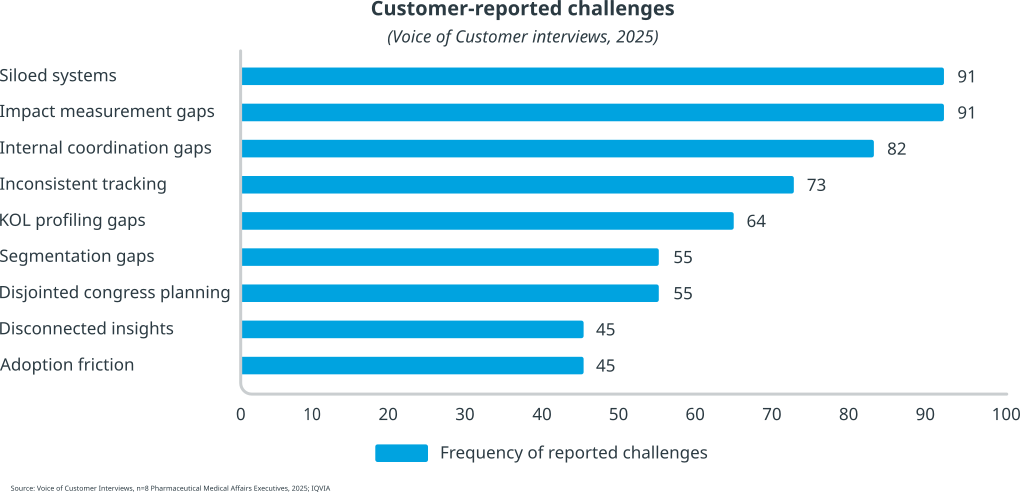
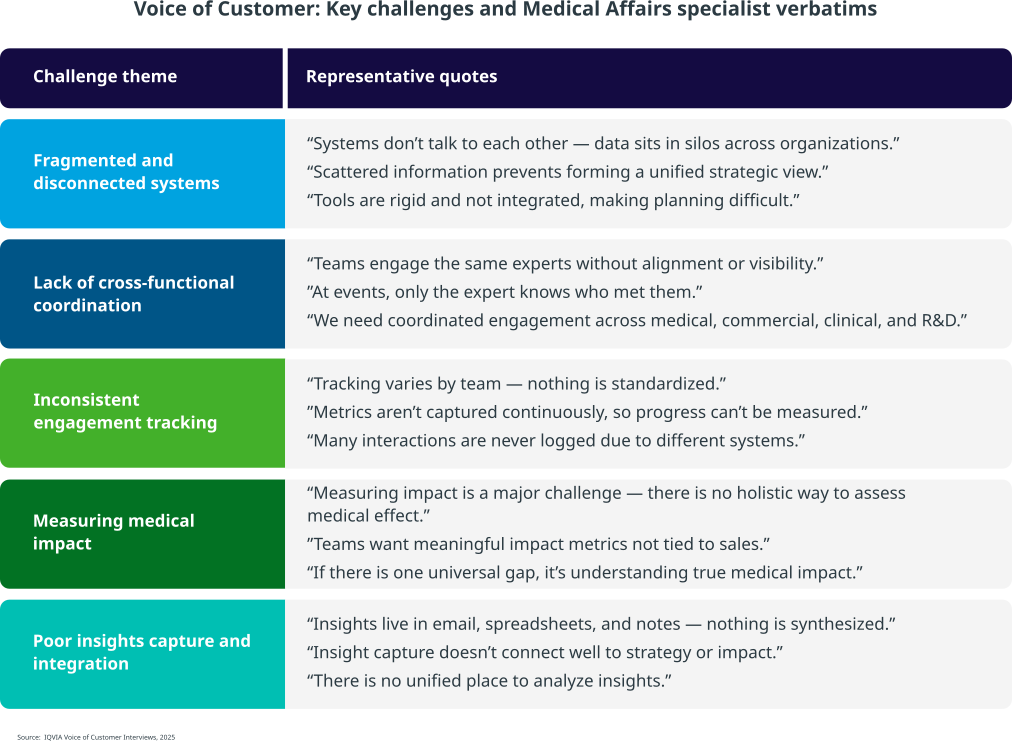
This widening gap between market requirements and organizational readiness is where the real breakdowns begin. Across recent Voice of Customer (VoC) discussions, leaders consistently described a set of pressures that signal just how strained today’s engagement models have become, highlighting the urgent need for modernization.
At the center of this urgency is a simple truth: modernization is not just about improving operations; it is about improving patient and healthcare ecosystem outcomes. When medical teams can access connected systems and analytics-ready insights, they can deliver clearer, faster, and more relevant scientific information to the clinicians who rely on it. That flow of timely, high-quality insight strengthens decision-making, supports evidence-based practice, and ultimately elevates the patient experience. But reaching this level of consistency and impact requires engagement models that can keep pace with today’s scientific environment—something current approaches too often struggle to support.
Current gaps in Expert Engagement: What’s broken today?
Despite best efforts, many Medical Affairs organizations remain constrained by outdated operating models. Disconnected engagement strategies, scattered data sources, and siloed operations limit the agility, transparency, and measurable impact that modern markets demand.
- Fragmented planning and siloed operations
When engagement planning and operations are fragmented across teams, regions, and systems, organizations face inconsistent documentation, slower execution, and elevated compliance risk. Medical teams spend unnecessary time searching for information, recreating context, or manually stitching together engagement plans, reducing the time available for scientific exchange.
- Scattered data with no unified engagement history
Information about stakeholder interactions often lives across CRMs, profiling tools, spreadsheets, email archives, and event systems. The result is limited visibility into who engaged whom, what was discussed, what commitments were made, and what should happen next. Without a unified view, teams struggle to coordinate engagement, avoid duplication, and sustain a coherent scientific narrative.
- Inconsistent insight capture and follow-up
Even when engagement is recorded, insight capture is often unstructured and inconsistent—making it hard to aggregate learnings, surface trends, and drive cross-functional action. Organizations lose the ability to quickly answer basic questions: What are we hearing? From whom? How is sentiment changing? Where are the most urgent unmet needs? This inconsistency also makes it harder to detect early signals of non-compliance, underperformance, or emerging opportunities.
- Measurement gaps that limit value demonstration
Many organizations still cannot answer the questions that matter most:
- Did this engagement make a difference?
- What changed as a result—knowledge, confidence, behavior, or practice?
- Where should we invest more (or less) next quarter?
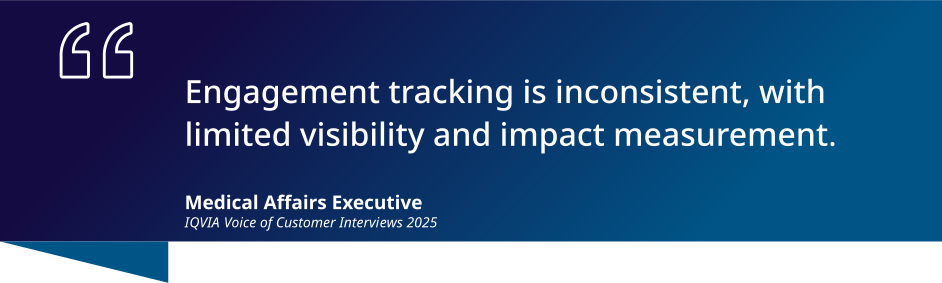
Without standardized KPIs and real-time visibility, leaders cannot course-correct quickly, benchmark across therapeutic areas, or communicate medical value with confidence. Many organizations report this reality: demonstrating meaningful impact remains a major challenge in digital engagement, and many organizations do not routinely measure impact on clinical practice.
The case for standardization and a data-driven strategy
The solution to these challenges is not more tools; rather, it is a standardized, data-driven engagement model that aligns people, process, and technology around clear goals and consistent measurement. Standardization is not about stifling flexibility, but about establishing the reliable foundation for repeatable, compliant execution across teams and channels. When implemented effectively, standardization strengthens the quality and consistency of scientific exchange, enhances engagement with KOLs by ensuring continuity and relevance, and improves overall company perception by presenting a unified, coordinated approach to expert engagement. Combined with robust analytics and clear performance metrics, standardized processes enable Medical Affairs teams to operate with greater precision, credibility, and impact.
Standardize what, specifically?
High-performing teams focus on a few high-impact standards that unlock outsized value:
- Common definitions: stakeholder tiers, engagement types, channel definitions, insight taxonomy
- Minimum capture requirements: required fields for topic, intent, key takeaways, follow-up, and materials
- Auditable workflow steps: nominations, approvals, documentation, and post-engagement follow-up
- Core KPIs: a balanced set spanning activity, perception/knowledge shift, and outcome/behavior proxies
Why standardization matters for compliance and impact measurement
Regulatory expectations increasingly require rigorous, consistent documentation. Standardized workflows ensure every interaction is captured consistently and traceably, enabling organizations to meet reporting requirements with confidence and reduce “audit scramble.” Just as importantly, uniform data definitions and processes make it possible to compare performance across teams, identify best practices at scale, and measure impact in a way leadership can trust.
Accelerating strategy through connected data
With centralized, reliable data, Medical Affairs can finally shift from reactive execution to strategic action—seeing what is working, what is not, and where to focus next. Standardized data unlocks meaningful analytics and AI support, helping teams prioritize stakeholders, recommend next best actions, and spot emerging themes early enough to act on them.
When a new expert-engagement program launches across regions, this foundation gives leaders real-time visibility into engagement quality, insight volume, follow-up completion, and early indicators of knowledge or confidence shifts, allowing them to refine targeting, content, and sequencing in weeks instead of quarters.
Modernization: An ecosystem shift
Medical Affairs increasingly relies on agencies and partners to extend execution across channels, events, and scientific communications, but that only works when everyone operates within the same standardized, auditable workflows. Partners must contribute to a unified engagement and insights view and demonstrate medical impact, not just activity, using shared definitions and dashboards. When work happens in separate tools or insights come back inconsistently, fragmentation returns, slowing learning loops, creating executive gaps, and elevating compliance risk.
And critically, the market is already moving. Companies recognize that continuing with legacy approaches is not sustainable, and many are beginning to modernize. The strongest partnerships run on connected data and repeatable processes so strategy reliably translates into measurable outcomes for HCPs and patients.
What customers want (themes from VoC insights)
Across customer discussions, the desired outcomes are consistent:
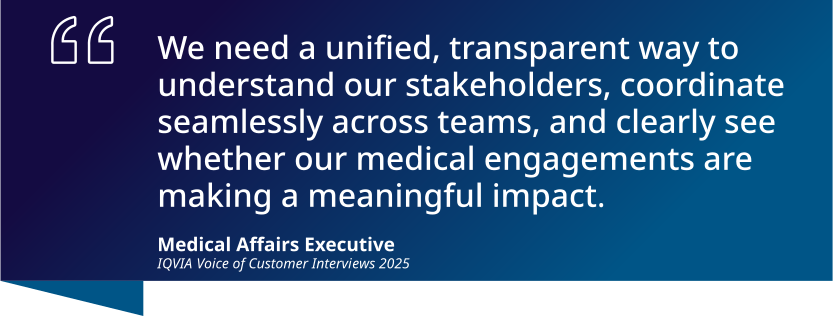
- Unified stakeholder profiles to eliminate blind spots and improve preparation
- Repeatable, auditable workflows that reduce manual effort and strengthen compliance
- Standardized metrics and transparent reporting to compare across teams and regions
- Impact dashboards that credibly answer, “Did this engagement matter?”
- AI-enabled productivity for summaries, insight organization, and finding relevant context faster
- Seamless cross-functional coordination across Medical, Commercial, and Compliance
- Innovation readiness to test, measure, and scale what works
The time to act is now
Modernization is no longer a future ambition. It is a strategic necessity for Medical Affairs to maintain scientific continuity, strengthen decision-making, and demonstrate credible impact. The urgency is real, as the gap between what Medical Affairs teams need and what legacy systems enable is widening. Organizations that modernize now will reduce compliance risk, unify their scientific narrative, and build the foundation for engagement models that are standardized, data-driven, and measurably impactful.
Modernization is not abstract. It is a practical imperative with real consequences: better coordination, faster learning loops, stronger scientific exchange, and a more credible ability to demonstrate medical value. In an environment where clinical differentiation and launch success depend on precision and trust, the choice is clear: modernize with intent or risk being left behind.
A subsequent installment in this blog series will examine best practices for modernization in greater depth, outlining the standardized processes, data foundations, and operational models that high-performing Medical Affairs organizations are adopting. A structured view of the elements will be provided, along with the elements required to enable consistent execution, connected insights, and credible impact measurement across the engagement ecosystem. Reach out to IQVIA to learn more about transforming medical engagement into a connected, data-driven engine for enabling stronger decisions and better outcomes.