This blog is part of an ongoing series, A Brave New World: Finding Life Sciences Success in Modern Markets.
Modern healthcare expert engagement is no longer constrained by access to data or clarity of strategy. Performance increasingly depends on whether knowledge shapes action quickly enough, even as conditions evolve.
This becomes most visible under pressure, when planning gives way to execution. In planning, teams are typically aligned, with priority experts identified and objectives clearly defined. During execution, that cohesion must hold as conditions change. When it holds, each action reinforces the original intent. When it breaks down, decisions fragment across teams, and actions reflect competing versions of the same plan.
The consequence is lag between insight and action, reducing the precision of engagement and causing it to reflect an earlier state rather than the current signal. As conditions shift, each delay compounds the next, widening the gap between what teams know and how they act, ultimately limiting effectiveness even when strategies are aligned.
The real problem: Decision latency
The challenge is coordinating execution before delay erodes the value of insight. In practice, insight has a short half-life, retaining value only if it shapes decisions in time.
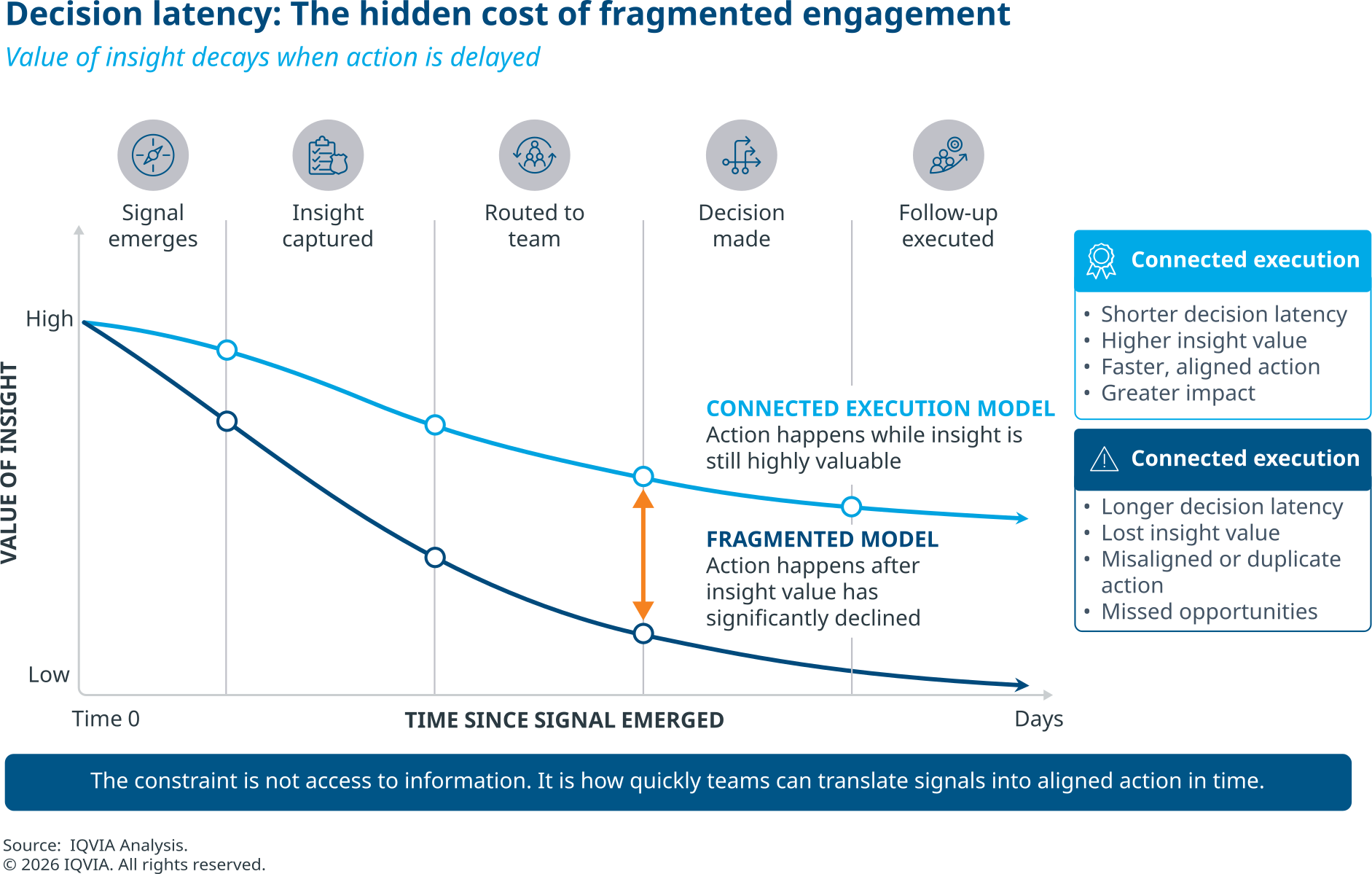
Decision latency often creates false confidence, when teams act on partial or outdated signals. Most organizations capture or summarize interactions but do not ensure that what is learned is applied consistently. Teams are left reconstructing context across touchpoints instead of acting on it, creating inefficiency and missed opportunities at the very moment when speed determines value.
Why congresses expose the gap
Congresses bring the execution gap into focus as teams must operate in conditions where decisions need to keep pace with rapidly evolving signals. For example, at a major congress, a medical science liaison (MSL) captures a key opinion leader’s (KOL) concern about subgroup interpretation following the emergence of new data. That insight is recorded but not shared in time. The next day, another team engages the same expert using outdated assumptions, while a third schedules follow-up aligned to the original plan. What should have been a coordinated response becomes duplicative and misaligned outreach.
As new data emerges, expert views can shift within hours, making the value of each interaction dependent on whether that change is effectively carried forward. When continuity breaks, teams act from different assumptions. That breakdown becomes visible when consecutive interactions with the same expert no longer builds from the same understanding, even during the congress, when physician connection is especially important.
Healthcare provider (HCP) engagement research underscores the importance of this environment, with three-quarters of HCPs considering in-person congress attendance a critical or very important channel for accessing scientific content and networking.
Differentiated engagement requires precision under pressure
If decision latency defines the constraint and congresses expose it, differentiation comes from what teams do in the moments that matter. Most organizations can identify priority experts and engagement goals, but the test is whether those priorities hold under pressure. Successful organizations:
- Make trade-offs explicit and usable in the moment: Clarity on priorities should not live in planning documents alone. Teams need clear guidance on whom to prioritize, what each interaction must achieve, and what follow-up is required, embedded into daily workflows. When trade-offs are visible and actionable at the point of engagement, teams can act from the same set of priorities.
- Keep priorities aligned to the moment, not the plan: As activity increases, priorities can drift when follow-up remains anchored to earlier objectives instead of adapting to what matters now. Maintaining precision depends on adjusting action as signals change.
- Ensure every interaction builds toward a shared outcome: Follow-up should not be a series of disconnected actions but should move decisions forward with clear intent. That requires coordinating across teams so that each next step carries forward what was already learned.
How performance depends on execution
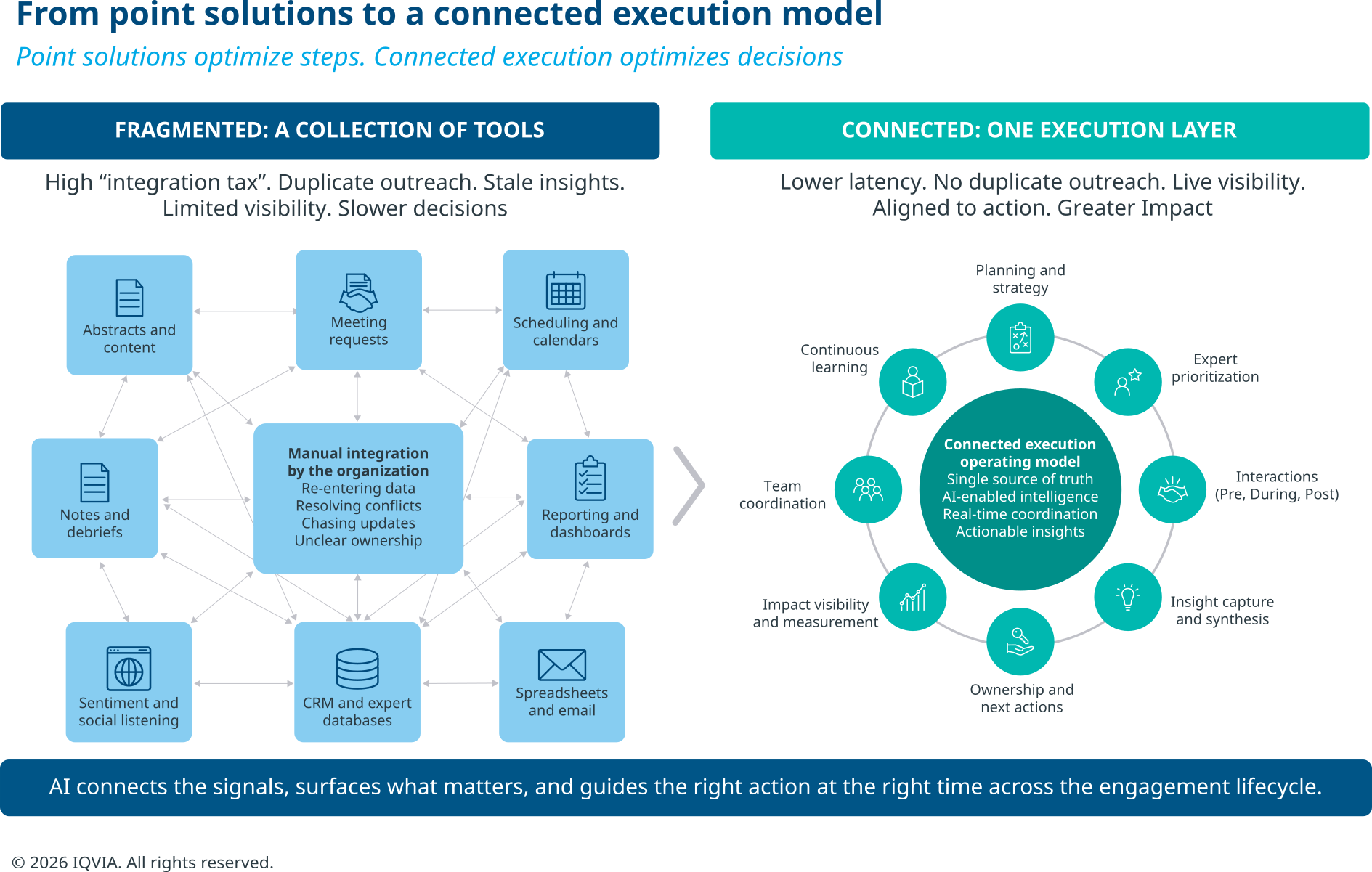
Performance depends on whether what is learned in one interaction carries forward across teams without delay or loss. This depends on systems that connect those moments in time so that decisions can persist as conditions change.
This is not achieved through incremental improvements to individual tools or isolated workflows. It requires systems that ensure decisions hold as execution unfolds. Without that foundation, execution continues to fragment even as more data becomes available. At stake is not incremental efficiency, but the ability to unlock tens of millions of dollars in value annually, which depends on whether insight shapes decisions while it still matters.
What good execution looks like in practice
Consider the following scenario. A concern emerges from a KOL at a major congress regarding subgroup interpretation of new data. That insight, captured by an MSL, is immediately shared and applied. Within hours, the next interaction adjusts, parallel engagements reflect the same signal, and follow-up shifts to where it matters most. Because teams are working from the same understanding, each step builds on what came before rather than resetting the discussion.
Engagement evolves with the discussion rather than remaining anchored to the original plan. This level of coordination is difficult to sustain through manual process alone. In high-velocity environments like congresses, no team can continuously track evolving signals, align priorities across functions, and adjust engagement in real time without system-level support. Execution, therefore, has to operate as a connected system, with AI supporting the continuity that manual coordination cannot sustain at scale.
AI reduces decision latency at the moment it matters
AI creates value when it reduces the lag between signal and action, allowing emerging insight to shape decisions while it is still relevant. It does this not by generating more information, but by ensuring that what is learned in one interaction is carried forward.
When AI sits on top of disconnected workflows, it accelerates fragmentation. When it is embedded in execution, it links interactions and enables coordinated action. AI does not create advantage on its own but reinforces how an organization already operates.
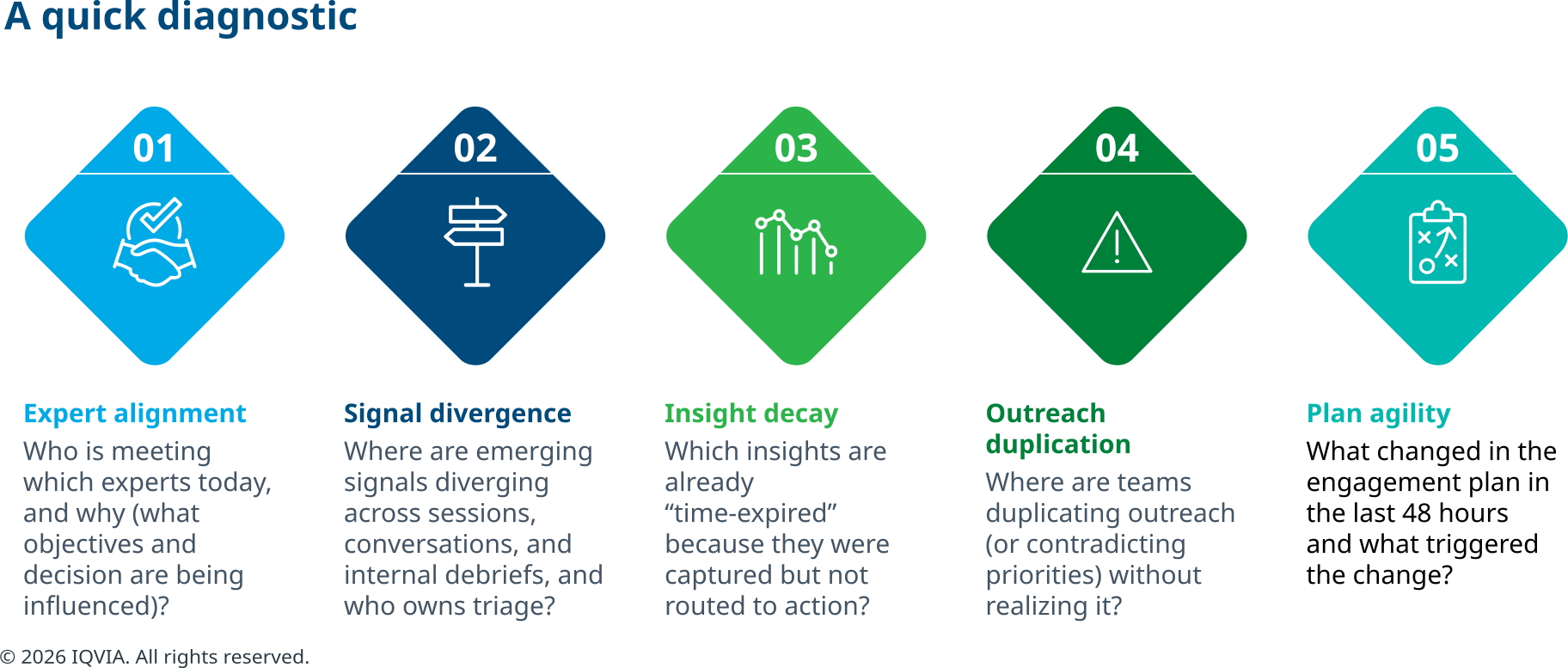
The impact of AI in this context is only as strong as the execution it supports. If teams cannot answer key diagnostic questions in real time during a congress week, the issue is not effort, but execution design.
Execution Defines the Next Era of Engagement
Sustained advantage in expert engagement will be defined by how consistently insight becomes action while it still matters, ensuring every interaction moves decisions forward. As organizations reduce decision latency and strengthen coordination across moments, execution becomes a source of differentiation.
Next generation organizations act directly on this constraint. They remove the barriers that prevent decisions from carrying forward by combining technology, communication, and AI into a single execution system. Platforms are part of that system, but they are not sufficient on their own. Sustaining this level of continuity requires a partner that understands how engagement, data, and workflow intersect in real environments and can design for coordination under pressure.
The choice is whether insight continues to arrive after the moment has moved on, or whether it shapes what happens next while it still can. That decision is now made in execution, in each interaction, at the point where value is determined.
To learn more about how to design execution systems that reduce decision latency and carry insight forward, contact IQVIA.