














This blog is part of an ongoing series, A Brave New World: Finding Life Sciences Success in Modern Markets.
Expert engagement has become harder to execute consistently because the work now moves through more teams, channels, and decision points than a static plan can support. Organizations often struggle to identify which experts truly matter, where influence is emerging, and which scientific priorities warrant coordinated action. Many also lack a clear understanding of how effectively those priorities are being advanced. After major congresses, advisory boards, and field engagements, leaders may still be unable to answer simple questions:
- What did we learn?
- Which experts changed our thinking?
- What actions should happen next?
Even when priorities are clear, executing them requires alignment across field interactions, medical planning, insight review, systems, governance processes, congress activity, and day-to-day execution. New information emerges continuously through expert conversations and in-the-moment insight capture, requiring teams to adapt while maintaining a consistent direction. The challenge is no longer just defining strategy. It is carrying that strategy through execution as information constantly updates and changes.
The most common failure point is continuity. A priority expert receives overlapping outreach, conversations progress in parallel without shared context, and follow-up reflects different interpretations of the same signal. Consider this hypothetical case: During a major congress, Dr. Sarah Mitchell, a nationally recognized hematology expert and one of the most influential voices in a company’s launch market, meets with a Medical Science Liaison (MSL), participates in an advisory board, attends a symposium, and has multiple informal scientific discussions with company representatives. Across those interactions, she repeatedly raises concerns about how physicians interpret a newly presented endpoint. Each interaction may be valuable on its own, but together, they lack the continuity needed to build toward a shared objective. The conversations happen, notes are captured, and activities are logged, but weeks later, no one can confidently answer what the organization learned from Dr. Mitchell, or whether that learning changed what happened next. As a result, future congress discussions continue to focus on the same issue, medical plans remain unchanged, and opportunities to address emerging physician misconceptions are missed.
The result is most visible to the expert, who experiences inconsistency instead of coordination. Teams may be working from the same strategy, but execution diverges when decisions move through different people, systems, and interactions without a shared view of what has changed.
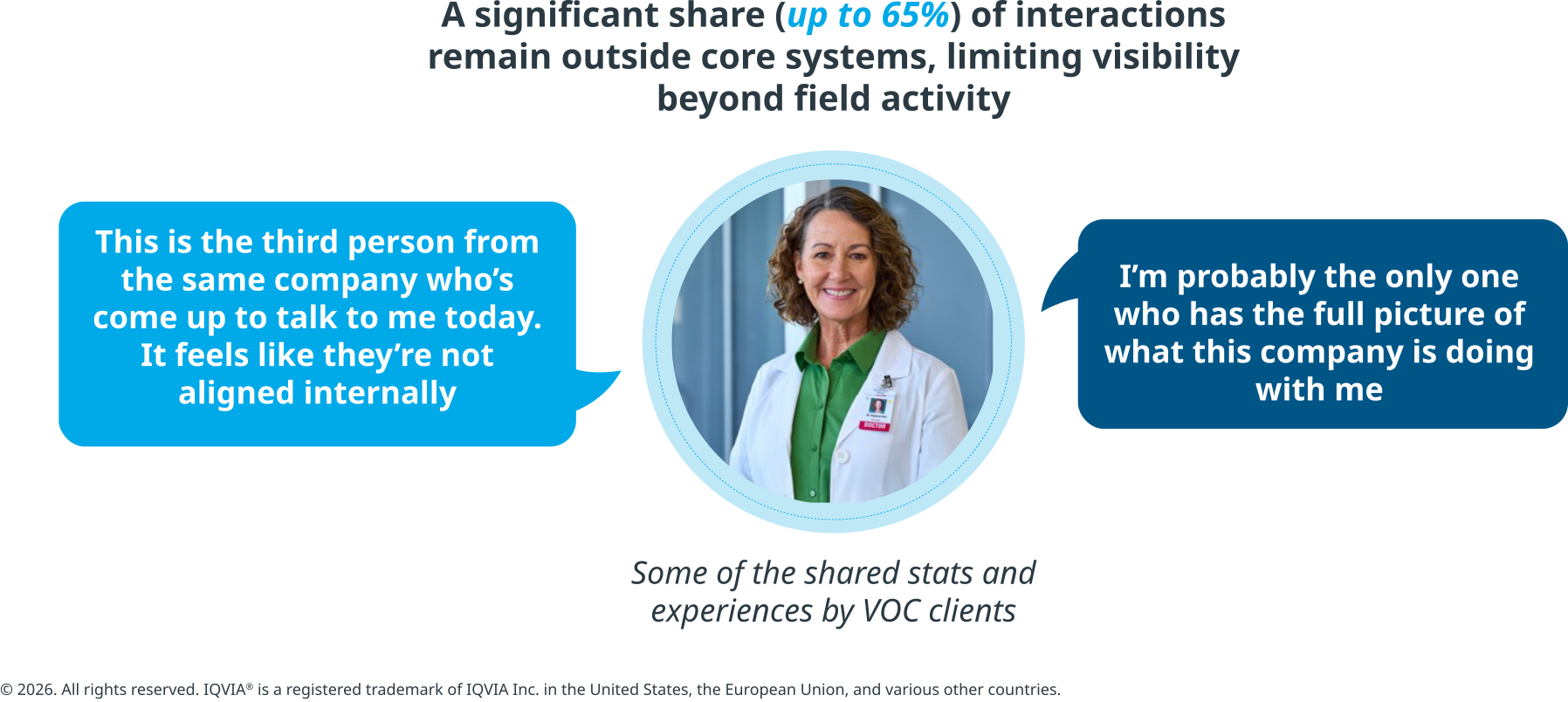
How do companies convert this fragmented experience into optimized engagement? Activity continues and decisions are recorded, but execution does not always reflect a shared and current view of the expert. Closing that gap requires more than process discipline or additional tools. It requires an operating model designed to carry decisions forward as information, interactions, and priorities that evolve in practice.
What an operating model means in expert engagement
In expert engagement, the operating model determines whether decisions persist or dissipate as execution unfolds. It connects strategy to action by defining how information moves, how signals are interpreted, and who is responsible for carrying decisions forward across interactions.
This impact becomes most visible during execution. A field insight captured in the morning either reshapes the next expert conversation that afternoon or remains isolated until the opportunity has passed. Dr. Mitchell’s feedback about how physicians are interpreting a newly presented endpoint represents that kind of input. In an effective operating model, the signal moves into future engagement plans, content priorities, and scientific exchange strategy. Without that mechanism, the insight remains a record of a conversation rather than an input into what changes next.
Most platforms can capture activity, but fewer are designed to coordinate action across teams and time so that engagement reflects the current reality rather than outdated assumptions. That distinction becomes increasingly important as organizations look to AI to support synthesis, routing, prioritization, and learning. AI can improve execution only when the operating model defines what counts as a signal, who needs to act, and how follow-through is confirmed. Without that structure, it may increase information without improving coordination.
Where operating models break down
Operating models rarely break down because of strategy. They break down when ownership, signal flow, and execution continuity are not designed into day-to-day operations across teams and interactions.
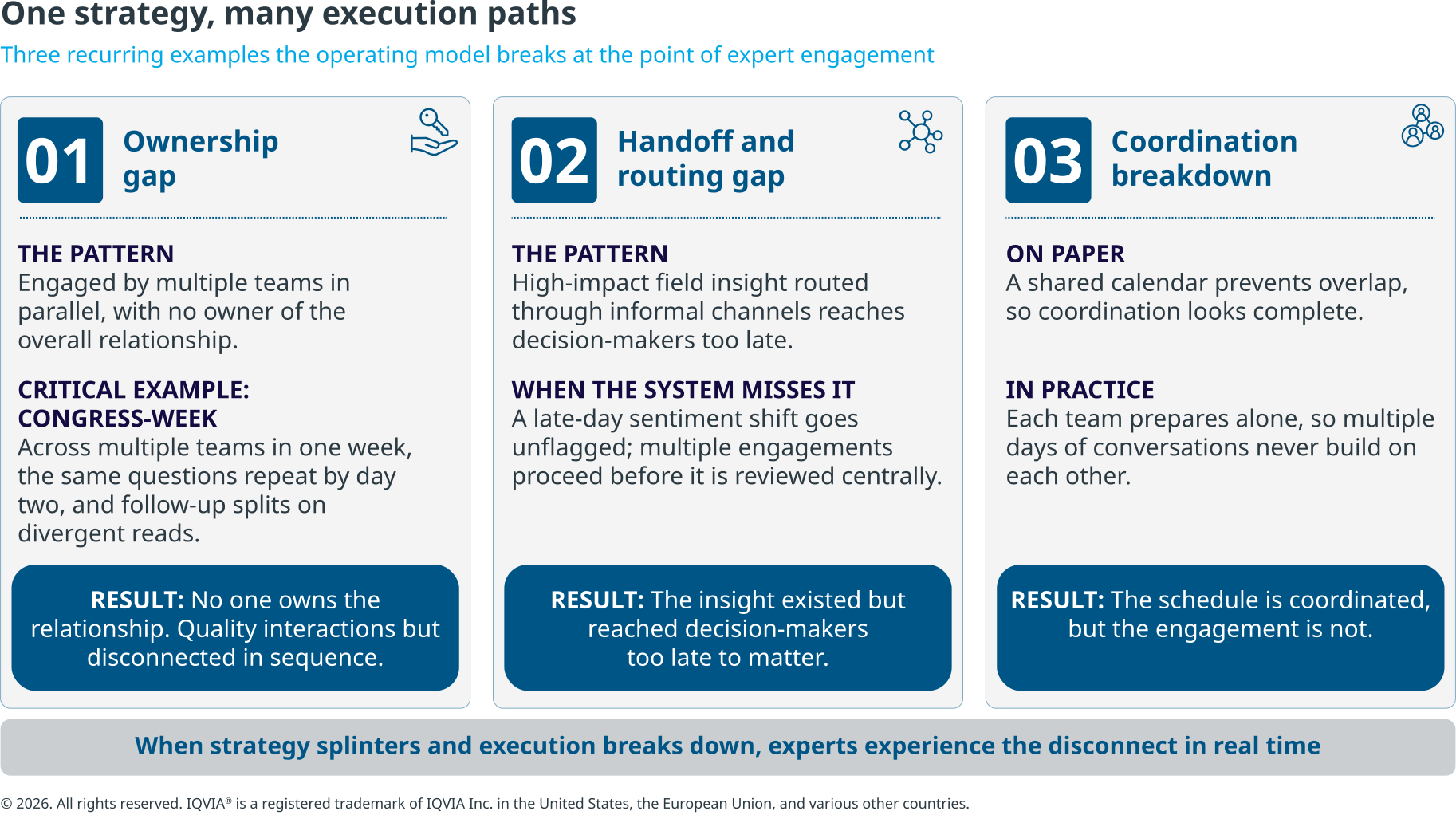
Ownership is often the first point of failure. A top-tier expert may be engaged across multiple teams during a congress week, with each interaction thoughtfully prepared and each team acting within its remit. Dr. Mitchell is one of the organization’s highest-priority experts, yet when leadership asks who owns the relationship and what actions have been taken in response to her feedback, several teams can contribute pieces of the answer, but no single individual can account for the whole relationship. By the second day, the expert has been asked similar questions by different groups, while follow-up is being shaped around different readings of the same conversation. The issue is not effort, but the absence of a role accountable for continuity across the engagement.
Signal flow is often the next point of failure. An MSL may capture a meaningful shift in expert sentiment and document it appropriately, but without defined routing and triage, the signal may not reach the next decision in time to shape action.
Coordination can also be mistaken for continuity. Shared calendars and activity tracking prevent scheduling conflicts, but they do not ensure that interactions build on one another. Without a mechanism to carry new context forward, engagements can remain coordinated on paper while staying disconnected in practice.
The organization may remain active and responsive without turning that activity into coordinated action.
The workflow layer carries decision intent forward
Workflow should not be treated as a record of activity after the work is done. In a designed execution system, it carries decision intent forward by making clear what should happen when a signal emerges, who needs to know, and how the updated view changes the next step. Months after a congress, leadership should be able to review engagement outcomes and see more than activity volumes or meeting counts. The test is whether teams can show what was learned from priority expert interactions and how that learning changed subsequent actions, priorities, or scientific strategy.
A minimum viable workflow begins with a trigger, such as repeated uncertainty from priority experts around a newly presented endpoint. From there, the signal needs a defined route, a clear point of interpretation, an owner for the next action, and a way to confirm that upcoming interactions changed as a result. That does not mean asking teams to do more administrative work. A stronger engagement workflow should reduce manual effort by pre-populating expert information, surfacing relevant context, and embedding data capture into existing work. The objective is to make the next action easier than maintaining the disconnected files and spreadsheets.
Organizations often assume workflow success depends on perfect user adoption. In reality, adoption follows usability. The strongest engagement systems reduce manual effort, surface relevant context automatically, and make the next best action easier than maintaining disconnected spreadsheets, trackers, and notes.
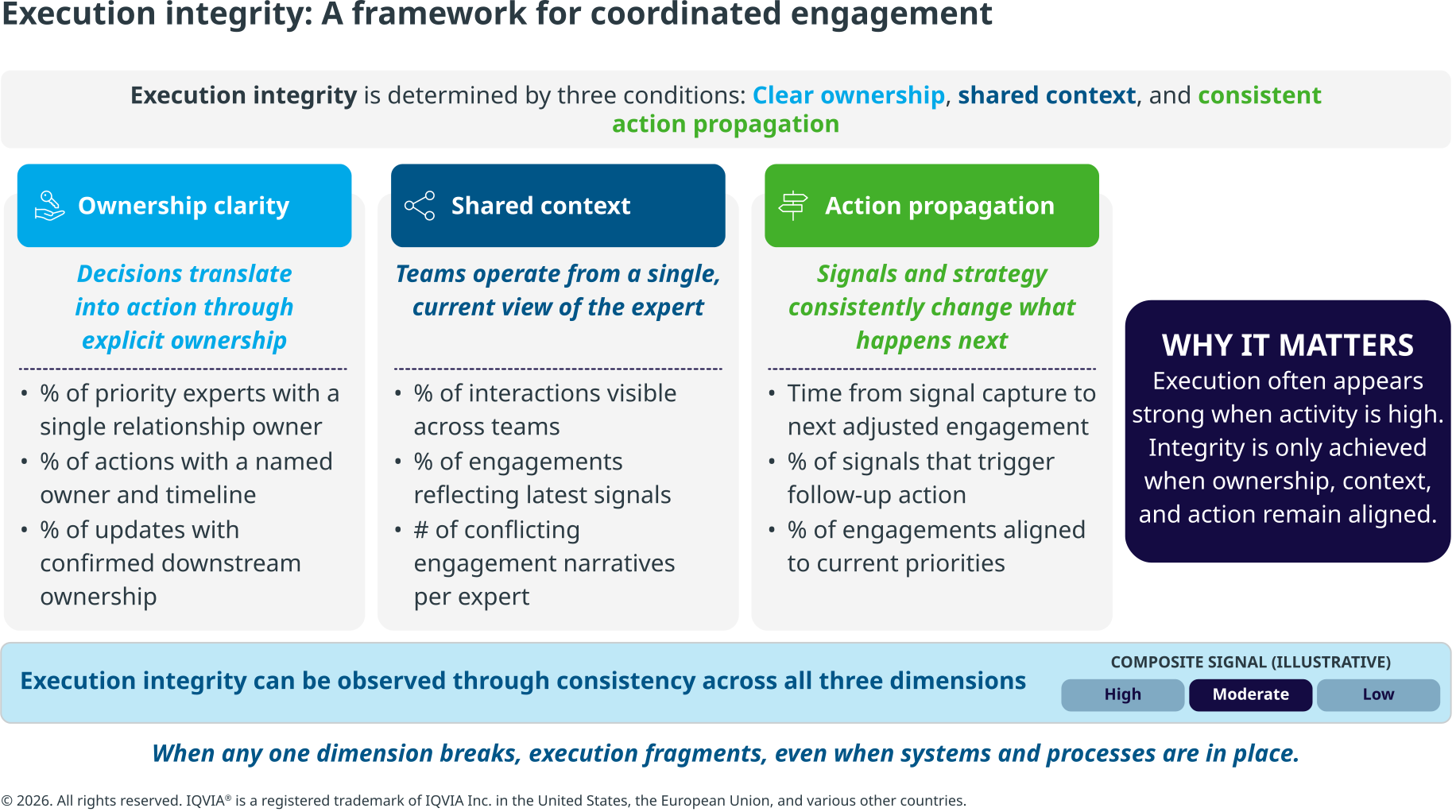
AI can strengthen that movement when it is embedded in the workflow rather than layered on top of it. It can detect patterns across inputs, recommend routing, surface-related interactions, and monitor whether actions were completed. Those capabilities are valuable only when the operating model already defines what counts as a trigger, who is accountable for interpretation, and when escalation is required.
Governance keeps execution aligned as conditions change
Governance is often mistaken for meeting cadence, but its value is the ability to keep execution aligned as priorities evolve. Leaders need visibility into what has changed, who owns the response, and which decisions require escalation.
Leaders should have real-time visibility into relationship accountability, meaningful changes, execution barriers, and whether upcoming engagements reflect current priorities. At any point, they should be able to answer who owns the relationship, what has changed recently, what actions are underway, and which future engagements have been adjusted because of new information. If those answers require multiple meetings and manual reconciliation, the operating model is already under strain.
Those questions expose whether the operating model is working. Unclear ownership fragments the expert relationship, informal escalation slows priority changes, and backward-looking review shows teams what happened only after the next decision has already been made.
Governance depends on clear accountability. The strategy owner defines priorities and when they change; the relationship owner carries those priorities across expert interactions; the coordinator ensures execution reflects one shared plan; and the insight owner determines which signals matter and what should change as a result. Without that clarity, even significant investment in expert engagement can leave leaders reconstructing which signals led to which actions across emails, spreadsheets, meeting notes, and individual recollections.
When these roles blur, signals stall, ownership diffuses, and actions default to local judgment. When they are explicit, teams can move faster because decision authority is clear.
What good looks like in a designed execution system
A designed execution system does not need to be elaborate to be strong. It needs to make priorities, signals, and ownership usable when they are needed most.
In that system, priorities are visible at the point of engagement, signals are captured and routed in real time, and ownership is explicit across the lifecycle. High-impact changes reach the right stakeholders quickly enough to shape the next action.
Execution is coordinated across teams, not only within them, when parallel engagements with the same expert reflect a shared narrative and evolving context. Follow-up builds on what has already been learned rather than restarting from separate local plans.
The system layer makes that coordination durable by giving teams one current expert profile, one view of scheduled and completed interactions, and one record of decisions and actions. In Dr. Mitchell’s case, feedback captured during the congress would update the shared expert profile and route the signal to the appropriate medical lead, so future engagements reflect the new context rather than repeating the same discussion. When leadership reviews engagement activity weeks later, they can see what signal emerged, who acted on it, and how subsequent interactions changed. AI can then support routing, synthesis, and follow-through under the same operating rules.
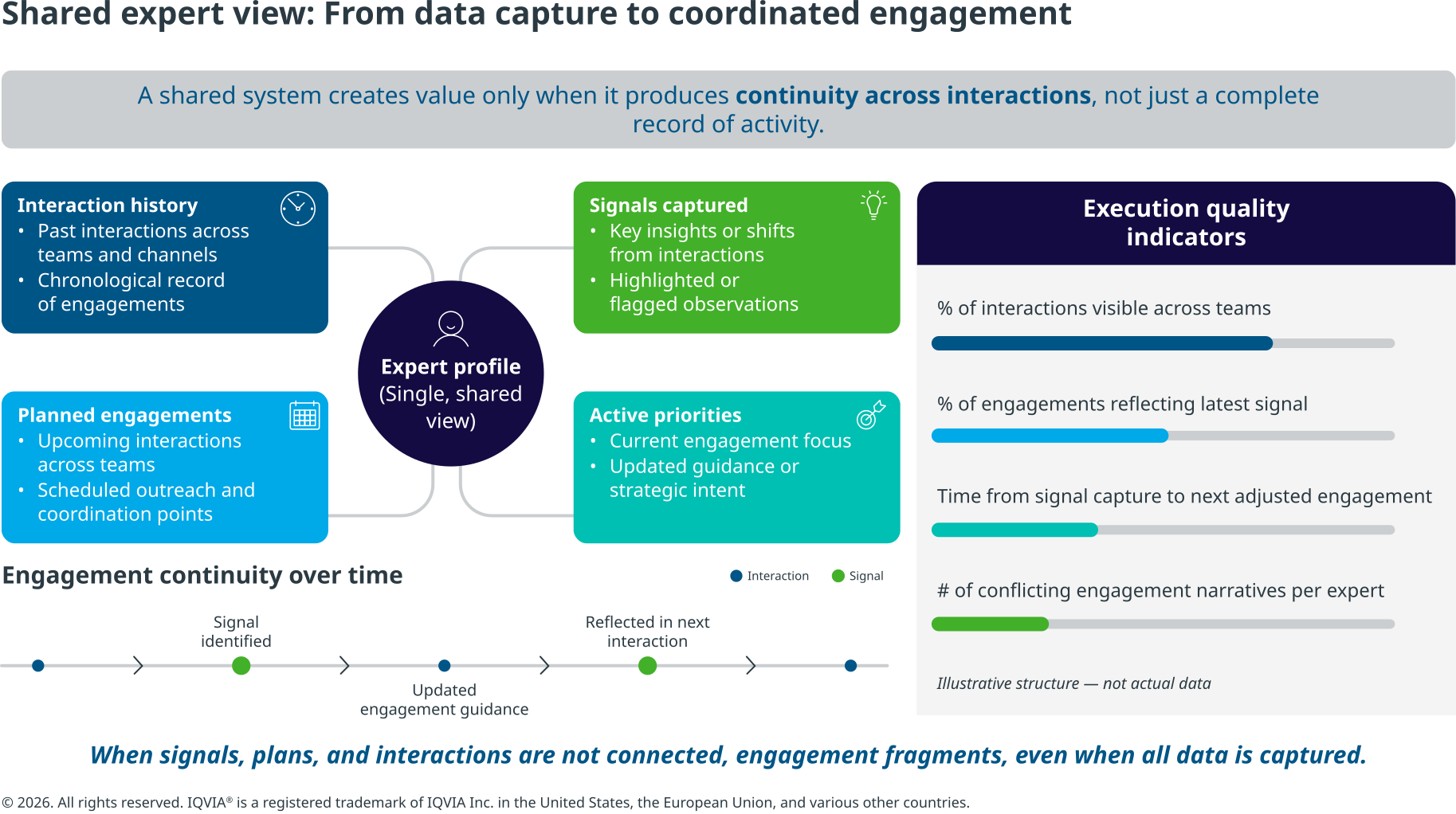
That is the difference between having tools in place and having a working execution system. One records activity. The other connects activity to decisions, decisions to ownership, and ownership to follow-through.
Closing the gap between strategy and action
Expert engagement improves when the operating model makes work easier to carry forward. Priorities have to show up in the workflow, signals need a defined route, and ownership has to be clear enough that teams know what needs to change before the next interaction.
Technology can support that process, but it should reinforce execution rather than become another place where activity is recorded. Consider again Dr. Mitchell’s repeated concern about physician understanding of a newly presented endpoint. Capturing that feedback is valuable only if it changes what happens next. The real test is whether new information influences future decisions, engagement plans, and scientific exchange before the next expert moment.
As expert networks become more dynamic and scientific exchange continues to accelerate, organizations need more than a clear strategy. They need workflows that can carry decisions forward as information changes. The ability to maintain continuity across interactions, teams, and channels is what turns strategy into execution.

Expert Engagement: Reducing Decision Latency
Even well-aligned engagement plans can lose impact when insights get trapped in disconnected workflows or acted on too late. This blog shows how life sciences organizations can close the gap between knowledge and action, using AI and stronger execution design to make every expert interaction more coordinated, timely, and valuable.
Related solutions
We empower Medical Affairs with end-to-end capabilities, leveraging data, technology, and expertise to generate and disseminate evidence for improved patient outcomes.