














Brand & Marketing
Grow your brand, now and through patent expiry
This blog is part of an ongoing series, A Brave New World: Finding Life Sciences Success in Modern Markets.
The healthcare market is undergoing a fundamental shift that is reshaping how life sciences brands approach product launches, access, and early growth. Ongoing margin pressure, combined with evolving policy and reimbursement dynamics, is pushing manufacturers to rethink traditional launch and commercialization models that were built for a different environment. At the same time, the role of the patient at launch is being redefined. Patients are increasingly bypassing long-standing gatekeepers and engaging directly with brands, digital platforms, and new intermediaries that offer faster, simpler pathways to care. This dynamic creates both new opportunities and new expectations during the critical launch window.
Today’s patients expect the same transparency, convenience, and personalization at launch that they experience in retail and other digital-first industries from banking to travel.
Tech-enabled front doors, including direct-to-consumer telehealth and retail-like healthcare platforms have entered the fray by setting new standards for speed, ease, and autonomy, accelerating time to therapy initiation.
For manufacturers, this evolving backdrop demands launch models that recognize patients as active decision-makers fueled by the rise of healthcare consumerism. Successful launches are increasingly designed around patient expectations, behaviors, motivations, and lived experiences, aligning access, engagement, and support to meet patients where they are and to drive early momentum.
Historically, pharma strategy was built around a clear hierarchy. Prescribers evaluated clinical data and made treatment decisions. Payers determined access and affordability. Patients, while important, were often treated as reactive participants in the process. That hierarchy has flattened, as patients are now equipped with an expanding range of medical information. In many therapeutic areas, patients now exert influence equal to or greater than prescribers, particularly at the point of treatment initiation. This does not mean clinicians are irrelevant. Rather, their role is evolving from primary decision-maker to also being an advisor and guide.
An analysis of IQVIA’s BrandImpact® data of over 750 primary care providers (PCPs) spanning 1.7M+ prescriptions from 2021 through 2025 indicates that more patients are entering treatment visits having already identified the product they want, driven by rising requests for obesity and respiratory products. Most notably, among top products prescribed, 27% of patient-initiated prescriptions were for diabetes products, up from 18% in 2021. Obesity and respiratory products likewise saw a jump up to 15% and 14%, respectively.
While the rise in patient requests for metabolic products are due in part to the rising popularity of glucagon-like peptide-1 (GLP-1) for weight loss, the top five therapeutic areas with the highest proportion of patient requests directly align with those with the highest direct-to-consumer (DTC) spend. This suggests that DTC messaging strategies are making an impact. Once patients are empowered with information about the treatment options available for their conditions, they are increasingly initiating treatment pathways independently, often from either the PCP’s office, or via DTC platforms. That’s not to say that excessive DTC spend alone is sufficient for success. Top performing products generally spend more on DTC at launch, but it is important to manage demand generation with return on investment to effectively manage spend.
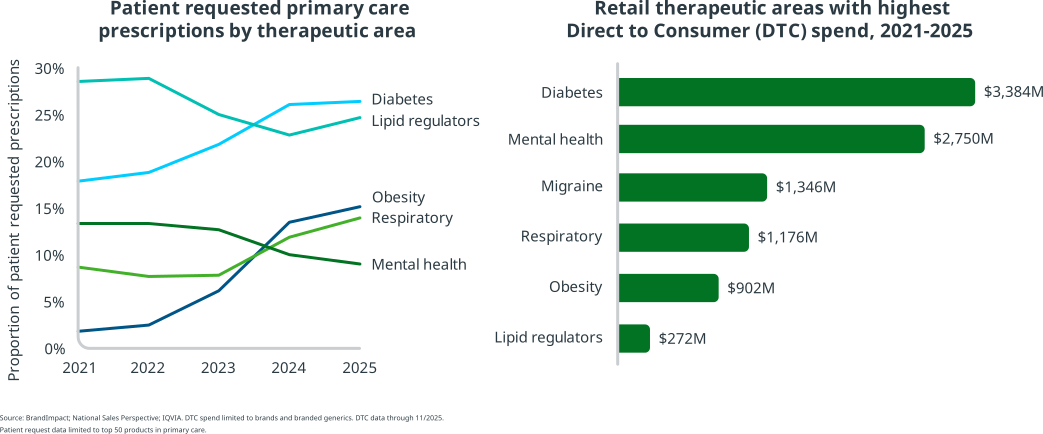
While healthcare consumerism is influencing patients across therapeutic areas, its impact shows differently depending on motivation, symptom burden, and treatment journeys. Several clear patterns are emerging:
As patients behave more like consumers, the gap between clinical evidence and experiential insight becomes increasingly consequential. Clinical data remains foundational, but in certain classes, experience is becoming more influential than evidence for patient decision-making. Patients often ask different questions than regulators or payers. They want to know how a therapy feels, how disruptive it is, and how others like them have navigated side effects. When this information is absent or abstract, confidence suffers. Experience data bridges this gap. It shapes patient expectations, reduces anxiety, and supports persistence, particularly in markets where alternatives are already clinically effective. Yet many brands lack systematic ways to capture and operationalize this insight.
For brands, there are practical paths forward. Co-pay and patient support programs offer an underutilized opportunity to gather real-world experience data from opted-in users. Short, targeted surveys can capture early journey insights such as reasons for hesitation, side-effect concerns, or unmet support needs. When analyzed in near real time, this data can inform rapid adjustments to onboarding and education. Differentiation through patient-reported outcomes (PRO) should begin earlier. Collecting PROs during clinical trials and continuing through post-launch support programs enables a longitudinal understanding of benefits and trade-offs that matter to patients. This information can be used to reinforce adherence by highlighting outcomes patients value most and by preparing healthcare providers to proactively manage predictable side effects. For example, if nausea is a known early barrier, equipping prescribers to co-prescribe supportive medications and counsel patients upfront can materially reduce early drop-off.
Patients now navigate multiple care pathways simultaneously. Traditional insurance-based care, cash-pay options, and DTC platforms coexist, and patients move between them fluidly. Retail-style DTC platforms have set a new bar for engagement as they excel at crafting clear, compelling messaging that speaks directly to patient motivations. They meet consumers where they are, reduce friction, and normalize proactive care-seeking. Pharma’s challenge is not to replicate these platforms wholesale, but to learn from them. Traditional patient services programs have historically emphasized affordability and adherence logistics. While important, these programs often lack emotional and experiential resonance. They explain what is available, not why it matters. Adopting consumer-grade communication strategies requires reframing support around patient goals rather than program features.
Where feasible, partnering with DTC platforms or integrating direct-to-patient (DTP) programs can extend reach and relevance, particularly at launch when awareness and confidence are fragile. DTP programs that allow pharma to bypass traditional models for a cohesive pharma-branded digital ecosystem have surged over the past year, driven largely by Most Favored Nation (MFN) policy. Today, 75% of top 20 pharmaceutical companies are either running a DTP program or are actively developing one, according to an IQVIA analysis.
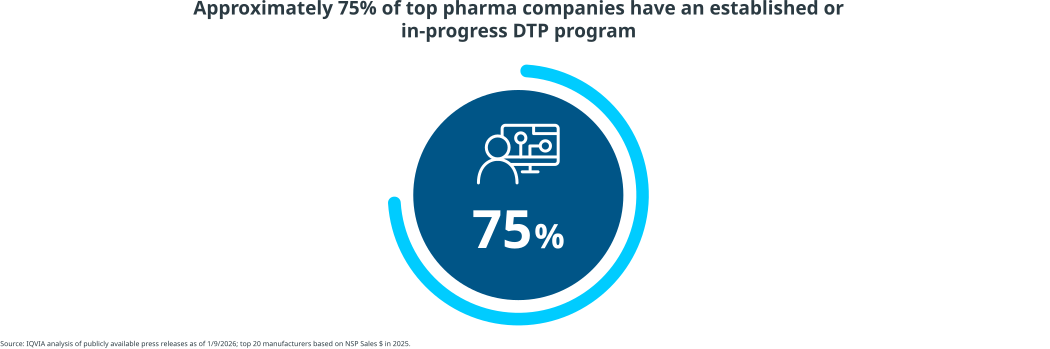
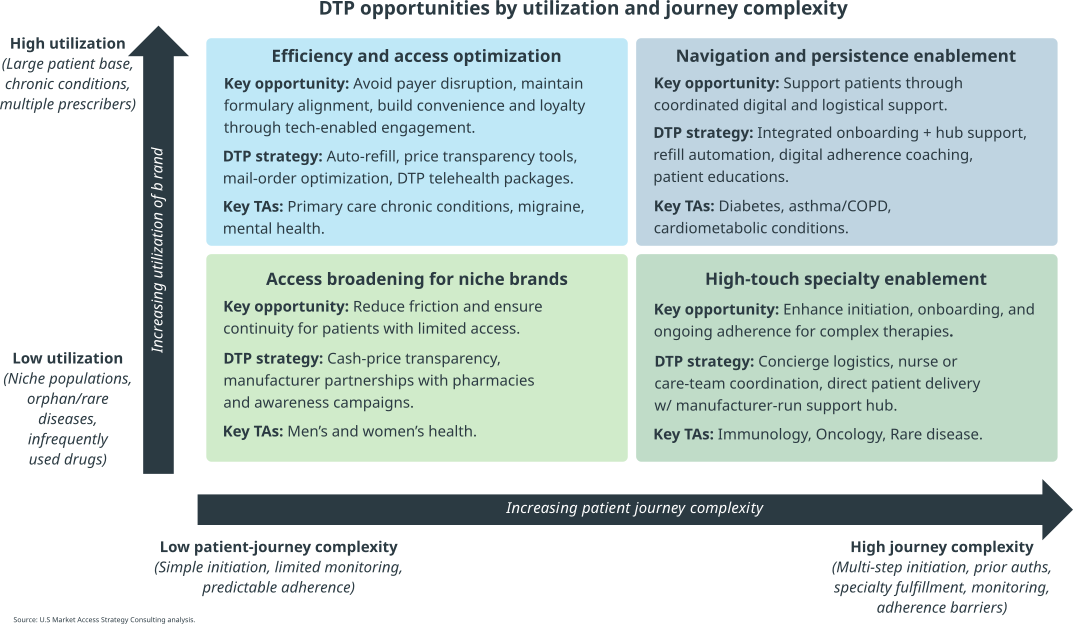
At the same time, the number of products available by manufacturer on these platforms varies widely, ranging from a single product to as many as nine, with a median of three. This variability reflects ongoing uncertainty about which products are well suited for these platforms, and which do not make economic sense. From the patient perspective, willingness to use a DTP platform depends on a range of factors, including the condition being treated and the level of support required. Across therapeutic areas, however, there are opportunities if the right strategy is deployed based on both brand utilization and the complexity of the patient journey.
For high-utilization brands with relatively simple journeys, such as primary care chronic conditions and migraine, the greatest opportunity lies in efficiency and access at scale through tools like auto-refill, telehealth, and price transparency. As journeys become more complex, particularly in areas like diabetes, asthma, or chronic obstructive pulmonary disease COPD, and broader cardiometabolic conditions, the focus shifts to navigation and persistence enablement, using coordinated digital onboarding, hub support, and adherence programs to help patients initiate and remain on therapy. For lower-utilization or niche brands, including men’s and women’s health and mental health, DTP strategies can broaden access through awareness, cash-pay options, and pharmacy partnerships when journeys are straightforward. Highly complex specialty therapies, such as oncology, immunology, and rare diseases, benefit most from high-touch, concierge-style models that support initiation, care coordination, and long-term adherence.
As patient behavior shifts, launch success increasingly depends on whether brands are designed for how decisions are actually made, not how they were assumed to be made in the past. Patients are initiating care, shaping therapy conversations, and judging experiences with a consumer mindset. For pharma executives, this requires a deliberate redesign of launch strategy, operating models, and success metrics that:
Patients are no longer passengers in their healthcare journey. They are driving, navigating complex choices with increasing confidence and autonomy. Policy transformation, consumerism, and innovation have converged across therapeutic areas. Companies that understand, embrace, and design for patient motivations will not only launch more effectively, but also build more resilient brands. The road ahead belongs to organizations willing to see the journey through the patient’s eyes and to design accordingly.
Please contact your IQVIA representative for more information.

This blog is part of a series exploring the evolving dynamics of pharmaceutical brand commercialization. Posts delve into critical themes such as patient engagement, resource-constrained uptake, HCP adoption, investment analysis, payer control, strategic promotion, and the shifting provider landscape. You can find all of our Brave New World content in the U.S. Insights Library.
Grow your brand, now and through patent expiry
Data, AI, and expertise empower Commercial Solutions to optimize strategy, accelerate market access, and maximize brand performance.