














Brand & Marketing
Grow your brand, now and through patent expiry
This blog is part of an ongoing series, A Brave New World: Therapeutic Area Deep Dives.
In the fast-shifting world of obesity treatment, patient behavior is proving to be a powerful force, one that can make or break the success of even the most promising therapies. Glucagon-like peptide 1 (GLP-1) receptor agonists, despite their clinical strength and surging demand, are hitting a wall of attrition fueled by systemic hurdles and behavioral friction. Coverage gaps, steep out-of-pocket costs, and payer-imposed roadblocks stall progress before treatment even begins, while stigma, fragmented care, and shifting patient perceptions chip away at long-term adherence. Bridging the gap between clinical potential and real-world impact enables stakeholders to decode the complex interplay of these forces and rethink what it truly takes to keep patients on the path to sustained outcomes.
The GLP-1 market is experiencing unprecedented demand, yet despite its clinical promise for obesity, diabetes, and other conditions, patient behavior and friction throughout the treatment journey continue to erode its commercial potential. Obesity patients face plan limits, prior authorization requirements, step edits, and non-formulary coverage resulting in a staggering 40% rejection rate and a 48% loss in demand. Even among those with payer approval, fewer than one in three prescriptions are ever filled due to patient abandonment, representing an additional 21% demand lost. By the time patients are 1 year from their initial prescription, only 10% remain persistent. In other words, 90% of initial demand from all new patient attempts go unrealized, signifying significant patient leakage. These figures underscore a critical disconnect between clinical access, real-world adherence, and treatment outcomes with payer friction playing a central role.
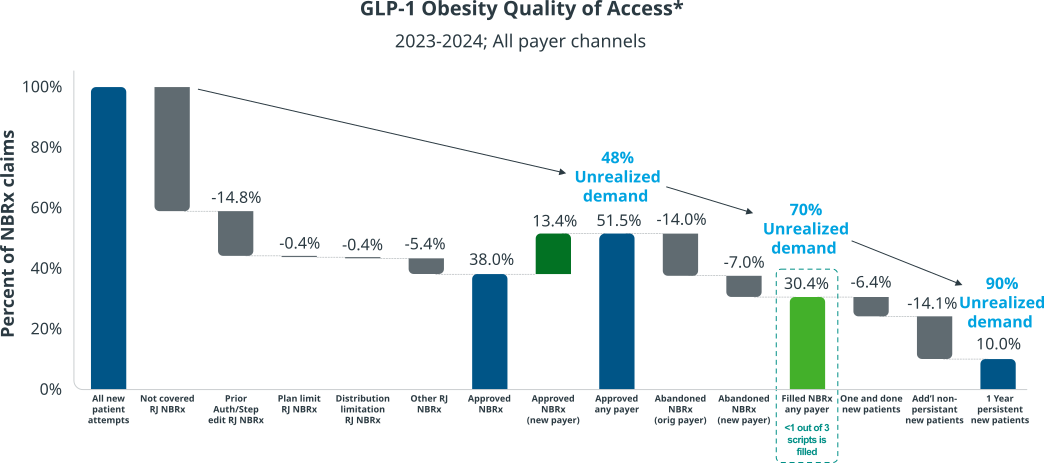
*Obesity GLP-1 Wegovy and Zepbound
Source: IQVIA Analysis; IQVIA Payer Control Library
Ignoring patient leakage is the most common forecasting error in the GLP-1 space. Commercial models that fail to account for abandonment and discontinuation risk significantly overestimating return on investment (ROI ). A 2025 study published in JAMA Network Open found that most patients with obesity discontinue GLP-1 therapy within a year, particularly those without type 2 diabetes1. The primary drivers? Coverage restrictions and high out-of-pocket costs. Medicare’s current policy, which excludes anti-obesity medications unless prescribed for another condition like diabetes, exacerbates this issue2. This coverage gap not only fuels abandonment but also limits reinitiation, further weakening long-term adherence. As GLP-1 spending continues to skyrocket, understanding and addressing behavioral and systemic barriers is essential for sustainable market growth.
GLP-1 therapies prescribed for type 2 diabetes demonstrate stronger patient retention than those indicated for obesity, but the market still faces substantial leakage. Alarmingly, of all approved prescriptions for diabetes GLP-1s, 15% are never filled , meaning patients walk away before even starting therapy, despite having an approved script. Among patients who do fill their first script, an additional 36% discontinue after just one fill, a phenomenon known as "one & done" or non-persistent patient behavior. As a result, only 24% of diabetes patients remain persistent with GLP-1 therapy after one year. While this persistence rate is a marked improvement over the 10% observed for obesity-indicated GLP-1s, it still leaves 76% of potential demand unrealized. These figures highlight how, even with broader coverage, patient behavior and systemic barriers continue to erode both demand and health outcomes in this rapidly evolving market.
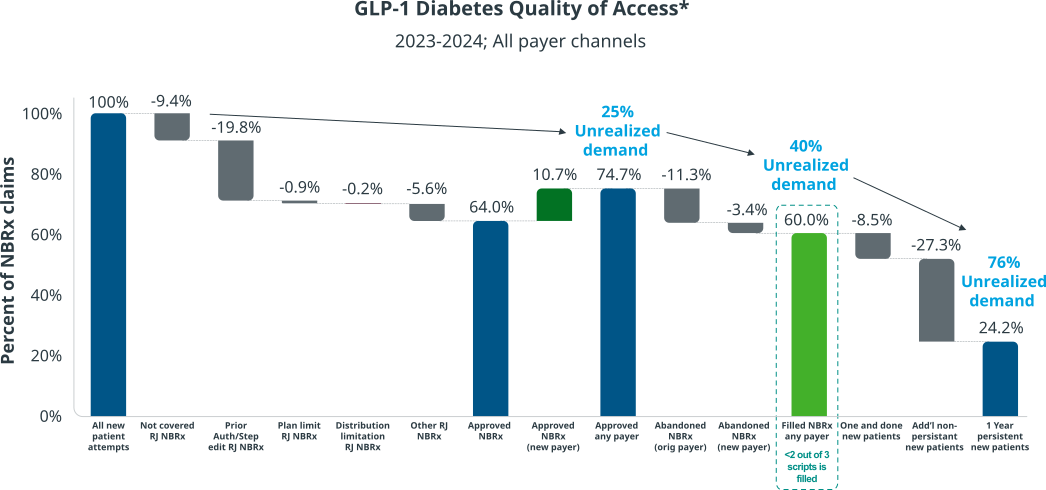
*Obesity GLP-1 Ozempic and Mounjaro
Source: IQVIA Analysis; IQVIA Payer Control Library
The relative success of diabetes GLP-1s is largely due to more favorable coverage and disease framing. Unlike obesity, which faces stigma and limited payer support, diabetes is widely recognized as a chronic condition requiring pharmaceutical intervention. As a result, payer approval-related demand losses for diabetes GLP-1s total 25%, significantly lower than the 48% seen in obesity. However, coverage does not eliminate all friction. Medicare Part D patients continue to face prior authorization and cost-sharing barriers, even with a diabetes diagnosis3. This delicate balance between access and affordability is critical to watch as the market evolves.
While payer restrictions and coverage gaps contribute to GLP-1 therapy abandonment, out-of-pocket (OOP) costs remain the most consistent and powerful predictor of non-adherence. Cost sensitivity is a leading driver of medication abandonment across chronic conditions, including obesity and diabetes4. Patients facing high OOP costs often discontinue therapy prematurely or dose less frequently to stretch prescriptions. This trend is especially pronounced among patients with OOP costs exceeding $500, a threshold where abandonment rates spike significantly. Notably, the $500 range is also the amount manufacturers offer for self-pay obesity patients, raising important questions about whether these programs are truly benefiting those who need them most5,6. The result is a catch-22: patients must persist long enough to demonstrate clinical benefit, yet the financial burden often prevents that persistence, undermining the very outcomes needed to justify reimbursement.
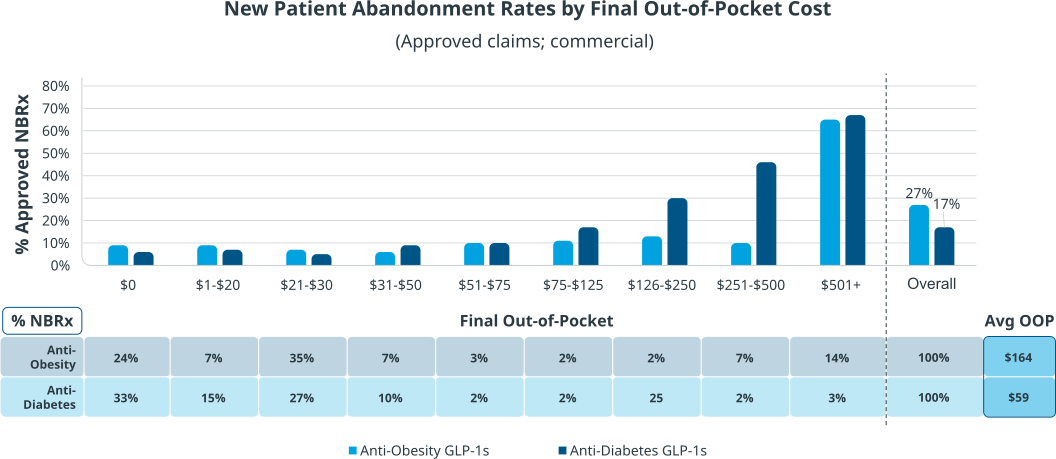
Note: Anti-Obesity GLP-1s Wegovy and Zepbound, Anti-Diabetes GLP-1s Ozempic and Mounjaro
Source: IQVIA MAAS Patient Behavior Library Tool; Patient Cost Sharing Library
Low persistence in GLP-1 therapy is rarely the result of a single factor; instead, it reflects a complex interplay of price sensitivity, personal goals, and systemic challenges. Some patients abandon therapy after reaching their target weight, while others are forced to pause or switch treatments due to supply shortages. Fragmented care, such as receiving prescriptions from specialists without informing primary care providers, can further disrupt continuity in therapy. Policy changes like the Inflation Reduction Act’s $2,000 out-of-pocket (OOP) cap for Medicare Part D beneficiaries may offer some relief, as patients who reach the cap pay $0 thereafter, but they also risk prompting payers to tighten coverage for high-cost drugs, especially those indicated for obesity. Medicare spending on GLP-1s has surged, raising concerns about long-term affordability and access2.
At the same time, payer policies often require discontinuation of GLP-1 therapy when a patient’s BMI drops below a set threshold, inadvertently triggering a frustrating cycle of weight loss and regain—the so-called “yo-yo effect.” This not only impacts ongoing adherence and persistence but also undermines the long-term cost-effectiveness of these therapies for healthcare systems. Breaking this cycle will require evidence-based, patient-centric policies that recognize obesity as a chronic, relapsing condition, along with integrated care models that combine ongoing pharmacotherapy, lifestyle interventions, and robust patient support.
Month-by-month persistency data reveals a steep erosion in adherence among patients prescribed GLP-1s for obesity. Over a 13-month period, persistence drops to just 32%, compared to 41% for diabetes GLP-1s. While side effects are often cited as a reason for GLP-1 non-adherence, the gap in persistence for the same molecule reflects deeper behavioral and systemic challenges. One-and-done behavior is especially common among obesity patients, as 19% of obesity GLP-1 users fill only a single prescription. These early exits from therapy not only undermine clinical outcomes but also distort commercial forecasts and ROI projections. The implication is clear: monthly attrition is a critical metric, and obesity GLP-1s face a steeper slope due to a combination of clinical ambiguity, payer friction, and patient psychology.
Patients with obesity are more likely to discontinue GLP-1 therapy than those with diabetes, citing lower perceived necessity, stigma, and limited coverage as key drivers7. Unlike diabetes, which is widely accepted as a chronic condition requiring ongoing pharmacologic management, obesity treatment often lacks the same framing, leading to premature discontinuation. Long-term adherence is essential to realizing the full therapeutic potential of GLP-1s, yet behavioral factors (such as reaching personal weight goals or perceived social stigma) and systemic issues (like high out-of-pocket costs and fragmented care) disproportionately affect obesity patients.
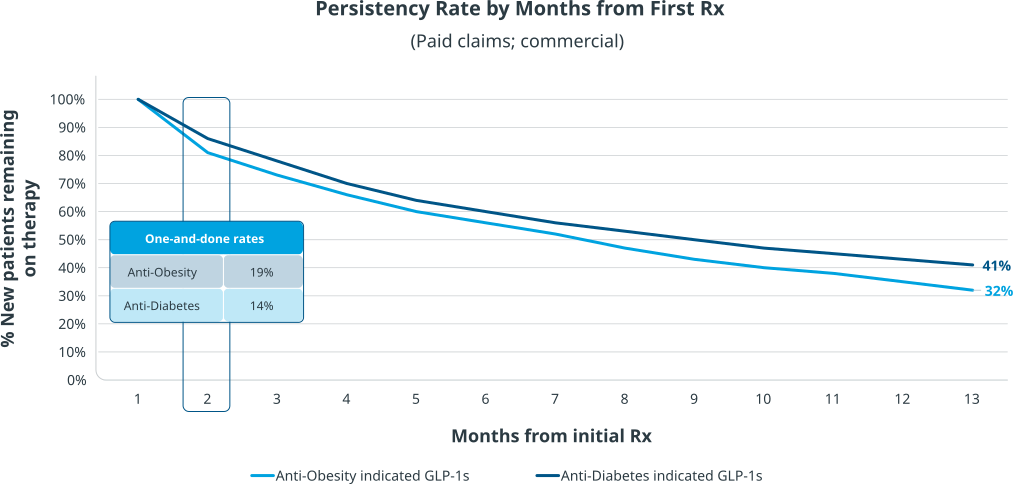
Note: Anti-Obesity GLP-1s Wegovy and Zepbound; Anti-Diabetes GLP-1s Ozempic and Mounjaro
Source: IQVIA Analysis; IQVIA Payer Control Library
The GLP-1 market sits at the intersection of clinical innovation and patient behavior, where real-world persistence often falls short of therapeutic potential. Despite strong efficacy, systemic barriers like coverage gaps and high out-of-pocket costs, especially for obesity indications, continue to drive abandonment. Diabetes GLP-1s fare better due to broader coverage and disease framing, but still face meaningful leakage. To stay ahead of this shifting environment, pharma companies should consider the following imperatives:
GLP-1s are known for disrupting treatment paradigms, but they also expose the cracks in patient access and adherence. From payer friction to behavioral drop-off, GLP-1s are challenging pharma to rethink how success is measured in the obesity and diabetes markets. Reach out to IQVIA to learn more about building successful strategies for the obesity market.
References:

This blog is part of a new series exploring a range of topics in the obesity market, including: market size and scope, impact of payer controls, activity in non-traditional channels, patient behavior, GLP-1 impact, HCP responses, the policy landscape, pharmacy economics, and the outlook for the future of GLP-1. You can find all of our Brave New World content in the U.S. Insights Library.
Grow your brand, now and through patent expiry
Data, AI, and expertise empower Commercial Solutions to optimize strategy, accelerate market access, and maximize brand performance.
We empower life sciences with connected intelligence, transforming data into actionable insights for smarter decisions and better patient outcomes.
Gain high value access and increase the profitability of your brands