







.svg)











Report Summary:
The Medicare Drug Price Negotiation Program established under the Inflation Reduction Act (IRA) aims to moderate federal spending on prescription drugs by allowing CMS to negotiate maximum fair prices for selected high-spend products. While this program aims to reduce government spending, it also shortens the effective lifespan of negotiated drugs during which manufacturers invest in continued research and development. As a result, drug manufacturers whose treatments are at risk for selection may be incentivized to slow or halt investment in post-initial approval clinical development well before reaching the traditional end of a product’s lifecycle. Therefore, understanding how supplemental drug indications have historically addressed unmet need is crucial for assessing the potential effects of this policy on future innovation.
This report examines how innovation has historically progressed across the lifecycles of widely used medicines and assesses the extent to which late life indications have contributed to meaningful clinical and population-level value. The analysis assesses the top 50 novel active substances (NASs) by U.S. sales from 2020-2024 that launched prior to 2014 and have at least one post-initial approval expansion. Across these medicines, the report characterizes 190 approved indications using ten metrics to examine potential unmet need addressed based on evidentiary signals, comparative benefit, disease severity, and therapeutic context. By demonstrating how late-life drug indications have historically contributed to clinical value and addressed unmet need, these findings intend to guide policymakers and other stakeholders in making informed decisions that balance healthcare savings, meaningful patient benefits, and continued innovation for existing therapies.
Key Findings:
- Drugs selected for this study include the top 50 novel active substances (NASs) with the highest combined U.S. sales from 2020-2024 that launched prior to 2014 with at least one post-initial approval expansion; these 50 NASs studied have a combined total of 190 indications.
- Out of the 190 distinct NAS/indication combinations, nearly one-third (29%, or 55) were initially approved in the “late life” of their drug’s lifecycle (>5 years after first approval for small molecules or >9 years after approval for biologics).
- Many late life indications target rare diseases, with 42% carrying an FDA orphan drug designation, compared to 30% for early life indications, highlighting a greater focus on low-prevalence, high-need populations in the late stages of many product lifecycles.
- A higher proportion of late life indications (65%) treated a severe disease (those with a disease severity rating of >5 morbidity-adjusted life-years lost) compared to early life indications (50%).
- 45% of the late life NAS/indication combinations studied represented the first new treatment approved for their condition in more than five years, and 20% were the first ever approved therapy for that disease; in contrast, only 25% of early life indications were the first in five years, and 13% were the first ever, underscoring the unique role late life expansions play in breaking therapeutic stagnation.
Other Findings:
Exhibit 3: Top 50 NAS/indication combinations by life stage and therapeutic area
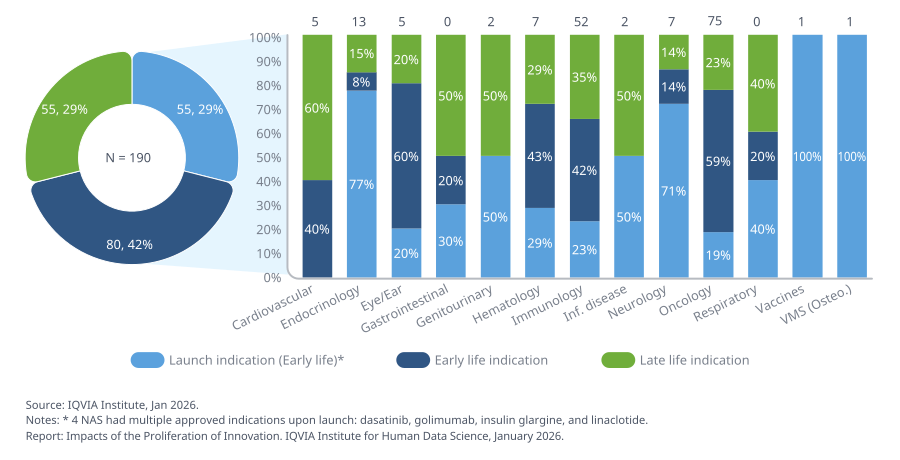
- Out of the 50 NASs’ total 190 distinct NAS/indication combinations, nearly one-third were “late life indications” initially approved >5 years after first approval for small molecules or >9 years after approval for biologics.
- Of the 190 indications, oncology (75), immunology (52), and endocrinology (13) were the most prevalent therapeutic areas.
- Late life indications are seen across all therapeutic areas with at least two NASs, and are not limited to the largest therapeutic areas, demonstrating the widespread presence of late life indications that may have been at risk if the price negotiations provision of the IRA were in place when these NASs first launched.
Exhibit 12: Caveats, data capture, and notable thresholds for 10 researched metrics
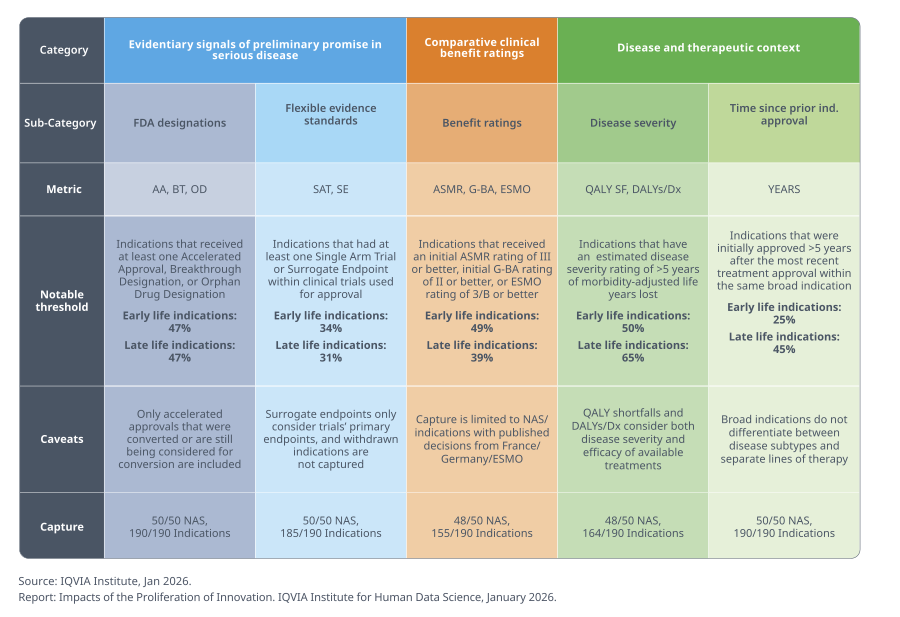
- Ten metrics were researched to assess drug indications’ signals of preliminary promise, comparative benefit, and disease burden in order to characterize the unmet need addressed by each indication.
- The first five metrics fall under evidentiary signals of preliminary promise in serious disease, and include FDA designations (accelerated approvals, breakthrough therapy designations, and orphan drug designations) and flexible evidence standards in clinical trials (single arm trials and surrogate endpoints); the next three metrics are comparative clinical benefit ratings, including HTA ratings (France’s ASMR benefit rating, Germany’s added benefit rating), and ESMO’s MCBS rating for oncology drugs/indications; the last two metrics are context for the disease itself and the therapeutic landscape for that disease, including disease severity (QALY shortfall or DALYs/Dx) and time since prior indication approval (in years).
- Notable thresholds for each subcategory were selected to succinctly characterize indications across multiple metrics; for example, a NAS/indication combination would reach the notable threshold for the FDA designations subcategory if it received at least one accelerated approval, breakthrough therapy designation, or orphan drug designation from the FDA across all of its approvals.
Exhibit 13: All top 50 NAS/indication combinations: Overall metrics by life stage
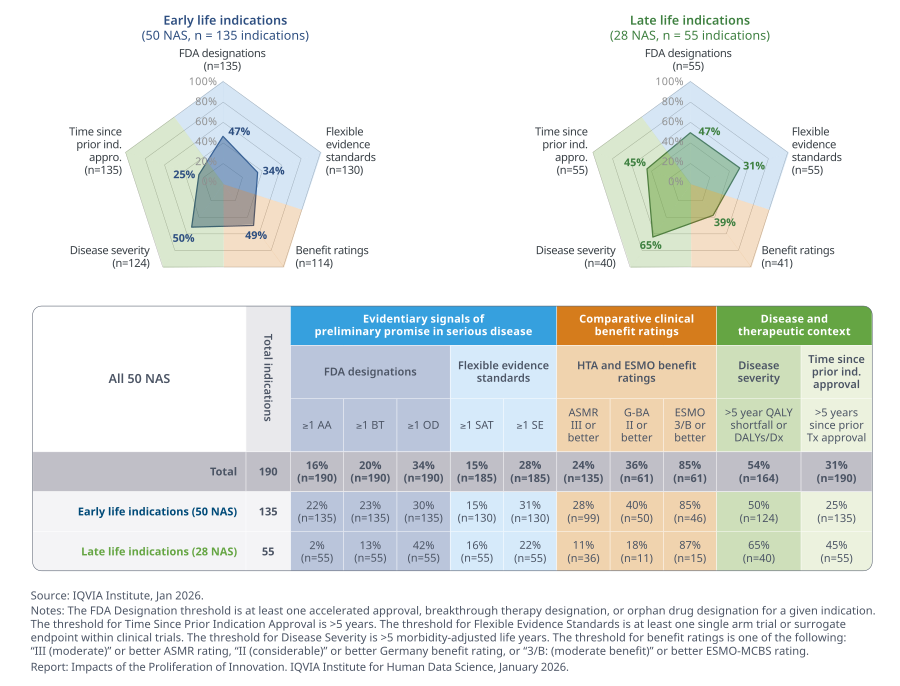
- Each spoke of the spider diagram represents one of the subcategories of metrics researched, and the percentages shown within the spider diagram represent the proportion of early or late life indications that reach the notable threshold for these subcategories.
- Across all 50 researched NASs, the only metric in which the proportion of early life indications reach a notable threshold substantially more often than the same proportion of late life indications is in clinical benefit ratings (49% for early life indications vs. 39% for late life indications)
- Otherwise, late life indications reach notable thresholds at a similar proportion (for FDA designations and flexible evidence standards) or higher proportion (for disease severity and time since prior indication approval) than early life indications, underscoring the public health value of encouraging ongoing innovation beyond a drug’s initial approval.
Exhibit 15: Patient counts for the top 50 NAS/indication combinations in IQVIA LAAD 3.0 claims data by life stage and NDA/BLA status (patient counts from 2019-2024)
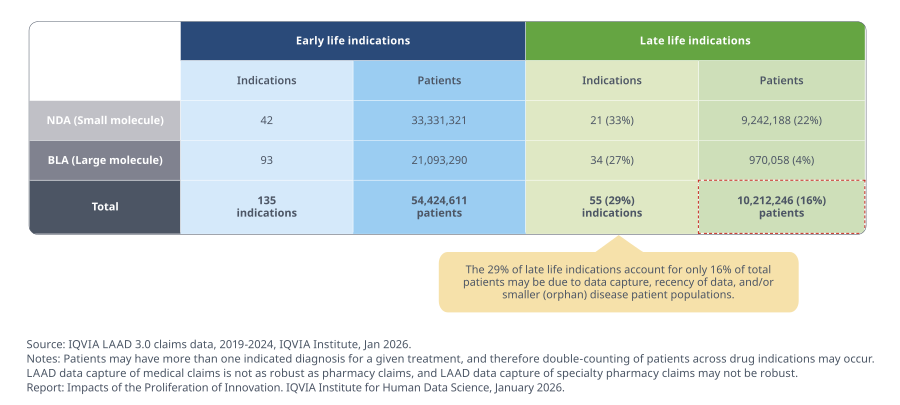
- Distinct patient counts in the U.S. from 2019-2024 were measured for NAS/indication combinations using IQVIA LAAD 3.0 claims data and ICD-10 diagnosis code counts per patient.
- If Medicare drug price negotiations were in place during the study timeframe (2000-2023), and these top 50 NASs were selected for MFPs, then reduced investments in late life indications may have resulted in over ten million patients not receiving their existing treatments.
- The ten million estimated patients using these NASs for late life indications is likely an underestimate due to the recency of late life indications and limited data capture for certain NASs, emphasizing the breadth of clinical value that these indications have brought patients.