
.svg)




Go beyond tracking procedures with MedTech Market Monitor
Enquire about IQVIA’s MedTech Market Monitor data solution today















In the grip of the COVID 19 pandemic, peaking in 2020, the healthcare landscape was defined by an immense ICU overload and strains upon hospital capacities, causing a vast array of procedures to be delayed or cancelled. Medical and surgical procedures have experienced varying recovery rates.
Differences in procedure complexity, hospital capacity, and adoption of minimally invasive and robotic techniques have created clear growth hotspots for 2026.
Drawing on insights from IQVIA’s MedTech Market Monitor (MMM), this blog highlights the top global surgical volume growth trends and outlines what medical device companies need to know to capitalize on emerging opportunities.
Procedures that can be performed with minimal incisions and allow for same-day discharge have seen a quicker recovery in surgical volumes. These include:
Data source: IQVIA Medtech Market Monitor
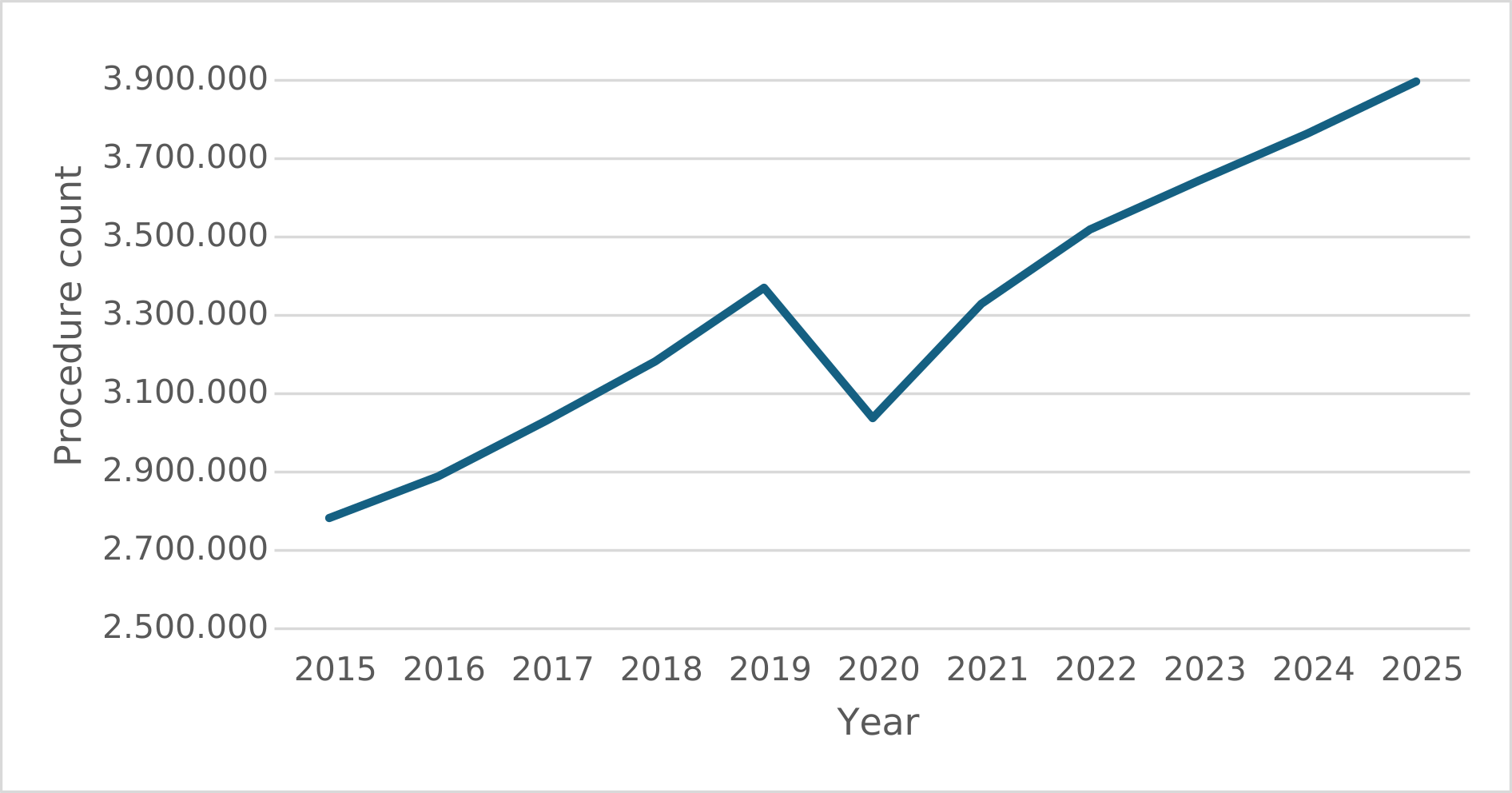
The figures capture the total volumes of the 45 countries covered by MMM, including the procedures (as defined by ICD9): Operations on facial bones and joints - Other operations on facial bones and joints: Bone graft to facial bone
Operations on joint structures (Repair and Plastic) - Joint replacement of lower extremity: Partial hip replacement, Replacement of joint of foot and toe, Total ankle replacement, Total hip replacement
Data source: IQVIA Medtech Market Monitor
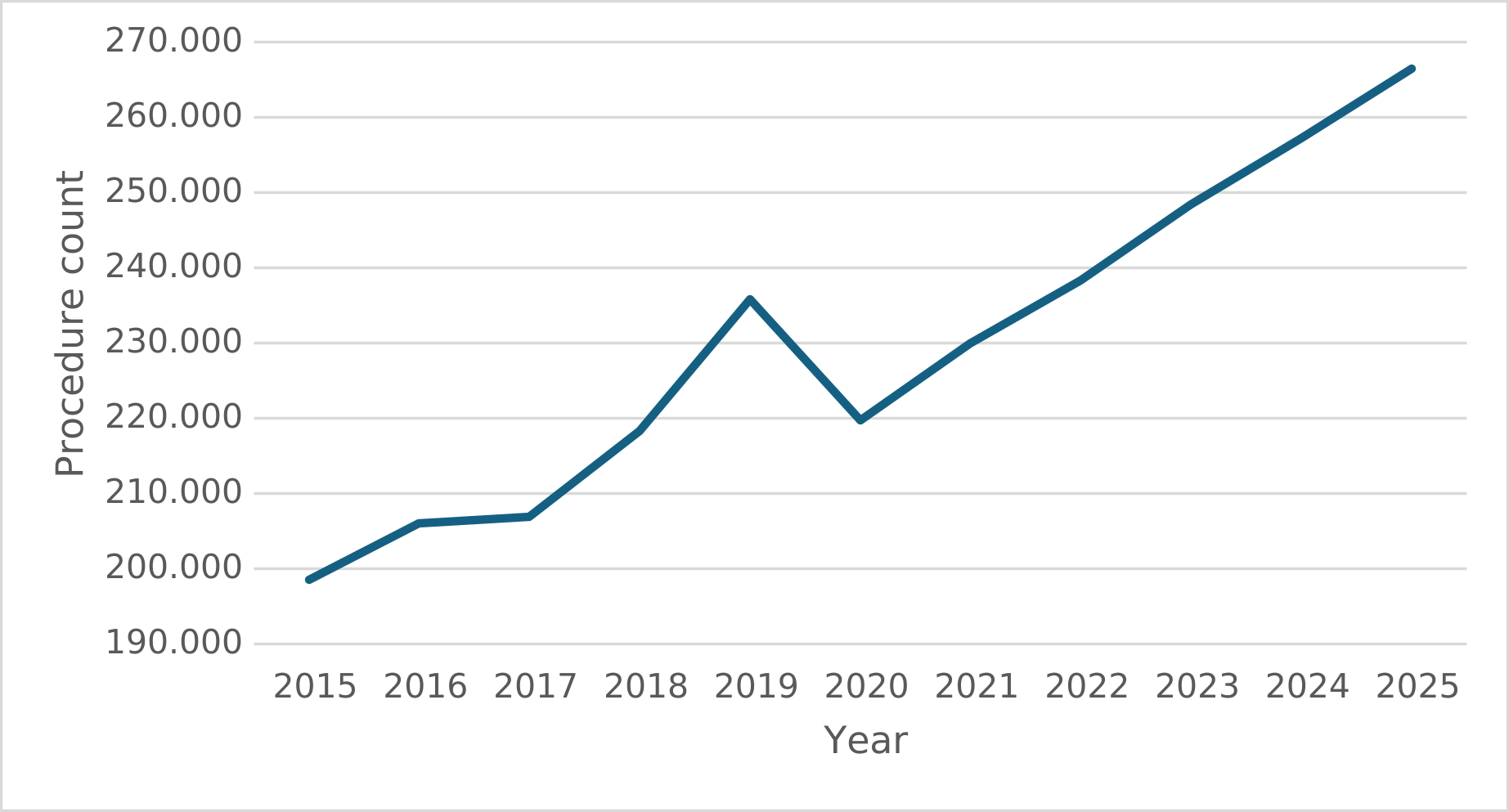
The figures capture the total volumes of the 45 countries covered by MMM, including the procedures (as defined by ICD9): Refusion of spine: Refusion of lumbar and lumbosacral spine, anterior column, posterior technique; Refusion of other cervical spine, anterior column, anterior technique; Refusion of spine, Other Procedures; Refusion of spine, not elsewhere classified.
The integration of robotic technology into surgical procedures has led to enhanced precision, smaller incisions, and reduced recovery times.
For instance, the NHS in England plans to expand robotic-assisted surgeries, including joint replacements and cancer surgeries, aiming to perform 500,000 robotic surgeries annually by 2035. (The Guardian)
Complex and high precision surgeries have experienced a slower recovery in volumes:
Across health systems, several structural and operational factors are influencing procedural trends:
Understanding surgical volume trends is essential for commercial planning and strategic investment. Key implications for MedTech manufacturers include:
As we begin 2026, global surgical volumes are continuing to rebound, with minimally invasive and robotic-assisted procedures driving the fastest growth. While complex surgeries recover more gradually, they represent significant long-term opportunity as systems expand capacity.
For medical device companies, understanding these specialty-level trends is essential. By aligning portfolios with high-growth procedures, supporting outpatient migration, and leveraging data-driven insights, manufacturers can position themselves for strong commercial performance.
Click the CONTACT US button to learn how IQVIA MedTech can fuel your MedTech growth strategy.

MMM helps MedTech companies realize that data isn’t just numbers—it’s insights that drives smarter decisions and better outcomes for patients. It’s exciting to be part of something that truly empowers innovation in healthcare.

MMM isn’t just about tracking procedures—it’s about unlocking the pulse of global healthcare. It empowers MedTech companies to act with precision, innovate with purpose, and lead with data.


The MedTech industries single source of truth for leaders seeking to understand and anticipate global surgical trends.
Using our MMM data we compare the dynamics of orthopaedic care across different regions.
Minimally invasive and outpatient procedures are driving the fastest global surgical volume growth in 2026. These include laparoscopic hernia repairs, minimally invasive spine surgeries, robotic-assisted prostate cancer surgeries, and select joint replacements that support same-day discharge. These procedures place less strain on hospital resources and align with ongoing healthcare system efficiency goals.
Robotic-assisted surgery is a key contributor to surgical volume growth in 2026. Robotics improves surgical precision, reduces variability, and enables more procedures to be performed minimally invasively. As hospitals expand robotic programs across orthopedics, urology, general surgery, and oncology, procedure volumes continue to increase.
Complex procedures such as major cardiac surgeries, extensive oncologic surgeries, and large reconstructive orthopedic cases are recovering more slowly. These procedures often require longer operating times, ICU capacity, and extended inpatient recovery, making them more sensitive to staffing and bed availability constraints.
Key drivers include the continued clearing of surgical backlogs, adoption of minimally invasive and robotic technologies, migration of procedures to outpatient settings, and healthcare system efforts to improve operating room efficiency. Demographic trends such as aging populations are also contributing to rising surgical demand.
With IQVIA MedTech, you gain more than expertise—you gain a partner built for the medical device, diagnostics and digital health industry, dedicated to helping you thrive, every step of the way.
Turn data, strategy, and execution into measurable MedTech market success - faster launches, stronger adoption, and sustained performance.