














Commercial Solutions
Data, AI, and expertise empower Commercial Solutions to optimize strategy, accelerate market access, and maximize brand performance.
This blog is part of an ongoing series, A Brave New World: Therapeutic Area Deep Dives.
In a glucagon-like peptide-1 (GLP-1) market defined by rapid growth and intensifying competition, digital engagement with healthcare professionals (HCPs) has become a strategic battleground for pharmaceutical brands. As the obesity treatment landscape continues to evolve within this crowded market, shifting patient-provider dynamics and heightened public awareness are putting pressure on traditional engagement models. Healthcare professionals are increasingly turning to digital channels for information and decision support, signaling a fundamental shift in how brands must connect and communicate. To remain relevant and impactful, companies must move beyond legacy tactics and embrace innovative, data-driven strategies that meet HCPs where they are.
As the GLP-1 market accelerates, brands find themselves navigating an environment where competition is fierce and patient demand actively reshapes both patient-provider dialogues as well as therapeutic decision-making. Demand for GLP-1 therapies has become a cultural and clinical force reshaping the way patients engage in their care and the way clinicians navigate therapeutic decisions. Patients arrive at appointments informed by a steady stream of online research, social narrative, and peer influence. As a result, HCP interactions are shaped not only by clinical evidence, but also by patient-driven demand, expectations, and even misconceptions. This shift has widened the gap between traditional educational strategies and the new reality of care, where digital behavior often precedes and surrounds clinical discussion.
This shift is reflected in the digital behaviors of clinicians. IQVIA’s Audience Identity Manager (AIM) dataset, which captured more than 17 million obesity-related HCP research interactions in 2025, demonstrates strong and sustained information‑seeking activity across the provider landscape.

Together, these patterns underscore a highly attentive HCP population actively tracking developments in a rapidly evolving therapeutic category and turning to digital sources to stay current.
In this dynamic landscape, conventional engagement tactics are no longer enough. Generalized awareness campaigns and broad‑reach media often fall short in a landscape where attention is saturated and physicians are inundated with similar content. The digital marketplace surrounding GLP-1 therapies has grown crowded, compressing the space that brands once used to differentiate themselves. To remain relevant and deliver measurable impact, brands must reinvent their approach, building deeper, more timely connections with both HCPs and patients.
With GLP-1 therapies now part of the cultural lexicon and awareness at unprecedented levels, successful go-to-market approaches in obesity must break from traditional playbooks and embrace innovative solutions to drive engagement. Success depends on adopting a modern digital approach that intentionally aligns with how HCPs research, learn, and make decisions. This includes leveraging real-time signals, identifying patterns in research behavior through tools like area curves, and mapping NPI-level engagement over time to understand where interest is rising and where educational gaps persist. These insights can guide content sequencing, channel selection, and personalized outreach strategies that resonate with providers in moments that matter.
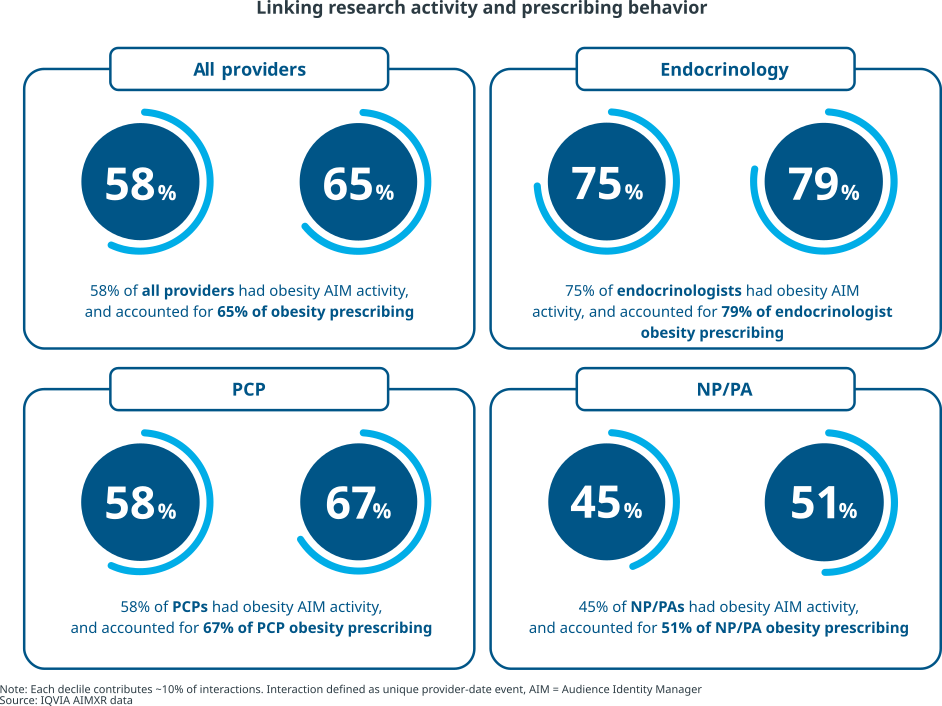
While traditional engagement models remain valuable, leading brands are incorporating behavioral and consumer intent metrics into their data sets to enable more sophisticated segmentation strategies. These signals help identify which HCPs are most likely to engage with GLP‑1 therapies based on clinical needs, patient population dynamics, and emerging lifestyle trends. This deeper intelligence supports more timely, personalized, and resonant messaging that aligns with how HCPs seek information in real‑world settings.
As the market diversifies with new mechanisms of action, dosing options, and comorbidity profiles (among myriad additional variables to consider), applying deeper data layers to predictive analytics has become essential for anticipating which physician segments will be most receptive to emerging therapies. This is especially critical as oral GLP-1 options and treatments targeting multiple comorbidities enter the market, requiring brands to stay ahead of evolving clinical and patient preferences as the number of brands available diversifies. Brands must rely on enhanced predictive analytics to anticipate which HCP segments will adopt these emerging options. Understanding not only who is prescribing but also who is actively researching, questioning, or signaling early interest is becoming essential for optimizing engagement and resource allocation.
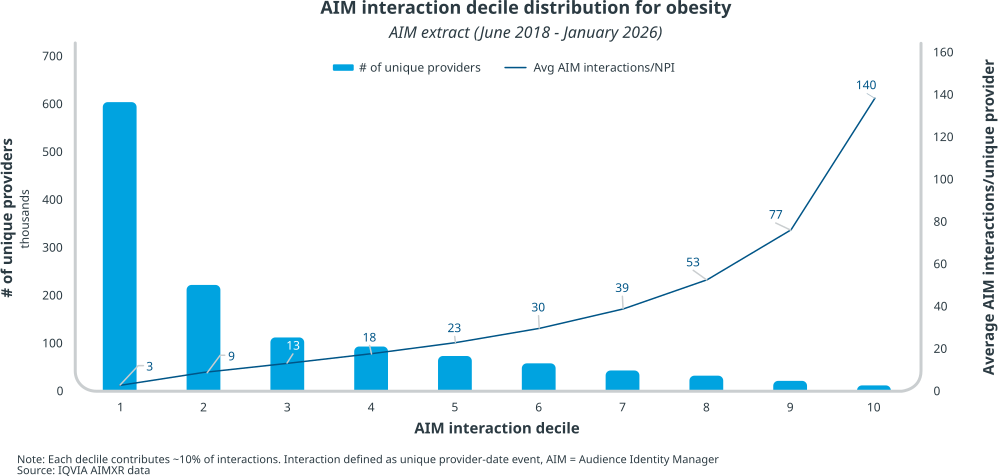
HCP digital behavior in the obesity market reflects a classic long-tail pattern, where a small top decile of HCPs drives a disproportionate share of research activity, while most engage only lightly. Recognizing these behavioral differences allows brands to tailor strategies that focus intensive efforts on high‑engagers while still nurturing the broader base with content that meets their lower-frequency needs. By applying richer behavioral insight to segmentation models, companies can stay ahead of evolving clinical preferences and better align their strategy with the next wave of GLP‑1 innovation.
With GLP-1 therapy awareness now widespread—and a patient population potentially climbing into the tens of millions, with no signs of slowing—the imperative for brands is to move beyond surface-level metrics and focus on deeper funnel indicators, such as activation, conversion, and adherence rates, that reveal true behavioral movement. Recent analyses estimate that by 2030, as many as 30 million Americans—nearly 9% of the total population—may be eligible or actively using GLP-1 therapies for diabetes and obesity management. This scale fundamentally changes how brands must evaluate performance, as traditional metrics like top‑line awareness become less useful in guiding strategy within an already saturated market.
This surge in demand is reflected in the exponential growth of prescribing activity: recent analysis demonstrates that over 500,000 healthcare professionals wrote scripts for GLP1s in 2025 alone. Given the sheer scale of both the eligible patient and prescribing universes, even advanced metrics such as Audience Quality lose some of their strategic value as their accuracy in differentiating between high-potential and low-potential segments dwindles. Instead, brands must focus on deeper funnel metrics to identify which HCPs are most likely to prescribe, switch, or advocate for specific therapies.
By prioritizing actionable insights tied directly to real prescribing and adoption behavior such as prescribing patterns, adoption rates, and patient conversion data, brands can uncover high-value opportunities and optimize campaigns for maximum impact in a market where both patient and provider engagement are accelerating at unprecedented rates.
To thrive in the fast-moving GLP-1 and obesity treatment market, brands must deploy strategies that are both lifecycle-specific and competitively agile. For pipeline brands, success hinges on harnessing pre-launch insights and intent modeling to shape go-to-market plans that resonate with healthcare professionals and anticipate patient demand. For example, a company preparing to launch a new oral GLP-1 therapy might analyze digital engagement trends among HCPs to identify early adopters, then tailor educational content to address their specific interests and concerns.
For products already on the market, the focus shifts to protecting and expanding market share through competitive intelligence. Successful brands may monitor digital signals, such as competitor trial activity and molecule mentions, and proactively engage HCPs with comparative efficacy data or patient support resources. This engagement can occur through targeted digital channels, informed in-person interactions, or a coordinated combination of both. Supporting content and publications should also follow an AI-aware strategy, with clear structure and formatting that enable discovery by AI search engines, ensuring branded content appears when HCPs search for obesity and GLP‑1 information. Together, these indicators help teams respond quickly with competitive efforts that reinforce product differentiation in a crowded category.
IQVIA’s AIM data shows that HCP digital engagement spikes following major GLP‑1 and obesity market developments. For example, results from the SURMOUNT-2 clinical trial, which demonstrated 15% weight‑loss result for tirzepatide, drove a surge in HCP research activity, while the FDA’s resolution of the prolonged Wegovy (semaglutide) shortage renewed interest by restoring access to a high‑demand therapy. At the end of 2025, additional engagement peaks followed announcements of Most Favored Nation (MFN) pricing agreements that significantly reduced GLP‑1 costs and enabled Medicare coverage of obesity treatments, as well as the FDA approval of oral Wegovy, the first GLP‑1 weight‑loss pill.
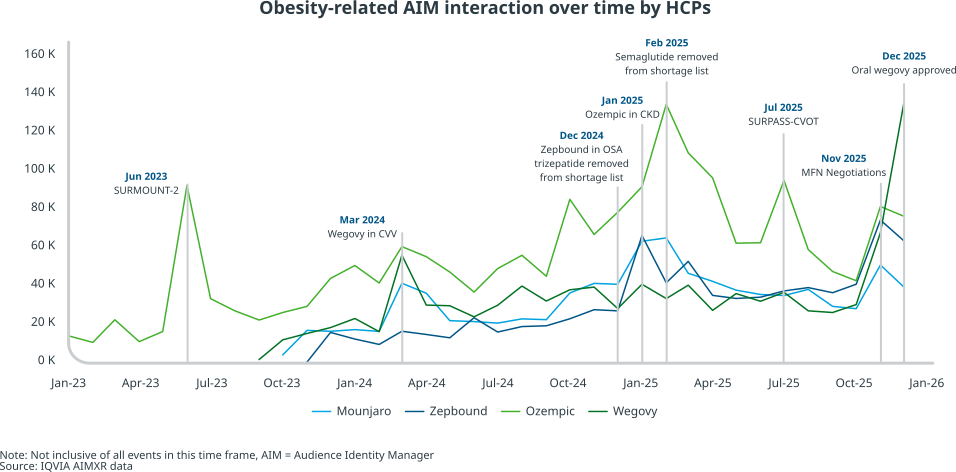
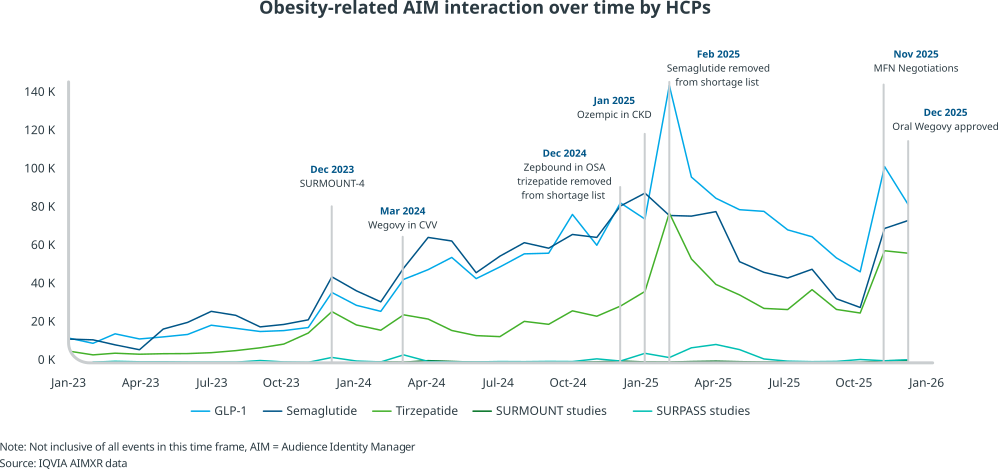
In the obesity market, timing is as critical as message relevance. Brands must meet physicians at the moments when curiosity peaks, long before signals fade and the opportunity to empower providers with the information they need to make informed prescribing decisions closes. Real-time and predictive analytics make this possible by identifying emerging interest as it happens, forecasting where it will grow next, and using adoption patterns from earlier GLP-1 launches to anticipate which HCPs are most likely to engage.
But measuring signals is only half the equation; successful brands also create the conditions that stimulate them. Well-timed clinical data releases, expert commentary, and educational content—especially around new FDA approvals, guideline updates, and study publications—consistently prompt renewed exploration of evolving GLP-1 topics. Across all lifecycle stages, the most effective brands combine these moments with targeted digital channels and coordinate in-person efforts, ensuring that outreach remains both strategic and responsive. By deliberately sequencing touchpoints before, during, and after high-attention events, companies can extend engagement, deepen clinical understanding, and sustain momentum as competition and clinical expectations evolve.
In today’s rapidly evolving obesity treatment landscape, GLP-1 therapies have become cultural and clinical mainstays, reshaping how HCPs engage with the information that assist with their prescribing decisions. For pharmaceutical companies, this shift demands a reimagined digital strategy—one that is agile, data-driven, and deeply attuned to the behaviors and needs of digitally active HCPs.
GLP-1 therapies have redefined the rules of engagement in the obesity market, with early signs that this shift is beginning to influence approaches in other therapeutic areas as well. By embracing digital innovation, behavioral insights, and lifecycle-aligned strategies, pharma companies can build stronger, more responsive connections with HCPs, and position themselves for sustained success in this high-growth therapeutic area. Reach out to IQVIA to learn more about how HCP digital strategies can evolve to meet HCP interest and drive engagement.

Data, AI, and expertise empower Commercial Solutions to optimize strategy, accelerate market access, and maximize brand performance.