














Brand & Marketing
Grow your brand, now and through patent expiry
This blog is part of an ongoing series, A Brave New World: Finding Life Sciences Success in Modern Markets.
Launching a new product in life sciences is more consequential than ever. Yet, manufacturers who confine their analysis to the performance of their own brands risk losing sight of the broader dynamics that truly shape market success. By focusing solely on individual products, organizations may overlook critical patterns and opportunities that emerge only when launches are examined across the entire universe of prescribers, therapies, and drug classes.
This above-brand perspective is essential, not just for understanding how quickly providers adopt new innovations, but for revealing the behavioral trends, competitive forces, and specialty-specific nuances that drive adoption at scale. Only by stepping back to see the forest, rather than just the trees, can launch teams unlock smarter strategies, maximize impact, and ensure their products thrive in a complex, interconnected marketplace.
In an era of heightened industry pressure and declining performance, rigorous benchmarking is indispensable to ensure strategic decisions are grounded in evidence, not assumptions or outdated views of market performance. Without clear benchmarks and a broad perspective, even the strongest brands risk falling behind in a market that demands continuous adaptation and excellence.
Above-brand analytics are transforming launch strategy. The Launch Adoption Index (LAI) is a breakthrough metric that measures how quickly healthcare providers (HCPs) adopt new therapies compared to their peers, using AI-driven behavioral science to pinpoint early adopters, optimize targeting, and ultimately improve launch performance. Unlike traditional models that focus on high-volume prescribers or limited early adoption analysis, LAI reveals the true drivers of brand adoption, helping launch teams segment markets, allocate resources efficiently, and forecast uptake with greater accuracy. By identifying innovators and tailoring engagement strategies, manufacturers can accelerate launch performance and respond quickly to market signals.
LAI methodology surpasses traditional brand and therapeutic-level analyses by evaluating adoption across over one million HCPs and ~2,000 launches within the IQVIA universe. The resulting study, the industry’s largest of its kind, enables flexible, data-driven insights through advanced analytics and AI models. For each HCP-launch product combination, the LAI calculates days to first written prescription, then aggregates results by HCP, adjusting for therapeutic category via a proprietary benchmarking algorithm.
The resulting HCP segmentation capabilities empower launch teams to pinpoint true innovators and early adopters, those most likely to adopt new therapies early and drive momentum. Targeting these fast movers with tailored engagement strategies accelerates uptake, while slower adopters can be approached with different tactics to accelerate adoption based upon demonstrated behavior or prioritized later in the launch cycle. For brands faced with scarce resources, this enables smarter promotional allocation and sharper forecasting, offering early signals when adoption lags.
Adoption rates for new treatments reveal striking differences across medical specialties. Plotting adoption speed deciles against days to adoption demonstrates how physician specialties vary in their willingness to prescribe new medicines. For example, most endocrinologists begin prescribing new products within the first year of launch, positioning them as rapid adopters. In contrast, nephrologists, one of the slower adopting specialties, are far more cautious, with the average time to adoption stretching to six years.

Source: Excludes vaccines; Physician Targeting Library; LAAD.
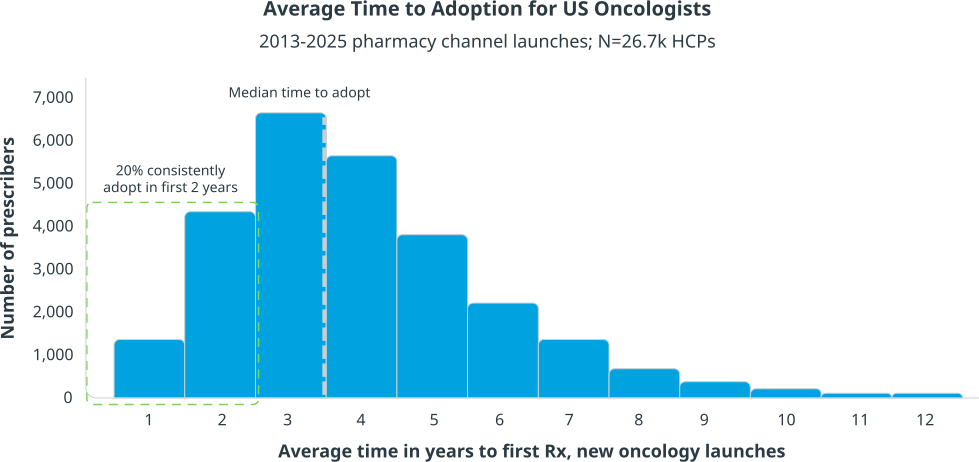
The diversity of adoption speed within specialties is equally notable and can be observed for more detailed analysis. Oncology, which is often thought of as an early adopting specialty, has a segment that consistently adopts new products, however the median time to adoption occurs between years three and four suggesting there are many factors at play.
For oncologists, the median time to adopt a new therapy is 3.5 years, yet 20% consistently prescribe within the first two years.
Source: IQVIA Analysis; Launch Success Encyclopedia, Physician Targeting Library, LAAD 2013-2025, Xponent 2013-2024.
Identifying adoption rates within a therapeutic area is essential for forming effective launch strategies. Early analysis enables precise targeting of providers most likely to adopt quickly, generate volume, and become strong advocates for the brand. It also provides valuable insights for designing short- and long-term promotional plans. These plans should prioritize early adopters, especially highly persistent and productive specialists within the brand’s therapy area.
Early adopting providers not only drive volume when a brand first enters the market, they often serve as key opinion leaders or peer advocates who influence others and become champions for it. During launch, benchmarking adoption against established norms enables early assessment of product performance and helps optimize promotional spend for stronger return on investment.
These insights are more than statistics; they provide a roadmap for launch success. To maximize impact, launch teams must identify and engage early adopters, especially those who influence their peers. By tailoring outreach and promotional efforts to these key providers, organizations can accelerate uptake and drive broader acceptance.
Evaluating adoption offers new insights to improve provider engagement. Creating strategies that drive a leftward shift in adoption to happen earlier creates qualitative and quantitative research opportunities. Asking the question why this observed behavior exists leads to HCP specific insights on how to influence it. Observed reasons could include the influence of peer networks, promotional sensitivity to in-person or digital interactions, the role of evidence beyond clinical trials, or as in the oncology case study, the need to establish treatment pathways.

Source: IQVIA U.S. Center for Thought Leadership & Innovation; Patient Targeting Library; LAAD.
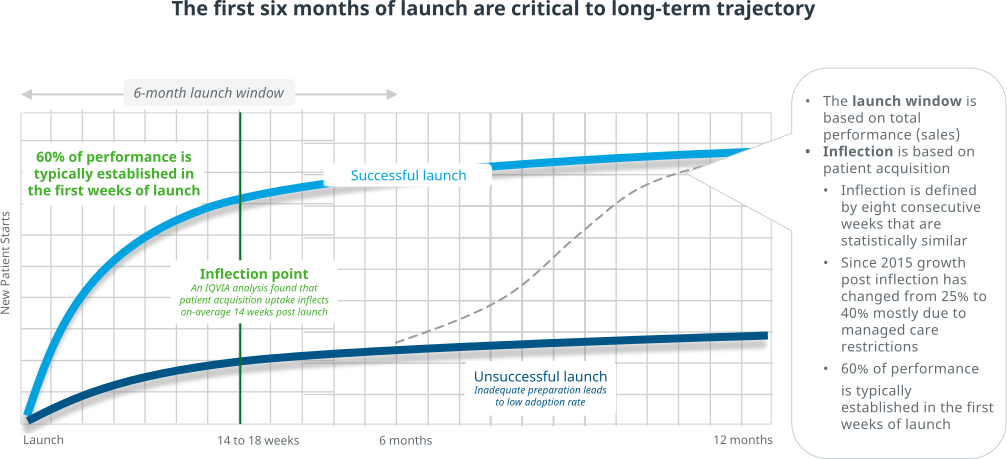
In a launch environment where there are more brands missing forecast than hitting, the adoption rate of HCPs for promotional targeting is an essential element for success:
Segmenting physician targets by adoption speed, not just volume and targeting high value doctors will accelerate new patient acquisition. Accurately accounting for new patient acquisition and developing the right new to brand (NTB) uptake curve is fundamental in developing an accurate long-term NTB forecast. This foundation strengthens strategic decision making and planning around sales force sizing, promotional investment, and brand optimization from launch and throughout the lifecycle of a brand.
Source: Launch Center Of Excellence Research; Abbreviations: NTB: New-to-Brand; Includes launches from 2000 through 2018.
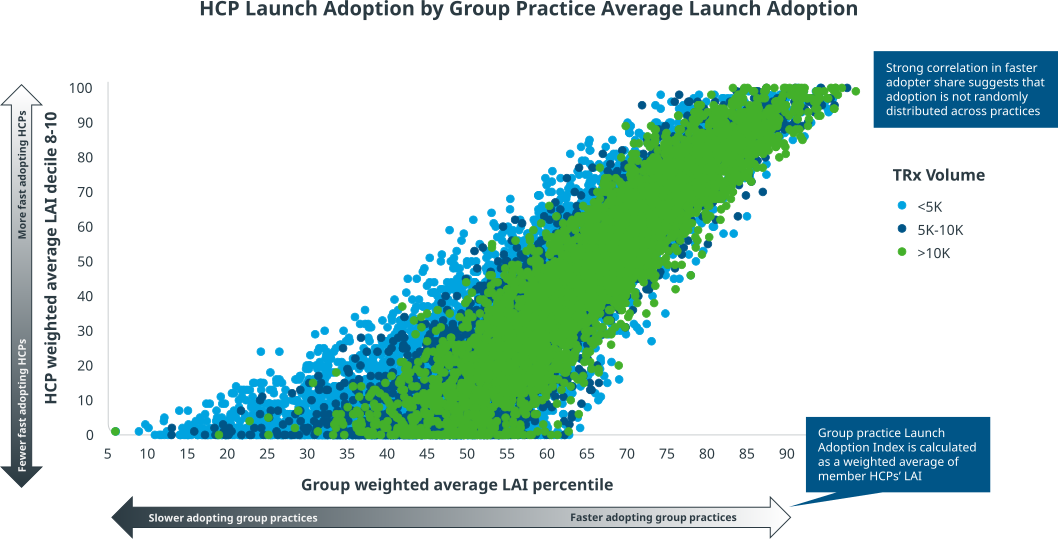
One early adopter is good; a group of early adopters is better. Launches succeed when they identify and engage early adopters who will not only prescribe but also influence peers to do the same. The LAI shows that early adoption behavior can be observed at the practice level. This means adoption is not purely an individual trait, the practice environment matters as does the sequence of adoption within a practice. Early adoption is influenced by peer interactions, shared resources, and institutional culture. Strong brands and organization invest not just into individual targeting strategies, but also invest in building practice level relationships.
Source: IQVIA U.S. Center for Thought Leadership & Innovation; Physician Targeting Library; LAAD; 242K unique providers.
The group practice effect has practical implications for launch strategy. If group practice is identified as early adopting, it should become a priority for initial uptake and peer influence. This can be particularly true when pursuing an asymmetric launch strategy against larger competitors with deeper pockets and larger resource pools they can activate.
Engaging the entire practice through group level detailing, grand rounds, targeted speaker programs, or securing a champion within the group can yield a multiplier effect as colleagues reinforce each other’s behavior. This also means sales representatives or Medical Science Liaisons (MSLs) should approach early adopter practices differently: rather than just focusing on one doctor, they should coordinate efforts across the practice to educate on the new product.
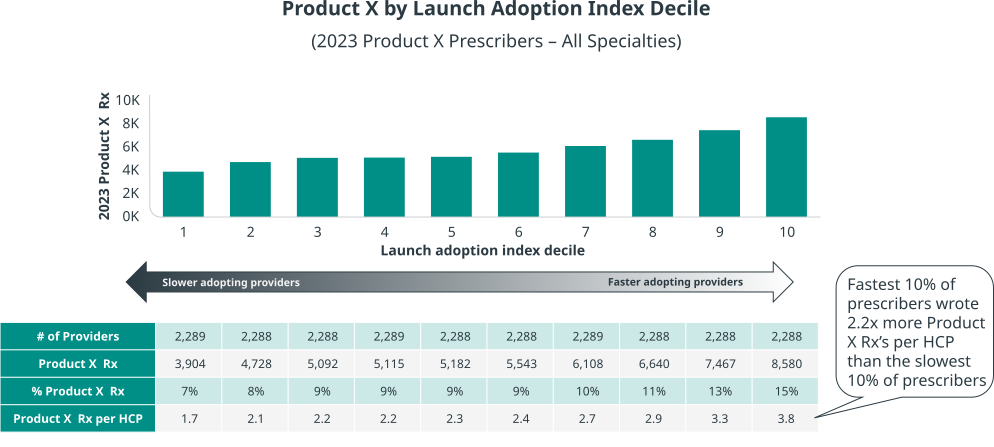
Broadly, the life sciences industry struggles with predictive analytics and often resorts to reactive descriptive analysis. By broadly studying HCP behavior demonstrated across many launches, future looking probabilistic analysis can be utilized. Consider the real-world example of a product that launched in 2023. Providers with faster adoption scores prescribed significantly more of the product than those with slower adoption scores. HCPs in the fastest adoption decile wrote on average 3.8 prescriptions each, which was 2.2x more than the 1.7 prescriptions per HCP in the slowest decile. In aggregate, that fastest group accounted for about 15% of the brands’ prescriptions, whereas the slowest group accounted for only 7%.
This demonstrates a predictive power: if a launch team had used LAI scores to target the brand’s rollout, they could have anticipated which doctors would contribute disproportionately to early uptake. For instance, the fast adopter segment could have been prioritized for early engagement efforts, knowing they were likely to drive volume quickly. For this brand, promotional costs far exceeded gross sales, creating a net negative on the balance sheet. Had investment been paced with prescribing probability, the time to promotional breakeven would be much earlier in the lifecycle.
Source: Physician Targeting Library; LAAD; Launch Adoption Index based on all launches prior to Product X.
Amid economic pressure and evolving policy constraints, launch strategies must evolve to reflect today’s realities. One of the most important factors to consider is incorporating modern metrics such as provider adoption rates. Without these insights, teams are flying blind, relying on reactive analytics to navigate the most challenging launch environment of the past decade. Provider adoption dynamics can be integrated throughout the launch process to:
IQVIA’s proprietary Launch Adoption Index is a powerful, AI-driven, HCP behavioral tool. In today’s market, leveraging provider adoption behavior is essential for building effective launch strategies and maximizing promotional impact. By focusing resources on high adopters, companies can drive early uptake and validate their insights for sustained success. Embracing these data-driven approaches enables organizations to navigate the evolving life sciences landscape and achieve meaningful outcomes.
Please contact your IQVIA representative for more information.

This blog is part of a series exploring the evolving dynamics of pharmaceutical brand commercialization. Upcoming posts will delve into critical themes such as patient engagement, resource-constrained uptake, HCP adoption, investment analysis, payer control, strategic promotion, and the shifting provider landscape. You can find all of our Brave New World content in the U.S. Insights Library.
Grow your brand, now and through patent expiry
Data, AI, and expertise empower Commercial Solutions to optimize strategy, accelerate market access, and maximize brand performance.
Gain high value access and increase the profitability of your brands
We empower life sciences with connected intelligence, transforming data into actionable insights for smarter decisions and better patient outcomes.