














Commercial Solutions
Data, AI, and expertise empower Commercial Solutions to optimize strategy, accelerate market access, and maximize brand performance.
This blog is part of an ongoing series on A Brave New World: Therapeutic Area Deep Dives.
The obesity treatment landscape is evolving rapidly as glucagon-like peptide-1 (GLP‑1) therapies take the market by storm, and the central question is: why are they performing so well? First-in-class status, cash-ready patients, and multiple crossover benefits set the stage; however, prescriber behavior truly ignites the success story in obesity care. None of the growth would have been possible without over 500,000 providers prescribing treatment in 2025. Provider adoption is a key driving force behind how swiftly new therapies gain momentum and which patients benefit. Specifically within obesity, a small group of high-volume prescribers holds outsized influence, steering market uptake and shaping which patient populations access them. These enduring prescribing patterns offer a roadmap for launching future GLP-1 therapies, making it essential for companies to tailor their engagement strategies to the unique needs of each healthcare provider (HCP) specialty.
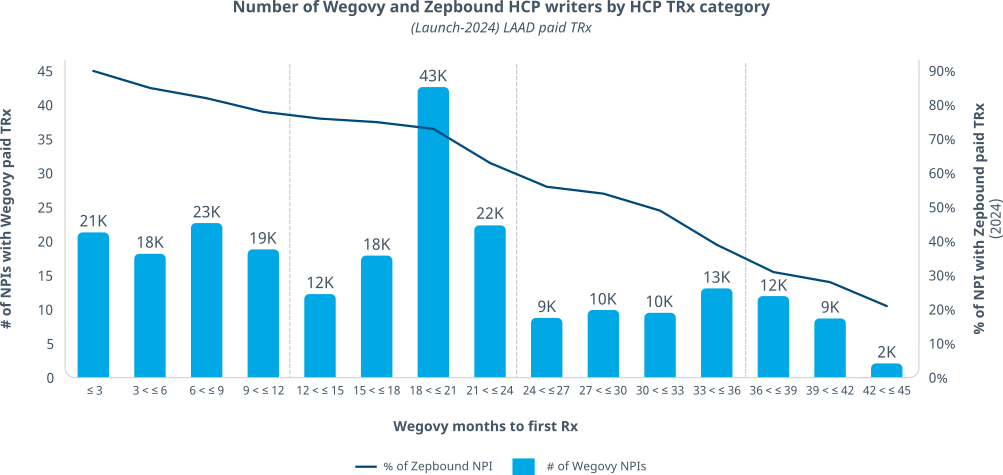
The pace at which providers initiate therapy is a critical signal of how the obesity market evolves. Early adopters of Wegovy (providers who prescribe within the first 1.75 years), which account for fewer than half as many physicians as the slow adopter group, showed a greater willingness to cross-adopt new entrants. In contrast, slower adopters of Wegovy were more cautious and sensitive to Zepbound cross-adoption, showing a steep drop off in Wegovy adopters who subsequently prescribed Zepbound after the 1.75-year post launch mark. This divergence highlights how timing shapes behavior: early engagement accelerates adoption across therapies, while slower adopters contribute more gradually, reflecting hesitancy that tempers the pace of market expansion. While this may appear obvious, the magnitude of adoption and shape of uptake or decay curves can fluctuate widely.
This dynamic underscores the broader influence providers have in shaping the competitive landscape. Early adopters of Wegovy were subsequently high cross prescribers of Zepbound, demonstrating a persistent willingness to embrace new therapies that transcend individual brands. The IQVIA Launch Adoption Index (LAI) is a proprietary, AI-driven methodology that quantifies how quickly HCPs begin prescribing new therapies compared to their peers, using real-world prescription data to identify those most likely to drive early uptake.
Crucially, this high-adopting behavior is not a retrospective metric. It should actively guide decision making for future launches. Providers are not homogenous, and failing to recognize their differences can result in wasted promotional dollars and missed opportunities for market penetration. As new obesity products enter the market, companies must leverage methodologies like IQVIA’s LAI to drive physician targeting efforts, ensuring promotional resources are allocated where they will have the greatest impact.
Note: NPI = the number of unique providers
Source: IQVIA Analysis; IQVIA LAAD Data.
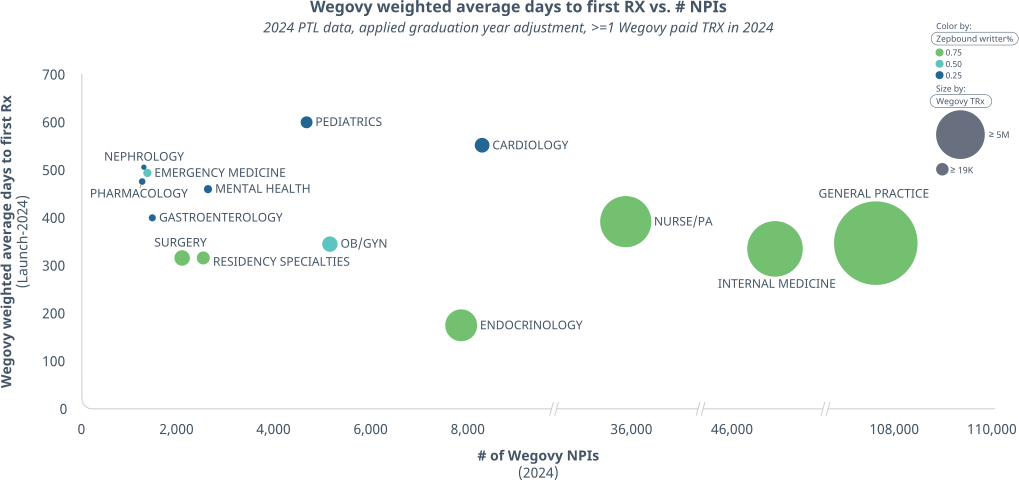
The pace of adoption varies across specialties, reflecting differences in clinical focus and comfort with metabolic therapies. Endocrinologists stand out as both quick adopters of Wegovy and subsequent high writers for Zepbound, leveraging their expertise in managing complex metabolic conditions to integrate new treatments earlier. Their readiness to prescribe is shaped by familiarity with the mechanisms of GLP-1 therapies and a patient base that often presents with comorbidities where these drugs deliver added value. By acting as early adopters, endocrinologists validate new therapies and accelerate momentum across the broader market.
Primary care providers (General Practice, Internal Medicine, and NP/PA), by contrast, are slower to adopt Wegovy compared to endocrinologists, reflecting the realities of managing diverse patient needs and balancing competing priorities. Yet their role is pivotal in driving scale, where they emerge as lay contributors to the high volume of prescriptions.

Together, these forces highlight the interplay between timing and scale in shaping the trajectory of obesity treatment uptake.
Cardiologists and pediatricians, however, have been slower all around to engage with these therapies. Cardiologists, while deeply attuned to the cardiovascular implications of obesity—tend to adopt cautiously, waiting for data to confirm cardiovascular benefit and weighing concerns around safety, tolerability, and the risk of overstepping specialist boundaries. Pediatricians face unique considerations around age, growth, formulary coverage, and long-term developmental outcomes, which contribute to their more measured approach. Although the American Academy of Pediatrics now includes GLP-1s in its guidelines for obesity treatment in children, there remains widespread debate about the long-term effects on younger populations, reinforcing hesitancy among pediatric providers.
Many patients are also co-managed across specialties, meaning cardiologists and pediatricians may see their patients receiving GLP-1s from primary care providers who handle a broad range of conditions and account for the largest share of prescribing activity. This variation underscores that different providers require different types of engagement and support to drive adoption: scientific data to reassure specialists such as cardiologists and pediatricians, and wrap around resources for PCPs managing diverse patient needs. Since GLP-1s originated in the diabetes space, endocrinologists were quick to adopt, supported by long standing infrastructure and relationships built by companies like Eli Lilly and Novo Nordisk. For other companies acquiring GLP-1 assets without those established ties, the lesson is clear: tailored engagement strategies are essential to meet the distinct needs of each provider group and accelerate broader market penetration.
Source: IQVIA Analysis: Launch Adoption Index, Physician Targeting Library.
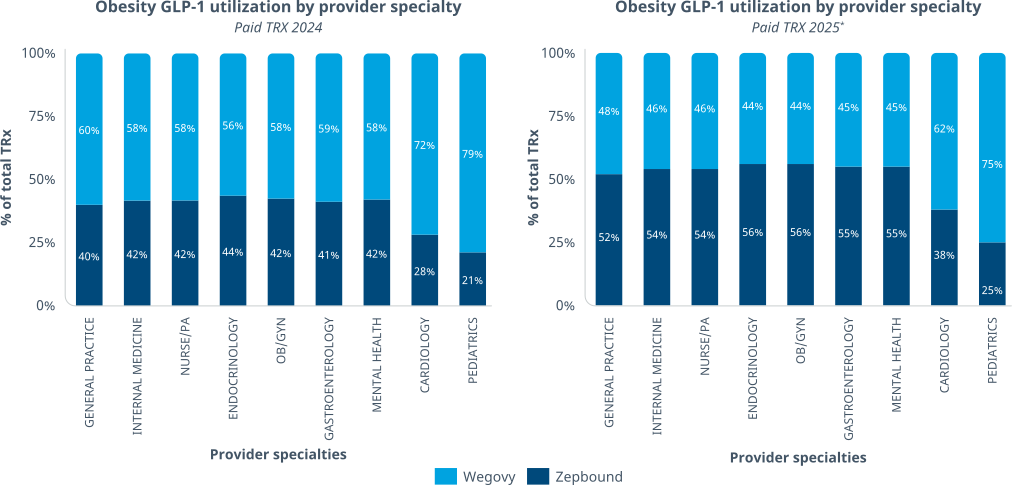
Utilization patterns across specialties reveal important nuances in how GLP-1 therapies are being integrated into clinical practice. Across all specialties, Wegovy held the lead in utilization through 2024 due to its first mover advantage and indication expansions, however, Zepbound pulled ahead in 2025 in most specialties. Zepbound’s approval for obstructive sleep apnea (OSA) in December 2024 drove a dramatic market access lift, with Medicare Part D approval rates rising 18% in just six months. Direct-to-Consumer patient programs are also contributing to the shift as consumer demand for treatment, even if not covered by an insurer, contributes to growing utilization.
Among faster-adopting specialties such as endocrinology, Zepbound is gaining meaningful traction, reflecting the specialty’s willingness to integrate newer therapies and accelerate momentum across the broader market. Primary care providers, which account for the largest share of prescribing activity, are following suit, adopting Zepbound at a growing pace. Their adoption of Zepbound is translating this shift into significant market impact, as therapies reach a wide audience quickly and sustain overall volume growth.
However, cardiologists and pediatric specialists remain holdouts, with Wegovy continuing to lead these segments due to its indications for cardiovascular risk reduction and pediatric obesity, areas where Zepbound does not currently have approvals.
Note: *2025 data based on first 6 data months the year.
Source: IQVIA Analysis; Launch Adoption Index, Physician Targeting Library.
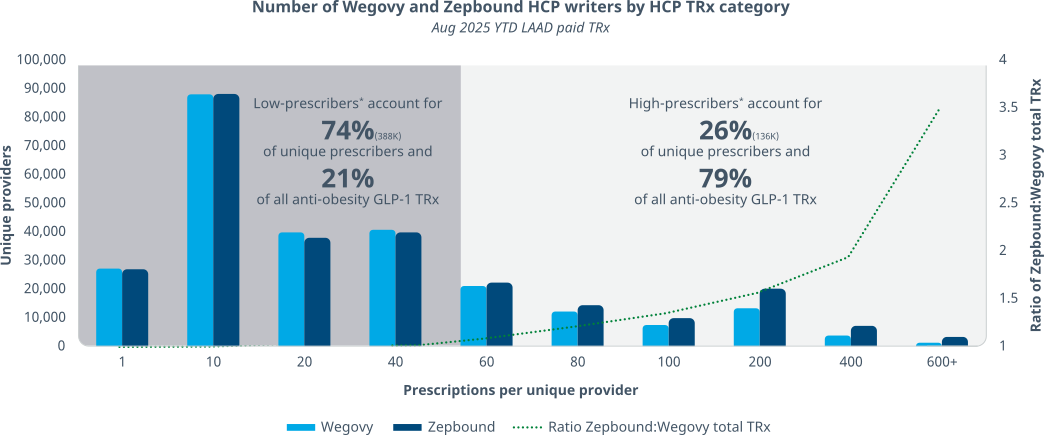
Provider behavior is shaping the trajectory of the obesity market. While many HCPs prescribe GLP‑1 therapies at similar rates, a relatively small group of top prescribers is propelling certain products to greater heights and exerting outsized influence on overall market dynamics. In fact, the top 26% of prescribers account for 79% of all anti‑obesity GLP‑1 prescriptions. This concentrated prescribing power not only drives momentum but also determines which therapies reach the broadest patient populations, amplifying their impact across the field.
The distinction becomes particularly clear when examining therapies with streamlined access pathways. Zepbound, for example, demonstrates a notable lift among high‑volume prescribers—defined as those writing more than 7.5 prescriptions per month. This threshold marks a key inflection point: casual prescribers below it show little brand preference, while high-volume writers consistently favor Zepbound over Wegovy. Amongst the highest writers who write more than 50 prescriptions per month, providers prefer Zepbound twice as much as Wegovy. That preference is fueled by clinical efficacy, label advantages, head-to-head study data, and enhanced patient access through direct‑to‑patient programs. Lilly’s commercialization strategy, including initiatives like LillyDirect®, reduces administrative friction and enables providers to initiate therapy more readily. This ease of use empowers high‑volume prescribers to expand adoption across their patient base, reinforcing their role as central catalysts in market growth.
Note: Low-prescribers defined as providers who write less than 7.5 Rxs monthly, High-prescribers defined as providers who write 7.5 or more Rxs monthly.
Source: IQVIA Analysis; IQVIA LAAD.
As the anti-obesity market continues to evolve, provider adoption behavior offers critical insights into how therapies gain traction and scale. Examining adoption patterns across specialties and prescriber types reveals the forces driving momentum and shaping patient access. To help drive provider adoption and market penetration, pharma companies should consider the following imperatives:
Together, these dynamics highlight the pivotal role of HCPs in determining the speed, scale, and sustainability of GLP‑1 adoption. Reach out to IQVIA to explore HCP adoption trends and understand how they can inform your adoption strategy.

Related solutions
Data, AI, and expertise empower Commercial Solutions to optimize strategy, accelerate market access, and maximize brand performance.
Grow your brand, now and through patent expiry