














Market Access
Gain high value access and increase the profitability of your brands
This blog is part of an ongoing series, A Brave New World: Therapeutic Area Deep Dives.
Lung cancer remains the leading cause of cancer-related mortality in the U.S., with non-small cell lung cancer (NSCLC) accounting for 80-85% of diagnoses and anchoring much of the clinical and commercial activity in the category. Despite advances in screening, early detection, and smoking cessation, most patients are still diagnosed at advanced stages which concentrates both clinical complexity and commercial value in later lines of care. Simultaneously, innovation is expanding treatment options faster than the system can identify, segment, and treat eligible patients consistently. This creates a gap between what is clinically possible and what is delivered in practice. As a result, competitive advantage in NSCLC no longer depends on access to innovation alone, but on the ability to match the right patient to the right therapy early.
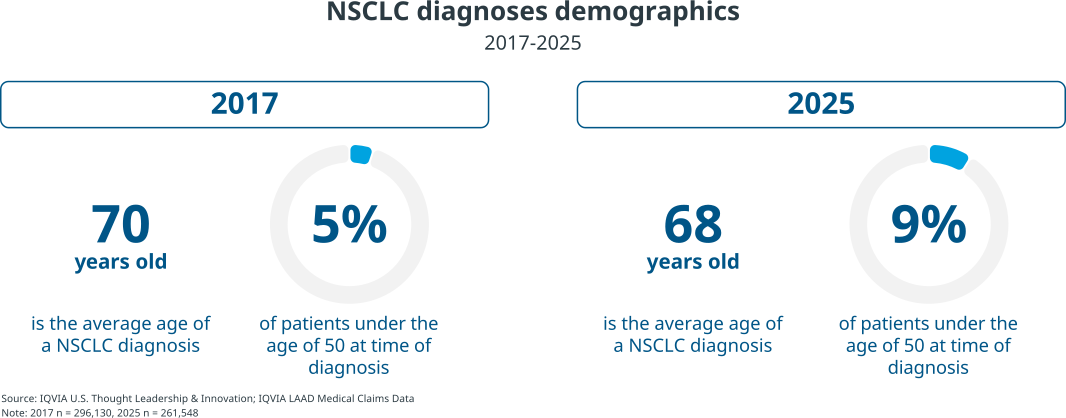
While mortality has declined over time, late-stage diagnosis continues to limit the full impact of therapeutic innovation. As a result, clinical need and commercial value remain concentrated in advanced disease. Outcomes have improved with the advent of targeted therapies and immuno-oncology, yet five-year survival remains only about 30% overall and closer to 12% in metastatic disease. This highlights a persistent challenge: expanding treatment options alone does not guarantee better outcomes when patients are not identified and treated early. At the same time, NSCLC population is evolving. Since 2017, the average age at diagnosis has fallen from 70 to 68 years, while the share of patients diagnosed before age 50 has increased by approximately 4 percentage points. These shifts reinforce the importance of earlier identification and intervention. As detection improves and treatment moves upstream, the gap between where innovation is advancing and where it is consistently applied becomes more pronounced.
Today’s NSCLC landscape is distinguished by its fragmentation into biomarker-defined segments, increasing the precision needed to identify and treat eligible patients. This shift moves competition from scale to execution where performance depends on identifying and capturing narrow patient segments consistently.
The NSCLC population is now segmented across disease stage, histology, and molecular drivers, creating interconnected submarkets that require distinct evidence, positioning, and access strategy. Biomarkers such as EGFR, ALK, and ROS1 now anchor treatment pathways, while PD-L1 expression continues to guide immunotherapy use in patients without actionable mutations.
In parallel, earlier detection and improving survival extend the treatment journey, further increasing the importance of sequencing across multiple lines of therapy. Therapies that once competed in later-line settings are moving upstream, compressing downstream opportunity and raising the bar for differentiation earlier in the disease course. This has shifted value toward assets that can demonstrate superiority in frontline or perioperative settings, where failure to establish relevance limits access to long-term value.
NSCLC now operates as a set of interrelated micro-markets, each defined by its own epidemiology, evidence requirements, and competitive pressures. Competing effectively depends on targeted evidence generation, diagnostic alignment, and precise positioning within increasingly narrow patient segments.
As these micro-markets emerge, NSCLC has emerged as one of the clearest examples of precision oncology and reshaping a market at scale. While breast cancer has also embraced biomarker-driven innovation, competition remains concentrated within a more defined set of subtypes. In contrast, NSCLC's patient population is spread across an expanding number of molecularly defined segments, increasing both competitive intensity and the pace of innovation. Over the past two decades, the U.S. NSCLC market has seen sustained innovation, with IQVIA analysis showing that approximately 80% of recent approvals are linked to biomarker-driven approaches. As a result, market opportunity is still supported by breadth, but competitive advantage is increasingly determined by the ability to build depth within priority molecular segments through diagnostic alignment, sequencing strategy, and focused lifecycle expansion.
The market has evolved through successive waves of innovation, from high-prevalence mutations to low-prevalence alterations. This has created a “scale-meets-segmentation” dynamic, allowing even small patient subsets (3–5%; ALK, ROS1, etc.) to support meaningful opportunity while intensifying competition within individual segments.
As multiple therapies converge on the same targets and patient populations, differentiation has shifted from mechanism to execution across sequencing and evidence generation, which compresses uptake windows and requires earlier proof of advantage to secure position.
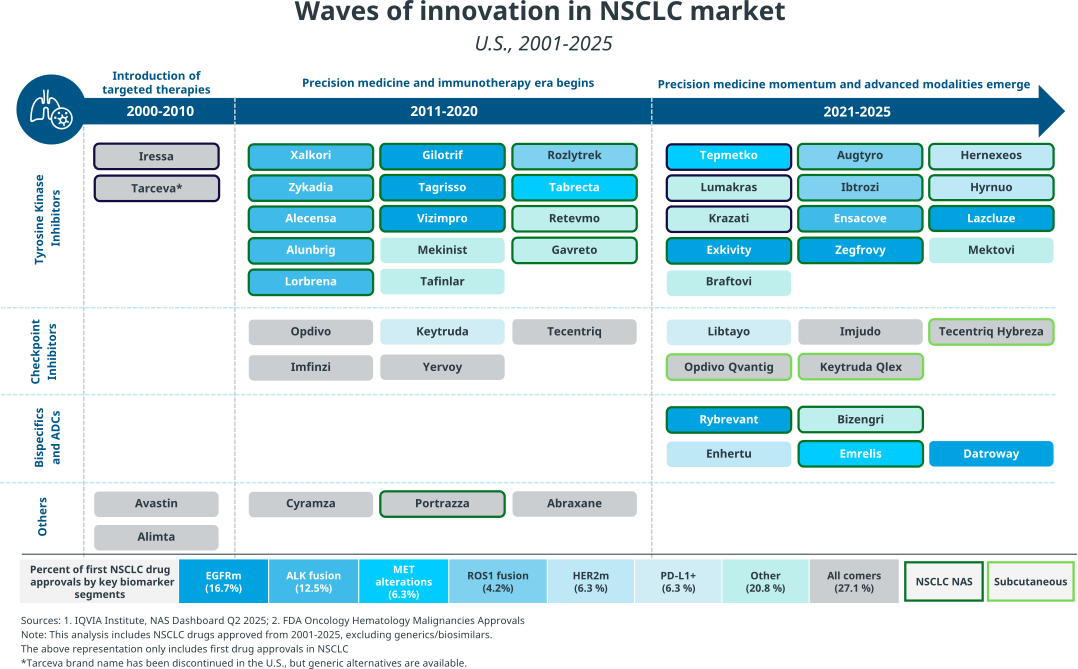
Success increasingly depends on execution across evidence generation, diagnostic adoption, patient identification, and lifecycle strategy. In a market where leadership can be won or lost within narrowly defined molecular segments, organizations must establish a clear role within evolving treatment paradigms while continuously reinforcing that position as standards of care advance.
Realizing the value of these micro-markets depends on one critical enabler: consistent and comprehensive biomarker identification. More than half of NSCLC patients harbor actionable genomic alterations that directly guide therapy selection, which makes testing a primary determinant of treatment access and competitive share.
Testing rates for established biomarkers such as EGFR, ALK, and BRAF now approach 95–100%, with next-generation sequencing adoption exceeding 90% in metastatic disease, reflecting one of the most mature diagnostic ecosystems in oncology. As innovation extends into lower-prevalence biomarkers and more complex treatment strategies, variability in real-world testing continues to create friction, which limits consistent identification of eligible patients.
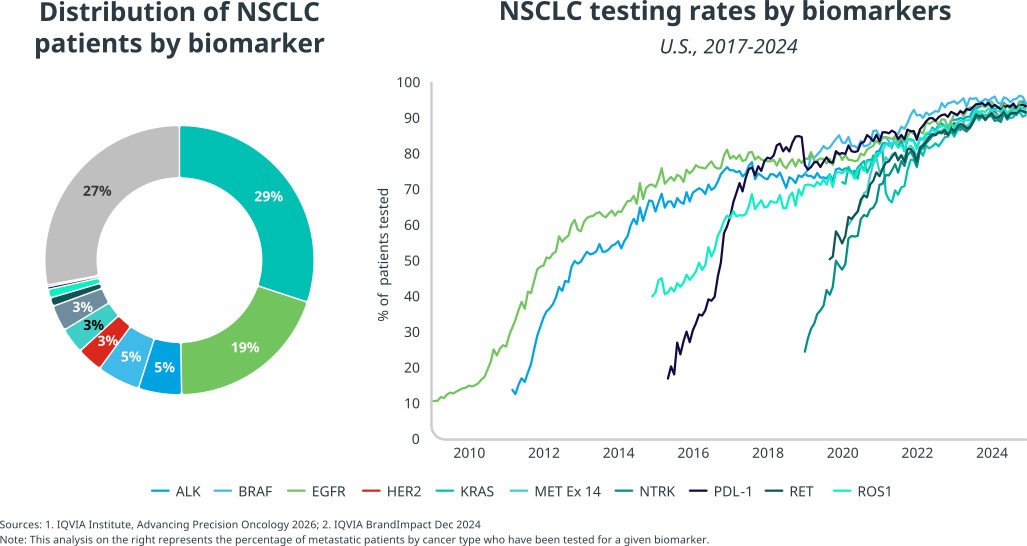
These gaps translate directly into commercial impact as missed or delayed testing reduces the effective addressable population, shifts patients toward non-biomarker-directed regimens, and limits share capture across providers and systems. Differentiation extends beyond clinical efficacy to include the ability to operationalize diagnostics, where identifying the right patient becomes as important as the therapy itself.
IQVIA analysis indicates the U.S. NSCLC market has scaled rapidly, reaching $16.6 billion in 2025 and is projected to exceed $40 billion by 2035. This growth reflects sustained disease burden and expanding use of targeted therapies and immunotherapy approaches. However, this growth masks a structural shift in how value is distributed. While scale is preserved at the aggregate level, competition is fragmented across a growing number of biomarker-defined segments.
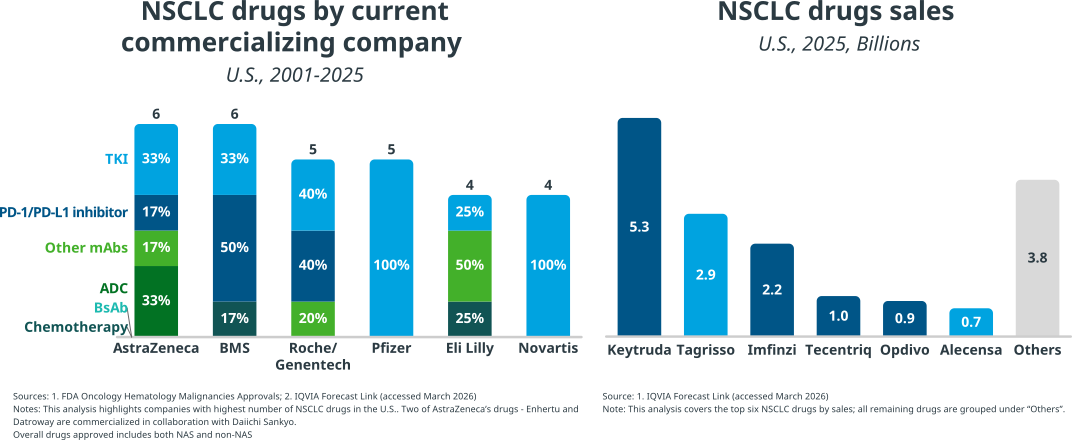
This fragmentation is reflected in a competitive landscape anchored by large pharmaceutical players with broad, multi-modality portfolios. Large pharmaceutical companies maintain leadership through established immunotherapy and targeted therapy franchises. However, sustaining that position depends on continued expansion within specific biomarker segments where multiple generations of therapies now compete on incremental gains, raising the bar for differentiation.
In parallel, emerging biopharma players continue to gain traction in narrower segments by addressing resistance pathways or underserved biomarker populations. These focused strategies show that meaningful opportunity persists in smaller segments, where precise positioning determines access.
As the market continues to expand, growth is tied to the ability to capture value within these smaller, more competitive segments. Advances in molecular profiling and expansion into biomarker populations such as KRAS, HER2, and NRG1 continue to fragment the addressable population, while a robust pipeline across ADCs, bispecifics, and next-generation targeted therapies sustains competition within already narrow segments.
NSCLC continues to be one of the most active oncology pipelines, with a broad range of modalities advancing across targeted and immunotherapy approaches. Development is growing more concentrated in frontline settings and combination strategies aimed at improving depth and durability of response, which reflects a shift toward earlier intervention, where clinical impact and long-term value are concentrated.
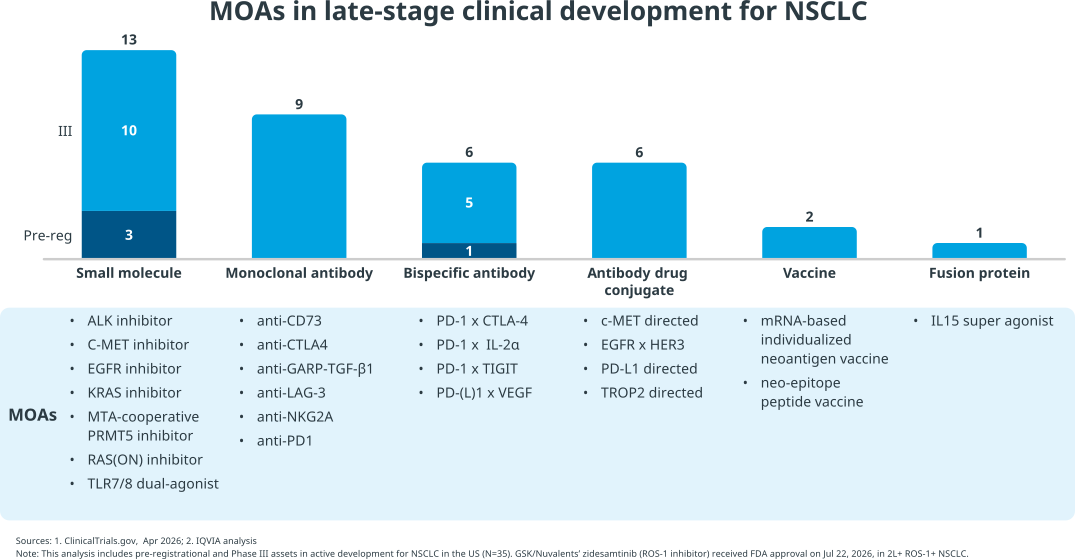
The next wave of innovation is expanding treatment options while intensifying competition within already crowded pathways. Next-generation targeted therapies continue to address resistance mechanisms across core biomarkers such as EGFR, KRAS, and ALK, including assets designed for improved brain penetration or to overcome acquired mutations. New modalities now enter overlapping treatment settings, competing for the same patient populations and increasing optionality without expanding the underlying demand.
Convergence across modalities is reshaping how therapies are evaluated and adopted. Differentiation is increasingly driven by depth and durability of response, tolerability, and the ability to integrate effectively into existing treatment sequences, which places pressure on assets to establish position early in the treatment pathway.
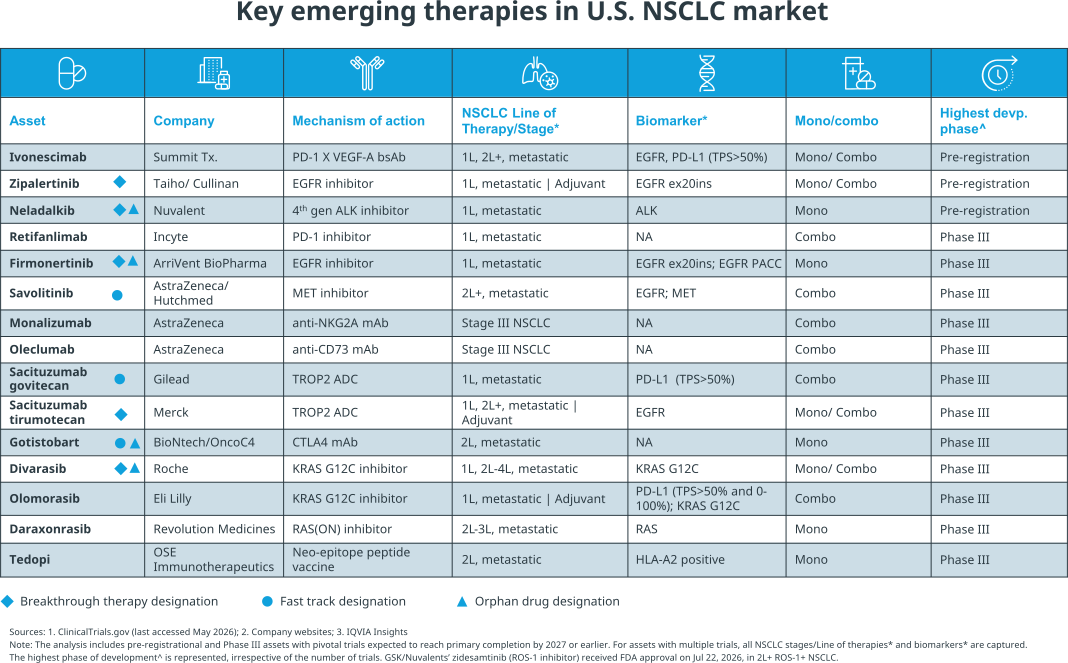
As the pipeline matures, competitive success is now tied to how effectively new therapies can be placed within evolving treatment algorithms. Clinical efficacy alone is unlikely to ensure uptake, as success depends on clear positioning, fit within treatment sequences, and the ability to demonstrate relevance within increasingly narrow patient segments.
Competing in NSCLC requires a more targeted and execution-driven approach, as value shifts toward earlier lines of therapy, narrower patient segments, and more complex treatment pathways. These priorities reflect the conditions that now define advantage in NSCLC:
NSCLC has evolved into a network of biomarker-defined submarkets, where opportunity continues to expand even as differentiation becomes more complex. Competition is intensifying as multiple therapies converge on increasingly narrow patient populations, while ongoing scientific advances continue to unlock new molecular segments with distinct unmet needs. In this environment, success depends not only on innovation, but on the ability to translate it into commercial leadership through effective patient identification, evidence generation, diagnostic adoption, and clear positioning within evolving treatment pathways. Contact IQVIA to learn more about how to navigate the evolving NSCLC market and shape future standards of care.

This blog is part of an ongoing Brave New World series focused on how oncology is evolving and what that means for clinical and commercial strategy. Topics include the modern oncology landscape, the shifting roles of community vs. academic organizations, post ASCO perspectives, tumor specific deep dives, the growing impact of advanced modalities (CAR T and bispecifics), and what’s next in oncology innovation. You can find all Brave New World content in the U.S. Insights Library.
Related solutions
Gain high value access and increase the profitability of your brands
Data, AI, and expertise empower Commercial Solutions to optimize strategy, accelerate market access, and maximize brand performance.