














Brand & Marketing
Grow your brand, now and through patent expiry
This blog is part of an ongoing series, A Brave New World: Therapeutic Area Deep Dives.
Advances in breast cancer treatment have fundamentally reshaped patient outcomes, turning what was once a devastating diagnosis into a model for how precision medicine can deliver sustained clinical benefit. Decades of progress in targeted therapies and biomarker‑driven care have contributed to a 44% decline in mortality since 1989, while rising incidence has increased the number of patients living longer with the disease. For many, breast cancer has become a chronic, multi‑line condition requiring prolonged and carefully sequenced treatment.
At the same time, the patient population is changing. Since 2017, the average age at diagnosis has fallen by three years, and the share of women diagnosed under age 50 has grown by 8%. These shifts introduce younger patients with longer treatment horizons, increasing the importance of durable efficacy and tolerability. Together, these patient‑driven dynamics have positioned breast cancer as one of the most consequential indications in U.S. oncology and a leading test case for translating precision innovation into lasting value.
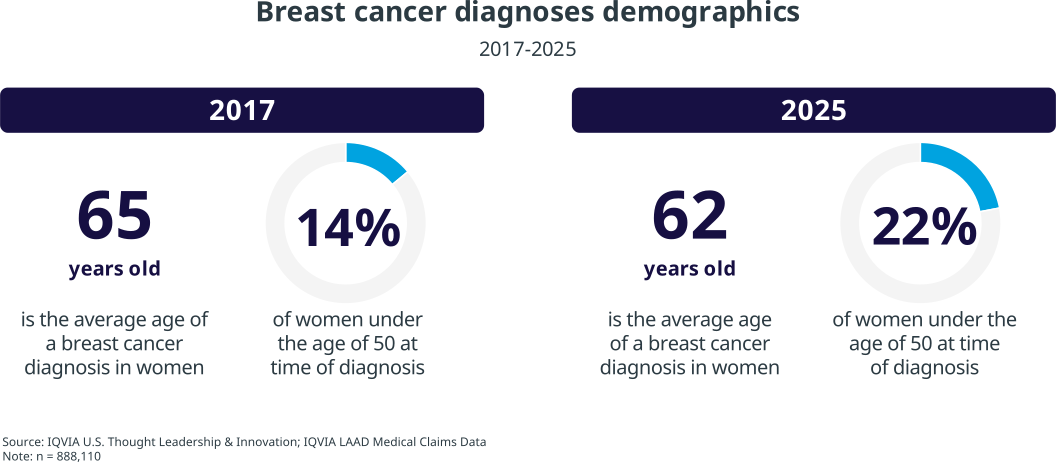
Against that backdrop, breast cancer’s biological heterogeneity is fragmenting the market into smaller, biomarker-defined segments with distinct competitive dynamics. This stratification reflects a broader shift towards delivering the right treatment to the right patient at the right time. As precision science advances, success will hinge on how effectively innovation translates into clinical practice, supported by diagnostic adoption and robust evidence that drives continued use across lines of care. Rather than broad eligibility alone, durable impact now depends on disciplined execution that aligns scientific differentiation, testing and screening infrastructure, and evidence‑based positioning. These factors determine how effectively innovation improves outcomes for well‑defined patient populations.
This progress is the result of continued innovation over the past two decades, with breast cancer evolving into one of the most clinically complex conditions, as scientific advances have markedly reshaped treatment paradigms.

Rapid innovation has expanded therapeutic choice while raising the bar commercially. Success now depends on relevance across lines of therapy, supported by durability, tolerability, and sequencing logic as development becomes more concentrated.
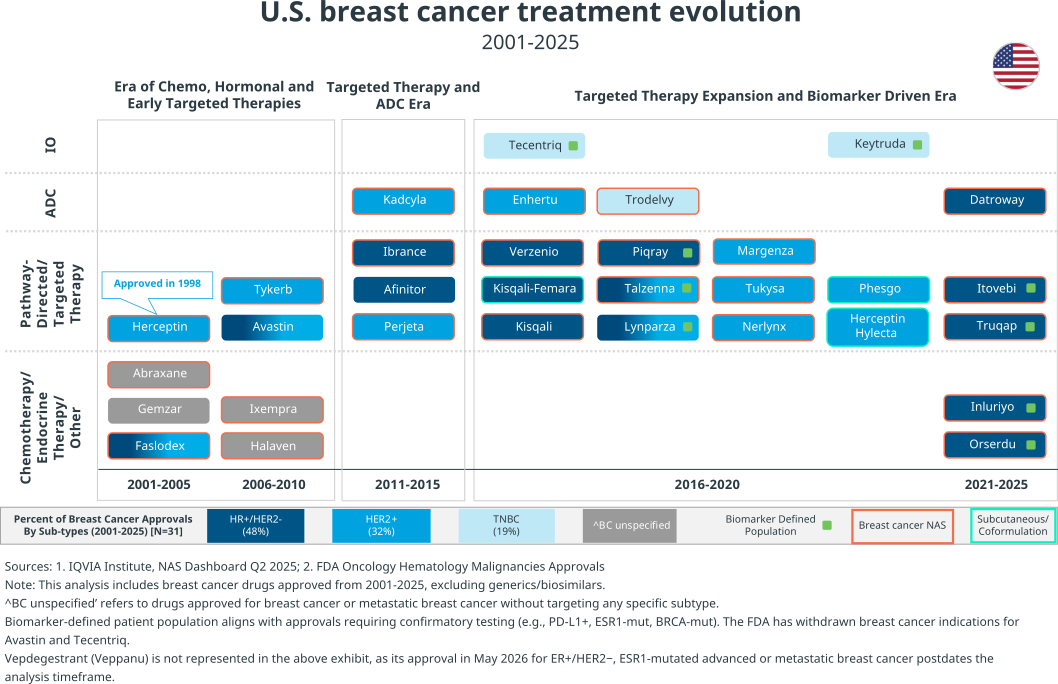
Precision medicine has been the central force behind this shift. The establishment of HER2‑positive disease as the first actionable subtype demonstrated that biomarker‑defined populations could unlock both meaningful survival gains and concentrated commercial value. That precedent was reinforced as HR-positive/HER2-negative disease emerged as the dominant subtype, representing approximately 70% of breast cancer cases. As a result, it is also the most competitive segment, where incremental differentiation and sequencing strategy determine share of voice. The introduction of CDK4/6 inhibitors transformed HR-positive/HER2‑negative disease into a multi-line market, which remains a consistent focus for innovation as opportunities persist in micro-segmentation and resistance-focused treatment. In contrast, triple negative breast cancer (TNBC) accounts for only 11% of cases and represents the segment with the highest unmet need due to its poor survival rate and constrained commercial scalability.
More recently, antibody‑drug conjugates (ADCs) have driven a structural redefinition of the market by expanding the treatable population in areas with few effective treatment options. The emergence of HER2‑low and HER2 ultra‑low disease has brought more than half of breast cancer patients into newly targetable segments, redrawing subtype boundaries. Collectively, these dynamics underscore a market where value is now created through precision, sequencing, and execution across progressively narrow but strategically critical patient segments. As a result, scale is no longer defined by size alone, but by how precisely therapies are matched to clearly defined patient groups.
Biomarker-driven segmentation now sits at the core of value creation in breast cancer, reshaping both clinical pathways and commercial opportunity. Beyond foundational HR and HER2 status, treatment selection increasingly depends on molecular markers such as BRCA, PIK3CA, ESR1, and PD L1, enabling highly targeted but progressively smaller patient populations. While this precision has supported differentiated approvals and premium positioning, it has also made market access and uptake more execution-dependent. In many cases, therapies reach the market before testing is fully standardized or embedded into routine practice, shifting commercial risk from clinical performance to diagnostic adoption and guideline integration.
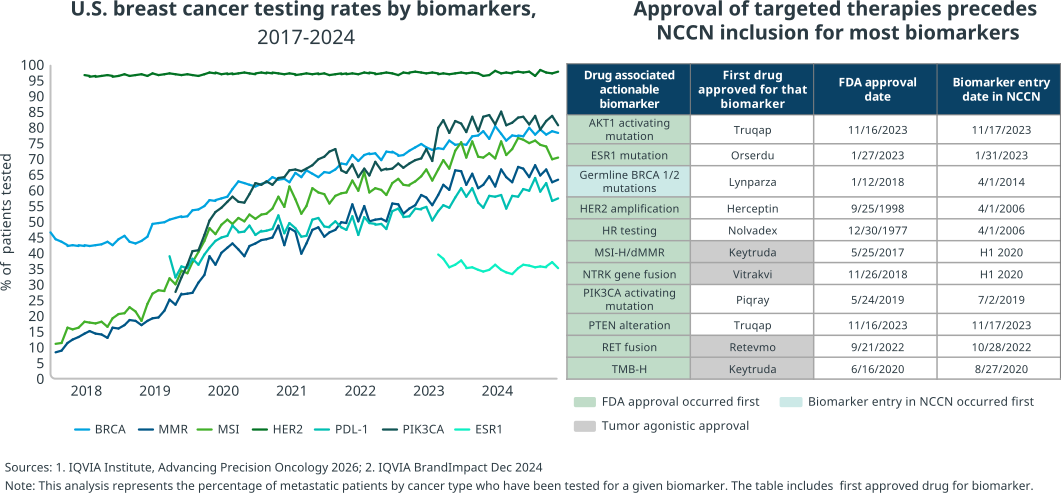
As of late 2024, roughly 70% of U.S. breast cancer patients receive some form of biomarker testing, but diagnostic adoption varies widely by marker, care setting, and practice type, directly constraining the addressable market. HER2 testing is approaching saturation at approximately 98%, while uptake is meaningfully lower for BRCA (78%) and PIK3CA (81%), and drops sharply for ESR1 at just 35%. These gaps carry clear downstream implications. Under-testing limits eligible patient identification, slows launch trajectories, and reduces penetration even for clinically differentiated assets. As the market continues to fragment into biomarker-defined niches, commercial success will depend on the ability to drive testing behavior at scale, clearer guideline positioning, and alignment with real world workflows, which directly shapes how opportunity translates into realized market impact.
These dynamics are visible in how the market is evolving today. The U.S. breast cancer market has expanded rapidly over the past several years, growing from $11.9 billion in 2021 to $24.8 billion in 2025, with a compound annual growth rate of roughly 20%. Market value, however, remains highly concentrated. Large biopharma players including Roche, AstraZeneca, Novartis, Pfizer, Eli Lilly, and Merck account for nearly 68% of novel active substance (NAS) launches since 2001, reinforcing scale, lifecycle depth, and portfolio breadth as durable sources of competitive advantage. At the product level, CDK4/6 inhibitors continue to anchor market value, with Verzenio emerging as the top-selling breast cancer therapy in 2025, followed closely by Kisqali and Ibrance, underscoring the durability of entrenched treatment backbones amid intensifying competition. Taken together, leadership remains concentrated, but sustaining share now depends on how well therapies hold their place across lines of care.
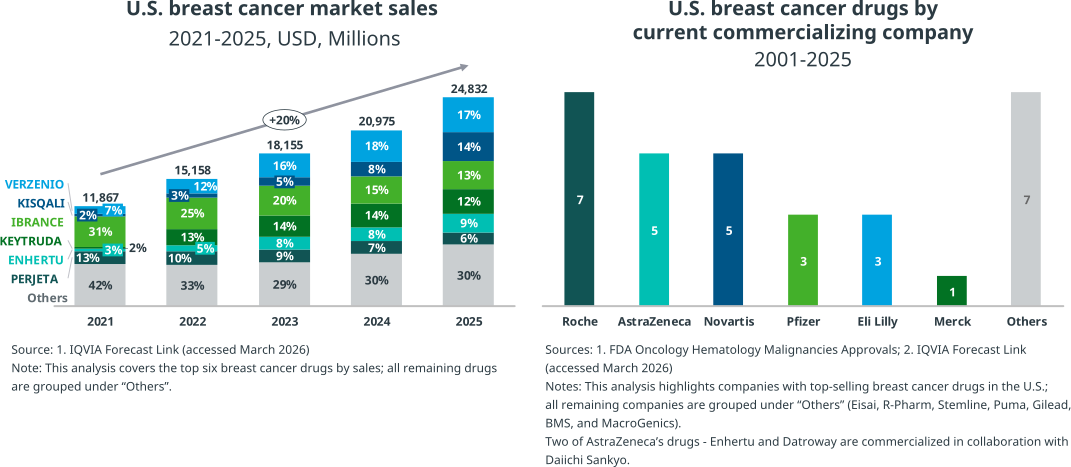
Market expansion has been driven by a combination of factors, including broader use of biomarker-guided therapies, the emergence of new segments such as HER2 low disease, and the continued shift of high-value therapies into earlier lines of care. Additionally, the entry of biosimilars has improved access and affordability, further accelerating adoption. Together, these dynamics have expanded the addressable population and extended treatment duration.
At the same time, the center of gravity is gradually shifting as immunotherapies and ADCs gain share in select segments. Agents such as Keytruda and Enhertu have expanded into earlier lines of therapy, reshaping treatment algorithms and capturing growing portions of aggregate market growth. Over the past five years, several assets have crossed into double-digit market share, intensifying competitive pressure across crowded segments and compressing differentiation windows for new entrants. In this environment, only therapies that deliver clear differentiation or open new segments are likely to maintain meaningful adoption. As a result, competitive success is defined by disciplined line of therapy expansion and the ability to defend share through robust evidence and sequencing rationale. Lifecycle management has therefore become critical in a market where incremental gains must translate into sustained utilization to justify investment.
Amid concentrated leadership and growing competition, the breast cancer pipeline remains highly active, signaling both persistent unmet need and intensifying competitive pressure. More than 20 novel agents are currently in late-stage development with potential launch over the next five years. Pipeline investment is growing more selective, concentrating on mechanisms that can either displace entrenched standards of care (SoC) or open biologically distinct segments large enough to sustain commercial scale.
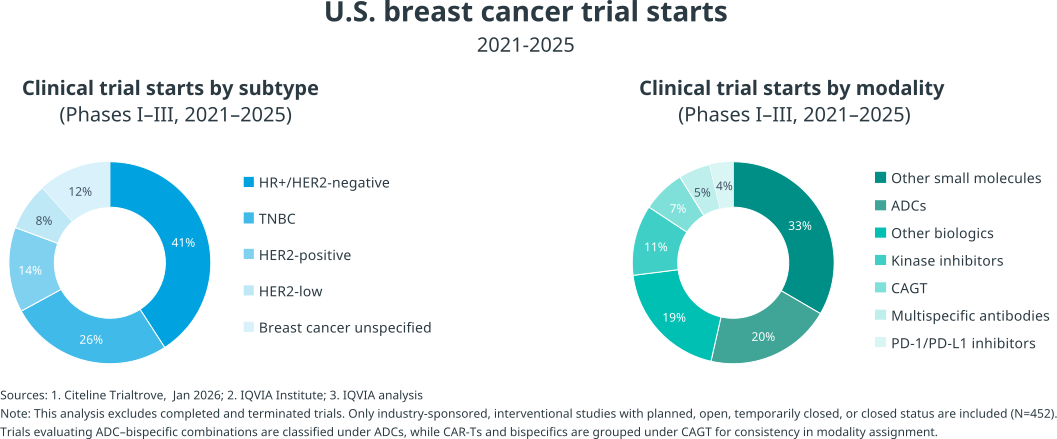
Investment remains heavily skewed towards HR‑positive, HER2‑negative disease, where late‑stage development centers on endocrine pathway innovation, including next‑generation SERDs, CERAN/SERD hybrids, PROTAC‑based degraders, and broader pathway targeting to address treatment resistant populations. In a segment anchored by CDK4/6 backbones, pipeline assets must deliver clear improvements in durability, tolerability, or sequencing potential to secure adoption.
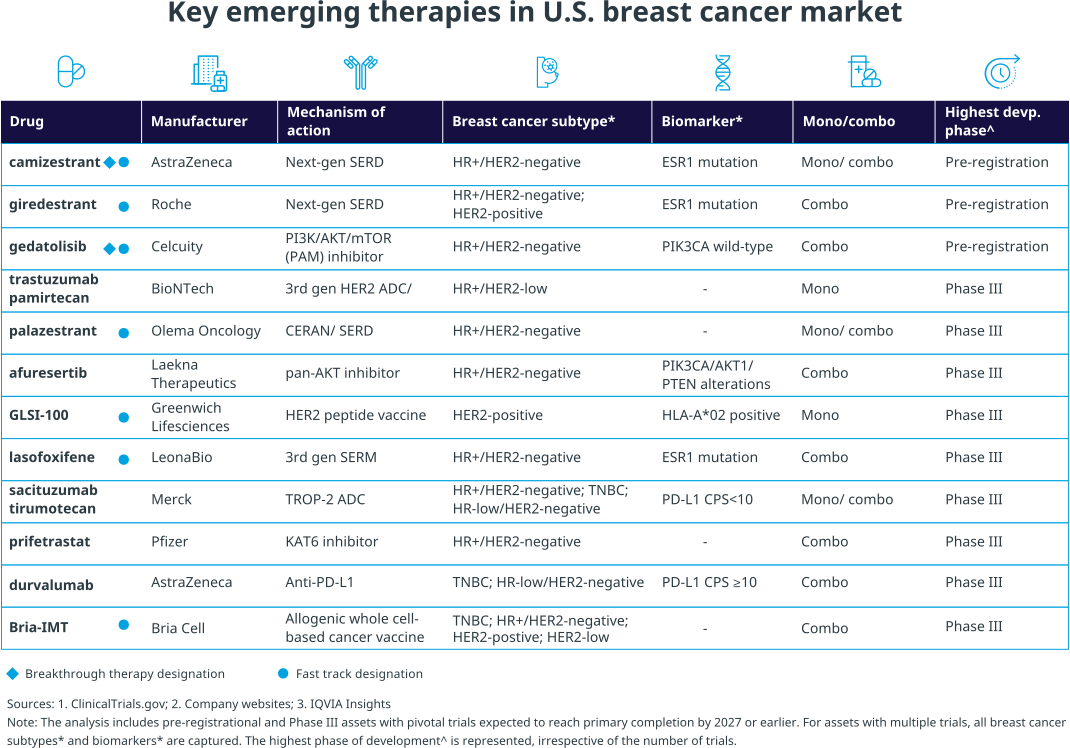
Antibody‑drug conjugates represent the second-most active pipeline area and are a key driver of future competition across subtypes. Next‑wave programs are now expanding into HER2‑low and ultra‑low disease and exploring new targets and payloads, enabling population re-segmentation but also introducing overlapping indications, earlier‑line competition, and rising sequencing complexity.
By contrast, late‑stage pipeline activity in TNBC remains comparatively thin, concentrated in immunotherapy‑ and ADC‑based combinations. Despite persistent unmet need and emerging longer‑term innovation, smaller eligible populations and limited mechanistic breadth continue to limit near‑term commercial scalability.
The overall breast cancer pipeline reflects a shift towards biomarker anchored development, combination led strategies, and earlier lifecycle integration of diagnostics. As the number of viable competitors increases, future growth will be shaped by how effectively companies can align scientific differentiation with sequencing logic, diagnostic adoption, and disciplined launch execution in the narrow lanes of high stakes patient segments. In this environment, only therapies that deliver clear differentiation or open new segments are likely to sustain meaningful adoption.
As competitive intensity in the U.S. breast cancer market continues to rise and the landscape fragments into narrow biomarker-defined patient segments, new entrants face a structurally more challenging launch environment. Smaller addressable populations, faster follow‑on competition, and compressed windows for differentiation are redefining launch success. In this context, commercial performance will be determined by how effectively clinical strategy, evidence generation, diagnostics, and go‑to‑market execution are aligned.
Five key strategic imperatives now shape competitive advantage:
Contact IQVIA to learn more about how strategic insights can help you navigate the complexity of the breast cancer market and shape future standards of care.
List of abbreviations used:
ADC – Antibody Drug Conjugate
BRCA – Breast Cancer Gene (BRCA1 / BRCA2)
CAGR – Compound Annual Growth Rate
CERAN – Complete Estrogen Receptor Antagonist
CDK4/6 – Cyclin Dependent Kinase 4 and 6
DNA – Deoxyribonucleic Acid
EMR – Electronic Medical Record
ESR1 – Estrogen Receptor 1
FDA – U.S. Food and Drug Administration
HER2 – Human Epidermal Growth Factor Receptor 2
HR – Hormone Receptor
LAAD – Longitudinal Access and Adjudicated Data
NAS – New Active Substance
NGS – Next Generation Sequencing
NCCN – National Comprehensive Cancer Network
PD 1 – Programmed Death 1
PD L1 – Programmed Death Ligand 1
PIK3CA – Phosphatidylinositol 4,5 Bisphosphate 3 Kinase Catalytic Subunit Alpha
PROTAC – Proteolysis Targeting Chimera
RCC – Renal Cell Carcinoma
SERD – Selective Estrogen Receptor Degrader
SERM – Selective Estrogen Receptor Modulator
SoC – Standard of Care
TNBC – Triple Negative Breast Cancer

This blog is part of an ongoing Brave New World series focused on how oncology is evolving and what that means for clinical and commercial strategy. Topics include the modern oncology landscape, the shifting roles of community vs. academic organizations, post ASCO perspectives, tumor specific deep dives, the growing impact of advanced modalities (CAR T and bispecifics), and what’s next in oncology innovation. You can find all Brave New World content in the U.S. Insights Library.
Related solutions
Grow your brand, now and through patent expiry
Gain high value access and increase the profitability of your brands