





.svg)











In our recent white paper on pharma investment strategies for drug launches we have outlined four main launch archetypes with tailored investment requirements. We have developed typical launch OPEX patterns for markets outside the US (Tonat, Sanan & Alzaga-Chaudhry, 2026) . In our newest blog we are looking at the US model, and explain how investment requirements and patterns differ.
Why Launch Investment Varies in the US
US launch investment varies significantly compared to other geographies due to fundamental differences in healthcare systems, commercialization models, and competitive dynamics. While European launches are shaped by payer‑controlled pricing and phased access, growing restrictions in terms of HCP access and more medically led-engagements, US launches operate in a more sales-/promotion‑driven environment requiring larger field teams driving stakeholder interactions in an environment with less restrictions. These structural differences combined with generally higher drug prices & sales in the US lead to significantly higher launch OPEX investments in the US with an OPEX composition that is more heavily skewed towards Sales and Advertising & Promotion (A&P).
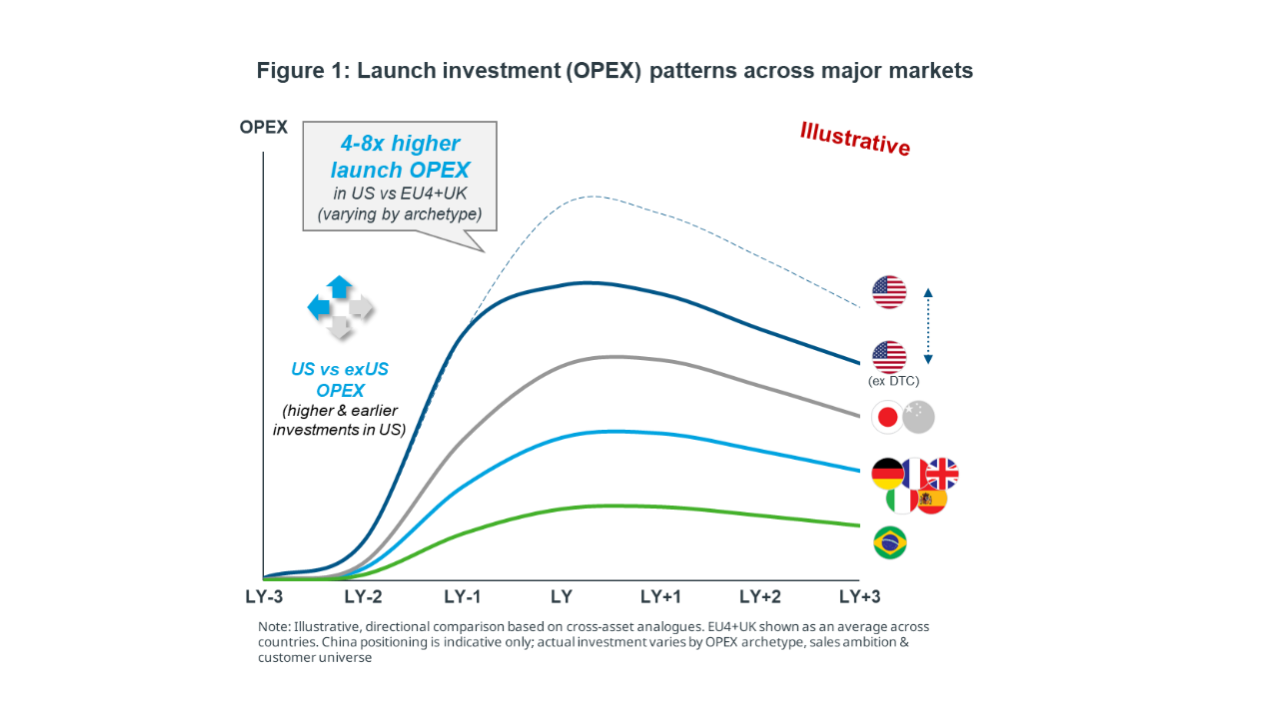
Following analysis and triangulation of numerous launches from our recent OPEX benchmarking work we found that US investments typically exceed average levels of EU4+UK countries by a factor of ~4–8x. US launches require higher & earlier total OPEX driven by larger market size, and typically first global launch environment:
- US launches require earlier pre‑launch ramp‑up and higher market shaping investments given the US are typically the first launch market globally
- A larger revenue opportunity and fewer access constraints drive higher absolute spend on sales & promotion, compared to pricing & reimbursement constraints and increasingly constraint access to HCPs for pharma companies in ex‑US markets
- Incremental costs, especially around direct-to-consumer (DTC) promotion as well as wider healthcare data availability & advanced analytics come on top for US launches, structurally widening the gap to exUS OPEX
The investment difference between US and exUS launches is typically smaller for Science-led or CoE-focused launch archetypes (cf. Tonat, Sanan & Alzaga-Chaudhry, 2026, p.5) with more specialist‑driven or rare indication launches, where launch efforts need to focus on scientific awareness building & education and care pathway shaping with a more concentrated stakeholder & prescriber bases, and limited patient pools. The investment difference is usually largest for Share-of-voice-driven launches, particularly in competitive and highly prevalent categories, where early and heavy investment is required to secure visibility and momentum with a broad stakeholder and prescriber base, often also directly including consumers.
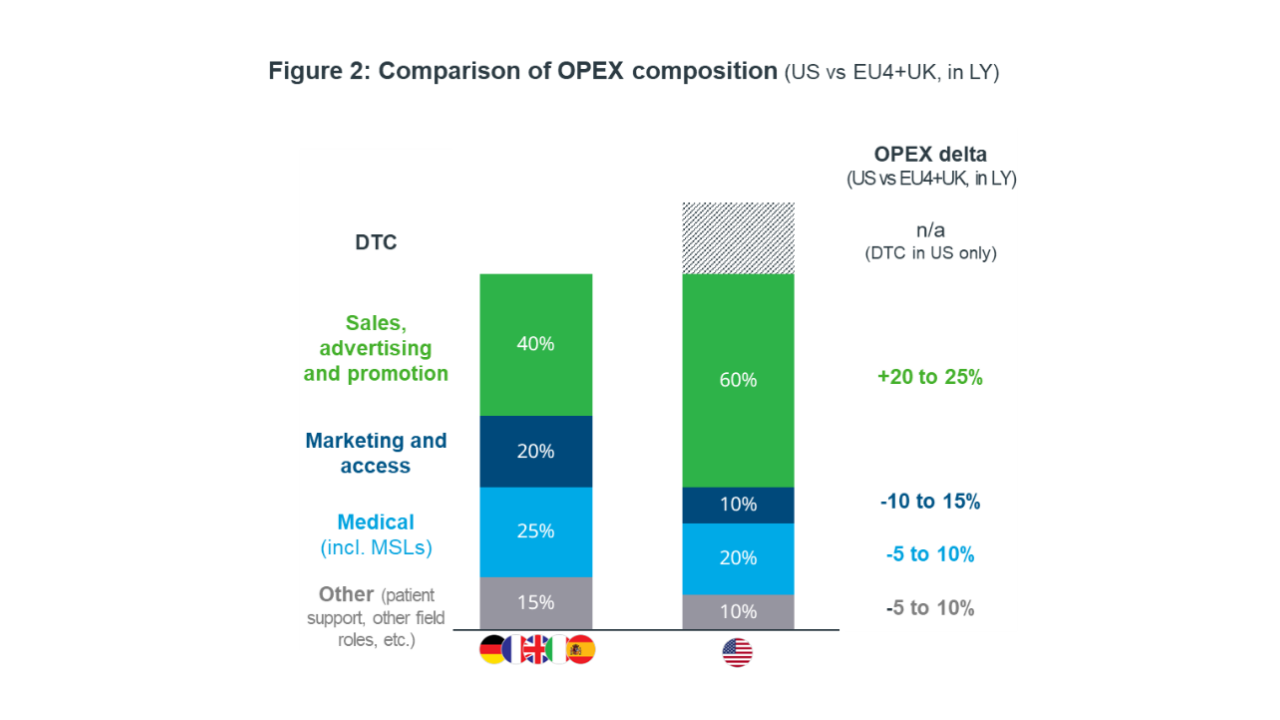
Beyond absolute investment levels, US and exUS launches also differ meaningfully in OPEX composition. EU4+UK investment tends to skew toward Medical and Access‑focused activities, reflecting the importance of HTA engagement, guideline inclusion, and scientific exchange. Promotional activities also play an important role, especially in Share-of-voice-driven launches, but is typically more constrained by regulation resulting in comparable lower investments compared to the US.
US launches, by contrast, allocate a larger share of investment to Sales, Advertising & Promotion driven by competitive pressure and the need for rapid scale‑up. For launches to broad patient populations, direct‑to‑consumer (DTC) activity further amplifies this skew. While DTC is not universal, its inclusion can materially increase total US launch investment with significantly higher spend for large, patient‑driven launches—an investment type generally not possible in exUS markets1.
1) For launches with significant DTC programs, our research shows on average +20% incremental OPEX for DTC with much higher outliers for large blockbuster launches.
References:
Tonat, H., Sanan, S., Alzaga-Chaudhry, C. (2026). Placing the right bets: Defining tailored investment strategies for pharma launch. IQVIA White Paper.
Tonat, H., Tallis, M., Alzaga-Chaudhry, C. (2022). Redefining OPEX modelling for a competitive future. IQVIA White Paper.