














Market Access
Gain high value access and increase the profitability of your brands
The Centers for Medicare and Medicaid Services (CMS) requires Part D formularies to include “all or substantially all” drugs in six protected classes1: anticonvulsants, antidepressants, antineoplastics, antipsychotics, antiretrovirals, and immunosuppressants.2 While this standard implies broad formulary coverage, in practice, not all drugs within a protected class must be covered and coverage does not guarantee unrestricted access. Plans may exclude certain products – such as multi-source brands – dosages, or formulations, and covered drugs may still be subject to utilization management requirements. The focus of this blog is to measure patients’ experiences when looking to fill a prescription in a protected class for the first time, providing evidence that coverage protections do not necessarily translate into unrestricted access.
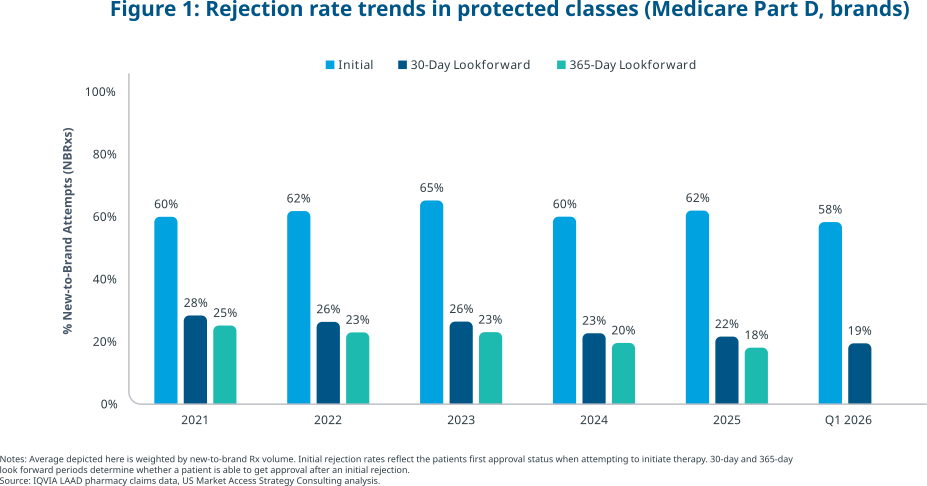
Despite brands in protected classes having an expectation of accessibility, more than half (58%) of Medicare patients attempting to fill new brand prescriptions in the protected classes were initially rejected from coverage in the latest period of data available, Q1 2026. Initial rejection rates for branded medicines in the protected classes were highest in 2023 at 65% but remained relatively stable from 2021 to 2025, consistently above the 37% to 47% rejection rates observed in prior research across all branded medicines. Within 30 days of an initial rejection, some patients were able to work through prior authorizations, medical exceptions, and other coverage requirements such as pharmacy networks and quantity limits, bringing the rejection rate down to 19% in Q1 2026. Because nearly a fifth of new attempts still face rejections after a month, with subsequent denial rates remaining nearly unchanged at 365 days, it is clear that accessing medicines in protected classes is not straightforward and open for all Medicare patients.
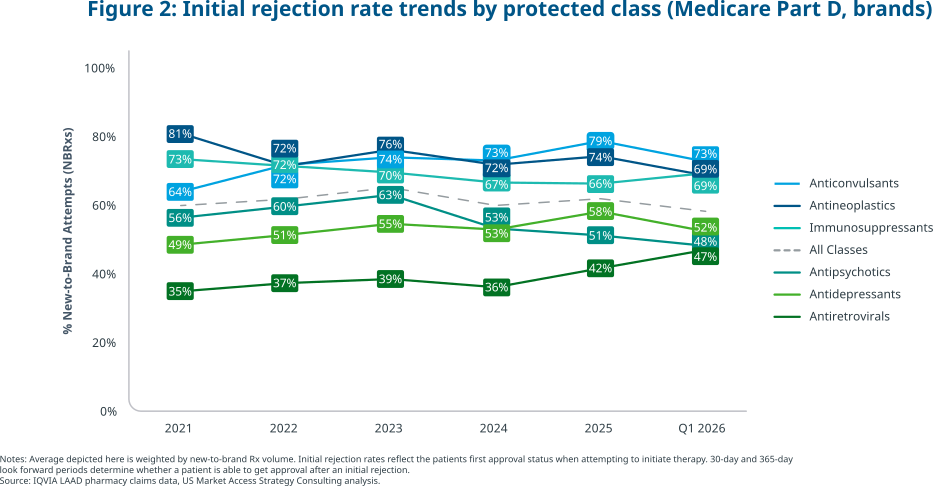
Initial rejection rates were fairly steady across all protected classes since 2021, but the level of rejection varied broadly by class. In Q1 2026, initial rejection rates were highest at 73% among anticonvulsants, medicines used primarily to treat seizures. Antineoplastics, cancer medications, and immunosuppressants, used as part of organ transplant protocols, had initial rejection rates of 69% in Q1 2026. Antidepressants and antipsychotics (used in the treatment of schizophrenia) had initial rejection rates of 52% and 48%, respectively. Despite CMS regulations indicating that antiretroviral medications should not be subject to prior authorization or step therapy, new patient attempts to fill antiretrovirals that treat and prevent HIV were initially rejected nearly half (47%) of the time in Q1 2026.
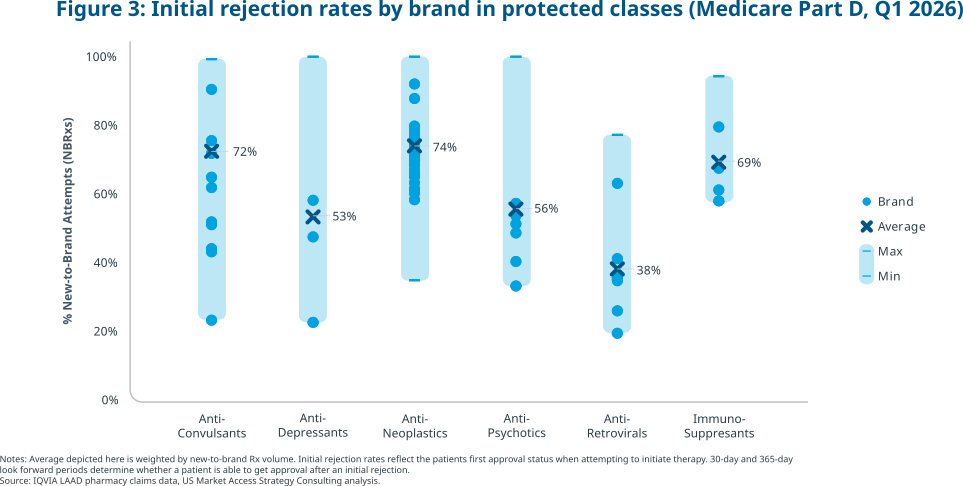
Within a given protected class, the rate of new Medicare patient attempts that were rejected varied even further across products. Initial rejection rates varied the most (from 23% to 100%) among antidepressants and the least (from 58% to 94%) among immunosuppressants. Regardless of therapeutic area, not all brands that fall within protected classes were equally accessible to Medicare patients initiating therapy. For multi-source brands or brands that are not unique mechanisms of action (extended release, tablet form as opposed to injection, etc.), higher rejections may be expected. However, differentiated access also affects unique mechanisms of action.
IQVIA analyzed utilization management in Medicare across all brands in a prior blog. When patients experienced rejections after attempting to start a new medicine, some were able to work through the requirements put forth by their insurance. Even when patients were able to achieve coverage, their treatment was often delayed by several days and sometimes months. Other patients switched to alternative therapies that have preferential access, but some patients did not get any treatment at all.
Utilization management among the protected classes introduce these same dynamics in therapeutic areas that have been considered important and necessary by the federal government. In the case of the protected classes, initial brand rejection rates (58%) are above the 2025 average of 47% across all brands in Medicare. It is easy to misunderstand the extent to which protections or coverage requirements lead to access for Medicare beneficiaries, thus making it important to quantify the extent to which patient care is disrupted when coverage is expected and, perhaps, taken for granted.
This report and the analyses used were sponsored by the Pharmaceutical Research and Manufacturers of America (PhRMA). The findings and points of view are the result of IQVIA’s investigation and expertise.
The authors would like to thank Justin Ciccone for his contributions to this blog.
References:

Explore how Medicare Drug Price Negotiation Program policies could affect drug lifecycle revenue and long-term innovation incentives. See what IQVIA’s analysis reveals about branded medicine revenue trends and market access strategy.
Gain high value access and increase the profitability of your brands
We empower life sciences with connected intelligence, transforming data into actionable insights for smarter decisions and better patient outcomes.