














Market Access
Gain high value access and increase the profitability of your brands
Medicare Part D plans increasingly leverage formulary restrictions to manage utilization of branded prescription medicines. Patients attempting to initiate treatment with a branded therapy may encounter prior authorization requirements, step therapy protocols, or other administrative rejections. These barriers have become increasingly common in recent years and can delay treatment initiation or prevent patients from accessing the medicines their providers prescribe altogether.
The following analyses examine how the use of formulary restrictions in Medicare Part D, and their impact to Medicare beneficiaries, have changed over time. Prior analyses found that 70% of new-to-brand attempts were initially rejected in five therapeutic areas for chronic conditions1. The new analyses discussed here are conducted for all branded medicines both at the claim level as well as the patient level to understand how access affects Medicare beneficiaries. Our new research confirms that access barriers caused by utilization management are pervasive across a wide range of brand perspectives, potentially affecting millions of Medicare beneficiaries annually.
Key Takeaways
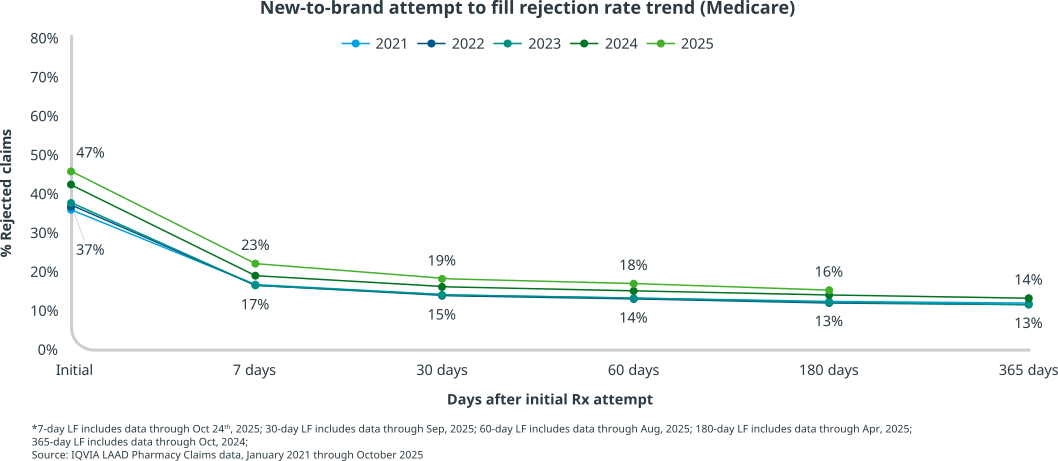
Initial rejection rates in Medicare Part D, measured as a rejection upon a patient’s first attempt to fill a new branded medicine, have increased in the last few years. Between 2021 and 2025, the share of first-attempt prescription claims that were denied increased from 37% to 47%, highlighting a tightening of utilization management protocols across therapeutic areas. Many patients were able to work through the necessary requirements to gain coverage after an initial rejection. About half of all attempts that were initially denied coverage were approved within 30 days. After a month, only an additional 4-9% of attempts were able to gain approval over the course of the year.
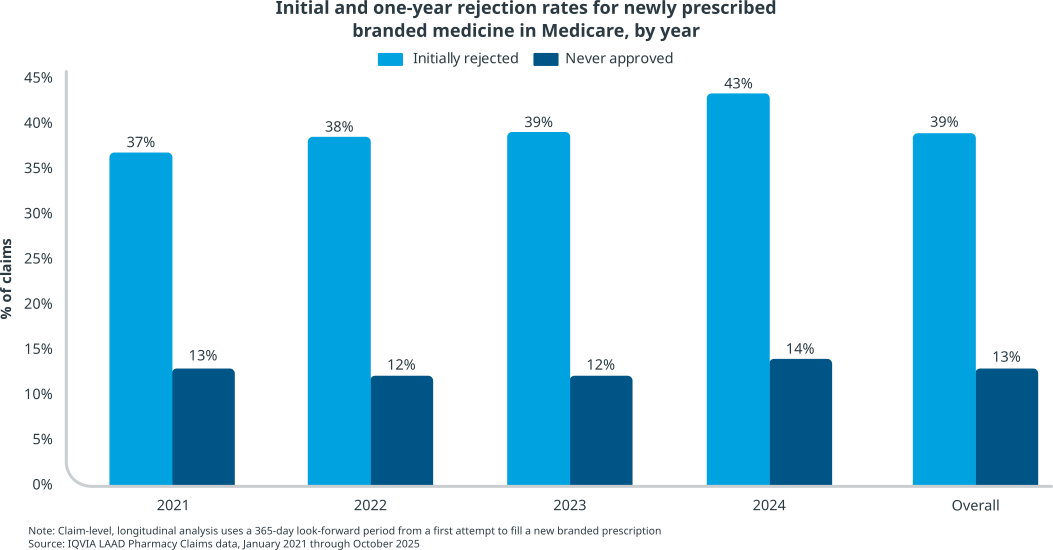
The figure below reproduces initial and one-year denial rates to show that despite an escalation in initial rejection rates, the proportion of claims that remained without coverage one year after their initial attempt remained largely unchanged. In 2024, 14% of new attempts to fill a branded medicine were never approved within one year, up just one percentage point from 13% in 2021. While patients were more likely to encounter upfront barriers, many ultimately secured access after a delay—often after navigating administrative requirements rather than clinical exclusions. When rejections require more than administrative effort, access delays can be longer, thereby disrupting treatment initiation, and they may meaningfully impact clinical outcomes.
Most Medicare patients attempted to start only one new branded medicine in a given year, thus claim- and patient-level analyses yielded similar results. In 2024, at a patient level, nearly half (48%) of all Medicare patients experienced at least one denial for a new branded medicine. 30% of patients who had at least one initial rejection never received approval for any of their branded medicine attempts within one year. Additionally, patients who faced at least one rejection were likely to encounter similar barriers across additional branded medicines, reflecting the broad application of utilization management controls across payers and therapeutic areas.
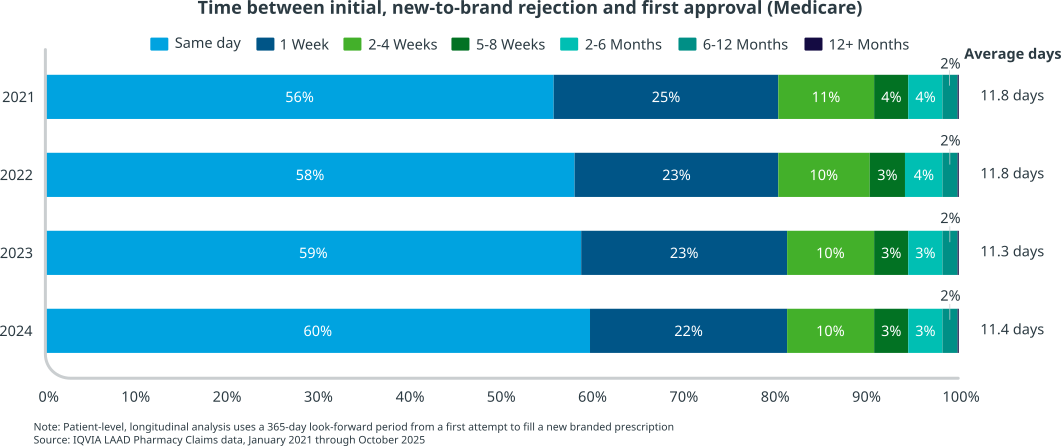
The proportion of patients relying on needing to gain approval for new medications prescribed by their clinician has grown over the past few years. For patients who ultimately obtained approval, access was typically secured quickly. 60% of approvals occurred on the same day as the initial denial, and the average time to approval remained steady at roughly 11 days year-over-year. However, the experience was not uniform: one in 10 new-to-brand patients faced delays longer than 30 days. Overcoming these rejections is more than an administrative burden; it can create interruptions that meaningfully affect treatment initiation and potentially clinical outcomes.
Medicare beneficiaries face increasingly restrictive formularies when attempting to start therapy with branded medicines. Recent changes to Medicare could amplify these trends further as out-of-pocket limits ($2,100 in 2026) and plan sponsor liabilities in the Catastrophic phase, $0 vaccines, and $35 insulins challenge the margins of Part D plans. In 2026, 10 brands selected for Medicare Price Negotiation are guaranteed coverage in Part D. As with protected classes prior to 2026, however, access is defined not only by whether a therapy is covered, but by how easily and quickly a patient is able to get treatment when it is covered. Understanding how formulary restrictions interact with new coverage requirements will be essential to ensuring that Medicare beneficiaries attain timely, meaningful access to clinically appropriate branded medicines.
This report and the analyses used were sponsored by the Pharmaceutical Research and Manufacturers of America (PhRMA). The findings and points of view are the result of IQVIA’s investigation and expertise.
The authors would like to thank their IQVIA colleague, Jesse Wang, for his support.
References:

The ability to harness and leverage data is paramount for making informed decisions that drive healthcare brand performance. By tapping into Medicare data, organizations can gain unique insights into patient populations and provider prescribing behaviors, which are essential for product launch, performance, and management. Learn how integrating Medicare data into your current ecosystem can work for your business.
Related solutions
Gain high value access and increase the profitability of your brands