














Market Access
Gain high value access and increase the profitability of your brands
This blog is part of an ongoing series, A Brave New World: Therapeutic Area Deep Dives.
The U.S. multiple myeloma market has entered a new phase defined by rapid innovation, expanding commercial opportunity, and growing strategic complexity. Over the past decade, therapeutic advances have extended survival, transforming multiple myeloma from a rapidly fatal malignancy into a chronic, relapsing disease managed across multiple lines of therapy. This clinical progress has reshaped the commercial problem manufacturers face. As patients move through multiple lines of therapy in increasingly individualized treatment sequences, succeeding at a single line of therapy is no longer enough. To realize long-term value, brands must remain relevant as patients progress through successive regimens across the full course of their treatment journey.
Many of these market dynamics stem directly from the biology of the disease. Multiple myeloma progresses through repeated cycles of remission and relapse while remaining largely incurable, creating sustained demand for new treatment approaches across successive lines of care. Although incidence has remained relatively stable, mortality has fallen steadily and then accelerated: the age-adjusted death rate declined by roughly 1.5% per year through 2021 before dropping about 5% per year from 2021 to 2023, as CAR-T and bispecific therapies reached patients.
Unlike breast and non-small cell lung cancer (NSCLC), where earlier detection efforts have contributed to shifts in diagnosis patterns, multiple myeloma is often diagnosed only after symptoms become clinically apparent later in the course of the disease. As a result, diagnosis continues to cluster in a consistent age range, with roughly 95% of patients diagnosed after age 50 and an average age of 69. Trends towards younger diagnosis seen in some major solid tumor markets are not observed in multiple myeloma.
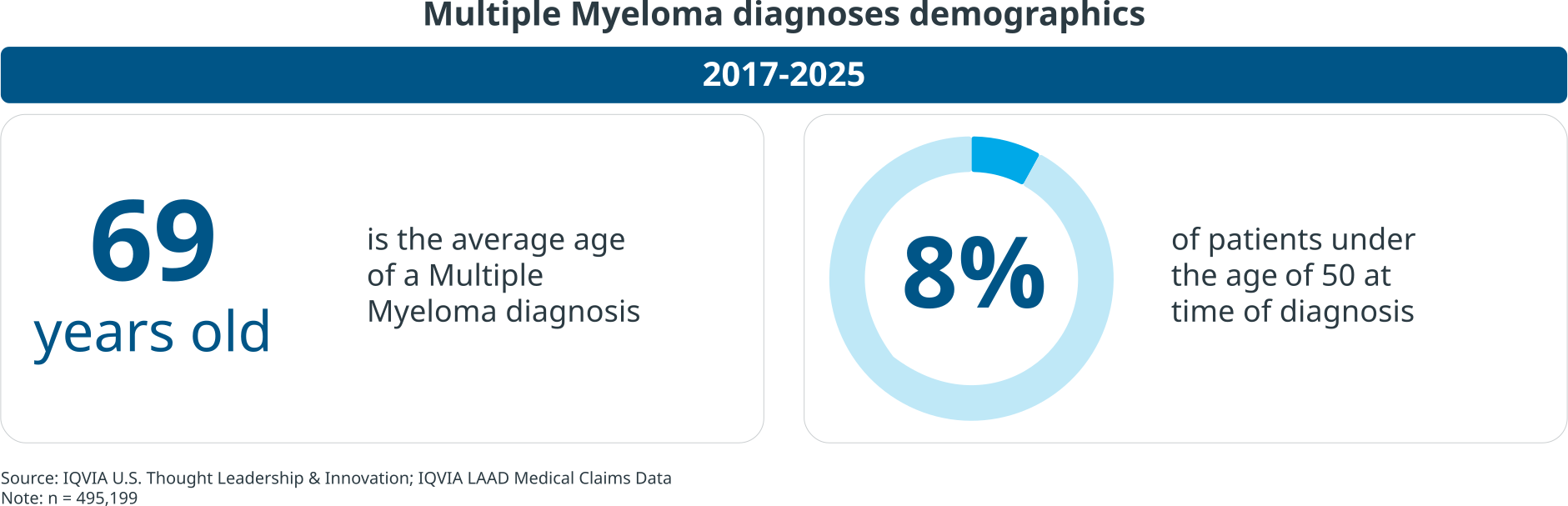
As targeted therapies, immunotherapies, and advanced modalities continue to enter the treatment paradigm, competitive success depends less on clinical performance and more on how effectively a therapy fits into real-world practice. What matters is how a therapy is delivered, how it is managed over years of treatment, and how easily it slots into shifting treatment pathways.
Since 2000, the multiple myeloma market has experienced one of the most sustained periods of innovation in oncology, with 20 therapies approved, including 17 new active substances. Early waves of innovation introduced proteasome inhibitors (PIs), immunomodulatory therapies (IMiDs), and anti-CD38 antibodies that improved outcomes and established highly effective treatment backbones across multiple lines of therapy. Among these, the Darzalex franchise has been particularly influential, becoming deeply embedded in treatment pathways and demonstrating the commercial advantage of therapies that can maintain relevance as standards of care evolve.
More recently, innovation has shifted towards advanced immunotherapies in later-line relapsed and refractory disease. BCMA-targeted approaches, including CAR-T cell therapies, bispecific antibodies, and antibody-drug conjugates (ADCs), have expanded treatment possibilities for heavily pretreated patients, delivering deeper and more durable responses in populations that historically faced limited options. Spread across the disease continuum, this innovation expands beyond questions of whether new therapies work to how they should be positioned and sequenced against everything already in use.
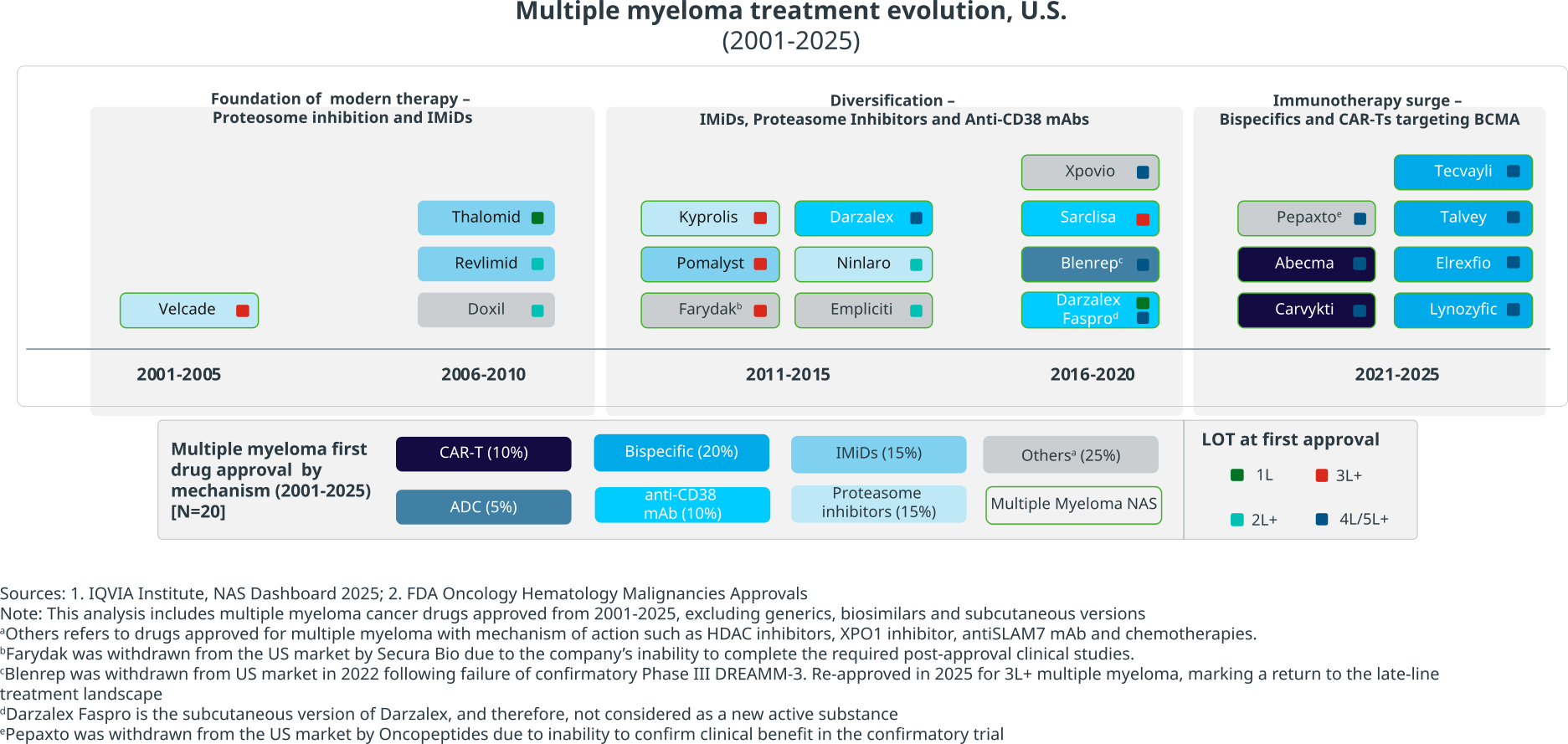
The rapid expansion of treatment options has created a unique challenge in multiple myeloma: innovation is advancing faster than a stable standard of care can form. While frontline treatment remains relatively anchored around PI-IMiD-anti-CD38 backbones, the relapse and refractory setting has expanded dramatically with the emergence of BCMA- and GPRC5D-targeted therapies. Healthcare providers (HCPs) must now navigate a growing number of clinically validated options, with limited consensus on optimal sequencing.
Unlike oncology markets with more established treatment pathways, multiple myeloma's treatment algorithm remains in a near-constant state of evolution. Therapies initially developed for heavily pretreated patients continue moving into earlier lines of care, while new mechanisms and modalities continually enter the market. Each approval or label expansion can redraw treatment pathways, so a therapy’s position is never secured by efficacy alone. In a market with no established consensus treatment sequence, there is no fixed slot to win and defend; brands must re-earn their position each time the treatment algorithm shifts.
Multiple myeloma's relapsing nature creates an enduring need for new treatment options as patients progress through successive lines of therapy and become exposed or refractory to prior regimens. This sustained demand has made heavily pretreated populations a focal point for innovation and competition. Historically characterized by poor outcomes and limited options, the fourth line plus (4L+) setting has rapidly evolved into a high-intensity battleground shaped by the emergence of novel targets and advanced treatment modalities.
The influx of BCMA- and GPRC5D-targeting CAR-T cell therapies, bispecific antibodies, and ADCs has redefined the late-line treatment landscape. CAR-T cell therapies introduced a step-change in efficacy, offering deep and durable responses for triple-class refractory patients and supporting premium positioning despite complex manufacturing and delivery requirements. Bispecific antibodies expanded the opportunity by offering off-the-shelf availability, faster initiation, and broader site-of-care flexibility, helping address some of the logistical barriers that can limit CAR-T scalability.
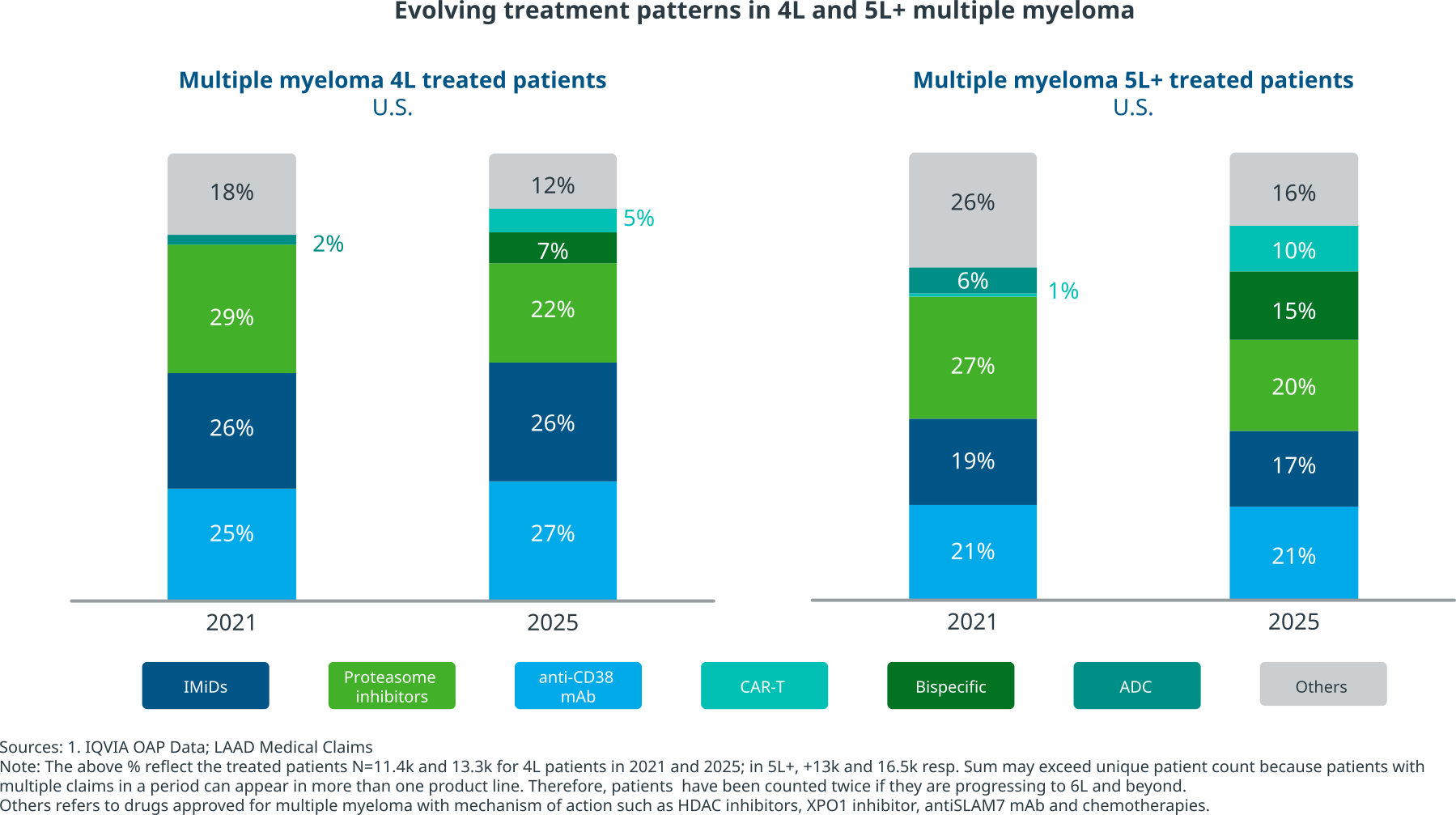
Real-world treatment trends suggest that this shift is gradual but directionally clear. Novel immunotherapies are steadily gaining share, particularly in 5L+ settings, while traditional backbone therapies remain relevant. As these modalities move the late-line paradigm beyond incremental benefit, legacy regimens do not disappear but persist alongside them, leaving manufacturers to compete not for a single standard slot but for durable position within a layered mix of therapies.
As innovation improves outcomes, it also narrows the perceived gap between therapies. When efficacy profiles begin to converge, differentiation becomes less dependent on headline clinical results and more dependent on the practical realities that shape prescribing. Factors such as durability of response, safety profile, dosing convenience, monitoring burden, time to treatment, site-of-care flexibility, and patient eligibility increasingly influence therapy selection.
Delivery has become one of the clearest expressions of this shift. Darzalex Faspro's rapid adoption demonstrates the value of reducing administration burden in a disease where patients often remain on therapy for extended periods, and Sarclisa's on-body injector, the first the FDA has approved for any anticancer therapy, extends the same logic. For a later entrant competing against an entrenched rival in the same drug class, a more patient- and provider-friendly delivery model becomes a way to compete where efficacy alone no longer separates therapies.
As efficacy profiles across therapies converge, manufacturers are changing how they position their brands. Each therapy now competes on a narrower differentiator: CAR-T on the depth and durability of its responses, bispecifics on faster, off-the-shelf treatment that more sites can administer. Success now hinges on identifying the treatment context where a therapy’s particular strength matters most.
The U.S. multiple myeloma market has grown rapidly, increasing from $9.0B in 2021 to $20.2B in 2025, representing a 22% compounded annual growth rate. Growth has been driven largely by the expansion of the Darzalex franchise, whose market share expanded from 23% to 39% over that period. At the same time, legacy therapies such as Revlimid and Kyprolis have lost share amid generic competition and the continued adoption of CD38-based combination regimens.
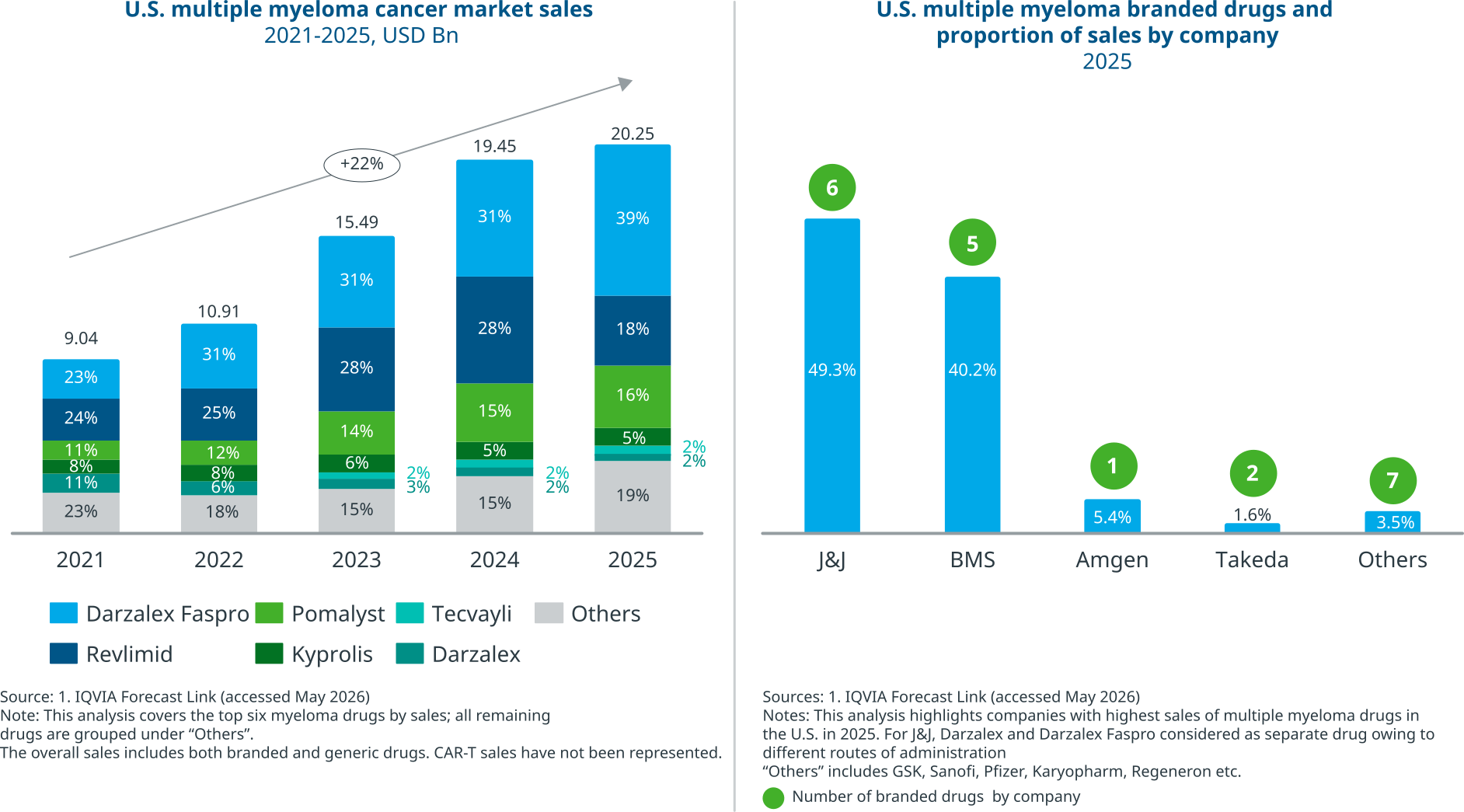
The market remains highly concentrated, with Johnson & Johnson (J&J) and Bristol Myers Squibb (BMS) comprising nearly 90% of U.S. multiple myeloma sales in 2025. J&J has benefited from the expansion of the Darzalex franchise across treatment lines, while BMS continues to leverage a broad portfolio despite Revlimid erosion. For manufacturers, this concentration raises the bar for competition. Future growth is likely to depend on the ability to build differentiated positions around novel targets, mechanisms, delivery models, and sequencing strategies, while companies reliant on older backbone therapies face mounting pressure to innovate or risk further share erosion.
The U.S. multiple myeloma pipeline remains highly active, with a clear pivot toward deeper and more durable responses across relapsed and refractory disease. While BCMA-targeted therapies have transformed outcomes, the next wave of innovation is focused on addressing remaining challenges related to durability, relapse, eligibility, manufacturing constraints, and treatment accessibility.
Next-generation CAR-T therapies are seeking to improve persistence, expand eligibility, and reduce manufacturing constraints. Trispecific antibodies may help bridge the depth associated with cell therapies and the convenience of off-the-shelf approaches, while emerging GPRC5D/FcRH5-directed assets are creating opportunities for mechanism-switching strategies after BCMA exposure. These shifts are pushing manufacturers beyond single-asset positioning and towards portfolio-led strategies that can support relevance across multiple lines of therapy.
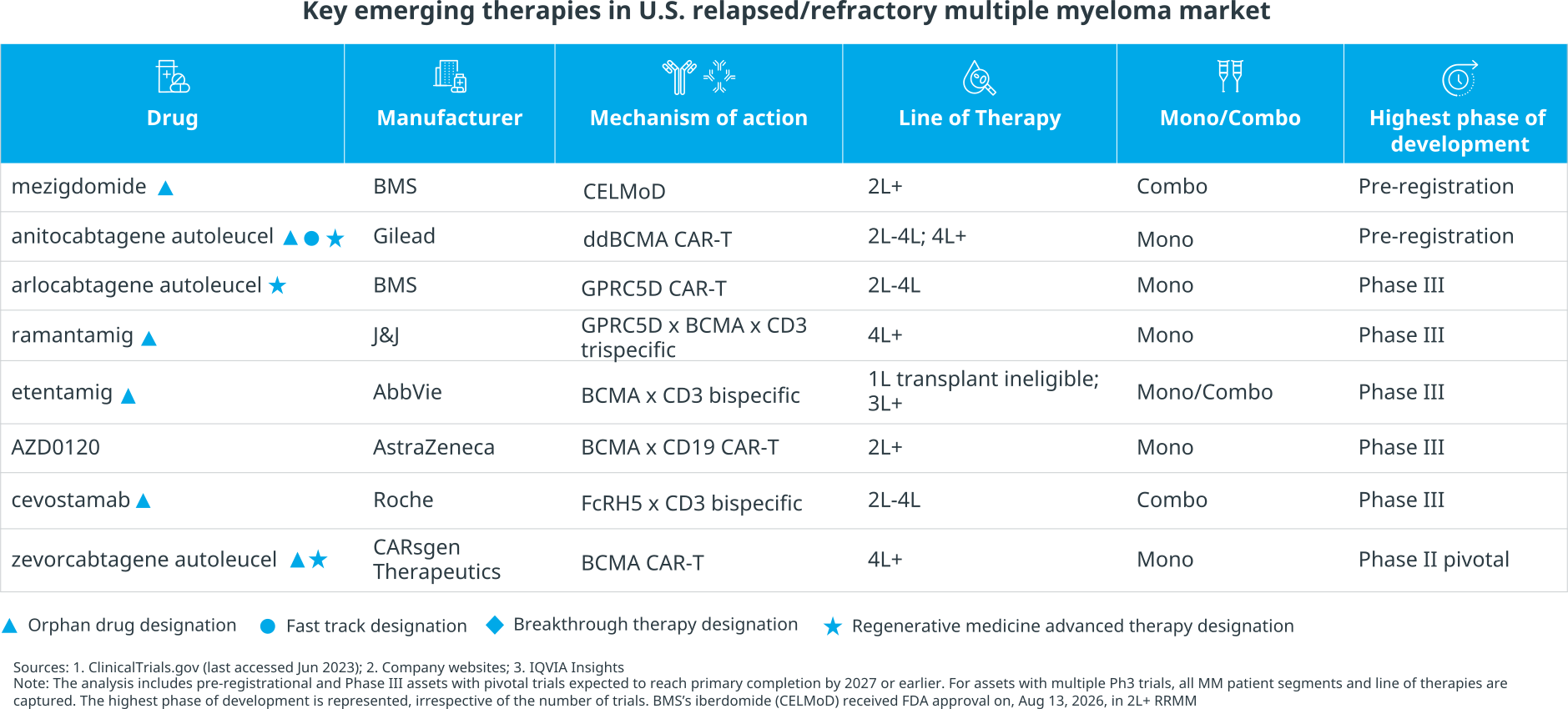
As off-the-shelf bi- and trispecifics, oral backbones such as CELMoDs, and evolving CAR-T approaches compete for position, later-line multiple myeloma is becoming more than a clinical proving ground. It is emerging as a commercial inflection point where scalability, operational ease, site-of-care integration, and clear sequencing logic will help determine long-term market leadership.
The U.S. multiple myeloma market is transitioning from rapid innovation to heightened strategic complexity. Treatment pathways are growing more fluid, competitive intensity is rising, and therapies are moving across lines in ways that continually reshape the market. In a market without an established sequence, advantage is built rather than defended, and it accrues to companies that shape that reality instead of reacting to it.
Unlike some oncology markets where biomarker-driven precision is the dominant pathway to differentiation, such as the NSCLC landscape covered earlier in this series, multiple myeloma rewards companies that can embed therapies within backbone regimens and sustain relevance across multiple lines of treatment. Scientific innovation remains essential, but market penetration requires alignment between clinical development, lifecycle planning, evidence generation, access strategy, patient experience, and commercial execution.
Several imperatives now define competitive advantage:
In a market defined by sequencing instability, modality convergence, and rapid innovation, winning in multiple myeloma will require moving beyond asset-level differentiation. Future leaders will be those that shape treatment pathways, mechanism-switching needs, and deliver therapies that combine strong clinical value with the operational scalability and patient experience required for real-world adoption.
Contact IQVIA to learn how our oncology expertise and strategic insights can help you navigate this evolving market and shape future standards of care.
Multiple myeloma has experienced one of oncology's most sustained periods of innovation, with 20 therapies, including 17 new active substances, approved since 2000. Foundational advances in proteasome inhibitors, IMiDs, and anti-CD38 antibodies established new standards of care, while CAR-T therapies, bispecific antibodies, and antibody-drug conjugates have expanded treatment options for relapsed and refractory patients.
Treatment sequencing has become more challenging because innovation is advancing faster than a stable standard of care can form. While frontline treatment remains relatively anchored around PI-IMiD-anti-CD38 regimens, expanding BCMA- and GPRC5D-targeted options have created multiple clinically validated pathways with limited consensus on optimal sequencing.
Pipeline innovation is expanding beyond BCMA into next-generation CAR-T therapies, trispecific antibodies, CELMoDs, GPRC5D-targeted therapies, FcRH5-targeted approaches, and other novel mechanisms. As more patients receive BCMA-directed therapies earlier in treatment, manufacturers are developing new targets and modalities to address resistance, relapse, and evolving post-BCMA treatment needs.
As efficacy outcomes increasingly converge across therapies, differentiation is shifting toward treatment experience and healthcare delivery. Factors such as durability, safety, dosing convenience, monitoring requirements, time to treatment, site-of-care flexibility, and patient eligibility are becoming increasingly important, as demonstrated by innovations such as Darzalex Faspro and Sarclisa's on-body injector.
Future market leadership will depend less on individual products and more on the ability to influence treatment pathways across the patient journey. Manufacturers that integrate clinical development, lifecycle planning, evidence generation, access strategy, patient experience, and commercial execution will be better positioned to maintain relevance as treatment options and sequencing pathways continue to evolve.

This blog is part of an ongoing Brave New World series focused on how oncology is evolving and what that means for clinical and commercial strategy. Topics include the modern oncology landscape, the shifting roles of community vs. academic organizations, post ASCO perspectives, tumor-specific deep dives, the growing impact of advanced modalities (CAR T and bispecifics), and what’s next in oncology innovation. You can find all Brave New World content in the U.S Insights Library.
Gain high value access and increase the profitability of your brands
Data, AI, and expertise empower Commercial Solutions to optimize strategy, accelerate market access, and maximize brand performance.