














Commercial Solutions
Data, AI, and expertise empower Commercial Solutions to optimize strategy, accelerate market access, and maximize brand performance.
This blog is part of the series, A Brave New World: State of the Industry, on modern market dynamics influencing the life sciences industry.
Ever-increasing payer restrictions and rising patient out-of-pocket costs are reshaping how patients access and stay on therapy. As broader pressure shortens the runway to success, traditional measures of access no longer capture whether demand converts into treatment. Brands need a more complete view of the factors influencing whether patients can overcome restrictions, initiate approved therapy, and remain on treatment over time.
The battle for provider and patient attention has never been more competitive, and brands are investing more to generate demand. What matters is not how much demand is created, but how much converts into durable therapy. By identifying where demand is lost through payer rejections, abandonment, or non-persistence, brands have an opportunity to address leakage earlier, support patients more effectively, and strengthen the return on their access and promotional strategies. That progression reframes access as a conversion system that must be managed beyond coverage and initiation. A reimagined approach to access measurement should show where demand is lost and which barriers most directly limit durable therapy across a patient’s journey.
Growth expectations become harder to sustain when the conversion of demand into paid therapy declines while the cost of securing access rises. The practical starting point is a broader definition of access. Traditional access discussions have focused on covered lives, formulary position and coverage status; however, current market dynamics require a broader construct. That broader construct should focus on the proportion of true demand that converts into patients and the long-term value of patients who are able to initiate and remain on therapy.
Three key stages of the patient journey must be evaluated and actively supported to limit patient leakage.
When viewed together, these breakdowns explain why quality of access must be managed as an end-to-end conversion system rather than a set of isolated access tactics. The same view also clarifies where commercial effort should shift as demand moves from attempted therapy to durable use.
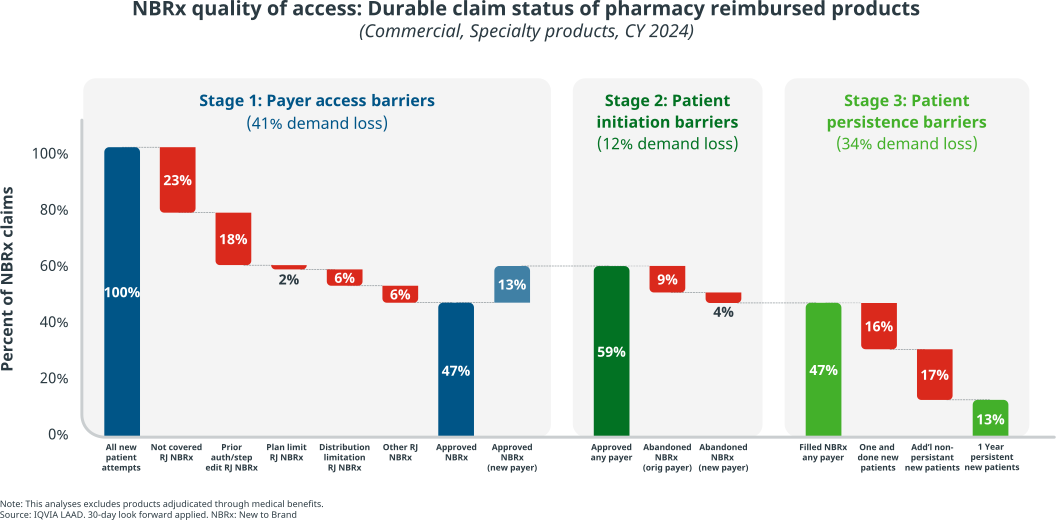
In 2025, only 30% of new-to-brand Commercial scripts – including retail and specialty products - were approved within 7 days of writing, down from over 50% in 2018. These durable rejections prevent the patient from initiating therapy and potentially discourage future attempts.
If a script is rejected, patients with insurance generally wait until a script is approved before initiating therapy, and not all restrictions are created equal. A step through a generic for a biologic is easier to overcome than a step through another biologic or a National Drug Code (NDC) block. True quality of access depends both on how patients face restrictions and whether those patients are able to overcome them, which determines whether demand converts at all.
From a quality of access perspective, one-and-done represents an early breakdown point in converting initiated demand to sustained treatment. Importantly, dosing frequency, as needed or PRN dosing, and other factors can contribute to a patient persisting to month 2 of treatment. Access has already been achieved, yet continuation fails immediately, which exposes earlier investment. Even among Commercial patients facing $0 out-of-pocket costs, fill rates for month 2 in chronic therapeutic areas can be as low as 60%.
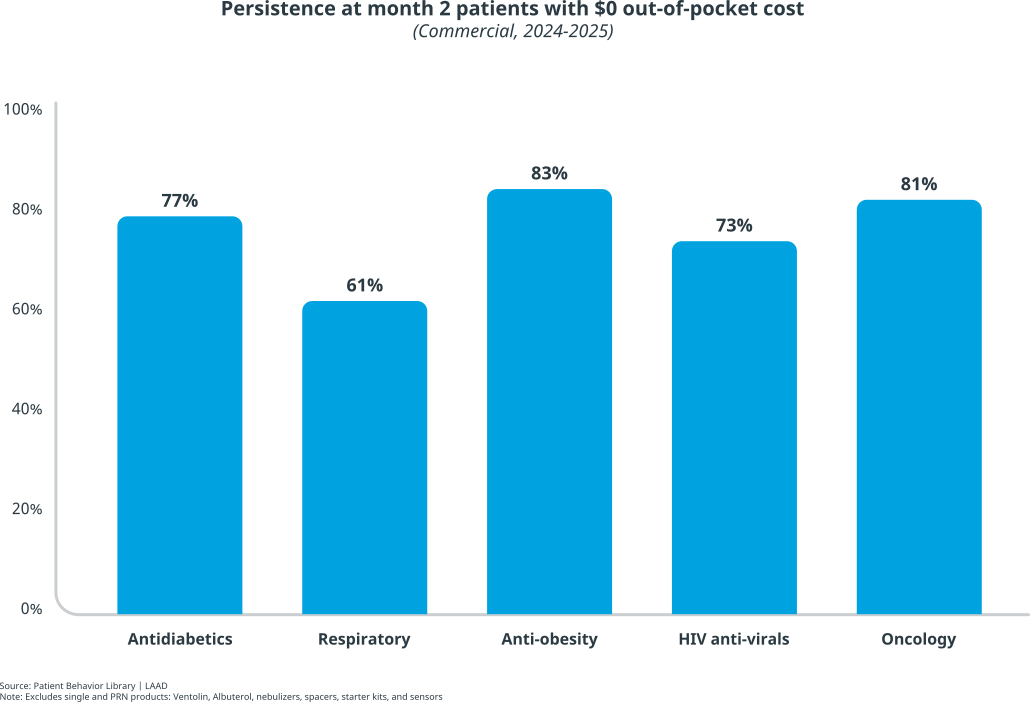
At this stage, continuation depends on how patients experience the therapy and how well they are supported through early use. Some patients may discontinue because of side effects or other treatment issues, while others may still be learning how to fit the medication into routine care. For many, continuation depends on whether the experience of therapy is understood well enough to be sustained, including what to expect in terms of onset, how to interpret progress when improvement is not directly felt, and how to anticipate and manage side effects as they arise. That variability shifts commercial effort from enabling access to ensuring early continuity, or demand begins to erode before it generates durable value.
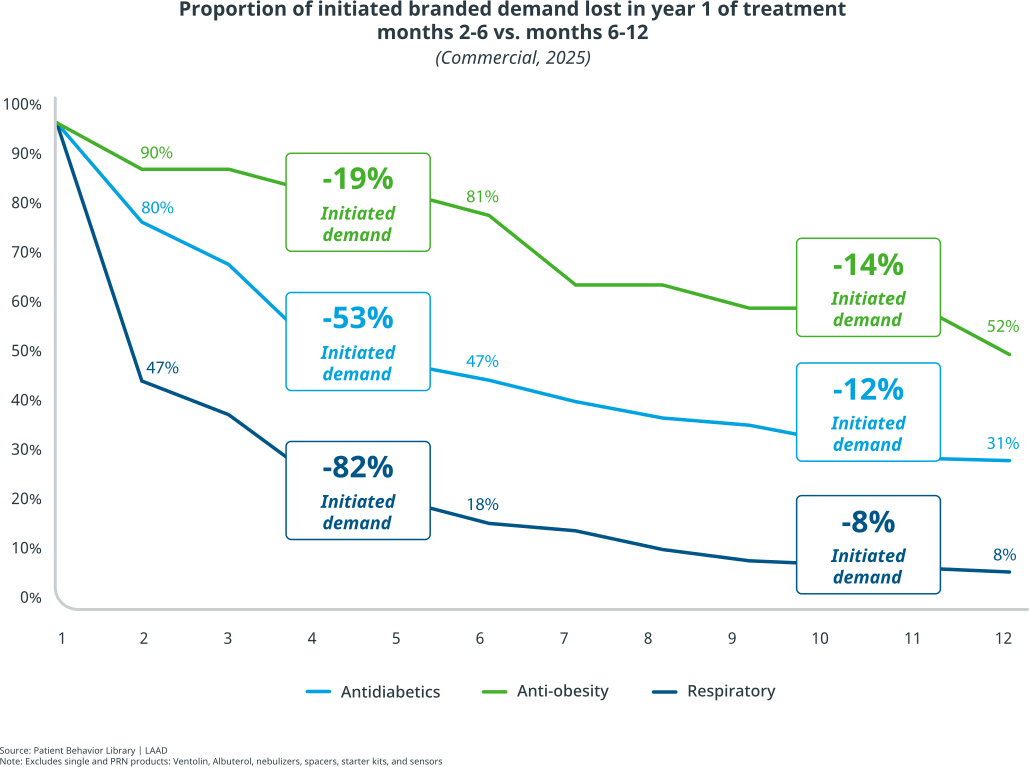
The same logic becomes more actionable when persistence is viewed by therapeutic context. Understanding expected patient outcomes for a specific therapeutic allows quantification of where addressing patient leakage could have the most impact. In the respiratory market for example, over 80% of patients who initiate therapy stop treatment in the first 6 months of therapy, with nearly 50% not filling after their initial fill. Increasing the proportion of 2nd fills is likely to impact most patients. The antidiabetic market looks quite different, with roughly half of patients dropping off before month 6 and only 12% stopping between months 6 and 12. If patients stay on through month 6, they have likely learned how to take the drug and are likely to remain on therapy. These differences determine where investment matters. When drop-off is early, value depends on converting the second fill. When persistence stabilizes, value depends on sustaining patients already on therapy. Without aligning effort to where the curve breaks, demand that has converted fails to generate durable utilization.
The modern environment makes quality of access the defining conversion system for growth, measured in paid, durable utilization. Rising rejection rates, abandonment rates, and one-and-done behavior make clear that demand generation alone will not carry a product’s success. Brands that win will quantify leakage end to end, fund the highest-impact conversion fixes, and design effective programs to enable patient persistence.
Managing quality of access as a single Key Performance Indicator (KPI) requires aligning payer strategy, patient services, evidence generation, and commercial operations to the same outcome. That alignment matters because each function can improve its own metric while demand still fails to convert into durable utilization. When that alignment is achieved, demand is no longer lost between functions and begins to convert consistently from initial intent through sustained therapy. When it is not, performance improves in isolated areas while overall growth remains constrained by leakage that goes unaddressed.
Please contact your IQVIA representative for more information.

This series revisits the industry fundamentals needed to make sense of today’s evolving life sciences market. IQVIA’s thought leaders clarify the dynamics shaping the environment, align on key terms and frameworks, and reinforce the foundational knowledge that supports strong decision making. The goal is to build a shared baseline and promote consistency in how teams interpret market context, evaluate opportunities, and communicate value as conditions shift, translating fundamentals into practical, durable approaches that carry into day-to-day work and move your organization forward.
Data, AI, and expertise empower Commercial Solutions to optimize strategy, accelerate market access, and maximize brand performance.
Gain high value access and increase the profitability of your brands