














Market Access
Gain high value access and increase the profitability of your brands
Commercial payers increasingly rely on formulary restrictions to manage utilization of branded prescription medicines. Patients with private, employer-sponsored or exchange insurance attempting to initiate therapy may encounter prior authorization requirements, step edits, coverage exclusions, quantity limits, or administrative denials. These barriers have become more prevalent in recent years and can delay treatment initiation or prevent treatment altogether.
The following analyses evaluate how the use of formulary restrictions and their impact to patients have grown over time. Prior analyses found that 75% of new-to-brand attempts were initially rejected in five therapeutic areas for chronic conditions1,2. The new analyses discussed here are conducted for all branded medicines, both at the claim level as well as the patient level, to understand how access affects those commercially insured. This new research confirms that access barriers caused by utilization management are pervasive across a wide range of therapies, potentially affecting millions of commercial beneficiaries annually.
Key Takeaways
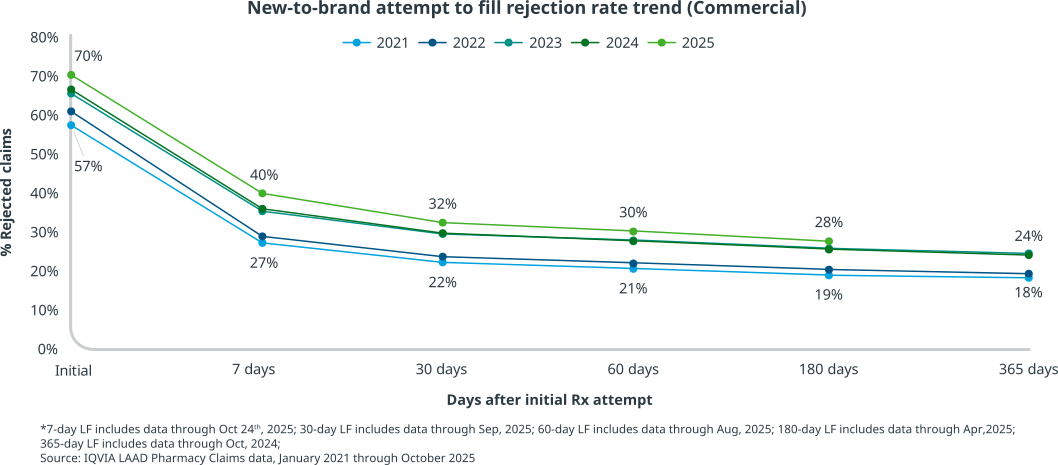
Rates for initial rejections - where coverage is denied upon a patient’s first attempt to fill - have risen sharply in the last several years. 70% of commercial attempts to fill a branded medicine received an immediate denial from their payer when starting treatment in 2025, up from 57% in 2021. Some patients manage to work through the necessary requirements to gain coverage after an initial rejection. Within 30 days, the proportion of rejected attempts decreased from 70% to 32% in 2025.
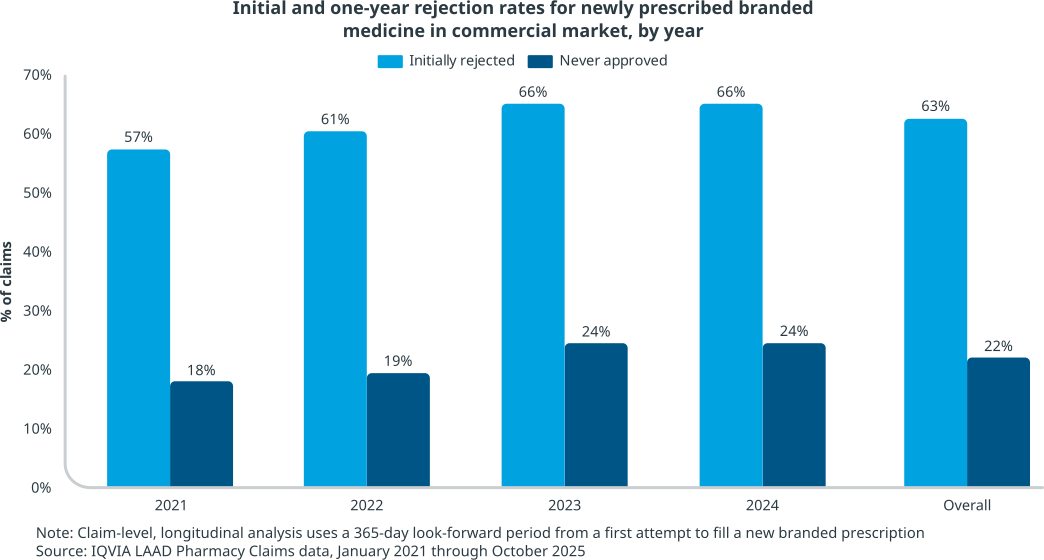
The figure below reflects initial and one-year denial rates to show that, while some patients and their prescribers were able to overcome initial rejections, others were not. As initial rejection rates increased over the past 5 years, so did the number of patients who were unable to gain approval - even a year after their first attempt to fill. In 2024, 24% of new attempts were never approved within one year compared to 18% in 2021. While the proportion of attempts that overcame a rejection increased over time, it was not enough to keep pace with the growing rate of initial rejections, leaving more patients without access to the medicines that their physicians prescribed.
Most commercial patients attempted to start only one new branded medicine in a given year, thus claim- and patient-level analyses yielded similar results. In 2024, at a patient level, 70% of all commercially insured patients experienced at least one denial for a new branded medicine. 45% of patients who experienced at least one initial rejection remained rejected across all attempts, never receiving approval on any new branded medicine within one year.
Additionally, patients who faced at least one rejection were likely to face additional rejections for all their new branded medicine attempts, reflecting that plans often exert formulary controls across many therapeutic areas. Patients with more comorbidities and more prescriptions were, as expected, more likely to encounter multiple rejections from their insurance.
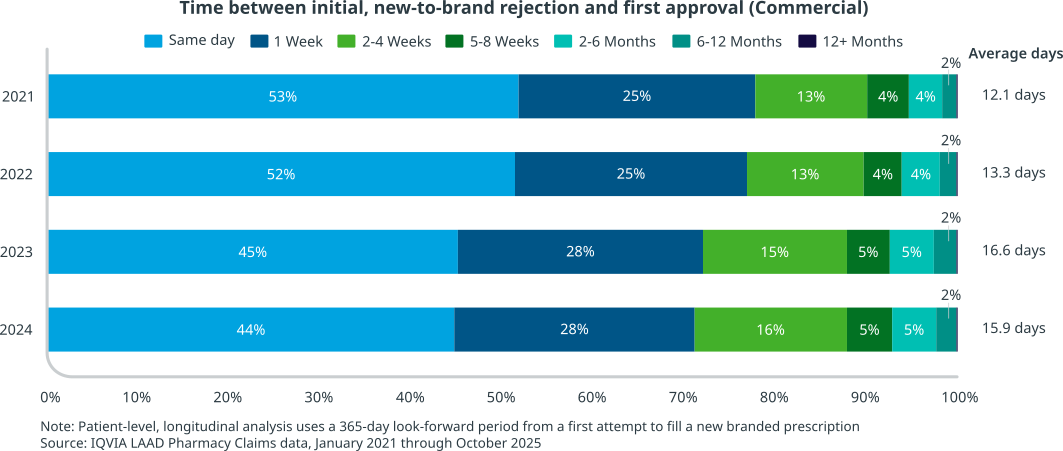
Patients increasingly relied on appeals to gain approval and coverage for new treatments. This was especially true as the number of patients facing an initial rejection grew. Among commercially insured patients who gained approval after a rejection, 44% were approved the same day in 2024. This suggests that many coverage denials reflected burdensome administrative requirements and other issues that could be resolved quickly. However, the average time for patients to gain approval lengthened from 12 days in 2021 to 16 days in 2024. Moreover, one in 10 attempts faced coverage delays exceeding a month. Overcoming rejections often requires coordination between patients and providers to meet documentation and coverage requirements. These extended delays can disrupt treatment plans, leading patients to switch therapies, remain on existing medications, or defer starting treatment altogether.
The rise of utilization management coincides with other barriers to access such as rising premiums and cost-sharing, the loss of Affordable Care Act (ACA)-expanded subsidies, and shrinking coverage networks. This creates disparities in access regardless of whether patients have insurance coverage. With health costs taking priority for policymakers and advocates, quality of access is just as important and requires real solutions to address the burden of utilization management.
The trend of rising utilization management is expected to continue, particularly as PBMs encounter more margin pressure through growing patient need, new drug innovation, and increasing liabilities from the Federal government. More than ever, policymakers must find solutions to facilitate patient access and treatment.
This report and the analyses used were sponsored by the Pharmaceutical Research and Manufacturers of America (PhRMA). The findings and points of view are the result of IQVIA’s investigation and expertise.
The authors would like to thank their IQVIA colleague, Jesse Wang, for his support.
References:

The ability to harness and leverage data is paramount for making informed decisions that drive healthcare brand performance. By tapping into Medicare data, organizations can gain unique insights into patient populations and provider prescribing behaviors, which are essential for product launch, performance, and management. Learn how integrating Medicare data into your current ecosystem can work for your business.
Gain high value access and increase the profitability of your brands
Take advantage of the latest tools, techniques, and deep healthcare expertise to create scalable resources, precision insights, and actionable ideas.