














Compliance & Quality
Navigate the challenge of compliance, and its vital association with quality
Medicare drug price negotiation was one of the most notable provisions of the Inflation Reduction Act (IRA), which became law in 2022. Since then, 40 branded medicines across Medicare Parts B and D have been selected for price negotiation. The 10 Part D medicines selected for the Initial Price Applicability Year (IPAY) 2026 are the first to have maximum fair prices (MFPs) take effect, beginning January 1, 2026, with Part D plans required to cover these drugs on formularies. However, while the IRA requires selected Part D drugs to be included on formularies, CMS did not establish uniform tier placement or utilization management requirements for selected drugs in 2026, meaning formulary coverage does not necessarily translate into unrestricted access at the point of care.
This blog uses longitudinal claims data to quantify the patient experience when attempting to initiate therapy with an IPAY 2026-selected drug (Eliquis, Enbrel, Entresto, Farxiga, Imbruvica, Januvia, Jardiance, Fiasp/Novolog, Stelara, Xarelto) from 2021 through Q1 2026, the first quarter in which MFPs were in effect for IPAY 2026-selected drugs. In a previous blog, IQVIA reported that nearly half (47%) of all attempts to fill a new branded medicine through Medicare Part D were initially rejected in 2025.
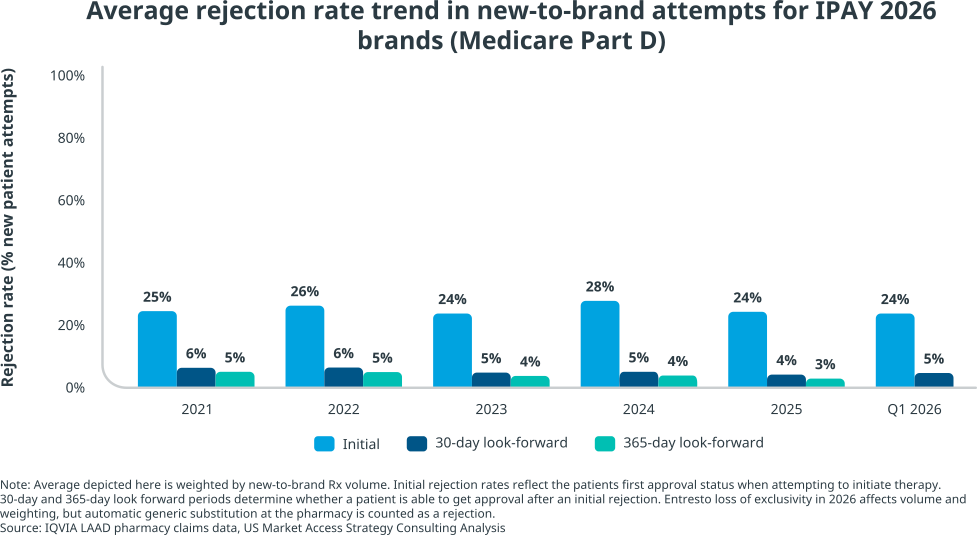
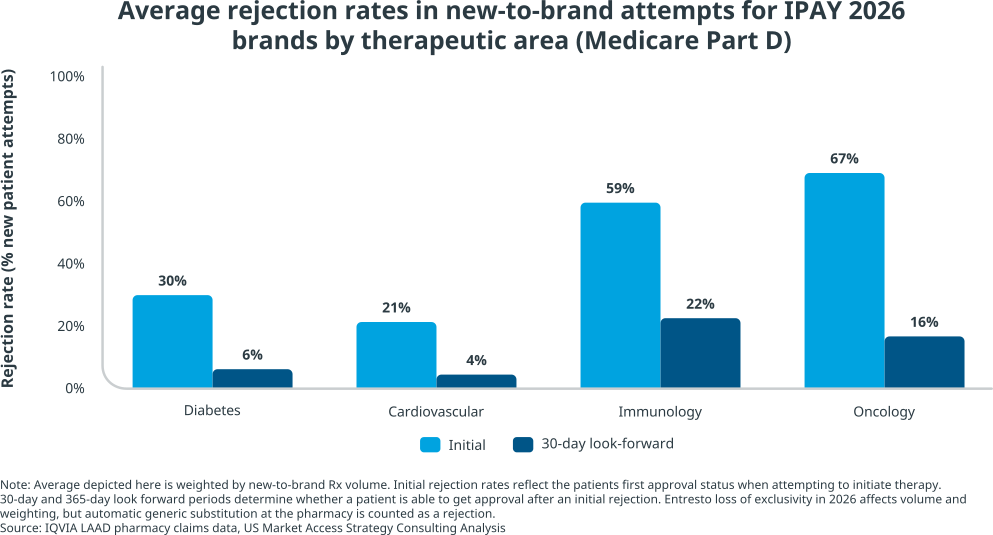
Since 2021, initial rejection rates for first fill attempts of IPAY 2026-selected drugs averaged between 24% and 28%. In Q1 2026, after the coverage requirement for IPAY 2026-selected drugs took effect, the initial rejection rate of first fill attempts for these drugs was nearly a quarter (24%), the same rate as in 2025. Overall rejection rates for the IPAY 2026-selected drugs mask broad variation across therapeutic areas, reflecting the different levels of payer control that tend to correlate with costs and complexity for a given drug class. IPAY 2026-selected drugs within the immunology and oncology therapeutic areas had initial rejection rates that were higher in Q1 2026 (59% and 67%, respectively) compared to their diabetes and cardiovascular counterparts (30% and 21%).
Thirty days after their initial attempt, some patients were able to work through their rejections and obtain access to therapy. Still, 5% of patients remained rejected a month after their initial attempt to fill any selected drug. The differences in rejection rates by therapeutic area are especially pronounced after 30 days post initial rejection. In Q1 2026, 22% of new immunology claims and 16% of new oncology claims for IPAY 2026-selected drugs remained rejected a month after the initial fill attempt. By comparison, 6% of new diabetes claims and 4% of new cardiovascular claims remained rejected a month after the initial fill attempt in Q1 2026 – nearly a quarter the rate of immunology and oncology.
Rejection rates for IPAY 2026-selected drugs are lower than those of all brands in Part D. This finding was expected given that IPAY 2026-selected drugs are widely used, older brands. Despite the coverage requirement for selected drugs, neither initial nor 30-day rejection rates for the IPAY 2026-selected drugs improved after the MFP went into effect on January 1, 2026. This lack of improvement demonstrates the continued use of prior authorizations, step therapies, and other controls on Part D formularies.
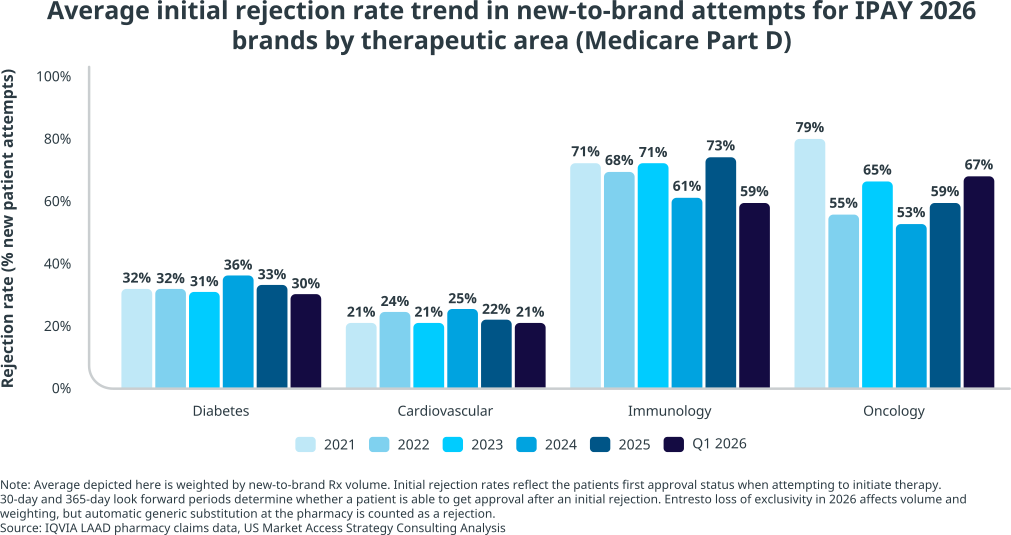
The MFPs for IPAY 2026-selected drugs went into effect on January 1, 2026 with Part D plans required to cover these selected drugs on formularies. However, the results of this analysis do not indicate any material improvement in patient access due to payer controls. Initial rejection rates decreased slightly from 2025 to Q1 2026 among diabetes and cardiovascular IPAY 2026-selected drugs, but these rates fall within the range observed from 2021 through 2024. Initial rejection rates for immunology IPAY 2026-selected drugs decreased by 14 percentage points from 2025. Patients attempting to initially fill oncology IPAY 2026-selected drugs actually saw an increase in rejection rates from 2025 to Q1 2026. Despite these larger changes from 2025 to Q1 2026 for immunology and oncology, the initial rejection rates are within the range observed in 2021-2024. This suggests that the coverage requirement has not translated into any meaningful changes in patient access.
Despite a coverage requirement for selected drugs, rejection data suggests that patient access has not materially improved since IPAY 2026-selected drug MFPs went into effect on January 1, 2026, as coverage is not synonymous with unrestricted access. Expectations for Medicare drug price negotiation to improve patient access have yet to come to fruition. Even more concerning, additional future IPAY-selected drugs are in the immunology and oncology therapeutic areas and other therapeutic areas with similar costs and treatment complexity, facing similarly high levels of payer control. These findings suggest that being included on formulary is not the same as quality access for patients, and that price negotiation and related health policies should be evaluated not only for government savings, but also for their direct effects on patient access and affordability.
As IRA implementation progresses, continued tracking of patient access - both exposure to rejections and final patient cost at the point of sale - will be critical to understanding success of these policies. However, while it is still the early days of Medicare drug price negotiation, initial evidence suggests that MFPs may not directly benefit patients and that policy design may need to more explicitly address patient access and affordability at the point of care.
This report and the analyses used were sponsored by the Pharmaceutical Research and Manufacturers of America (PhRMA). The findings and points of view are the result of IQVIA’s investigation and expertise.
The authors would like to thank Olivia Hutchins and Justin Ciccone for their contributions to this blog.

Timely access to prescribed treatments is a critical component of quality patient care, yet an increasing number of Medicare beneficiaries encounter coverage barriers when initiating branded medicines. As formulary restrictions become more prevalent and Medicare policy continues to evolve, understanding the real-world impact of these access challenges are essential for ensuring that Medicare beneficiaries attain timely, meaningful access to care. Explore how utilization management practices are affecting patients and how these trends may accelerate.
Related solutions
Navigate the challenge of compliance, and its vital association with quality
Data, AI, and expertise empower Commercial Solutions to optimize strategy, accelerate market access, and maximize brand performance.
Effectively engage with patients to help improve adherence, drive better disease understanding, and deliver treatment value.