














Market Access
Gain high value access and increase the profitability of your brands
This blog is part of an ongoing series, A Brave New World: Therapeutic Area Deep Dives.
Life sciences oncology strategy has long relied on the academic versus community care setting distinction, despite its increasing misalignment with how care is delivered today. What once served as a useful proxy for treatment complexity and decision-making no longer reflects the structural realities of the modern oncology landscape. Consolidation, therapeutic innovation, and the rise of integrated networked models have fundamentally reshaped where decisions are made and how therapies gain traction.
The consequence is not merely conceptual. Reliance on legacy segmentation creates blind spots in commercial strategy by masking centralized governance, network-level pathway control, and meaningful variation in how care is organized across sites that appear similar on paper. Two practices labeled as “community” may operate under entirely different governance and access models, including centers that function like academic institutions despite lacking large teaching infrastructures. At the same time, some academic centers exert limited downstream influence beyond niche capabilities. In this environment, the critical question is no longer where care occurs, but which organizations control patient flow, treatment decisions, and access at scale. Answering that question requires a shift toward segmentation grounded in operational capability and clinical influence rather than institutional labels.
Oncology care delivery has moved away from a linear referral-based model toward a more networked and economically integrated ecosystem. Historically, community practices served as entry points for diagnosis and early treatment, with complex care routinely referred out to academic centers before patients returned to the community setting for maintenance treatment. That handoff model is breaking down. Since 2019, the number of oncology practices operating within a parent network has risen by 96%, with nearly 80% of practices now embedded in networked models. These systems are structured to retain patients across multiple lines of therapy, selectively referring externally only for highly specialized interventions. At the same time, advances in targeted therapies, supportive care, and remote monitoring have reduced the need for inpatient infrastructure, enabling more sophisticated treatment to be delivered closer to the patient. The result is a system where care pathways are less about institutional labels and more about operational capability.
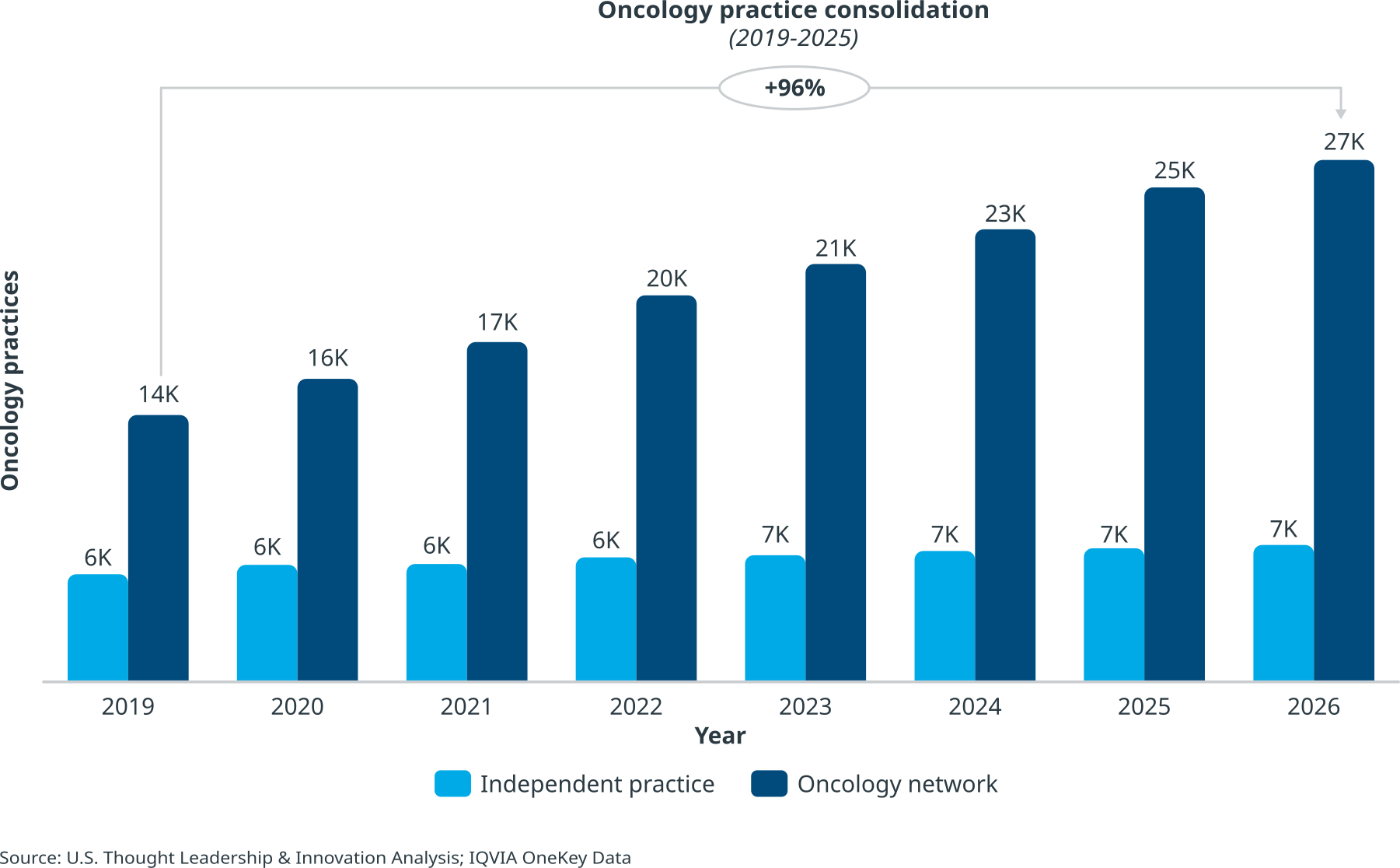
This shift is being driven as much by economics as by clinical capability. As networked practices scale through consolidation, centralized purchasing, and more advanced contracting models, they are strengthening financial performance and expanding their ability to deliver complex therapies outside traditional academic environments. The impact is already evident at scale. In a recent case study of two large community oncology networks, drug purchases at wholesale acquisition cost more than doubled between 2020 and 2025, increasing by over 130%.
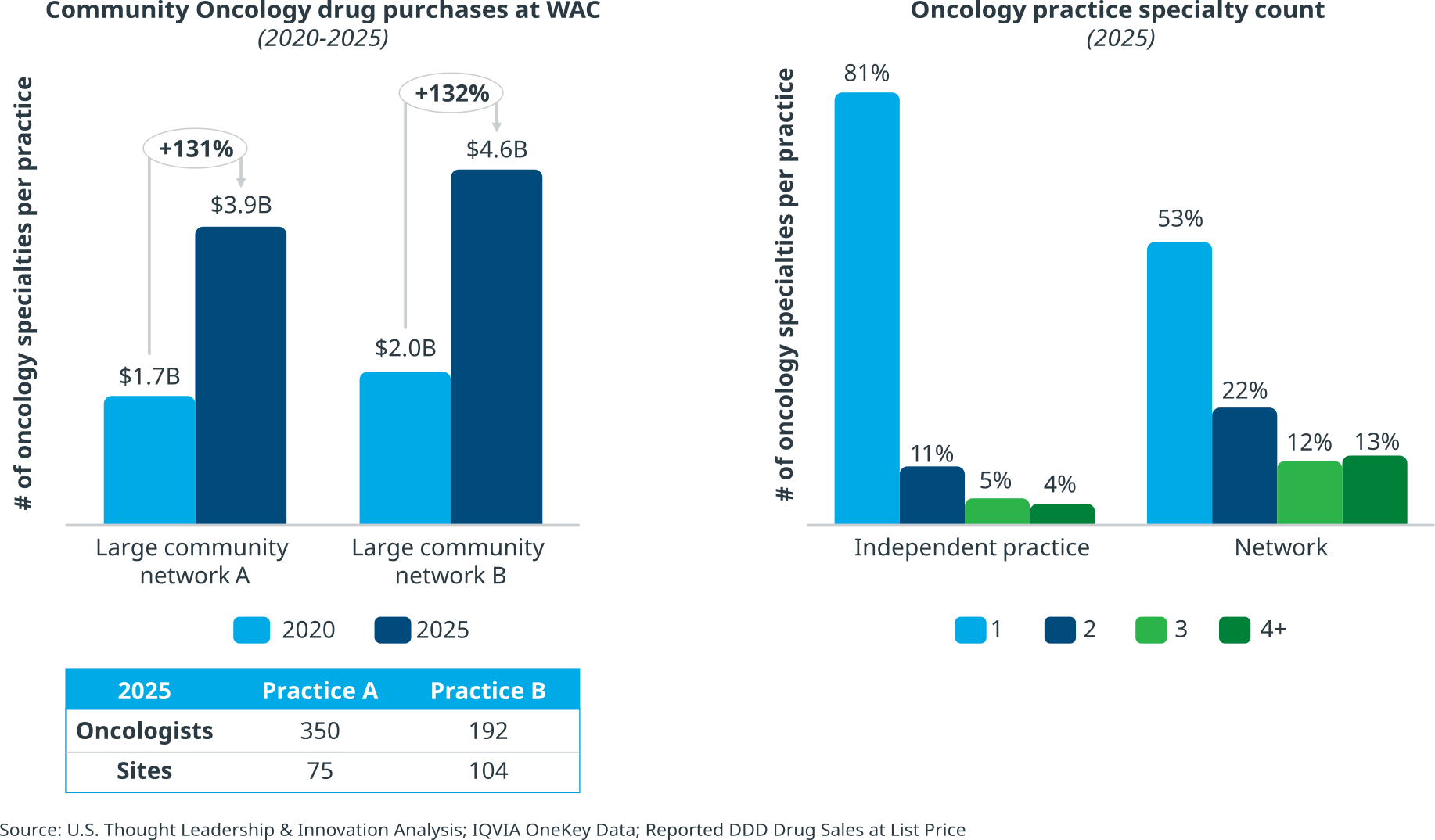
Scale also enables a broader scope of care delivery. Nearly half of networked oncology practices support more than one specialty, compared with just 19% of independent practices, allowing networks to internalize a wider range of clinical services and patient touchpoints. Alongside this expanded clinical footprint, larger networks can concentrate volume, standardize treatment pathways, and strengthen negotiating leverage across buy-and-bill products. These dynamics reinforce incentives to retain care within the network rather than refer it externally.
While consolidation is the most visible force reshaping oncology care, its deeper impact is how referral behavior is being restructured across the system. Rather than operating as isolated sites connected through episodic handoffs, oncology providers are most often embedded within integrated networks that actively manage how patients move across the care continuum.
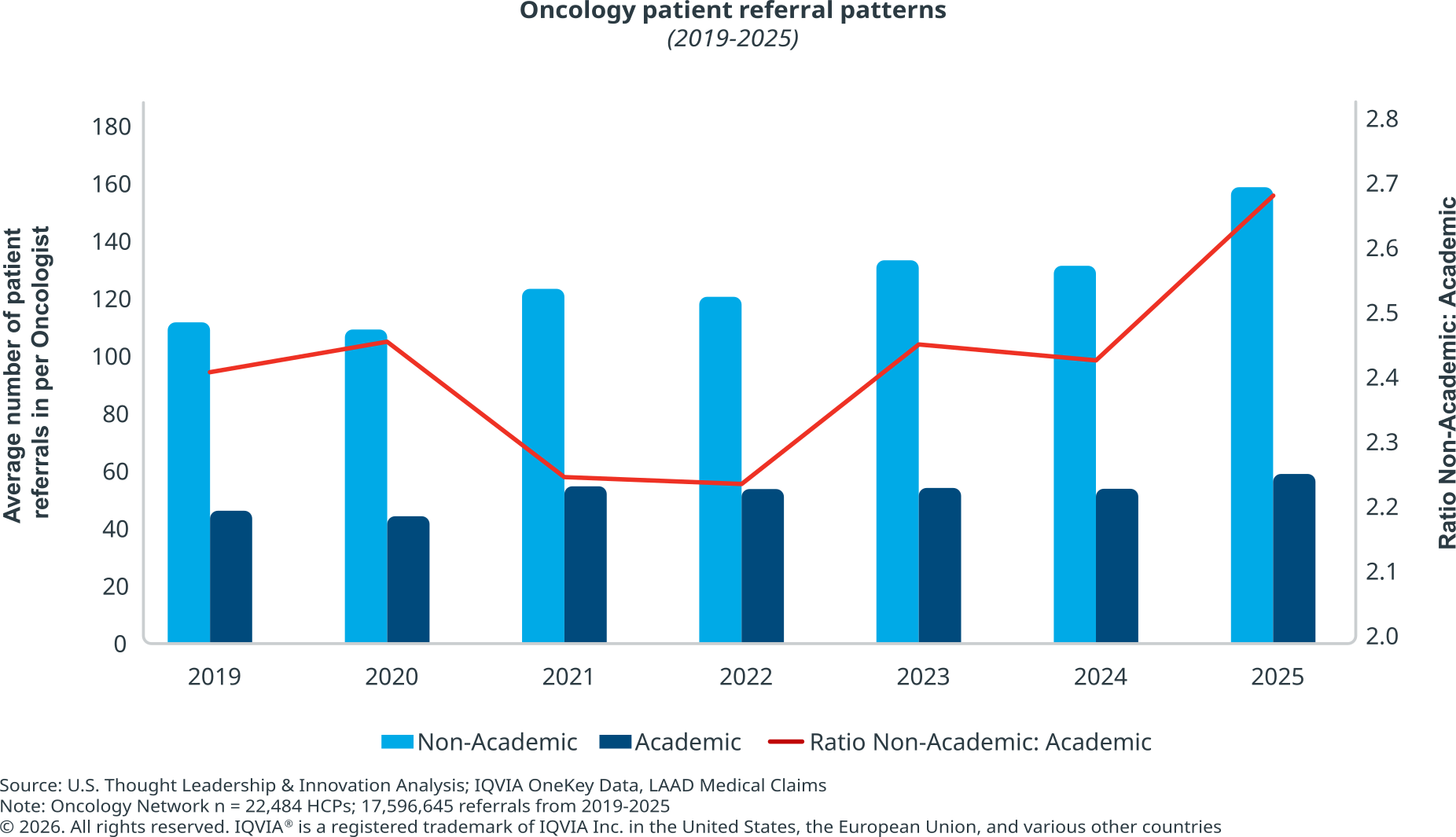
A longitudinal analysis of more than 22,000 oncologists and 17.5 million patient referrals from 2019 to 2025 highlights the scale of this shift. As practices consolidate into networked models, referral behavior is becoming more centralized and internally coordinated. These networks are not just larger versions of traditional community settings; they function as interconnected systems that manage patient progression across diagnosis, treatment, and follow-on care.
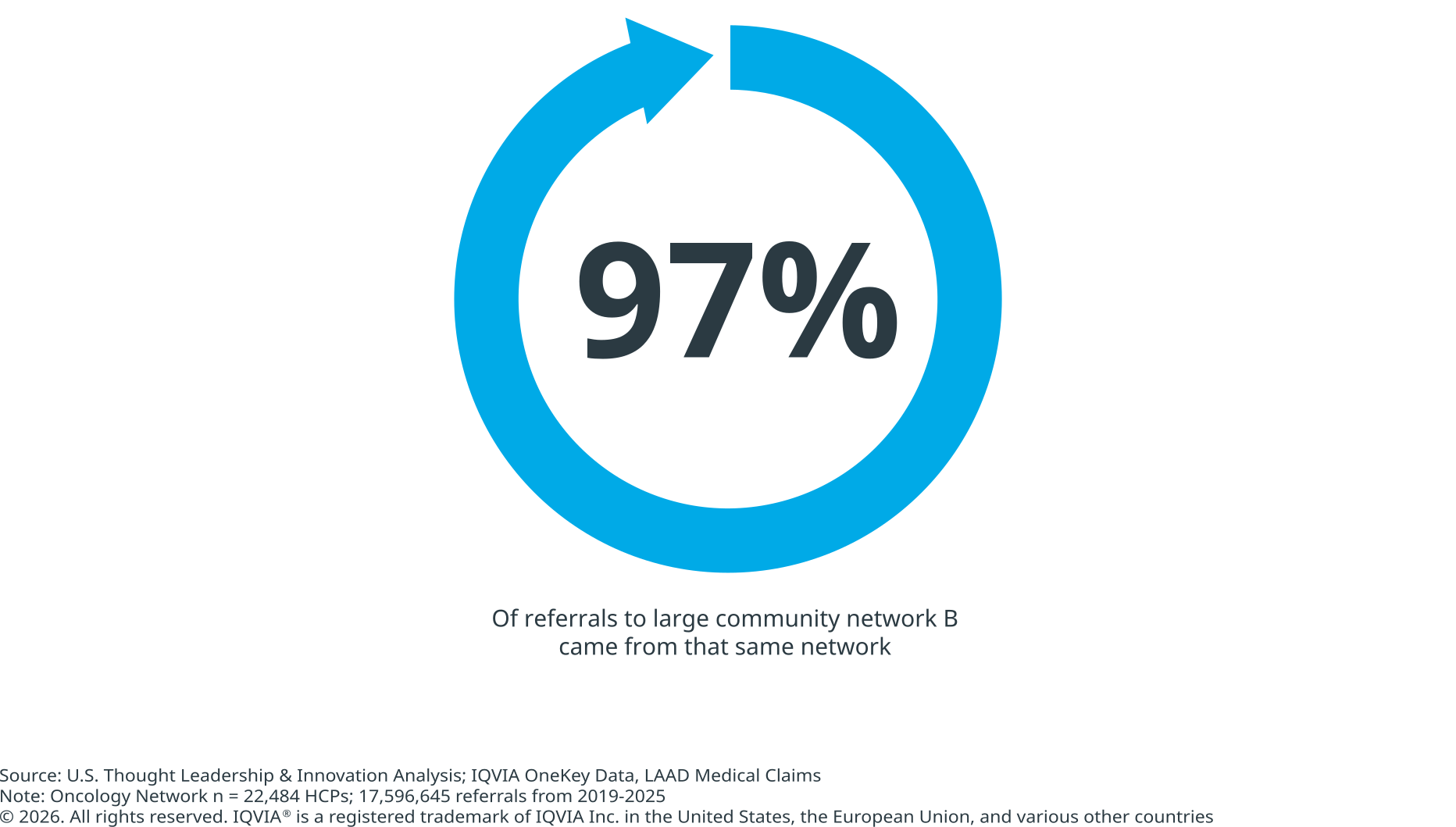
As a result, patient flow is retained within networks rather than distributed across independent providers. In one large community oncology network, approximately 97% of referrals occur internally, underscoring the extent to which these systems are able to coordinate care without reliance on external partners. This reflects a broader directional shift across the market, where referral leakage is declining as networks build the clinical breadth and infrastructure required to manage patients end-to-end.
This evolution is altering the role of traditional care settings. Referral pathways are no longer defined by movement between community and academic providers, but by a network’s position and degree of connectivity across sites and specialties, which now determine where patients are directed and how care is coordinated. As community-based networks scale and expand capabilities, this combination of connectivity and clinical breadth is enabling them to capture a growing share of incoming referrals relative to academic centers.
For life sciences companies, this shift materially changes how influence must be understood. Identifying high-value sites is no longer sufficient; success depends on understanding how patients move through referral networks, where coordination occurs, and which stakeholders shape progression across connected settings. Engagement strategies must therefore align not only to individual providers, but to the referral structures that govern access, continuity, and care delivery across the system.
If patient flow and decision-making are determined by position within referral networks, then care setting segmentation must reflect these underlying structures. Classifying sites as academic or community no longer provides a reliable view of where control resides or how care is coordinated across the system.
A more relevant segmentation must instead capture capability, network position, and decision authority. Organizations differ not only in the complexity of care they deliver, but in their role within referral networks and their influence over how patients progress through treatment. Some function as highly connected hubs that coordinate care across sites and specialties, while others operate with more limited connectivity and rely on external networks for downstream services.
A more commercially actionable segmentation must reflect capability, control, and decision authority rather than institutional branding:
In this environment, misclassification is no longer a theoretical issue. It directly limits the ability to understand how patients move through the system, where decisions are made, and which organizations meaningfully shape access and continuity of care. Segmentation grounded in referral dynamics and decision authority provides a more accurate foundation for identifying influence and aligning commercial strategy to how oncology care is actually delivered.
For life sciences companies, the implication is not simply that influence is shifting, but that control over patient flow resides within referral networks rather than individual sites or prescribers. As internal referral pathways expand within integrated systems, access, progression, and continuity of care are shaped upstream by how these networks are structured and coordinated.
This shift requires a fundamentally different approach to engagement:
Ultimately, commercial success will depend on recognizing that oncology care is no longer organized around isolated sites, but around interconnected referral systems that shape how patients move through the ecosystem. Companies that align their strategies to these network structures will be better positioned to influence access, support continuity of care, and capture opportunities across the full patient journey. Contact IQVIA to learn more about how to identify the oncology care settings that matter most, prioritize opportunities with precision, and execute commercial strategies aligned to today’s consolidated oncology landscape.
This blog is part of an ongoing Brave New World series focused on how oncology is evolving and what that means for clinical and commercial strategy. Topics include the modern oncology landscape, the shifting roles of community vs. academic organizations, post ASCO perspectives, tumor specific deep dives, the growing impact of advanced modalities (CAR T and bispecifics), and what’s next in oncology innovation. You can find all Brave New World content in the U.S. Insights Library.
Related solutions
Gain high value access and increase the profitability of your brands