














Commercial Solutions
Data, AI, and expertise empower Commercial Solutions to optimize strategy, accelerate market access, and maximize brand performance.
This blog is part of an ongoing series, A Brave New World: Therapeutic Area Deep Dives.
Oncology has emerged as one of the fastest growing and most strategically consequential therapeutic areas in biopharma. Global cancer medicine spending reached $252 billion in 2024 and is projected to exceed $400 billion by 2028, positioning oncology as the single largest contributor to pharmaceutical spending, ahead of immunology and obesity. This exceptional growth has firmly established oncology as a top investment priority for both large and emerging biopharma companies, driving increased R&D spending, expansion of modality platforms, and aggressive portfolio buildout through mergers and acquisitions.
The U.S. market sits at the center of this momentum, accounting for roughly 46% of global oncology spending and exerting an outsized influence on global market dynamics. U.S. cancer medicine spend for novel active substances (NAS) increased from $73.3 billion in 2020 to $120 billion in 2024, reflecting a robust compound annual growth rate (CAGR) of approximately 13%. Growth has been driven primarily by solid tumors overall; however, multiple myeloma is the single largest contributor, followed by breast cancer.
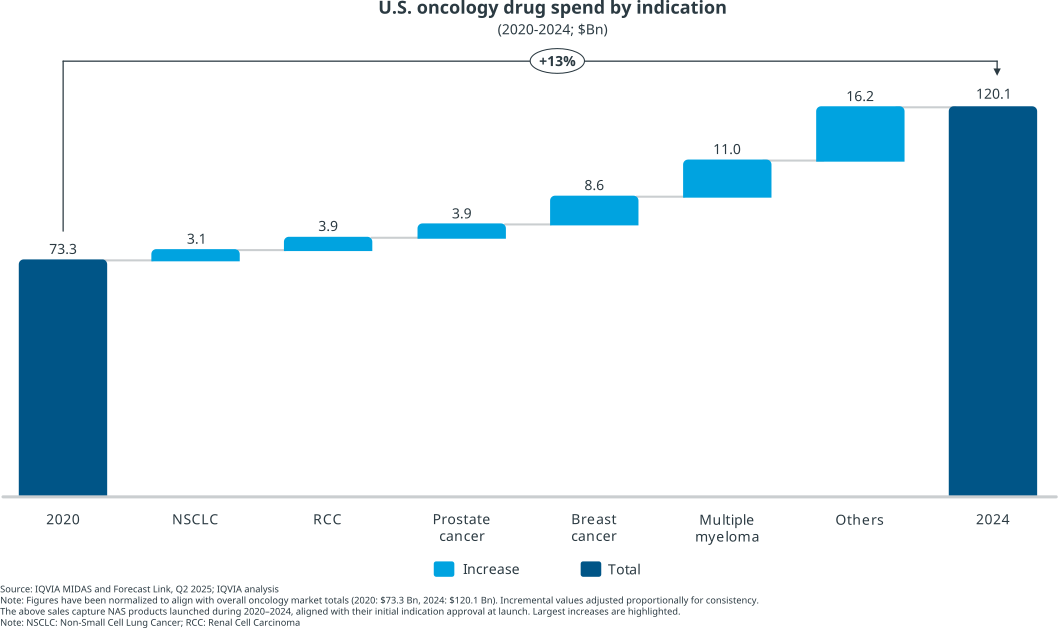
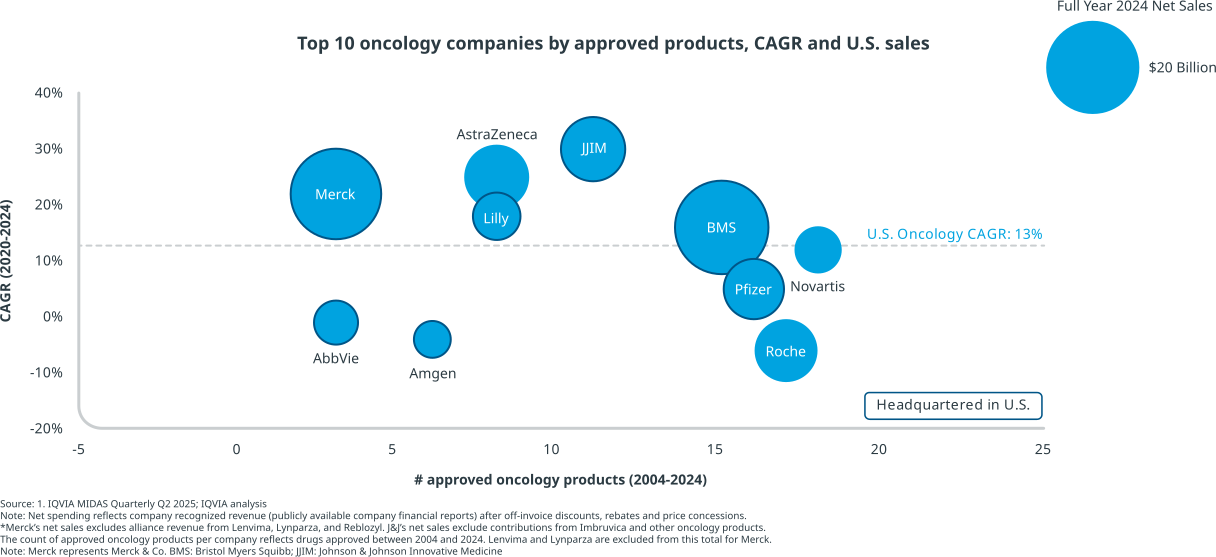
Due to the complexity of clinical development and regulatory approval, many companies are concentrating investment in a small number of key tumor types—multiple myeloma, breast cancer, prostate cancer, renal cell carcinoma (RCC), and non-small cell lung cancer (NSCLC)—rather than pursuing areas with fewer competitive agents in the pipeline. By 2024, seven of the 10 highest-revenue oncology companies were U.S.-based, accounting for approximately 57% of U.S. oncology revenue and nearly 30% of global oncology sales. This concentration reflects a deliberate strategy to scale across large, well-validated markets where clinical development pathways and commercial infrastructure are already well established.
Performance within this group continues to be driven by a small number of high-revenue assets. Bristol Myers Squibb, Merck, Johnson & Johnson, and Eli Lilly have each outpaced the broader U.S. oncology market growth, which expanded at ~13% CAGR over this period. In many cases, market leadership is anchored by single multibillion-dollar therapies that support broad portfolio economics. Checkpoint inhibitors remain central to this dynamic, alongside CDK4/6 inhibitors, reinforcing a model in which sustained growth is increasingly tied to early development within foundational treatment classes rather than breadth alone.
Oncology growth is increasingly shaped by the pace and scale of innovation rather than market expansion alone. Between 2015–2024, approximately 150 New Active Substances (NAS) entered the U.S. oncology market, with solid tumors accounting for nearly two-thirds of approvals. Launch activity increased by nearly 40% in 2020-2024 compared to the prior five years, reflecting sustained investment in indications with both high prevalence and persistent unmet need. Non-small cell lung cancer, breast cancer, non-Hodgkin lymphoma (NHL), and multiple myeloma continue to account for a disproportionate share of approvals, reinforcing their role as focal points for R&D prioritization. The result was more approvals but also heightened competitive intensity.
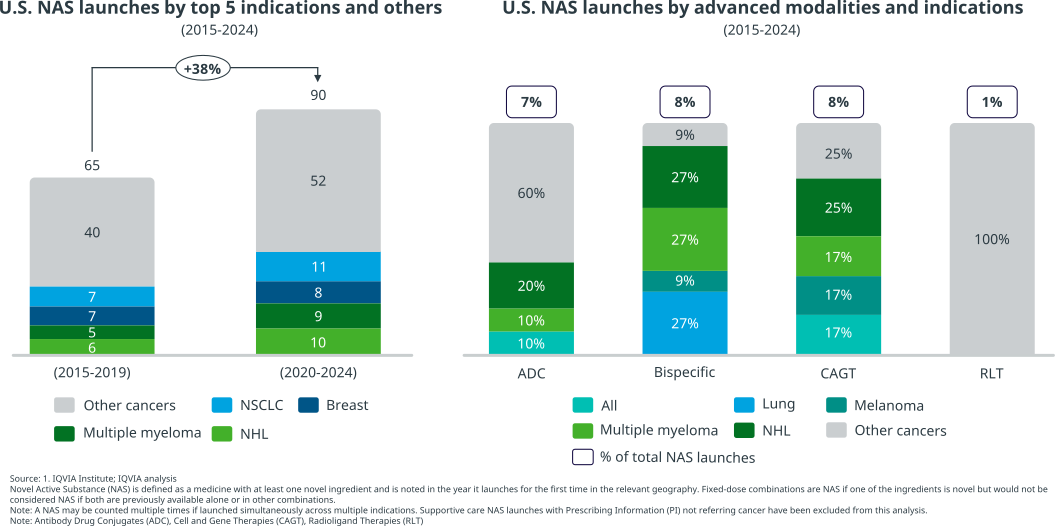
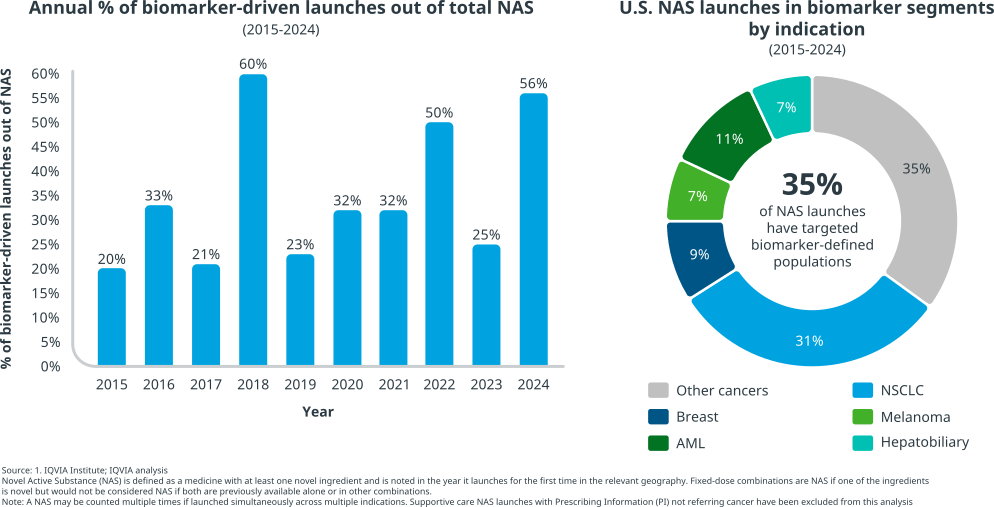
The convergence of sustained unmet need, accelerated R&D timelines, and high-target validation has intensified competition across oncology markets. Over the past decade, lifecycle expansion has become the dominant growth strategy in oncology, with more than 500 approvals across NAS and label extensions collectively supporting continued value well beyond initial launch. This pattern is most pronounced in large, established indications such as NSCLC, breast cancer, and multiple myeloma, where successive expansions increasingly function as a primary engine of growth rather than discrete launch events. As a result, leading oncology assets are increasingly managed through a “pipeline in a product” strategy, where value is built both vertically, by moving earlier across lines of therapy, and horizontally, by expanding into new indications and patient populations, rather than through a single discrete launch event.
This dynamic is most visible in established treatment backbones. Checkpoint inhibitors continue to anchor care across multiple tumor types, with rapid progression from later-line settings into earlier lines of therapy. Growth within these classes is now driven less by entry of new mechanisms and more by line of therapy, combination strategies, and incremental differentiation supported by ongoing evidence generation. Similar patterns are emerging across other validated pathways, where multiple modalities compete within overlapping patient populations.
As innovation converges around proven targets, competitive density has increased across major oncology markets, including NSCLC, breast cancer, NHL, and multiple myeloma, where multiple modalities now compete for overlapping patient segments. Late entrants face slower uptake and often face later line-of-therapy utilization, increasing the importance of early positioning and disciplined indication strategy. In this environment, durable commercial success depends on establishing relevance early and sustaining it through coordinated clinical development, lifecycle execution, evidence strategy, and portfolio integration.
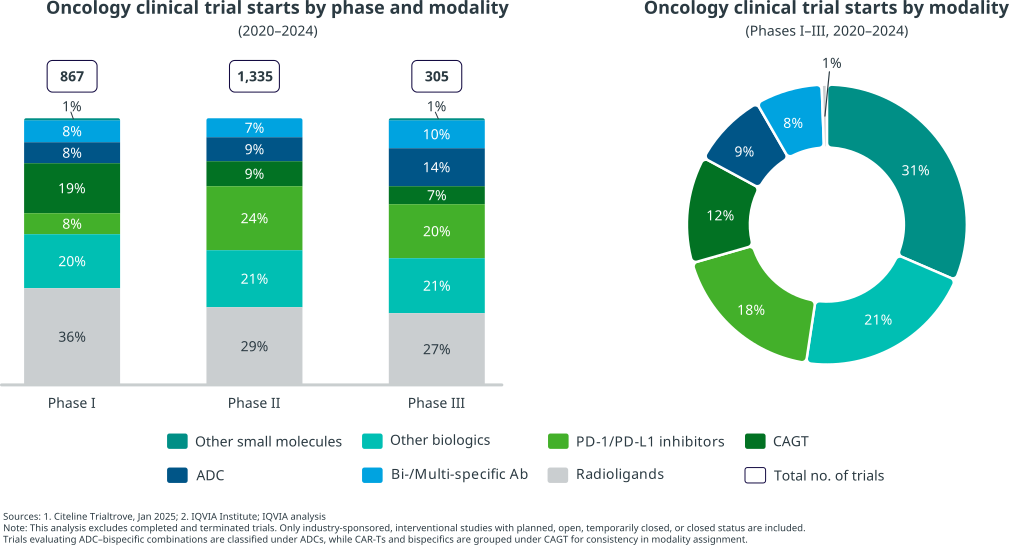
Despite increasing competition in the commercial landscape, oncology R&D activity continues to expand, driven by rapid modality innovation and more precise patient segmentation. U.S. oncology trial starts more than doubled between 2020 and 2024, with activity increasingly concentrated in solid tumors. Phase II studies now account for nearly half of all trial initiations, reflecting a development pipeline that is both exploratory and focused on advancing assets toward proof of concept.
Advanced modalities now represent more than a third of active oncology trials. CAGT programs have expanded beyond hematologic malignancies into select solid tumors, while antibody-drug conjugates continue to show the fastest growth in trial activity and remain a focal point for oncology dealmaking. Bi- and multi-specific antibodies are advancing steadily through mid- and late-stage development, and radioligand therapies are gaining earlier lines of therapy that increase the size of the patient population in indications such as prostate and neuroendocrine tumors.
At the same time, despite the relative maturity of the PD-(L)1 class, checkpoint inhibitors remain central to oncology development, accounting for the largest share of ongoing clinical trials. Their continued role as treatment backbones reflects both clinical validation and their importance in combination therapies.
|
Together, these trends highlight a central tension in oncology R&D: Scientific innovation continues to accelerate, but increasing convergence around proven targets is intensifying competition and raising the bar for meaningful clinical and commercial differentiation. |
Oncology remains a central driver for biopharma growth, but the conditions required for sustained success are changing. As innovation accelerates and competition intensifies around established targets and treatment backbones, market leadership is increasingly shaped by how effectively organizations execute against clear strategic priorities. Companies that succeed are those that translate innovation into focused development plans, coherent positioning, and sustained adoption rather than relying on participation in high-growth segments alone.
As oncology innovation converges around a narrow set of proven scientific pathways, market leadership is no longer defined by innovation alone, but by the ability to execute with discipline. Strong science is now table stakes. It establishes relevance, but it does not guarantee success. What separates leaders is how effectively they translate innovation into focused development choices, clear market positioning, and sustained adoption over time. In crowded markets, outcomes are determined early by indication strategy, lifecycle intent, and the ability to align clinical, regulatory, access, and commercial decisions behind a single coherent plan.
At the same time, competitive intensity is being amplified by strategic convergence across large biopharma, as companies are increasingly pursuing the same limited set of viable paths in oncology. Whether expanding a single asset across indications, assembling portfolios within a small number of tumor areas, or concentrating investment in select advanced modalities, the industry is moving in parallel. Because these options are finite, many organizations are moving in the same direction at the same time, resulting in crowding and compressing the window for differentiation. In this environment, leadership is shaped by clarity of choice. Organizations that commit early, make deliberate tradeoffs, and resist reactive expansion are better positioned to sustain advantage in a market defined by shared direction rather than open opportunity. Contact IQVIA to learn more about how to evaluate oncology opportunities, prioritize effectively, and execute strategies that support long-term performance.

This blog is part of an ongoing Brave New World series focused on how oncology is evolving and what that means for clinical and commercial strategy. Topics include the modern oncology landscape, the shifting roles of community vs. academic organizations, post‑ASCO perspectives, tumor‑specific deep dives, the growing impact of advanced modalities (CAR‑T and bispecifics), and what’s next in oncology innovation. You can find all Brave New World content in the U.S. Insights Library.
Related solutions
Data, AI, and expertise empower Commercial Solutions to optimize strategy, accelerate market access, and maximize brand performance.
Grow your brand, now and through patent expiry
Gain high value access and increase the profitability of your brands