














Commercial Solutions
Data, AI, and expertise empower Commercial Solutions to optimize strategy, accelerate market access, and maximize brand performance.
This blog is part of the series, A Brave New World: What’s New and What’s Next, on emerging issues, fast-moving changes, and early signals shaping the industry.
It’s not a provocative statement to say the U.S. health system is under growing strain, but the current weights are creating a powerful opening for innovative ways to provide patient care. Necessity is the mother of invention.
A looming $300B loss of exclusivity (LOE) cliff and uneven pipeline productivity are forcing the pharmaceutical industry to rethink portfolio value, while patients increasingly expect digital-first, consumer grade experiences as part of their care. Physicians, now armed with richer data and incentivized by financial mechanisms tied to monitoring, outcomes, and any solutions that can reduce administrative burden, are demanding tools that integrate seamlessly into clinical workflows. At the same time, payers are pressing harder for measurable value, accelerating the shift toward value-based care, and policy tailwinds are fueling a national race in AI-enabled drug development, wearables, and remote monitoring.
Together, these dynamics set the stage for Prescription Drug Use Related Software (PDURS) to emerge as a critical lever for extending therapeutic impact, differentiation, and value beyond the pill.
As digital health technologies continue to evolve the field is entering an era in which regulated, therapeutic value can be delivered in cases where a drug alone may not be sufficient to achieve a desired treatment outcome. Thus, PDURS has emerged as a transformative force in modern healthcare that can enable patients to achieve improved outcomes by leveraging more effective technology in a digitally centric world.
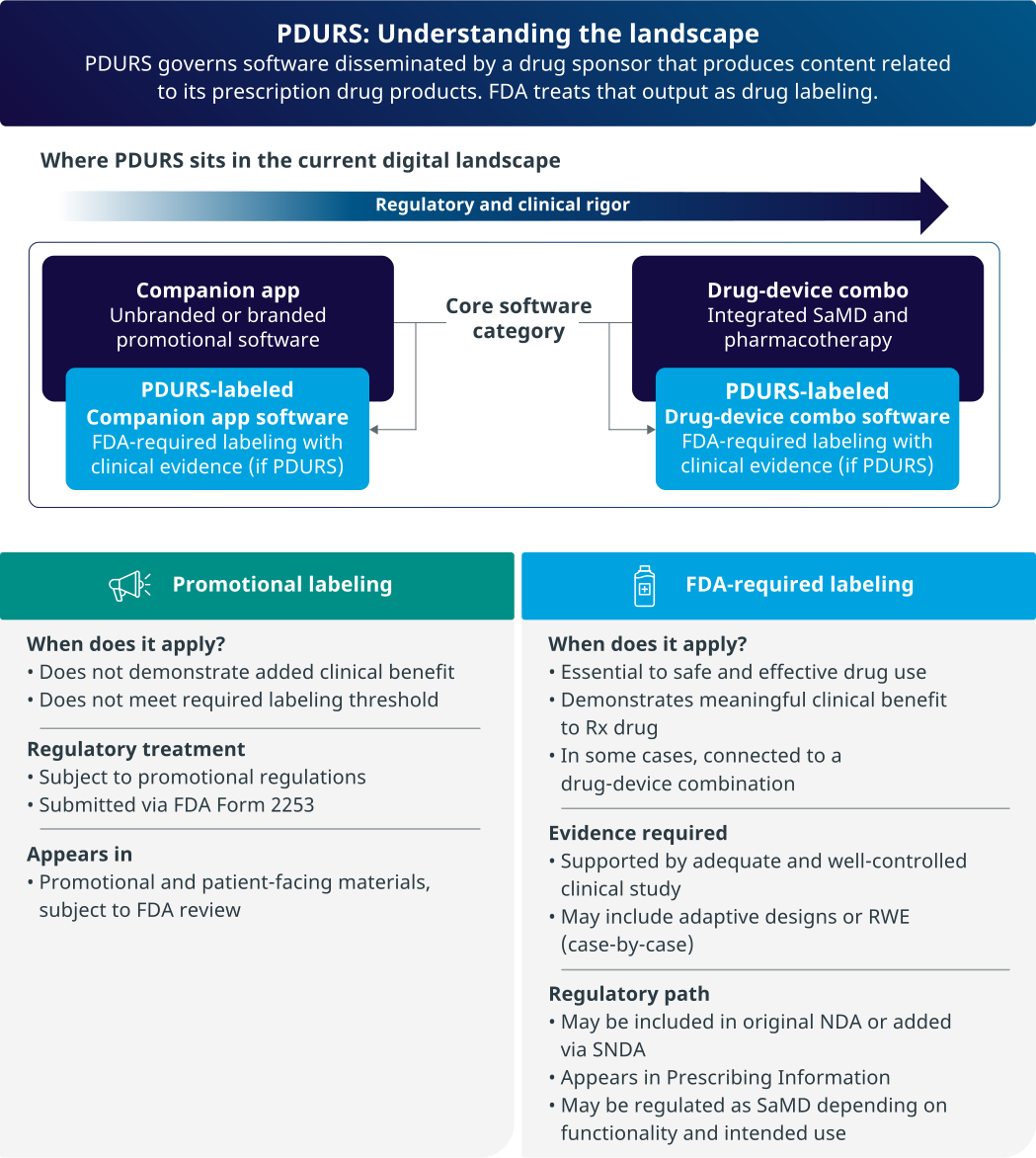
The FDA issued draft guidance in 2023 on PDURS, where it clarified how the agency intends to apply its drug-labeling authorities to certain software outputs disseminated by or on behalf of a drug sponsor for use with a prescription drug or biologic product. PDURS, as defined by the FDA, generally includes software that:
A software function is any distinct purpose of the software, and end-user output is any material (content) that the prescription drug use-related software presents to the end user (a patient, caregiver, or healthcare practitioner).
By this definition, examples of PDURS can encompass solutions anywhere from companion apps or branded web tools for treatment and dose selection, to safety and Risk Evaluation and Mitigation Strategies (REMS) software. However, the most exciting part of the PDURS draft guidance is how FDA clarifies that the benefit from the software function may be added to the drug label.
The software benefit may be added to the drug label if the PDURS offers demonstrated evidence:
Without such evidence submitted and reviewed by the FDA, the manufacturer may not promote the clinical value of the software.
Inclusion of the software benefit within the drug label directly enhances the therapeutic and commercial value of the drug, as it can now make new and/or improved clinical claims. Importantly, the FDA has already reviewed evidence showing that software can deliver clinically meaningful benefit on top of drug therapy.
In its De Novo review of Click Therapeutics’ digital therapeutic, CT 132, for Migraine, FDA evaluated data demonstrating improved outcomes when a digital intervention was added to standard pharmacologic care, mirroring the exact evidentiary bar PDURS is designed to meet.
Before PDURS, digital therapeutics (DTx) were used as either standalone or adjunctive therapies -- prescribed, utilized, and reimbursed separately -- without the opportunity to realize their full therapeutic potential as a synergistic enabler in therapy.
Today’s healthcare software typically comes in the form of companion apps or well-being solutions that are limited to the wellness claims that they provide. Even as a general-use DTx, the software may be limited to low-risk, indication-specific claims.
Through PDURS and with the software regulated as a Software as a Medication Device (SaMD), the added clinical benefit can now be integrated directly into the official drug label, which strengthens the therapeutic and commercial value proposition of the drug asset.
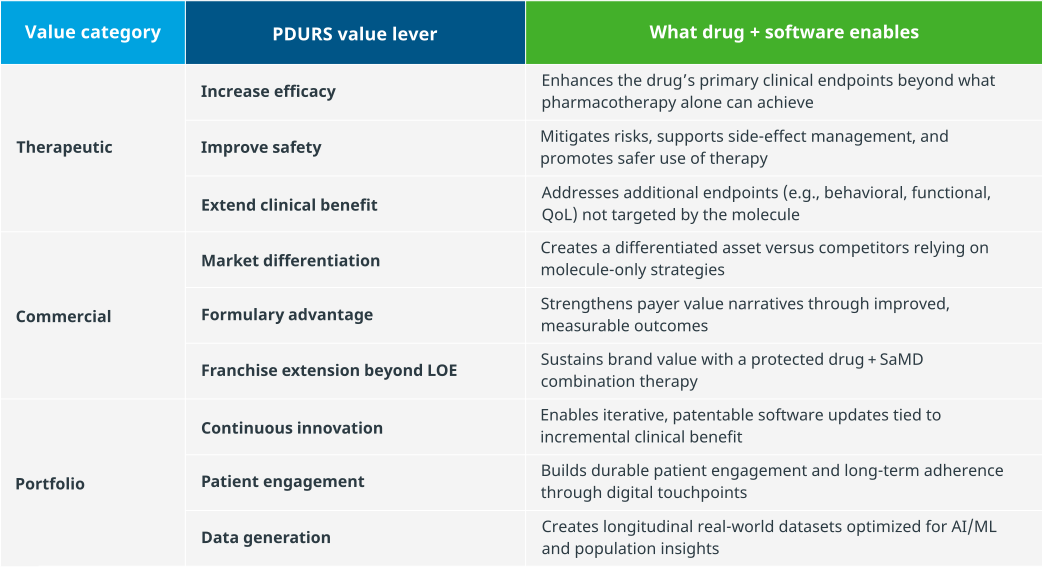
Potential commercial and therapeutic opportunities for pharma manufacturers could include, but are not limited to, increased efficacy, safety, market differentiation, and patient engagement.
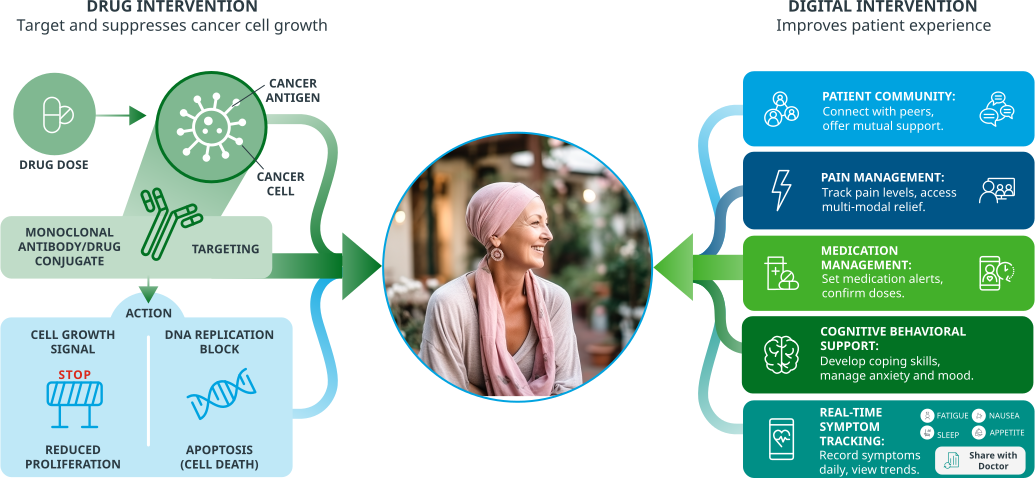
Consider the current landscape of cancer treatment. While we are seeing unprecedented innovation at the molecular level designed specifically to suppress tumor growth and drive clinical remission, the molecule alone often fails to address the patient's holistic experience. While the drug performs its specific biochemical task, the patient is frequently left to navigate a secondary human crisis. This includes debilitating mental health hurdles such as anxiety and depression, profound social isolation, and the constant physical toll of medication side effects and adverse events.
This is where medical-grade software acts as a critical, synergistic enhancer for the molecule. By integrating digital interventions, such as real-time symptom tracking and cognitive behavioral support, pharma can provide the psychological and operational scaffolding necessary to complete the therapy. Together, the drug and the software function as a unified treatment system to deliver a superior therapeutic outcome that is safer and more engaging. For Pharma manufacturers, this represents a strategic opportunity to capture value by demonstrating a clinically meaningful benefit that extends far beyond the chemical asset itself.
This is not just theory. Click Therapeutics has demonstrated data in a randomized control trial (RCT) that it’s novel Multimodal Multistable Bias Modification (MMBM) smart phone intervention for breast cancer patients demonstrated reduction in fatigue, anxiety, and depression symptoms. By the definition of PDURS, if Click’s MMBM demonstrates this clinical benefit when used with a specific drug, that added benefit may be added to the sponsor’s drug label.
In order to better understand this, we need to revisit the importance of labeling and claims:
So then, how should pharma be thinking about moving forward to capitalize on PDURS? We have highlighted a couple of guiding principles:
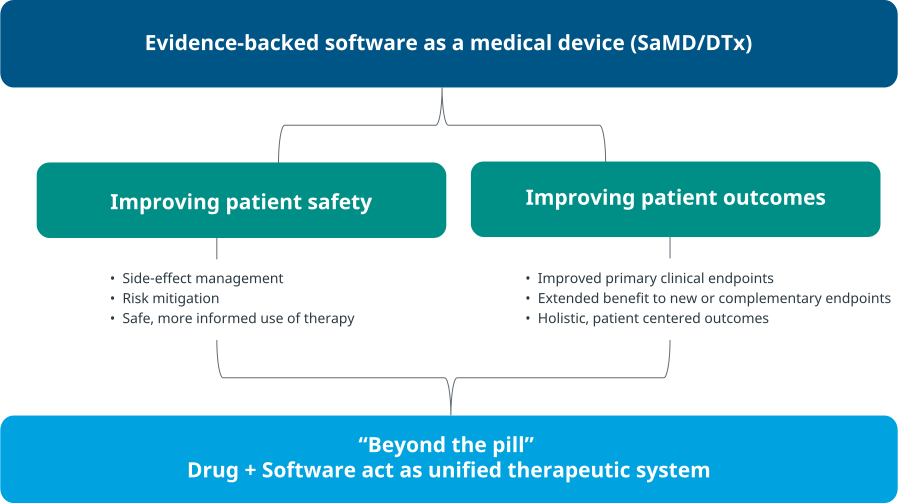
Ultimately, the promise of PDURS for pharma can be thought of in two main impactful ways: improving patient safety and improving patient outcomes, which underscores the shift towards understanding the patient as a consumer. Patient safety focuses on helping patients manage side effects and improve tolerability, while patient outcomes focus on achieving either the same clinical endpoint as the drug or a distinct endpoint specific to the PDURS. Evidence-backed Software as a Medical Device (SaMD) and DTx can be the catalysts to create this therapeutic benefit for a specific pharma drug. This represents a meaningful opportunity for pharma to finally fully capitalize on the original “beyond the pill” promise.
Click Therapeutics is the market leader in developing potential PDURS solutions. IQVIA is advising life sciences clients on how to best navigate this new world and successfully bring these solutions to market with the shared goal of improving patient outcomes and experiences. Please reach out to the authors to learn more and discuss how PDURS can enhance your organization’s commercial impact.

Driven by the promise digital tools offer to optimize care and reduce costs, as well as recent commercial challenges facing the sector, digital health stakeholders are rethinking how they evaluate, approve, reimburse, and bring digital technologies to market.
Data, AI, and expertise empower Commercial Solutions to optimize strategy, accelerate market access, and maximize brand performance.
Grow your brand, now and through patent expiry
Our Real-World Evidence offerings turn diverse healthcare data into actionable insights, empowering confident decisions and better patient outcomes.