This blog is part of an ongoing series, A Brave New World: Finding Life Sciences Success in Modern Markets.
Whoever said that stasis is a good thing?! While direct-to-consumer (DTC) patient programs have only recently captured headlines and driven innovation in patient engagement, the next wave may be emerging: pharma direct-to-employer (DTE) business models.
These models, which may be a rebirth of pharma’s decades-old focus on direct engagement with employers, could reshape how medicines are accessed, priced, and delivered to patients, potentially representing a shift away from traditional insurance intermediaries while unlocking new value for pharma, employers, and patients.
Why Now? Market Forces Driving DTE Adoption
Several converging drivers are accelerating this shift, many of which are the same trends pushing pharma to go directly to consumers:
- Employer Benefits Evolution: Employers, facing rising healthcare costs and the limitations of high-deductible health plans (HDHPs), are actively seeking alternatives to traditional pharmacy benefit managers (PBMs). This is combined with the fact that existing PBM rebate guarantees obfuscate the net price employers pay for most drugs. According to a 2025 Mercer study, 61% of employers with 500+ employees are exploring new PBM approaches. Lilly itself just discontinued CVS’s drug plan and is working with alternative PBM Rightaway to manage drug benefits for its 23,000 employees.
- Regulatory and Policy Dynamics: Recent and upcoming policy changes, including Medicare price negotiations (IRA) and Most Favored Nation (MFN) pricing, are pushing pharma to continuously innovate. Margin pressure from rebates and discounts—often exceeding 80% on gross sales for new brand launches—makes alternative access channels increasingly attractive. Net price erosion is occurring more quickly and in more therapeutic areas than ever before.
- Consumerization and Transparent Pricing Trends: Activism around drug pricing has led to disruptors like Mark Cuban’s Cost Plus Drugs (MCCPD) and pharma to embrace transparent cash-pay programs. Patients now expect on-demand, user-friendly care, driving pharma to adopt friction-less, omnichannel approaches, building off the success of Lilly Direct®, Pfizer4All®, NovoCare® and others.
Waltz Health & Novo Nordisk: A Recent DTE Case Study in Innovation
Waltz Health has launched a first-of-its-kind DTE access model for FDA-approved obesity management medications, partnering with Novo Nordisk. This initiative offers self-insured employers a turnkey solution: fixed pricing, clinical safeguards, and end-to-end employee support. Employees can access treatment and prescriptions through their existing providers or telehealth platforms, with real-time eligibility screening and ongoing digital support. The program aims to deliver consistent pricing, adherence monitoring, and importantly, transparency. These features address the growing patient demand for obesity medicines and the limitations of traditional insurance coverage.
Who are the Players? The Evolving Ecosystem and Models
While Waltz Health is a prominent early mover with Novo Nordisk, there are multiple innovative companies providing an alternative for employers and pharma to explore value without working directly with insurance companies. These companies often offer similar services, so the question remains whether there will be consolidation, one interconnected platform marketplace similar to a pharma alternative PBM consortia, or one-off partnerships.
- Transparent drug marketplaces: MCCPD and SmithRx are challenging legacy PBMs with transparent, fixed-price offerings, often bypassing PBMs and insurance entirely. MCCPD has previously partnered with Janssen to sell Invokana and two diabetes brands prior to loss of exclusivity (LOE).
- Alternative PBMs: In addition to Rightway, companies like Prescryptive Health (a previous partner of Eli Lilly for its insulin portfolio) and AffirmedRx (previous partner of Sun Pharma for its psoriasis drug Illumya) are partnering with employers and pharma to deliver drugs more transparently. 7-Eleven and Purdue University are large employers who were early movers to these platforms versus traditional PBMs.
- Dedicated pharma DTE solutions: Tech-enabled platforms (i.e., the Waltz model) allow pharma to establish direct relationships with employers and insurers, offering a service-oriented solution to manage company’s prescription benefits.
- Digital direct-to-employer health tech: Health tech companies partnering with employers to offer innovative, digital-first wellness benefits based on employer priorities (Hinge Health for MSK conditions and Teladoc for mental health services are popular wellness benefits employers offer their employees).
What is the Value for Pharma and Employers?
These DTE approaches and models offer numerous benefits, so more pharma companies are expected to pursue the channel. These benefits include:
- Margin Control: By avoiding rebate dilution, 340B misuse, and chargebacks, pharma can improve gross-to-net outcomes.
- Speed to Market: Faster launch cycles and competitive net pricing help defend against LOE and generics.
- Brand Differentiation: Direct relationships with employers and employees build trust and supplement DTC programs.
- Expanded Access: DTE can reach under-treated populations with high disease burden, aligning with employer health priorities. Managing the cost of disease, not just the cost of medicine, aligns with many health sector stakeholders.
- Data and Insights: Pharma gains direct feedback on utilization and outcomes, supporting adherence and personalized engagement.
Key Question Moving Forward: How Should Your Organization Play?
As DTE models gain traction, organizations must consider:
- Is there a compelling DTE model today, or is the market still forming? Is it best to be an early mover or wait to see the market develop?
- What strategic value could DTE provide for a specific portfolio and target employer partners?
- Who are the right alternative PBM partner(s), and what archetype of products are best suited for DTE?
- What is the business case and execution plan to pioneer in this direction?
- How can value and evidence be used to substantiate pricing in an emerging DTE model?
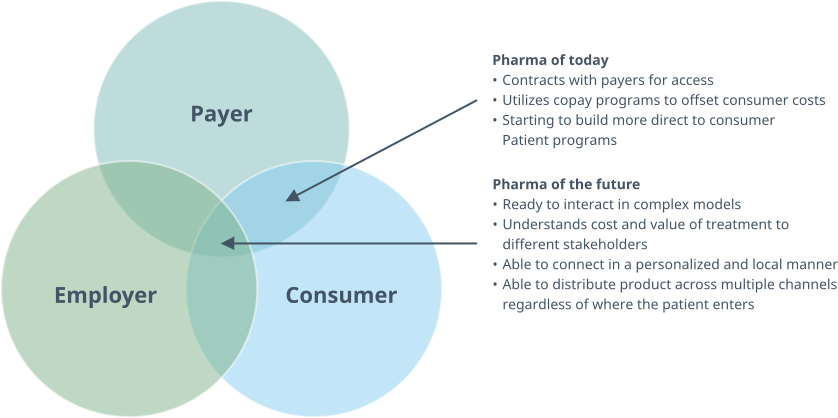
What is clear is the future pharma business model is shifting from where it is today. What is emerging could be a hybrid future state of who pays for drugs, shifting conversations about the value provided to key stakeholders, specifically payers, employers, and consumers. While the pharma of today is clearly focused on payer engagement, emphasis is shifting toward greater customer inclusiveness, and the next wave will turn toward employers. It’s imperative that pharma positions itself in the center to capitalize on all segments of the market.
Conclusion: Early Days, Big Potential
The direct-to-employer model is still in its early stage, but momentum is building. As more employers seek alternatives to traditional insurance and PBMs, pharma has an opportunity to lead—driving transparency, improving access, and redefining value. The question is not just whether to play, but how to play smart.
IQVIA is working together with customers and its suite of advisory, patient, digital and data offerings to pursue answers to these questions. Please allow us to help explore a fit-for-purpose DTE model for your organization.
References:
- Why Pharma Is Going Direct to Consumers; IQVIA Blog.
- Waltz Health launches new direct-to-employer access model for obesity management medications; PR Newswire.
- Eli Lilly drops CVS drug plan workers after Novo obesity deal; Reuters.
- Mercer As Benefits Costs Surge, Employers Face Tough Decisions for 2026; Mercer.