


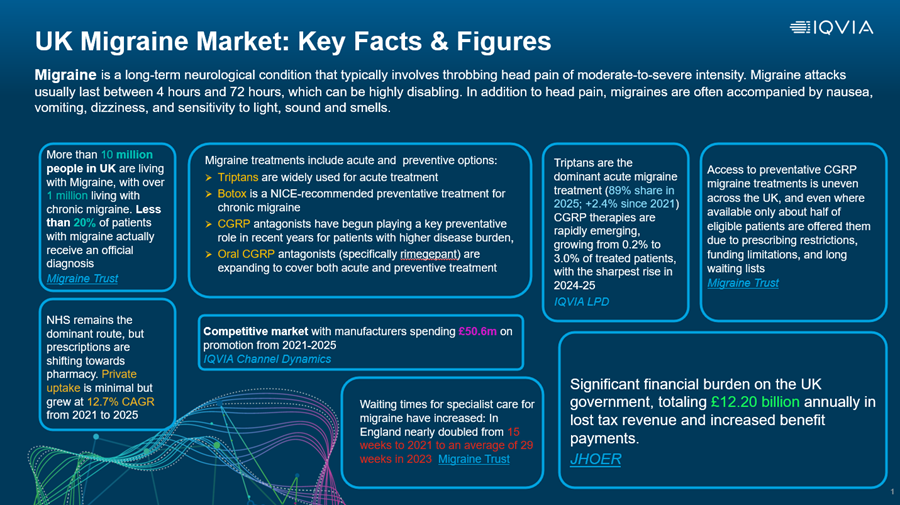
Migraine is often described as an “invisible” epidemic. It affects more than 10 million people in the UK, costs the economy an estimated £12.2bn each year, and yet fewer than one in five sufferers ever receive a formal diagnosis. Despite significant scientific progress, migraine remains under‑recognised, under‑diagnosed, and under‑treated.
This blog brings together data, expert insight, and lived experience from within IQVIA to examine why innovation has been slow to translate into impact for migraine patients, and what could change.
1. The Current UK Migraine Landscape: High Burden, Limited Progress
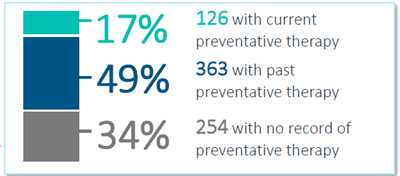
Migraine remains a major source of unmet need. Around 80% of UK migraine patients are women, and the condition disproportionately affects people during their working years. Yet only 17% of patients with a recorded migraine diagnosis are currently receiving a preventive treatment1.
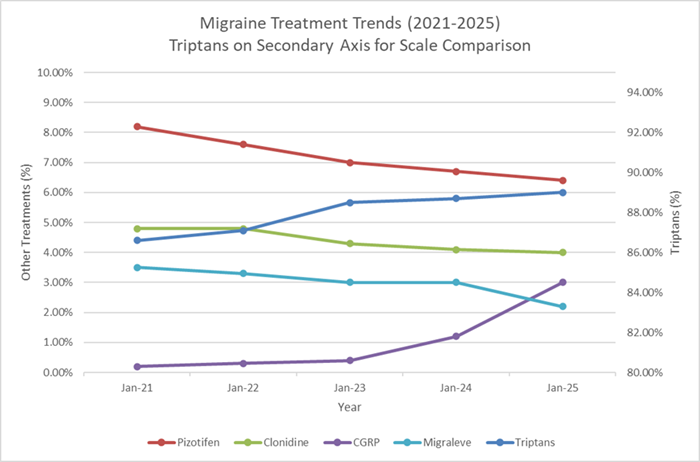
Treatment patterns remain heavily skewed towards older therapies. Triptans, first introduced in the 1990s, still account for almost 90% of migraine‑specific prescriptions2. While effective for some, they are not suitable for all patients and are limited to acute use.
Newer CGRP‑targeting therapies, both injectable and oral, have expanded treatment options and shown meaningful clinical benefit. However, uptake remains modest, reaching only around 3% of treated patients by 20252.
The primary constraint is access. NHS pathways typically require patients to fail multiple older preventive treatments and experience at least four migraine days per month before referral to specialist care or eligibility for CGRP therapies. Even then, access is often subject to local funding rules and prolonged waits for neurology services, which now average over six months. The result is significant regional variation and delayed escalation to effective treatment.
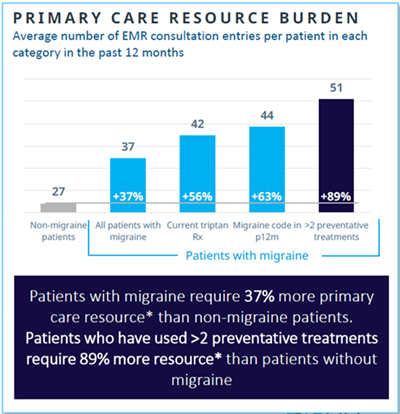
This has system‑wide consequences. Migraine patients have substantially higher GP consultation rates than non‑migraine patients3, further straining primary care capacity and reinforcing a cycle of delayed care.
Some patients seek alternatives through the private market, where migraine prescriptions have grown steadily in recent years. However, private insurance rarely covers chronic migraine fully, leaving many patients to self‑fund treatment, an option that risks widening inequity.
Overall, the UK migraine market is characterised by substantial unmet need and slow adaptation. Despite improved treatment options, structural barriers continue to limit patient benefit. The key question remains: are we doing enough to translate innovation into meaningful outcomes for migraine sufferers?
2. How Pharma Can Help Change the System
Pharmaceutical companies have an opportunity to play a broader role in improving migraine care, beyond individual products.
First, earlier diagnosis and treatment escalation could be enabled through better GP education, decision‑support tools, and clearer referral pathways. Improving confidence and capability in primary care is critical to reducing delays.
Second, pharma can support new models of care delivery. Community‑based headache clinics, shared‑care arrangements, specialist nurses, and digital support tools could help relieve pressure on neurology services while improving patient access.
Third, engaging patients and raising awareness is critical given the large population of migraine sufferers who remain outside the formal care system. Pharma can work with patient groups to destigmatise migraine, encourage help‑seeking, and highlight that frequent migraines are not “normal” and that new treatment options exist. Workplace initiatives and targeted awareness campaigns can help bring more patients into care and strengthen the patient voice, increasing pressure on policymakers to prioritise migraine services.
Finally, demonstrating system‑level value will be essential. Robust real‑world evidence showing reductions in GP visits, A&E attendance, and productivity loss associated with effective preventive treatment can strengthen the case for wider adoption and investment.
By combining education, service innovation and evidence generation, pharma can act as a catalyst for system change in a historically under‑prioritised disease area.
3. Looking Ahead: Innovation Meets System Readiness
The migraine pipeline remains strong, spanning faster‑acting acute treatments, new preventive mechanisms, and emerging digital and device‑based therapies. Together, these innovations have the potential to broaden patient choice and reduce reliance on older treatments.
However, the pace of system adaptation will be critical. If existing access barriers persist, new therapies risk exacerbating inequalities rather than closing them. For pharma, future success may depend on thinking beyond the pill: integrating patient support, partnering on service redesign, and exploring flexible market access approaches such as outcome‑based agreements.
Migraine care in the UK is at an inflection point. With collaboration across industry, the NHS, and patient organisations, there is an opportunity to turn scientific progress into real‑world impact. The challenge now is who will lead that change and how they will achieve it.
Reference:
- IQVIA GP data on file for Migraine – Patients with a migraine diagnosis:
Related solutions