





.svg)











Stay ahead with the EMEA Thought Leadership insights: your source for industry-leading expertise and analysis
Blog
The evidence edge: Benchmarking the strategic use of RWE
Trends and patterns of evidence dissemination along the product lifecycle
Jul 08, 2026
Introduction
In 2020, we published our much-referenced white paper ‘Excellent launches are winning the evidence battle’ [1]. It benchmarked dissemination of RWE and examined how the most successful pharmaceutical product launches started to embrace RWE as a true strategic asset – using it as a source of competitive advantage.
At that time, few companies approached RWE generation with the same strategic mindset or urgency as they would, for example, building a competitive in-field presence that sets them apart in a crowded market place.
Since then, RWE has become firmly established as a critical ‘must have’ across the industry. It has been elevated by the forces of supply and demand, such as the proliferation of new data sources, fuelled by digitisation of health systems, patient-/consumer-generated data combined with advances in analytics and powerful AI-agents, while more demanding stakeholders keep raising the evidence bar, including the need to continuously demonstrate value across the product lifecycle.
Against this backdrop of greater RWE maturity, we set out to revisit our original analysis to understand how the strategic and competitive use of RWE has evolved.
This first blog in our series dedicated to RWE as strategic differentiator explores recent trends in RWE use over the product lifecycle and compares observed patterns vs. our original findings. It sets the scene for benchmarking competitive use of RWE in the context of variance in brand performance, which will be the focus of a later blog.
Just as AI is transforming RWE generation, our benchmarking approach for this blog has also embraced agentic AI. Specifically, we utilised the powerful, proprietary IQVIA Literature AI Platform [2] for performing a volumetric analysis, including categorisation, of company-authored or sponsored RWE publications. This adaptation represents an important upgrade to the extremely onerous, manual analysis behind our 2020 publication, which now enables more efficient benchmarking of RWE use, including repeat updates.
Details regarding the approach and methodology are covered in the appendix.
RWE over the product lifecycle: When? How much?
The first set of questions we wanted to answer include:
- When do companies disseminate RWE during the pre-, peri- and post launch period, and how much at different time points?
- How has the volumetric RWE profile evolved for recent launches compared to the cohort we analysed in 2020?
- What does the volume distribution of company-authored or sponsored RWE look like over the entire brand lifecycle deep into maturity?
The analyses featured in this blog focus on immunology, specifically psoriasis and inflammatory bowel disease (IBD). These highly crowded indications see fierce inter- and intra-class competition between many therapeutic options, which makes them ideally suited for observing the strategic use of RWE as a source of competitive advantage.
Looking at psoriasis, arguably the most competitive immunology indication, we found that the more recent launches frontload the use of RWE compared to our original analysis. This is reflected in significantly higher volume share of company-authored or sponsored RWE publications for the pre- and peri-launch phase. It represents an almost 20% ‘upstream shift’ towards the earlier launch lifecycle vs. the original pattern (see Figure 1).
A similar upstream shift in published RWE volume was also observed for inflammatory bowel disease.
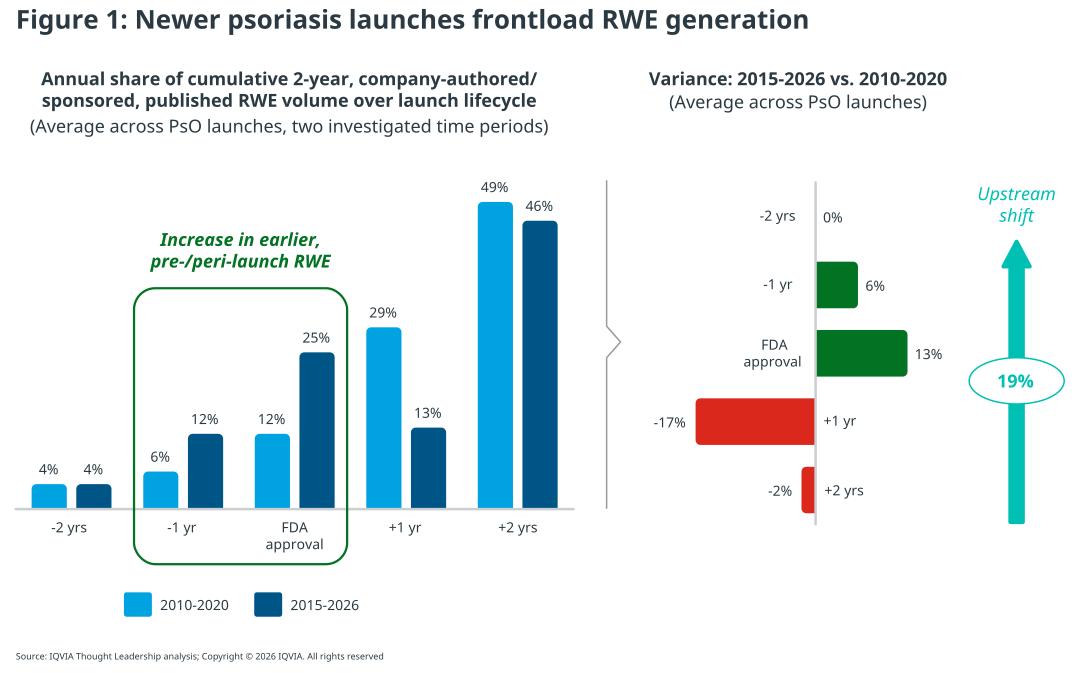
This trend is a consequence of several factors converging, including greater maturity in the use of RWE across the industry and, specifically, intensifying competition in the respective markets for psoriasis and IBD which forces brand teams to embrace RWE much earlier to find a competitive edge and inform a winning launch strategy.
This observation is also consistent with another trend we discussed elsewhere, the rise of H2H trials in the most crowded immunology indications, which in psoriasis have become table stakes for new entrants [3]. It highlights the vital role of evidence as a critical success factor in these hyper-competitive markets.
Collectively across psoriasis and inflammatory bowel disease, RWE generation continued post launch well into the late lifecycle of immunology brands. For the time period of 2015 to 2026, two thirds of company-authored or sponsored RWE publications relate to products that received FDA approval over 5 years ago, while 39% pertain to products the FDA approved over a decade ago (see Figure 2).
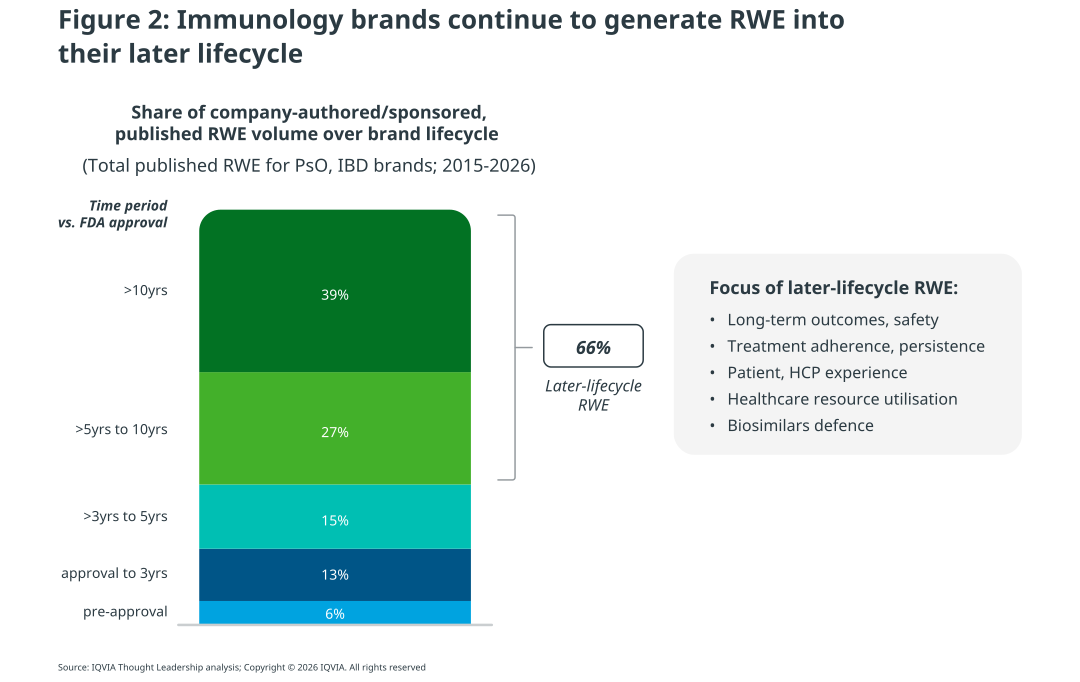
RWE generated during the later stages of a product’s lifecycle typically focuses on issues such as long-term outcomes and safety, treatment adherence and persistence, the experience of patients and HCPs, healthcare resource utilisation, and preparing for loss of exclusivity, e.g., how to defend against biosimilars.
Faced with healthcare stakeholders’ persistent value scrutiny against a rapidly changing competitive landscape, it is now essential for innovators to generate a continuous flow of evidence over the lifecycle. Such evidence flow underpins ongoing value demonstration to re-affirm a brand’s differentiation in the fluid context of evolving real world practice.
This is precisely what we observed for the fiercely competitive immunology indications in focus of this blog, psoriasis and IBD, which is a reflection of both intensifying competition and increasing maturity in how companies embrace RWE.
Strategic use of RWE: Purposeful focus on the critical issues
An important dimension of the strategic use of RWE is its relevance and purpose – being focused on the critical issues along the product lifecycle both to address stakeholder evidence needs and to inform brand strategy evolution.
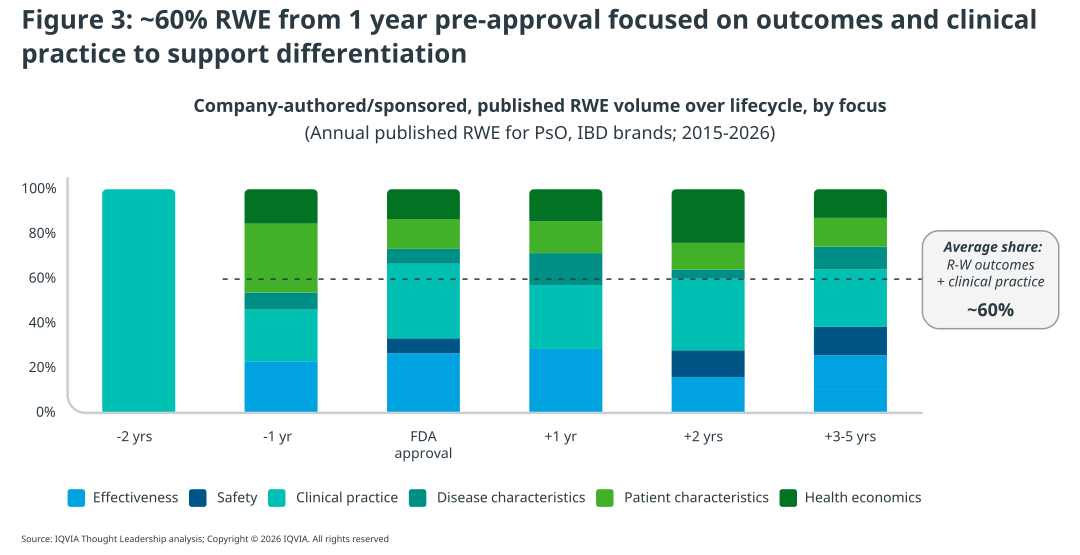
To understand the purposeful use of RWE, we categorised RWE publications into six distinct focus areas: effectiveness, safety, clinical practice, disease characteristics, patient characteristics and health economics, with multiple allocations possible.
For psoriasis and IBD, over the time period of 2015 to 2026, we found that from one year before FDA approval until 5 years post approval on average 60% of company-authored or sponsored RWE publications consistently focused on real world outcomes, including effectiveness and safety, in addition to clinical practice (see Figure 3).
Success in these crowded, highly competitive indications depends on clear brand differentiation.
This requires innovators to (i) develop a deep understanding of the therapeutic landscape and how HCPs actually use specific therapies in different patients in routine practice; and (ii) demonstrate superior outcomes for their brand against this competitive real world backdrop.
It is therefore not surprising that RWE generation over the product lifecycle for psoriasis and IBD brands disproportionately focuses on clinical practice and real world outcomes.
Another noteworthy observation found pre-launch RWE was predominantly focused on insight categories, e.g., clinical practice and patient characteristics, alongside the effectiveness of on-market competitor products. This real world insight, gained early in the product lifecycle, helps innovators understand true unmet needs, the opportunity this presents and how to optimise their competitive positioning in preparation for launch.
Conclusions
In the context of two specific, highly competitive immunology indications, psoriasis and IBD, our updated RWE benchmarking analysis demonstrates how the strategic use of RWE over the product lifecycle has evolved, as innovators adapt to harsh market realities:
- For the specific pre-, peri- and post-launch period, spanning 2 years before FDA approval until 2 years post approval, innovators are shifting RWE volume upstream in pursuit of a competitive edge as they prepare to enter these crowded indications.
- At the same time, RWE use keeps expanding well beyond the near-term post-launch period, reflecting the need to generate a continuous flow of evidence deep into the late lifecycle to keep substantiating a brand’s differentiated value proposition.
- Clinical practice and real world outcomes are the dominant focus areas of RWE generation, starting 1 year pre-approval until 5 years post-approval, to support differentiation as the key success driver in crowded markets.
These findings reinforce the critical role of strategically deployed RWE as a source of competitive advantage to succeed in today’s markets.
Its prerequisite is a comprehensive lifecycle evidence strategy that anticipates stakeholder needs to ensure RWE focus aligns dynamically as needs evolve over time. Furthermore, innovators must show conviction and commitment to RWE, including adequate investment to execute lifecycle evidence plans and sustain competitive levels of RWE productivity for many years after launch.
Future-proofing evidence strategies
The adoption of generative AI tools by HCPs as gateway to medical information has profound implications for the strategic use of evidence, including its generation and dissemination.
It is no longer sufficient for evidence to be compelling in its own right, it must also be optimised to ensure algorithmic prioritisation will surface it to HCPs at the right time, or even at all [4]. For example, this requires gaining ‘algorithmic trust’, with evidence being categorised as high quality and credible, e.g., publications in highly‑rated, peer‑reviewed journals or inclusion in medical society guidelines. Evidence must also be rated as clinically meaningful for HCPs by addressing practice-relevant questions. Finally, attention must be paid to optimising content format and structure for how AI retrieves information, e.g., clean HTML page vs unstructured PDF, or facilitating summarisation while avoiding oversimplification, e.g., original content being organised around the PICO framework.
In a world where generative AI increasingly defines how HCPs encounter medical information, these ultimate success drivers for evidence to have impact must become critical considerations to inform evidence strategy from the very beginning.
* * *
The second blog in our series dedicated to RWE as strategic differentiator will revisit the question of how excellent launches utilise RWE as a driver of their outperformance.
Acknowledgements
The authors would like to thank Lenon Mendes for his generous and invaluable support in utilising the proprietary IQVIA Literature AI Platform to perform the literature review and create the data foundation for this benchmarking analysis.
Appendix: Methodology
Using the proprietary IQVIA Literature AI Platform [3], we performed a literature review with the following stated objective:
“To identify, characterize, and categorize real-world evidence (RWE) publications evaluating treatments used in Crohn’s disease, ulcerative colitis, and psoriasis, with a focus on effectiveness, safety, quality of life, clinical practice, disease characteristics, patient characteristics, and health-economic outcomes, and to assess pharmaceutical company involvement in the evidence generation.”
The primary bibliographic databases for the search included PubMed (MEDLINE), Insightmeme (Conference Proceedings), with focus on the publication period of 2016-2026.
A specific literature review protocol was created that was structured using the PICO framework to define scope and guide the AI-powered search.
Search outputs were captured in a pre-define table template which categorised identified publication along the dimensions of molecule, brand, author affiliations, funding and sponsorship, publication title, publication date, abstract, and content focus of the publication.
Several manual steps were applied to the outputs of the automated search, including:
- Validating a publication as company-authored or sponsored vs. information retrieved by the search on direct funding by a company and/or company employees being among the authors.
- Validating the ‘primary brand’ attributed to a company-authored or sponsored RWE publication. For example, when several products were featured in a publication, those belonging to the sponsoring or authoring company were selected as ‘primary brands’ that for the purpose of subsequent analyses were considered the beneficiaries of the evidence generated as part of that publication.
In some cases, none of the named brands associated with a publication belonged to the funding company. Here we applied the ‘ultimate beneficiary principle’, ie which of the sponsor’s brands will benefit from the evidence generated in this publication, even if that benefitting brand was not included itself, e.g., because the focus of a publication was the competitive landscape. - Converting absolute publication dates into relative time points anchored on the FDA approval date for the primary brand in focus of a company-authored or sponsored RWE publication, e.g., -2 = publication date 2 years before approval, or 0 = publication date in approval year.
This yielded the final, cleaned data set that formed the basis of our benchmarking analyses featured in this blog.
References
1. Excellent launches are winning the evidence battle, IQVIA white paper, 2020: https://www.iqvia.com/locations/united-kingdom/library/white-papers/excellent-launches-are-winning-the-evidence-battle
2. Going head-to-head: Comparative evidence in immunology on the rise, IQVIA blog, 2025: https://www.iqvia.com/locations/emea/blogs/2025/11/going-head-to-head-comparative-evidence-in-immunology-on-the-rise
3. IQVIA Literature AI Platform, factsheet: IQVIA Literature AI Platform | IQVIA
4. The evolution of pharma engagement as AI becomes a front door to medical information, IQVIA blog, 2026: The evolution of pharma engagement as AI becomes a front door to medical information | IQVIA