







.svg)











Stay ahead with the EMEA Thought Leadership insights: your source for industry-leading expertise and analysis
Blog
The promise of advanced therapy combinations in immunology
Breaking through the therapeutic ceiling
Apr 21, 2026
Introduction
The concept of combination therapies dates back to the late 1940s and the treatment of tuberculosis. In 1948, the combination of streptomycin and para-aminosalicylic acid was compared in a randomised controlled trial to monotherapy with each antibiotic. The combination demonstrated superiority in curing one of the most feared diseases of the nineteenth and early twentieth century, while preventing the emergence of acquired drug resistance1. This event established multi-drug combinations as the standard of care for treating tuberculosis.
Since then, combination therapies have transformed the prospects for patients across many therapy areas, for example, multi-drug Highly Active Anti-Retroviral Therapy (HAART) turning an HIV infection from an incurable, deadly disease into a chronic illness, or widely used combination regimens in oncology that have significantly improved treatment response and survival outcomes.
In this blog, we will explore the promise of advanced therapy combinations in treating immunological diseases, a therapy area where this is still an emerging field.
The case for combining advanced therapies in immunology
While this blog focuses on combinations of two advanced therapies (‘dual-advanced’), it is worth noting that regimens combining multiple non-advanced therapies or pairing an advanced therapy with a non-advanced one have been used in immunology for some time.
For example, in rheumatoid arthritis, use of double or triple non-advanced therapy is common, which typically combines methotrexate with one or two other DMARDs (disease-modifying antirheumatic drug), such as azathioprine, cyclosporine, hydroxychloroquine, leflunomide or sulfasalazine. Anti-TNF therapies, e.g., etanercept, infliximab or adalimumab, are also routinely used in combination with methotrexate.
However, due to the non-targeted nature of non-advanced therapies, such combinations do not address major shortcomings in the current treatment of immunological diseases while often being associated with an unfavourable risk-benefit profile.
There is, however, a strong rationale for deploying combinations of two advanced therapies in immunology, supported by arguments spanning disease biology, clinical need and mechanistic complementarity.
- Disease biology: Autoimmune and inflammatory diseases are not governed by a single pathogenic pathway. Instead, they are driven by complex, redundant and multi‑layered immune networks, including multiple immune cell populations, cytokine redundancy with overlapping signalling pathways, innate-adaptive immune interactions, and tissue‑specific amplifiers.
Furthermore, the heterogeneity of immunological diseases manifests itself in different pathophysiological phenotypes and endotypes, even within a single diagnosis, e.g., including variability in dominant pathways or immune cell infiltration.
Therefore, targeting a single pathway often leads to incomplete or transient responses, with compensatory upregulation of alternative immune mechanisms, while cycling through monotherapies yields diminishing returns. - Clinical need: Despite the proliferation of advanced monotherapy options across a wide range of diverse molecular targets and mechanisms of action, several immunology indications have hit an efficacy ceiling, well below levels patients would consider satisfactory. For example, in rheumatoid arthritis <30% of treated patients achieve ACR70 response, <25% of treated Crohn’s disease patients are in durable, steroid‑free clinical remission, while <35% of treated atopic dermatitis patients achieve clear or almost clear skin and sustained disease control with minimal symptoms for ≥12 months. Furthermore, primary non-response is another common problem encountered across many immunology indications.
Monotherapies also fail to address comorbidities within and beyond immunology, e.g. extra-intestinal manifestations of inflammatory bowel disease affecting the joints, skin, eyes, kidneys, and liver, or targeting the metabolic-immune axis. - Mechanistic complementarity: The targeted nature of advanced therapies enables a rational approach towards finding optimal drug combinations with complementary mechanisms that deliver better disease control and ultimately deeper, durable remission.
Synergistic combinations have the potential to break through the efficacy ceiling, better accommodate disease heterogeneity, and potentially alter the disease trajectory; for example, via upstream and downstream targeting, e.g., inhibiting cytokine production alongside effector signalling; inflammation control paired with tissue protection to address immune activation and structural dysfunction; or simultaneous modulation of non‑redundant immune axes to prevent compensatory pathway upregulation.
Finally, the mechanistic precision of combining two advanced therapies offers the potential for a more favourable risk-benefit profile vs. non-advanced combinations involving broad immunosuppression.
Given these compelling benefits, it is not surprising that innovators are increasingly turning to combinations of two advanced therapies to re-define the efficacy frontier in immunology and provide new therapeutic options, especially for difficult-to-treat, refractory or multi-morbid patient populations.
The landscape of immunology combination therapies
Numerous case reports, case series and typically small, retrospective real-world studies have been published on the use of dual-advanced combinations in various immunology indications.
These cases usually reflect efforts in clinical practice of managing complex, refractory patients, often involving concomitant immune-mediated inflammatory disorders (IMIDs)2,3. However, such evidence lacks the robustness of large, prospective, randomised controlled trials to confirm the efficacy and safety of dual-advanced combinations as a viable therapeutic strategy.
Using the Citeline Trialtrove database, we identified industry-sponsored immunology trials that evaluate combination therapies for the time period of 2015-2025. We further narrowed down the search to combinations that include at least one advanced therapy. This yielded 183 clinical trials investigating such combinations in immunology.
Combinations of an advanced therapy and a non-advanced therapy, such as a methotrexate, azathioprine or corticosteroids, were the dominant category and collectively accounted for 73% of all combination trials run over the past decade that involved at least one advanced therapy.
The share of trials investigating combinations of two advanced therapies (‘dual-advanced’) doubled from 19% for 2015-2020 to 40% for 2021-2025, while related absolute trial numbers reached a high mark in 2024 and 2025. This trend reflects a growing realisation of advanced monotherapies hitting an efficacy ceiling despite ongoing innovation efforts and therefore the need for novel approaches.
Inflammatory bowel disease was the focus of 30% of all clinical trials testing dual-advanced therapies in the past 10 years, followed by graft vs. host disease and rheumatoid arthritis, accounting for 16% and 12%, respectively (see Figure 1).
Figure 1: Immunology combination therapies: clinical trial landscape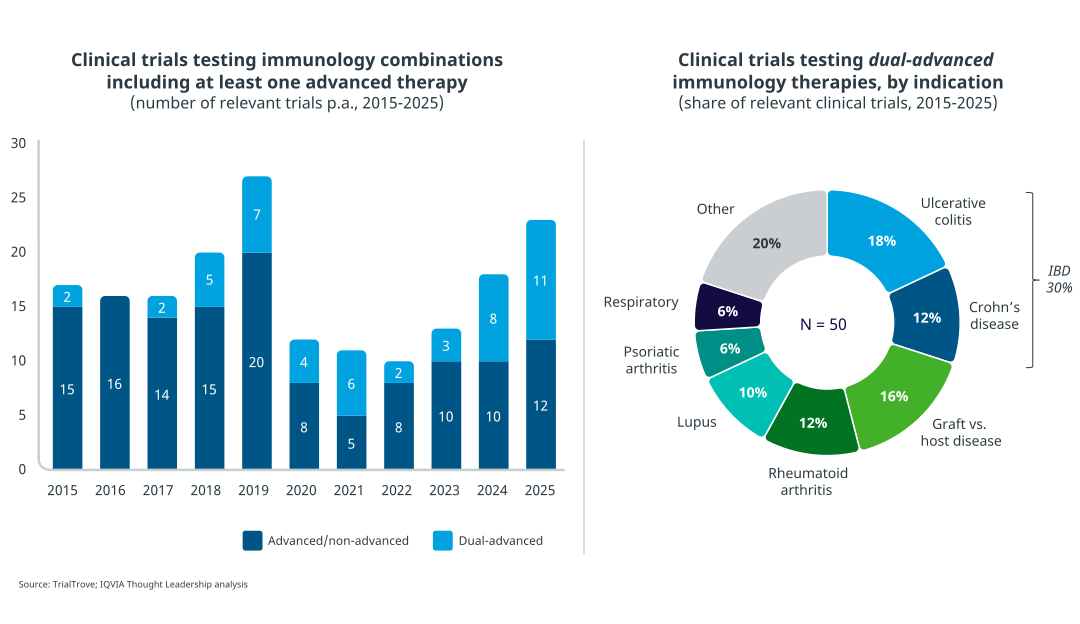
Guided by mechanistic complementarity with the aim to target multiple, disease-relevant immune pathways, dual-advanced therapies have been exploring combinations of a diverse range of targeted MoAs (see Table 1).
Table 1: Targeted MoA combinations explored in dual-advanced therapies
(based on clinical trials testing dual-advanced therapy combinations, 2015-2025; N=50)
| TNF | IL-17 | IL-12/23 | IL-23 | Integrin | IL-4/13 | IL-13 | CD20 | other | |
|---|---|---|---|---|---|---|---|---|---|
| TNF | |||||||||
| IL-17 | |||||||||
| IL-12/23 | |||||||||
| IL-23 | CXCR1/2 | ||||||||
| Integrin | |||||||||
| JAK | BTK, IRAK4 | ||||||||
| TL1A | |||||||||
| IL-1 | |||||||||
| GLP-1/GIP | |||||||||
| other | FcRn | IL-33 | OX40L | BAFF, CD20 BDCA2 |
Legend: Blue cells indicate MoA combinations investigated in randomised controlled trials as potential combination therapies for immunology indications.
In early 2026, two noteworthy combination trials read out with strong positive results, Lilly’s phase 3b TOGETHER PsA4 and TOGETHER PsO5, which investigated IL-17 inhibitor Taltz combined with obesity therapy GLP-1/GIP receptor agonist Zepbound (see Figure 2).
Figure 2: Lilly’s Taltz-Zepbound TOGETHER combination trials
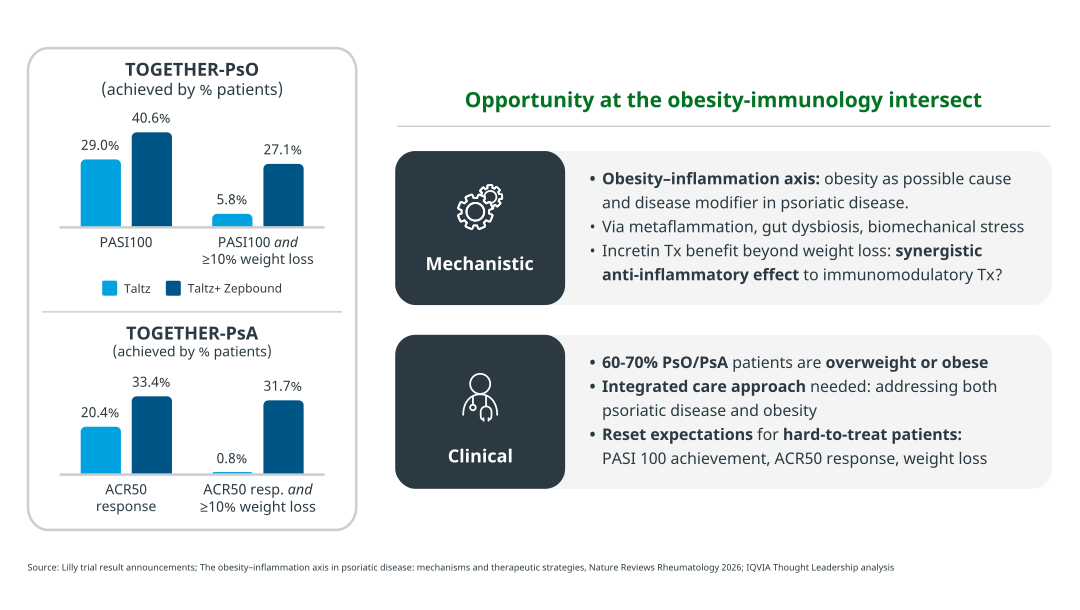
- In TOGETHER PsA, at 36 weeks 31.7% of obese psoriatic arthritis patients receiving Taltz plus Zepbound achieved ACR50 response, and ≥10% weight loss, vs. 0.8% for Taltz monotherapy. On a secondary endpoint, the combination delivered 33.4% ACR50 response vs. 20.4% for Taltz alone.
- In TOGETHER PsO, at 36 weeks 27.1% of obese psoriasis patients treated with the Taltz-Zepbound combination achieved PASI 100, plus ≥10% weight loss, vs. 5.8% for Taltz alone. On a secondary endpoint, the combination delivered 40.6% PASI100 achievement vs. 29% for Taltz monotherapy.
This seemingly unorthodox combination has a compelling underlying rationale: It targets the obesity–inflammation axis6,7, with obesity playing a role as both a possible cause and disease modifier in psoriatic disease, e.g., via metaflammation, gut dysbiosis and biomechanical stress.
Early improvements observed for the combination, e.g., ACR50 response at week 4 after treatment initiation before any significant weight loss occurred, suggest direct immune system modulation by Zepbound.
Moreover, 60-70% of psoriasis and psoriatic arthritis patients are overweight or obese. The TOGETHER PsA / PsO trials demonstrated that the addition of Zepbound significantly boosts the efficacy of Taltz, thus re-setting outcomes expectations for this difficult to treat population.
Deep dive: Dual-advanced therapy combinations in IBD
Inflammatory bowel disease (IBD) represents a prime opportunity for combinations of two advanced therapies as unmet need remains stubbornly high.
- Despite an increasingly crowded IBD treatment landscape which has benefited from the arrival of new advanced monotherapy options and the introduction of several novel MoAs, the therapeutic ceiling in IBD is still unsatisfactorily low. While some newer therapies, such as IL-23 and JAK inhibitors, have improved point‑in‑time clinical remission rates to ≥60%, rates of durable clinical remission typically fall to ~25-35% in biologic‑naïve, early disease patients and as low as ~10-15% in multi‑biologic experienced cohorts.
- Patients with severe, uncontrolled IBD typically require hospitalisations and surgery, while the debilitating disease takes a major toll on patients’ quality of life.
- Furthermore, up to ~25% of IBD patients are affected by concomitant IMIDs, e.g., axial spondyloarthritis, psoriasis, atopic dermatitis, hidradenitis suppurativa, uveitis, asthma and others.
In response to this unmet need, an expanding mid-to-late-stage pipeline is emerging of dual-advanced therapy combinations that are being investigated in Crohn’s disease and ulcerative colitis (see Table 2):
Table 2: Dual-advanced therapy combinations in IBD mid-/late-stage pipeline
| Company | Dual-advanced therapy combination |
MoAs | Crohn’s disease |
Ulcerative colitis |
|---|---|---|---|---|
| AbbVie | Skyrizi + ABBV-382 | IL-23 / α4β7 integrin | Ph 2 | -- |
| AbbVie | Skyrizi + lutikizumab | IL-23 / IL-1α/1β | Ph 2 | -- |
| J&J | JNJ-4804 (Tremfya + Simponi) | IL-23 / TNF | Ph 2 | Ph 2 |
| Lilly | Omvoh + MORF-057 | IL-23 / α4β7 integrin | -- | Ph 2 |
| Lilly | Omvoh + Eltrekibart | IL-23 / CXCR1/2 | -- | Ph 2 |
| Lilly | Omvoh + Zepbound | IL-23 / GLP-1/GIP | Ph 3 | Ph 3 |
| Spyre Therap. | SPY001 + SPY002 | α4β7 integrin / TL1A | -- | Ph 2 |
| Spyre Therap. | SPY001 + SPY003 | α4β7 integrin / IL-23 | -- | Ph 2 |
| Spyre Therap. | SPY002 + SPY003 | TL1A / IL23 | -- | Ph 2 |
| Takeda | Entyvio + Humira | α4β7 integrin / TNF | Ph 4 | -- |
| Takeda | Entyvio + Stelara | α4β7 integrin / IL-12/23 | Ph 4 | -- |
| Takeda | Entyvio + Rinvoq | α4β7 integrin / JAK | Ph 3 | -- |
| Takeda | Entyvio + Xeljanz | α4β7 integrin / JAK | -- | Ph 4 |
Two MoAs dominate among those advanced therapy combinations in IBD, integrin and IL-23 (including IL-12/23). Individually, these MoAs are part of about two-thirds of investigated combinations, while one third of combinations comprises both MoAs.
This is no coincidence, given a priori concerns about potentially increased risk of infection or malignancies from combining multiple immuno-therapies. Consequently, MoAs with a long safety track record, such as integrin and IL-23, are a good starting point for selecting potential combination partners.
In addition, integrin and IL-23 are complementary MoAs in IBD, targeting cell trafficking into the intestine vs. pathogenic immune activation and maintenance within the tissue, respectively. These MoAs are also found in well-established IBD monotherapies.
An important proof point: The VEGA combination trial
J&J’s phase 2a VEGA trial, a well-designed, randomised, controlled, proof-of-concept study, compared the efficacy and safety of a Tremfya-Simponi (guselkumab/golimumab) combination vs the individual monotherapies in adult patients with active, moderate-to-severe ulcerative colitis who were naïve to biologic therapies.
After endpoints were evaluated at week 12, patients in the monotherapy groups continued their initially assigned treatment, while patients randomized to the combination therapy group transitioned to Tremfya (guselkumab) alone as maintenance therapy, with final efficacy assessment at week 38. Safety was assessed through week 50.
The VEGA trial8,9 read out in 2022 (see Figure 3):
- Statistical superiority for the combination was achieved in direct comparison vs. golimumab monotherapy for clinical response at week 12.
- A numerically favourable trend was observed for secondary outcomes, including clinical remission, endoscopic remission, endoscopic improvement, histological remission, and composite histological-endoscopic endpoints, at both week 12 and 38. For example, at week 12, almost twice as many patients in the combination group achieved clinical remission vs. each monotherapy.
- Incidence of serious adverse events (SAEs) was low for the combination, with no differences in SAEs found between the 3 treatment groups over the 50 week observation period.
Figure 3: Tremfya-Simponi combination in UC: VEGA trial highlights
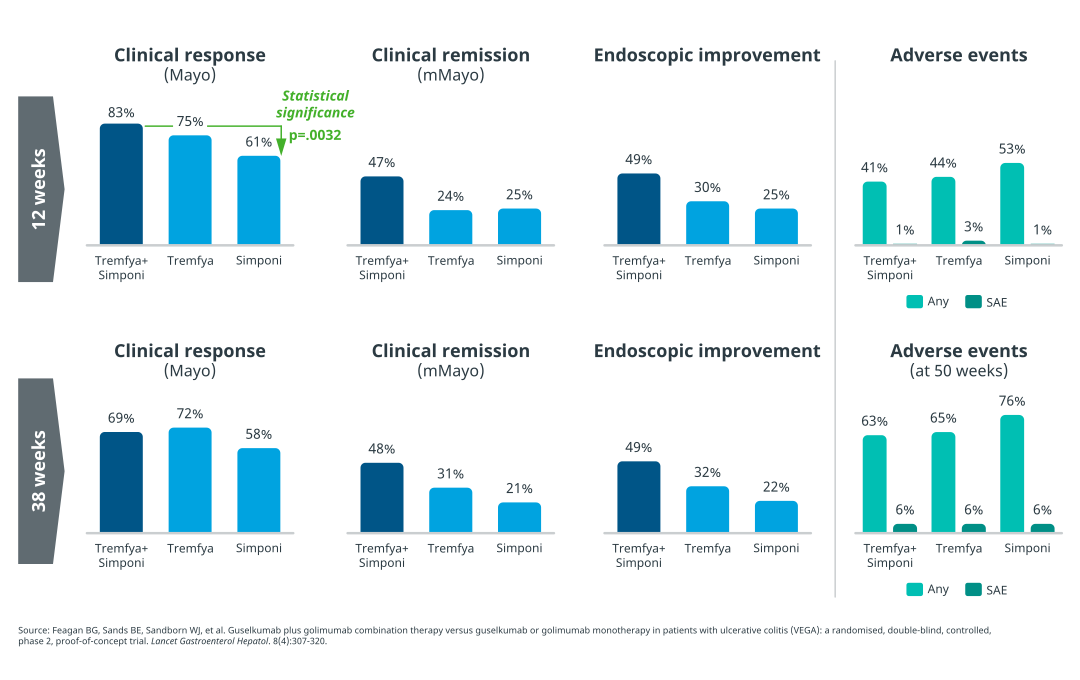
Even though the VEGA trial achieved significance only on one endpoint, it provided important proof of principle supported by high quality evidence. It demonstrated that two biologics with distinct MoAs can be combined safely, with a credible signal for superior efficacy indicating the potential of dual-advanced therapy combinations to break the therapeutic ceiling.
Additionally, data through week 38 suggests a sustained benefit of combination induction even after transition to Tremfya monotherapy for maintenance at week 12. This provides a potential blueprint for using dual-advanced therapy combinations in clinical practice – as induction therapy for rapid early disease control, followed by de-escalation to maintenance with monotherapy – to balance risk, benefits and cost.
J&J’s two ongoing follow-on phase 2b trials, DUET-UC and DUET-CD, investigate the Tremfya-Simponi combination vs. placebo in moderate-to-severe, refractory ulcerative colitis and Crohn’s disease, respectively. Their much anticipated readout is expected in 2026.
Challenges and considerations for innovators
Innovators must understand and prepare for the unique challenges associated with the development, and commercialisation, of dual-advanced therapy combinations.
- Clinical development
- Combination trials are more complex, e.g., multiple arms including the combination, placebo, possibly H2H vs. monotherapies or relevant SoC; post-induction de-escalation of advanced combination treatment to monotherapy maintenance; dose optimisation for efficacy vs. tolerability across multiple therapeutic components.
- Endpoints demonstrating incremental, patient-centric benefit, e.g., deeper remission, greater durability, reduction in flares or structural damage, are less standardised or recognised by regulators and payers, may be slower to emerge, and require greater statistical power and trial duration.
- Addressing safety concerns about combinations, e.g., increased risk of infections, malignancies, or CV-events, is paramount. However, safety signals may be delayed, prompting regulators to demand long-term follow-up and real-world safety monitoring.
- An increased patient burden, e.g., multiple treatment administrations, more clinic visits, longer trial duration and prolonged safety monitoring, will impact recruitment and retention.
- Market access
- Payers will be concerned about budget impact from combining two advanced therapies and likely restrict access, e.g., to complex, multi-morbid patients, high-risk phenotypes, or narrow, refractory sub-populations, possibly for a limited treatment duration.
- Increasing availability of biosimilars beyond TNF inhibitors will help mitigate budget impact if considered as one component of advanced therapy combinations. Conversely, this raises the bar for combinations without biosimilars.
- Adoption in clinical practice
- HCPs will need guidance on when and how to use dual-advanced combinations, e.g., positioning within the treatment algorithm, identifying eligible patients in routine practice, dose titration or safety monitoring.
- Health system capacity may be impacted, e.g., co-administration of two advanced therapies or care coordination when different HCP specialties manage co-morbidities.
- Overcoming adoption barriers, including the burden on patients, may require co-formulation or fixed dose combinations, e.g., an integrated autoinjector delivering both therapies, which entails challenges around pharmacology, drug stability, device complexity and higher COGS.
Achieving success with dual-advanced combinations requires early stakeholder engagement to understand the trade-offs between expected ‘efficacy delta’ vs. acceptable safety profile and cost to inform innovators’ clinical and commercial strategies. Furthermore, extensive market shaping and advocacy building will be needed to ensure the adoption of dual-advanced combinations in clinical practice.
We are at a turning point. Propelled by innovators’ increasing interest coupled with persistent high unmet need, dual-advanced therapy combinations are beginning to emerge from the fringes as promising treatment options with huge potential to shatter the efficacy ceiling in immunology.
Final thoughts
This blog has focused on combinations of two advanced therapies to simultaneously target multiple immune pathways. However, it is worth noting there is an alternative way for achieving this goal – with multi-specific antibodies, essentially ‘combinations within a molecule’. Multi-specifics represent another promising innovation frontier in immunology seeking to break the therapeutic ceiling which we will explore in a future blog.
References
- Iseman MD. Tuberculosis therapy: past, present and future. Eur Respir J Suppl. 2002. Jul;36:87s–94s, https://doi.org/10.1183/09031936.02.00309102
- S. Keow et al., Patient outcomes and safety of combination biologic therapy with dupilumab, Ann Allergy Asthma Immunol 135 (2025) 23−30. https://doi.org/10.1016/j.anai.2025.04.012
- Wetwittayakhlang P, Lakatos PL. Current Evidence for Combined Targeted Therapy for the Treatment of Inflammatory Bowel Disease. J Can Assoc Gastroenterol. 2023 Sep 26;7(1):22-29. https://doi.org/10.1093/jcag/gwad032
- TOGETHER-PsA results, Lilly press release, 8 January 2026: https://investor.lilly.com/news-releases/news-release-details/lillys-taltz-ixekizumab-and-zepbound-tirzepatide-used-together
- TOGETHER-PsO results, Lilly press release, 18 February 2026: https://investor.lilly.com/news-releases/news-release-details/lillys-taltz-ixekizumab-and-zepbound-tirzepatide-used-together-0
- Haberman RH, Ogdie A, Merola JF, Scher JU, Eder L. The obesity-inflammation axis in psoriatic disease: mechanisms and therapeutic strategies. Nat Rev Rheumatol. 2026 Mar;22(3):151-164. https://doi.org/10.1038/s41584-025-01326-6
- IQVIA blog, September 2025. The everything drugs: from weight loss to whole body medicines | IQVIA
- Feagan BG, Sands BE, Sandborn WJ, et al. Guselkumab plus golimumab combination therapy versus guselkumab or golimumab monotherapy in patients with ulcerative colitis (VEGA): a randomised, double-blind, controlled, phase 2, proof-of-concept trial. Lancet Gastroenterol Hepatol. 8(4):307-320. https://doi.org/10.1016/S2468-1253(22)00427-7
- VEGA trial results, J&J press release, 10 October 2022: https://www.jnj.com/media-center/press-releases/results-of-novel-clinical-study-of-guselkumab-and-golimumab-combination-therapy-show-adults-with-moderately-to-severely-active-ulcerative-colitis-maintained-higher-rates-of-clinical-histologic-and-endoscopic-remission-at-week-38