





.svg)











Stay ahead with the EMEA Thought Leadership insights: your source for industry-leading expertise and analysis
Blog
The outlook for obesity from 2026 to 2030
Apr 21, 2026
The past few years have transformed obesity, bringing it into the fore as one of the fastest growing therapy areas in global healthcare. This blog, based on IQVIA’s 18th March 2026 webinar on the future of the Obesity Medicines market, looks ahead to the next phase of that transformation, examining how the obesity market evolves from 2026 to 2030, and how the drivers of success shift from rapid adoption to differentiation, long‑term performance and system‑level impact. Framed around three distinct periods, it explores how innovation, competition and access interact to shape the market’s trajectory over the remainder of the decade.
The global Obesity Medicines market reached $66 billion in list price sales value in 2025, according to IQVIA’s ForecastLink, and is forecast to rise to $92 billion in 2026, before reaching between $105 billion and $200 billion by 2027 and beyond. 2026 is the year in which the long-term themes, the true drivers of sustainable success for the burgeoning landscape of obesity treatment, prescription medicines and beyond, become apparent. Oral therapies and off patent semaglutide will affect pricing and access, competition intensifies in an increasingly segmented market, and innovation shifts the focus beyond weight loss alone towards comorbidity benefit, long-term maintenance and muscle preservation. Framed as three eras (2025-2026; 2027-2028 and 2029-2030), these phases capture the shift from rapid emergence to long-term transformation.
2025–2026: The inflection point for the future of obesity
2026 can be described as ‘the inflection point for the future of obesity’ defined by market acceleration and new launches.
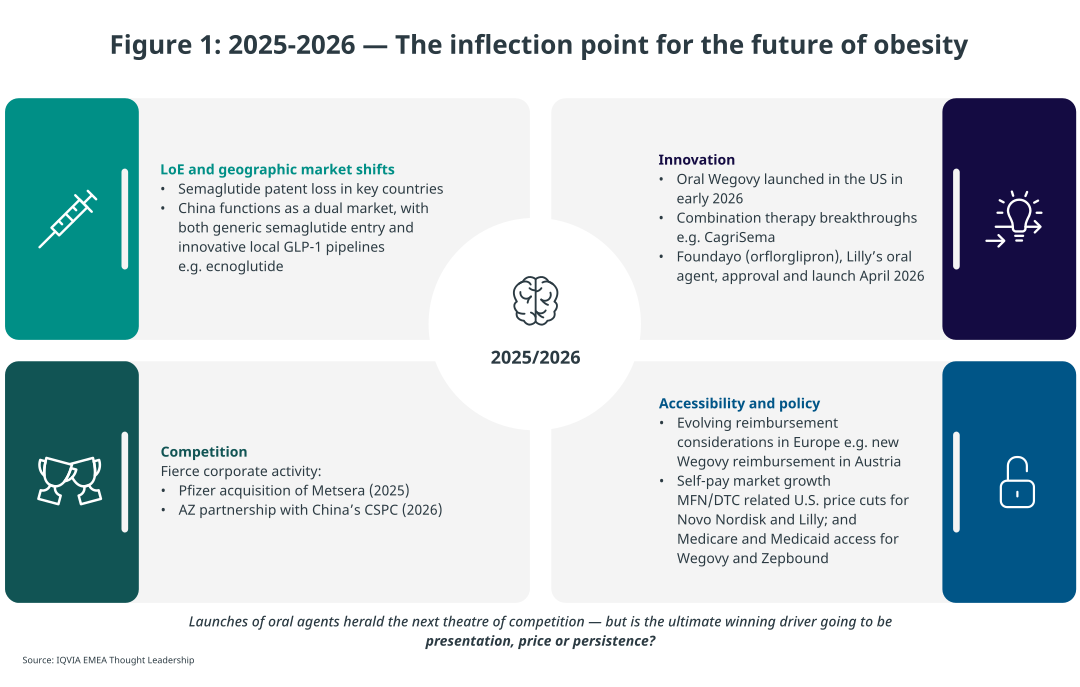
One of the most consequential changes in 2026 is the loss of exclusivity for semaglutide, beginning in early 2026 across major markets including India, China, Brazil, Turkey and Canada, with semaglutide having lost exclusivity in India on 20th March 2026. Collectively, these markets account for 38% of adults living with obesity globally. Off patent semaglutide may also reshape patient treatment journeys, acting as an entry therapy for patients previously priced out, or a maintenance therapy once initial weight loss goals have been achieved. By IQVIA’s latest tracking, China accounts for a large share of global generic semaglutide manufacturing: there are currently 74 Chinese developers, including CDMOs and full developers, with many using synthetic approaches, alongside growing manufacturing activity in India and other geographies. The countries where semaglutide is going off patent in 2026 are, with the exception of Canada, outside Obesity Medicines, self-pay markets, meaning price and consumer access will influence the market dynamics. The same dynamic is increasingly visible across Europe, where private markets for Obesity Medicines have expanded in all the five largest European countries. Among them, the UK stands out, with the highest value of privately funded sales of Obesity Medicines, reinforcing the role of self-pay demand in shaping the market’s next phase.
Innovation is moving to wider geographies outside of the US and Europe. China has become both a major volume opportunity for obesity medications and an increasingly important source of innovation. In 2025, Innovent launched Xinermei (mazdutide) in China, and ecnoglutide was launched by Sciwind Biosciences in 2026. Companies such as Hengrui, Hansoh Pharmaceutical and others are now advancing their own obesity assets, not only for the domestic market but with ambitions beyond China. Additionally, combination therapies move closer to market during this era. Novo Nordisk’s CagriSema, combining semaglutide with cagrilintide, points to a new generation of higher performance treatments. In parallel, Eli Lilly’s Foundayo (orflorglipron), a small molecule oral GLP-1, reached the US market in April 2026, opening a new competitive front against Novo Nordisk’s oral Wegovy.
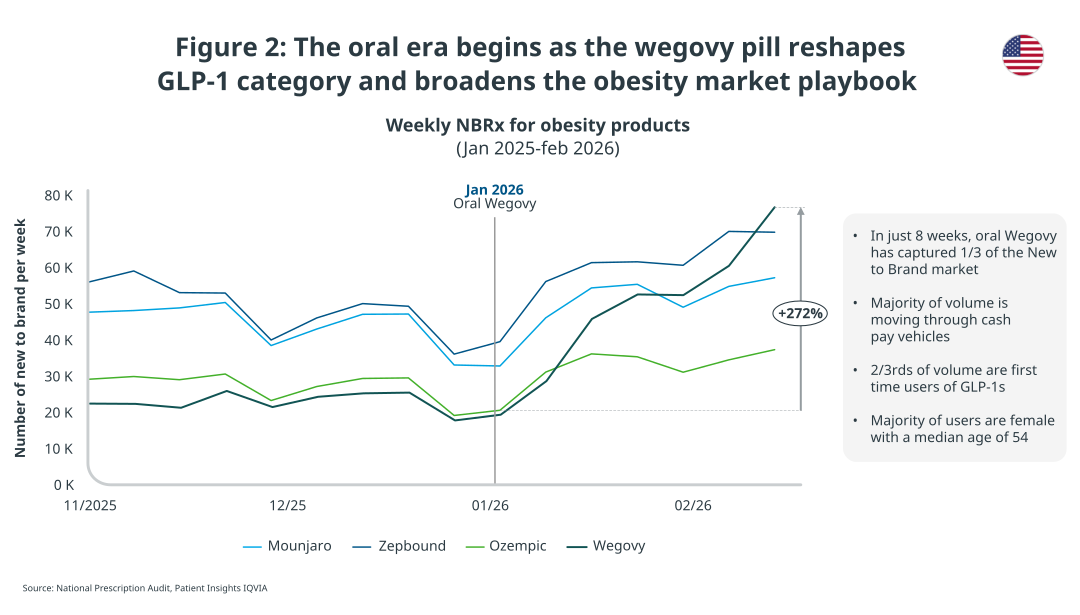
January 2026 saw the launch of Wegovy pill in the US, the first oral GLP-1 approved for obesity. Early data point to rapid uptake: within eight weeks, oral Wegovy captured around one-third of new-to-brand prescriptions, with the majority of volume flowing through cash pay channels. Notably, around two-thirds of volume are users new to any GLP-1 therapy, suggesting that convenience, and lower prices expand the market rather than simply driving switching from injectables.
Aside from innovation milestones 2025 and 2026 see fierce corporate activity. 2025 saw a bidding war between Pfizer and Novo Nordisk for Metsera and its portfolio of obesity agents, which was ultimately won by Pfizer for up to $10 billion. In 2026, AstraZeneca’s partnership with China’s CSPC reflects growing interest in accessing Chinese innovation and manufacturing capabilities. Together, these moves highlight a market that will cease to be a duopoly, and will be actively contested by multiple major pharmaceutical players.
2027–2028: The era of increasing differentiation, focus on long term performance, and generic expansion
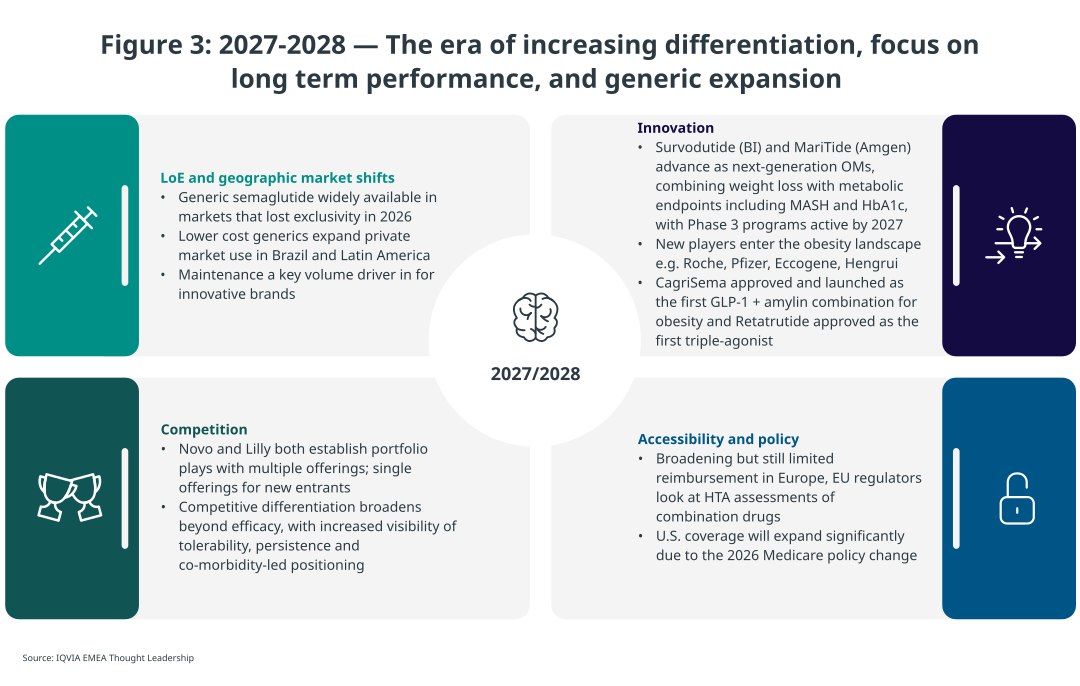
By 2027 and 2028, innovation again takes centre stage. Eli Lilly is expected to have its new obesity asset on the market with the triple-agonist retatrutide, reinforcing the shift towards portfolio led strategies that address different stages of treatment and patient needs rather than relying on a single flagship product. This period also marks the arrival of a broader next wave of players. Boehringer Ingelheim enters the obesity space with survodutide, a glucagon/GLP-1 also positioned for metabolic associated steatohepatitis, while Amgen adds a further dimension with MariTide, a once monthly dual action injectable. Roche with its 2024 acquisition of Carmot, and Pfizer, following its 2025 acquisition of Metsera, enter obesity and broaden their presence in cardiovascular/metabolic, while other large pharmaceutical companies prepare to follow later in the decade.
Chinese companies are increasingly shaping the innovation landscape. Two, Innovent and Sciwind, have already launched novel obesity medications domestically, several are expected to globalise their assets, while continuing to bring new therapies to market. This reinforces China’s role not only as a major source of GLP-1 volume demand, but as a source of innovation in obesity. As competition intensifies, differentiation becomes more central to positioning.
IQVIA analysis of more than 14,000 ChannelDynamics recorded promotional interactions across EU4, UK and US suggest that messaging is already moving away from basics about the availability of a new approach to weight loss, and towards labelled benefits and supporting evidence. Cardiovascular benefits for Wegovy and sleep apnoea for Mounjaro/Zepbound have the highest change in percentage of verbatims mentioning these themes, illustrating how product labels are becoming increasingly important points of distinction. In this context, portfolio strategies become more visible during this era, as leading players seek to position multiple assets across induction, maintenance, label expansion and distinct patient segments in an increasingly crowded market.
Persistence emerges as a defining challenge in this era. IQVIA’s Obesity Market Landscaping shows that persistence varies markedly between brands and across countries, reflecting differences in pricing, patient support and local treatment pathways. Social media intelligence adds further insight: patients most often cite tolerability issues as the primary reason for stopping GLP-1 treatment. Improving long term adherence therefore becomes both a clinical and commercial imperative in an increasingly competitive market.
2029–2030: The era of reckoning
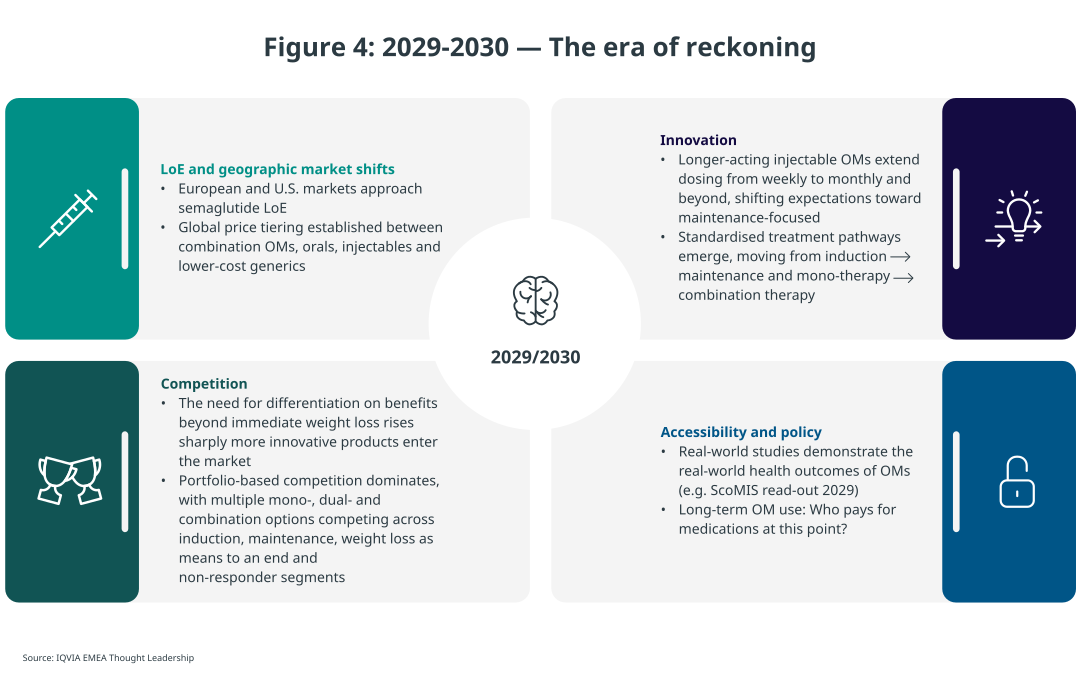
By the end of the decade, the obesity market enters a far more competitive and mature phase. It is no longer useful to think of obesity as a single, monolithic market. Instead, the market becomes highly complex and deeply segmented, shaped by body mass index, comorbidities, and by differences in patient profiles and preferences, including route of administration, dosing frequency and tolerability. Competition intensifies accordingly. As more innovative products enter the market, differentiation based purely on weight loss performance loses its importance as the point of primary focus. Differentiation and sustainable advantage shifts towards tolerability, outcomes beyond weight loss, and the quality of weight loss itself, including muscle and bone preservation and functional benefits. Within this era, innovation emerges in the form of longer-acting injectables, moving beyond weekly injections towards monthly and longer dosing intervals, adding a new approach to the maintenance-focused paradigm.
By 2029–2030, real-world evidence comes to the fore. Major population health real-world studies such as SCoMIS, which examines the use of Wegovy in the Scottish population will read-out by 2029, and SURMOUNT-REAL will provide definitive insights into whether use of Obesity Medicines brings healthcare system benefits in the form of, for example, reduced cardiovascular events, diabetes or disability, and may also provide data on wider socio-economic benefits, such as reduced unemployment. While clinical trials have already established the weight loss benefits of GLP-1s, it is real-world evidence that will show whether these benefits translate into tangible system-level and socioeconomic gains, providing public payers and policymakers with a stronger basis on which to justify reimbursement. If these studies do evidence these wider benefits, the case for wider public coverage of OMs will be greatly strengthened.
Finally, “consumerisation” is a theme appearing in this era. Individuals are taking greater ownership of their own weight management journey and treatment decisions, encouraging the emergence of new partnerships between digital health platforms, retail, patients and direct-to-employer models eg. Lilly Employer Connect.
Final thoughts
- The market for Obesity Medicines will continue on a strong global sales trajectory, becoming one of the world's top five most valuable therapy classes by 2030, with both off patent and innovative segments. By 2030 the impact of widespread use on addressing the global Obesity crisis should be apparent.
- Self-pay will continue to lead access in many countries, driving new routes to patients through direct-to-patient models, employer programmes and digital health platforms.
- Innovation will broaden choice: oral therapies, triple agonists, combination treatments and agents designed to improve tolerability will increase diversity and competition. Early entrants Novo Nordisk and Lilly will have established portfolios of multiple agents which new players will seek to emulate.
- Sustainable success in the Obesity Medicine market will not just be about assets or portfolios of assets, but also active influence across the full patient weight loss and weight maintenance journey, which will mean new partnerships between emergent actors (digital health platforms, patients themselves).
For a deeper dive into these topics, watch the webinar on-demand here.