







.svg)











Stay ahead with the EMEA Thought Leadership insights: your source for industry-leading expertise and analysis
Blog
The Next Frontier of RNA Therapeutics
Discover the powerful new platforms behind the RNA revolution
Mar 31, 2026
The Current RNA Landscape
RNA therapeutics have moved rapidly from an emerging research area to a mainstream drug modality, accelerated by the success of mRNA vaccines. From the first approval of fomivirsen in 1998 for cytomegalovirus (CMV) retinitis, to the wave of rare disease approvals in the 2010s, RNA has established itself as a technology capable of addressing areas of highest unmet need. Today, this foundation is enabling an expansion far beyond rare diseases, with RNA therapeutics rapidly gaining traction in highly prevalent conditions such as cardiovascular disease and obesity.
This pioneering field is experiencing rapid growth, supported by 734 ongoing clinical trials and estimated sales of over $7 billion in 2025, excluding prophylactic vaccines (Figure 1). This momentum reflects increasing investment and attention from major pharmaceutical and biotech companies, with RNA licensing deal value exceeding $17 billion in 2025.1 With an estimated 25 FDA-approved RNA therapeutics to date, and landmark approvals such as nusinersen and vutrisiran establishing a strong foundation, the field is well positioned for continued success, with several key clinical trial readouts expected in 2026. This momentum is unfolding against a backdrop of strengthening investment, as biopharma M&A activity rebounded in 2025 to $133 billion, while licensing activity reached a 10 ‑year high of $232 billion – an encouraging signal for sustained RNA innovation.2
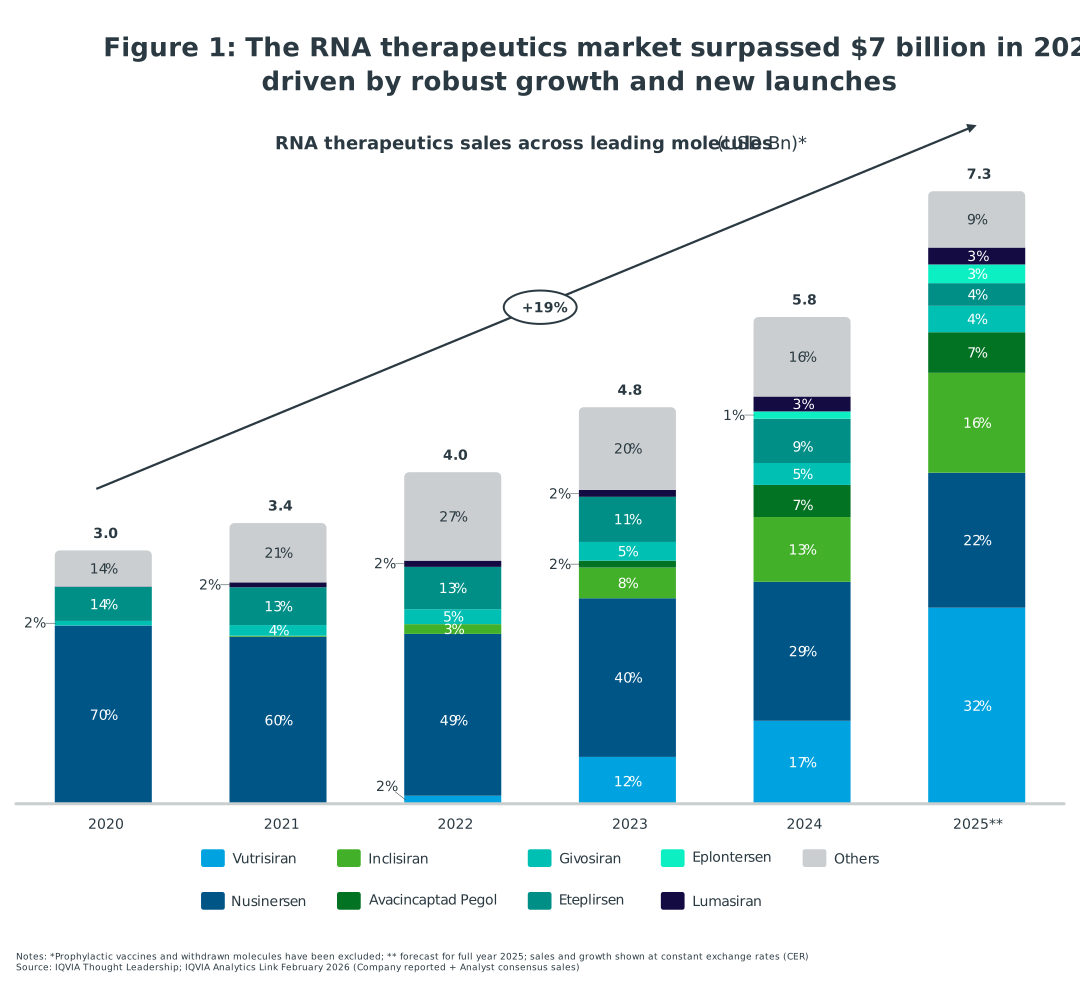
Despite this progress, the field faces notable challenges such as increasing politicisation. For example, the U.S. Department of Health and Human Services cut roughly $500 million in mRNA funding in 2025, citing concerns about safety and broad applicability.3 Additionally, the FDA initially rejected Moderna’s application for a new mRNA influenza vaccine before later reversing its decision, against a backdrop of heightened political scrutiny of mRNA technologies under the Trump administration.4,5 However, the long-term outlook for RNA therapeutics remains extremely positive. Breakthrough innovation is underpinned by next generation RNA technologies that are overcoming prior generation constraints. These advances firmly anchor RNA therapies within the treatment landscape and are driving expansion into new therapeutic frontiers.
RNA as a Platform: Beyond Vaccines
The success of mRNA COVID-19 vaccines showcased the platform’s exceptional speed, versatility and scalability, as illustrated by the Pfizer-BioNTech vaccine, which took just 11 months from research to approval in the UK.6 Nonetheless, this achievement represents only the beginning of the RNA therapeutic journey. Beyond prophylactic vaccines, RNA therapeutics represent a rapidly expanding toolkit capable of restoring, silencing, or rewriting biological functions across a wide range of diseases and modalities. As existing modalities mature, novel approaches are also entering clinical development (Figure 2).
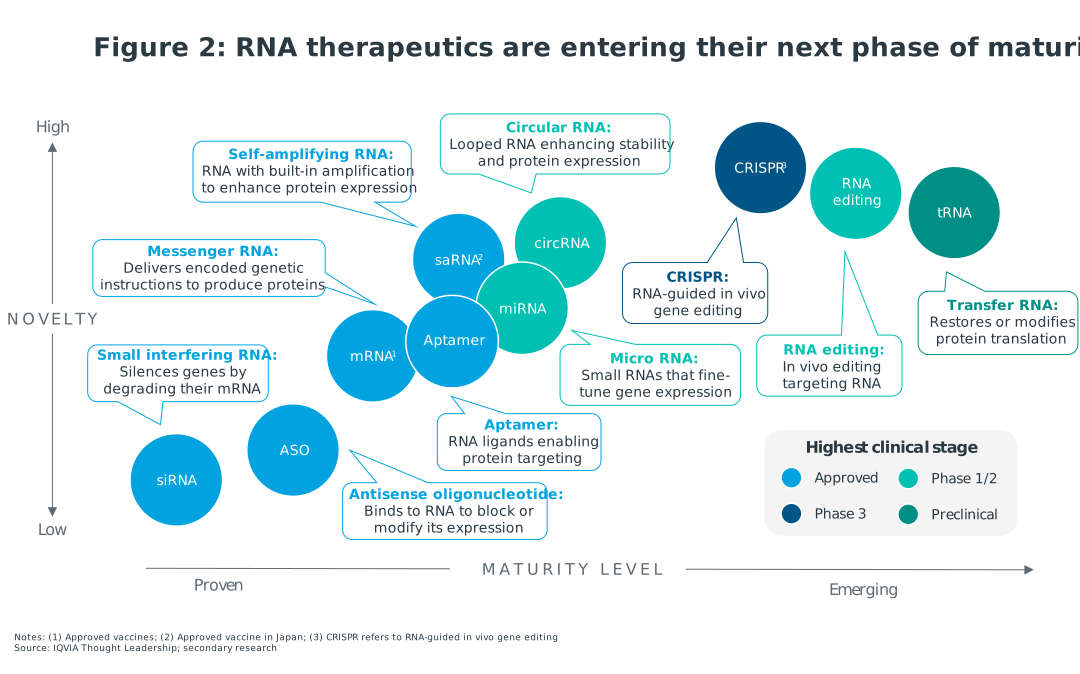
The evolving landscape of RNA therapeutics can be broadly grouped into the following categories according to their intended effects and mechanisms of action:
- RNA that regulates or silences gene expression:
This group encompasses modalities that interfere with RNA pathways, typically to modify or reduce gene expression. Small interfering RNAs (siRNAs) achieve this by guiding the degradation of target mRNA, whilst antisense oligonucleotides (ASOs) bind to specific RNA sequences to block or reduce their activity. Meanwhile, micro RNAs (miRNAs) exploit natural regulatory mechanisms to subtly fine-tune gene expression. - RNA that encodes or enhances protein production:
Other modalities focus on supplying the cell with RNA templates that drive protein synthesis. Messenger RNA (mRNA) delivers genetic instructions for desired proteins, whereas self-amplifying RNA (saRNA) helps to replicate those instructions to achieve longer-lasting effects. Circular RNA (circRNA) takes this further through its looped and stabilised structure, enabling sustained protein expression. Complementing these, emerging transfer RNA (tRNA) platforms seek to restore correct protein translation. - RNA-guided targeting, editing or repair:
A third category involves using RNA as either a guide or target for modulating or editing genetic information. CRISPR platforms rely on RNA guides to direct precise edits of DNA or RNA. Beyond CRISPR, a growing suite of RNA-focused editors are also entering the field, making it possible to correct disease-driving mutations in RNA sequences. In contrast, RNA aptamers provide structure‑based molecular targeting, selectively binding proteins or receptors to control biological activity.
The Evolving RNA Therapeutics Pipeline
The RNA therapeutics pipeline has continued to surge over the last 5 years (Figure 3). Following the landmark successes of RNA therapies in the early 2020s (led by the mRNA COVID-19 vaccines), many companies have accelerated their RNA R&D efforts beyond prophylactic vaccines. Key players include Moderna, BioNTech, Alnylam, Ionis and Arrowhead Pharmaceuticals. Additionally, emerging biopharma companies (EBPs) dominate the pipeline, accounting for more than 55% of trials. Reflecting this continued innovation, the number of clinical trial starts is expected to hit a record high of approximately 164 in 2025, following dramatic growth since 2023. This considerable rise has likely been fuelled not only by the rapid expansion of siRNA technologies, but also by the emergence of novel modalities such as miRNAs and RNA editing.
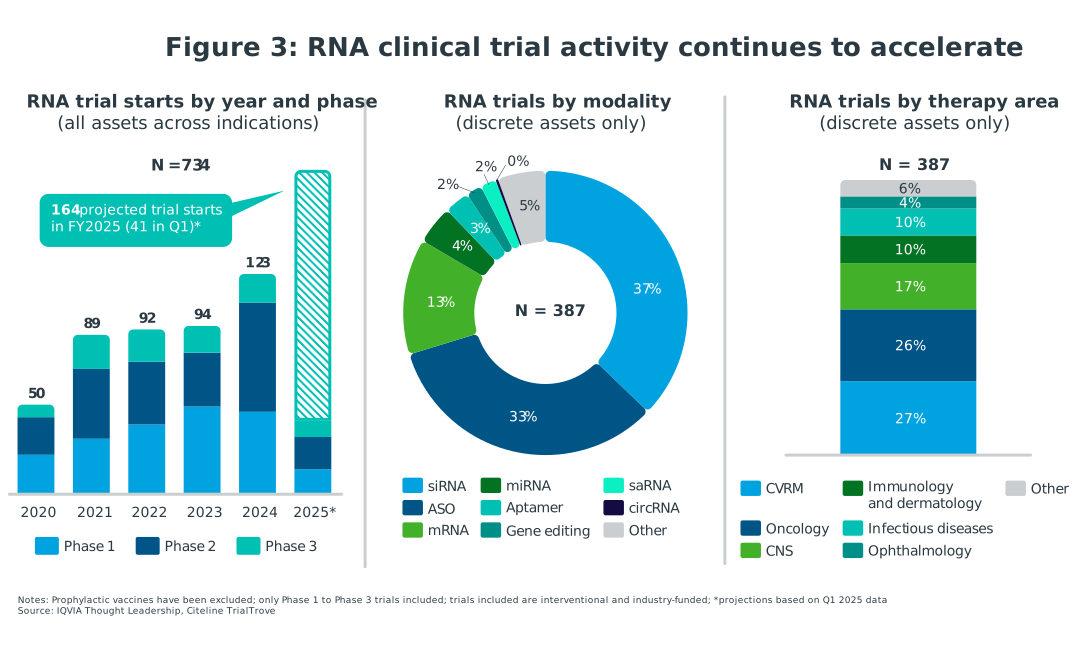
RNA therapeutics targeting the central nervous system (CNS) and the cardiovascular, renal, and metabolic (CVMR) systems are also rapidly emerging as key drivers of growth in a field once confined to rare genetic diseases. Powered by the recent cardiometabolic renaissance, these expansive therapy areas address far larger patient populations and are therefore a driving force behind the accelerating number of clinical trials.
siRNAs are the most established modality, accounting for 37% of ongoing clinical trials. Among the standout candidates is WVE-007 (Wave Life Sciences), an obesity-targeting siRNA therapy that delivered promising results in its Phase 1 trial reported in December 2025.7 Remarkably, participants experienced comparable fat loss to GLP-1 treatments but without the associated muscle loss and from just a single dose across a 12-week period. With six-month follow up data expected in Q1 2026, momentum in this space continues to build. Meanwhile, a pivotal Phase 3 clinical trial is investigating whether inclisiran (Novartis), a recently approved cholesterol-lowering siRNA, can safely reduce the incidence of heart attacks and strokes.8
ASOs follow closely behind siRNAs as the second largest RNA modality, representing 33% of clinical trials. One of the most anticipated candidates in this space is pelacarsen (Novartis/Ionis), currently under evaluation in the pivotal Phase 3 trial for lowering lipoprotein(a), with results expected in H1 2026.9 Meanwhile, mRNA-based therapeutics form the third largest segment, accounting for 13% of ongoing trials and expanding far beyond their early infectious disease footprint. These include a potential breakthrough mRNA vaccine for high-risk skin cancers (Moderna/Merck), investigated in the KEYNOTE-942 trial. Recent positive results revealed that, when administered alongside Keytruda, the vaccine demonstrated a 49% reduction in the risk of cancer recurrence and death over a 5-year period.10
Beyond these core modalities, the RNA therapeutics landscape is witnessing a wave of novel approaches and notable firsts. These include RXRG-001 (RiboX Therapeutics), the first circRNA therapy to enter human clinical trials, now in Phase 1 for ophthalmological indications.11 Interest in miRNA-based treatments is also rising, exemplified by AMT-130 (uniQure), the first one-time gene therapy for Huntington’s disease.12 However, AMT-130 has recently faced a regulatory hurdle from the FDA concerning trial design.13
Beyond these modalities, a new generation of RNA-enabled gene-editing assets is also emerging, such as VERVE-101 (Verve Therapeutics), which targets the PCSK9 gene to lower LDL-C levels in patients with familial hypercholesterolaemia.14 With major clinical readouts on the horizon in 2026 and beyond, RNA therapeutics are on track for another year of transformative progress.
Outlook and Future Perspectives
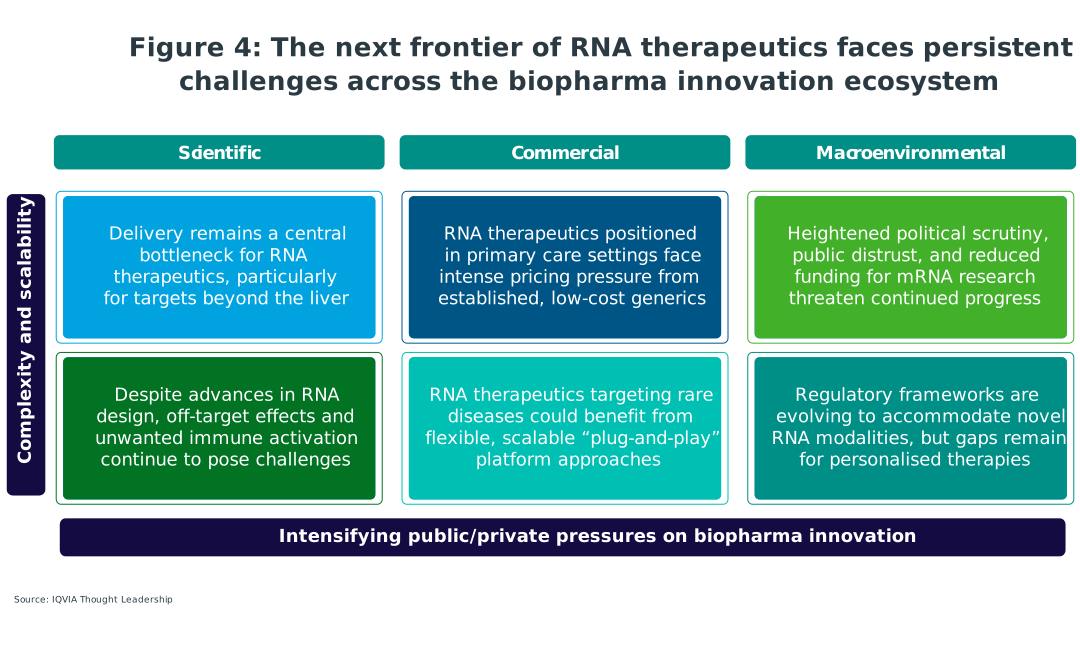
As we look ahead, the outlook of RNA therapies can be categorised into three key themes: scientific, commercial and macroenvironmental trends (Figure 3). Overarching factors include public and private pressures on biopharma innovation, coupled with the unique therapeutic complexity and scalability challenges of RNA therapeutics. Across these pillars, we highlight key challenges and issues that must be overcome to realise the full potential of RNA medicine.
Scientific:
- The majority of clinically validated RNA delivery platforms exhibit a strong bias toward hepatic (liver) uptake, most notably established lipid nanoparticle (LNP) formulations and GalNAc conjugation systems. This bias makes efficient delivery to extrahepatic tissues such as the lung and brain substantially more challenging.
- As a consequence of these delivery limitations, typically only a small proportion of the administered RNA dose reaches the intended target cells. To achieve sufficient target uptake, higher doses are therefore often required, which increases the risk of off‑target effects, toxicity, and unintended immune activation.
Commercial:
- As RNA therapeutics increasingly move into primary care indications such as cardiovascular and metabolic disease, they will encounter fiercely competitive markets dominated by well‑established, low‑cost generic therapies that are effective, well tolerated, and deeply embedded in clinical practice. This dynamic places significant pressure on pricing, reimbursement, and market differentiation. Inclisiran illustrates these challenges and opportunities: despite a slow start on the market in 2021, largely due to healthcare system readiness and access constraints, uptake has since accelerated, driving sales above $1 billion in 2025 and highlighting the potential of RNA therapeutics in primary care.
- In contrast, RNA therapeutics are also particularly well suited to rare disease settings. In these cases, therapeutic development may involve modifying only the RNA sequence (for example, an siRNA guide strand or mRNA coding region) while preserving the same underlying chemistry, delivery system, and manufacturing process. This therefore creates a compelling opportunity for scalable, “plug‑and‑play” platform approaches across multiple indications.
Macroenvironmental:
- Despite the proven clinical impact of mRNA technologies, the field is increasingly exposed to politicisation, alongside regulatory and public‑funding uncertainty. At the same time, public distrust and rising vaccine scepticism present additional headwinds. To date, however, these challenges have largely been confined to mRNA applications in infectious diseases and have not broadly extended to other RNA modalities or therapeutic areas.
- Regulatory agencies have made substantial progress in adapting frameworks to support the rapid development and approval of RNA therapeutics, particularly mRNA vaccines. Nevertheless, personalised RNA therapies such as cancer vaccines or bespoke rare disease treatments continue to strain regulatory paradigms that are primarily designed around standard, mass‑marketed drugs.
Closing thoughts
The next phase of RNA will depend not only on scientific excellence but whether the field is able to address and overcome existing limitations. Better delivery, improved stability, broader tissue targeting, and durable efficacy will matter most. Progress on these fronts will decide if RNA moves from promising biology to reliable, long-term treatment across a wider range of disease.
The bigger test is translation. RNA has proven its value across rare diseases and now needs to show the same impact in chronic diseases with large patient populations and established standard of care. To succeed, innovators must demonstrate clear, measurable benefits under real cost and market access pressures. Those who can align scientific excellence with realities of care delivery will shape the next frontier of RNA therapeutics.
Acknowledgments
The authors of this blog would like to thank Seren Ford, a University of Oxford student, for her data analysis and research contributions.
References
1. Citeline Trialtrove; IQVIA Analytics Link; IQVIA Pharma Deals; secondary research
2. Biopharma M&A: Outlook for 2026; IQVIA blog, January 2026: https://www.iqvia.com/locations/emea/blogs/2026/01/biopharma-m-and-a-outlook-for-2026
3. HHS cancels mRNA vaccine development funded by BARDA; Fierce Biotech, August 2025: https://www.fiercebiotech.com/biotech/hhs-cancels-all-mrna-vaccine-development-funded-barda
4. FDA refuses to review Moderna’s influenza vaccine; STAT news, February 2026: https://www.statnews.com/2026/02/10/fda-refuses-review-moderna-flu-vaccine-application/
5. FDA agrees to review Moderna’s mRNA flu vaccine application in a reversal; CNBC, February 18: https://www.cnbc.com/2026/02/18/fda-agrees-to-review-modernas-flu-shot-application-after-refusal.html?msockid=22eef1da59cb66242119e6c858be6707
6. UK approved Pfizer-BioNTech COVID-19 vaccine in world first; Reuters, December 2020: https://www.reuters.com/world/uk/uk-approves-pfizer-biontech-covid-19-vaccine-world-first-2020-12-02/
7. Wave Life Sciences Announces Positive Interim Data from Phase 1 INLIGHT Trial of WVE-007 (INHBE) for Obesity; Wave Life Sciences press release, December 2025: https://ir.wavelifesciences.com/news-releases/news-release-details/wave-life-sciences-announces-positive-interim-data-phase-1
8. A Randomized Trial Assessing the Effects of Inclisiran on Clinical Outcomes Among People With Cardiovascular Disease; ClinicalTrials.gov, Accessed February 2026: https://clinicaltrials.gov/study/NCT03705234
9. Lp(a) Lowering Study of Pelacarsen (TQJ230) With Background Inclisiran in Participants With Elevated Lp(a) and Established ASCVD; Novartis press release, February 2026: https://www.novartis.com/clinicaltrials/study/nct06813911
10. Moderna, Merck’s skin cancer vaccine shows sustained benefit in five-year follow-up; Reuters, January 2026: https://www.reuters.com/business/healthcare-pharmaceuticals/moderna-mercks-skin-cancer-vaccine-shows-sustained-benefit-after-five-years-2026-01-20/
11. RiboX's Circular RNA Therapy RXRG001 Cleared for Phase 1/2a Trial in Radiation-Induced Xerostomia and Hyposalivation; CGT live, November 2024: https://www.cgtlive.com/view/ribox-circular-rna-therapy-rxrg001-cleared-phase-trial-radiation-induced-xerostomia-hyposalivation
12. Phase I/II Clinical Trial of AMT-130; uniQURE article, Accessed February 2026: https://www.uniqure.com/programs-pipeline/phase-1-2-clinical-trial-of-amt-130
13. uniQure's ballyhooed gene therapy for Huntington's hits FDA roadblock; Fierce Biotech, November 2025: https://www.fiercebiotech.com/biotech/uniqure-ballyhooed-gene-therapy-huntingtons-hits-fda-roadblock
14. An Investigational DNA Base Editing Medicine Designed to Durably Inactivate the PCSK9 Gene and Lower LDL Cholesterol – Interim Results of the Phase 1b heart-1 Trial; Verve Therapeutics, November 2023: https://www.vervetx.com/sites/default/files/2023-11/Verve_AHA_2023_LBS_for%20website.pdf
Everything you need to know about RNA Therapeutics
RNA therapeutics are medicines that use or target RNA molecules to silence or regulate gene expression, encode or enhance protein production, or guide molecular targeting or editing. Major RNA therapeutic types include small interfering RNAs (siRNAs), antisense oligonucleotides (ASOs), messenger RNA (mRNA), as well as emerging modalities such as self-amplifying RNAs (saRNAs), circular RNAs (circRNAs), and RNA-guided editing technologies.
In 2025, RNA therapeutics generated over $7 billion in estimated global company reported sales, excluding prophylactic vaccines (IQVIA Analytics Link). Market momentum is reinforced by strong investment activity, with RNA licensing deal value exceeding $17 billion in 2025, a promising signal for sustained RNA innovation (IQVIA PharmaDeals).
Examples of key RNA programs with important recent or upcoming readouts include pelacarsen, an ASO targeting lipoprotein(a), with pivotal Phase 3 results expected in H1 2026. Additionally, an mRNA cancer vaccine has shown sustained clinical benefit in melanoma, with Phase 2 results reported in early 2026. Together, these trials highlight RNA’s expansion into cardiometabolic disease and oncology, two large and commercially significant markets.
Key challenges span scientific, commercial, and macroenvironmental factors. Scientifically, efficient RNA delivery beyond the liver remains difficult, increasing dosing complexity and potential safety risks. Commercially, RNA therapies entering primary care settings face pricing and reimbursement pressure from established low-cost generics. At a macroenvironmental level, politicisation, regulatory uncertainty, and public scepticism, particularly around mRNA technologies, create additional headwinds.