





.svg)











Stay ahead with the EMEA Thought Leadership insights: your source for industry-leading expertise and analysis
Blog
A crisis turned into opportunity: What will global health look like in 2026?
Mar 12, 2026
The systems underpinning the global health architecture experienced significant transformations in 2025. A lingering post-pandemic fiscal and health crisis, competing aid and national security priorities, and a profound shift in the strategic direction of major public donors are some of the key forces behind these changes. The first and most noticeable consequence of these shifts was a stark reduction in funding, followed by an emerging post-multilateralism paradigm that seeks to reshape the understanding of international cooperation as a state-to-state (or donor-to-national partner) prosperity-driven engagement. These decisions have severely affected many international organizations, thereby reducing their footprint and accelerating a long-running reform agenda that could see—and has already seen, in some cases—the restructuring, merger, or sunsetting of many regional and global bodies. The United Nations system alone is abolishing more than 20,000 fixed-term and temporary posts in what is considered the largest workforce reduction in the organization’s history.1
These institutional dynamics, dire resource scenarios, and convoluted geopolitical environment have caused noticeable disruptions in service delivery and have risked the continuity of lifesaving interventions, especially immunization, emergency preparedness and response, and disease surveillance.2 Several studies project that the human toll of this crisis could be devastating, with some anticipating nearly 22 million additional preventable deaths by 2030 in low- and middle-income countries (LMICs), around a quarter of them among children.3 It is estimated that this abrupt shock on health, without the implementation of alternative cash flows, coordination efforts, and technical capacity, could go as far as surpassing the human impact of COVID-19.
The World Health Organization (WHO) will experience a headcount decline of 25% by June 2026. Major global health institutions such as the Global Fund and Gavi have seen drops in their replenishments by 37% and 24%, respectively. Gavi is planning to abolish approximately 155 positions (or 24% of its workforce), while the Global Fund is in the midst of a comprehensive restructuring exercise. Other key players in the space, such as UNICEF, are cutting close to 25% of its global staff footprint and relocating the remaining personnel to lower-cost duty stations.
Sources: Health Policy Watch,4,5 Reuters,6 Global Fund,7 and Gavi8
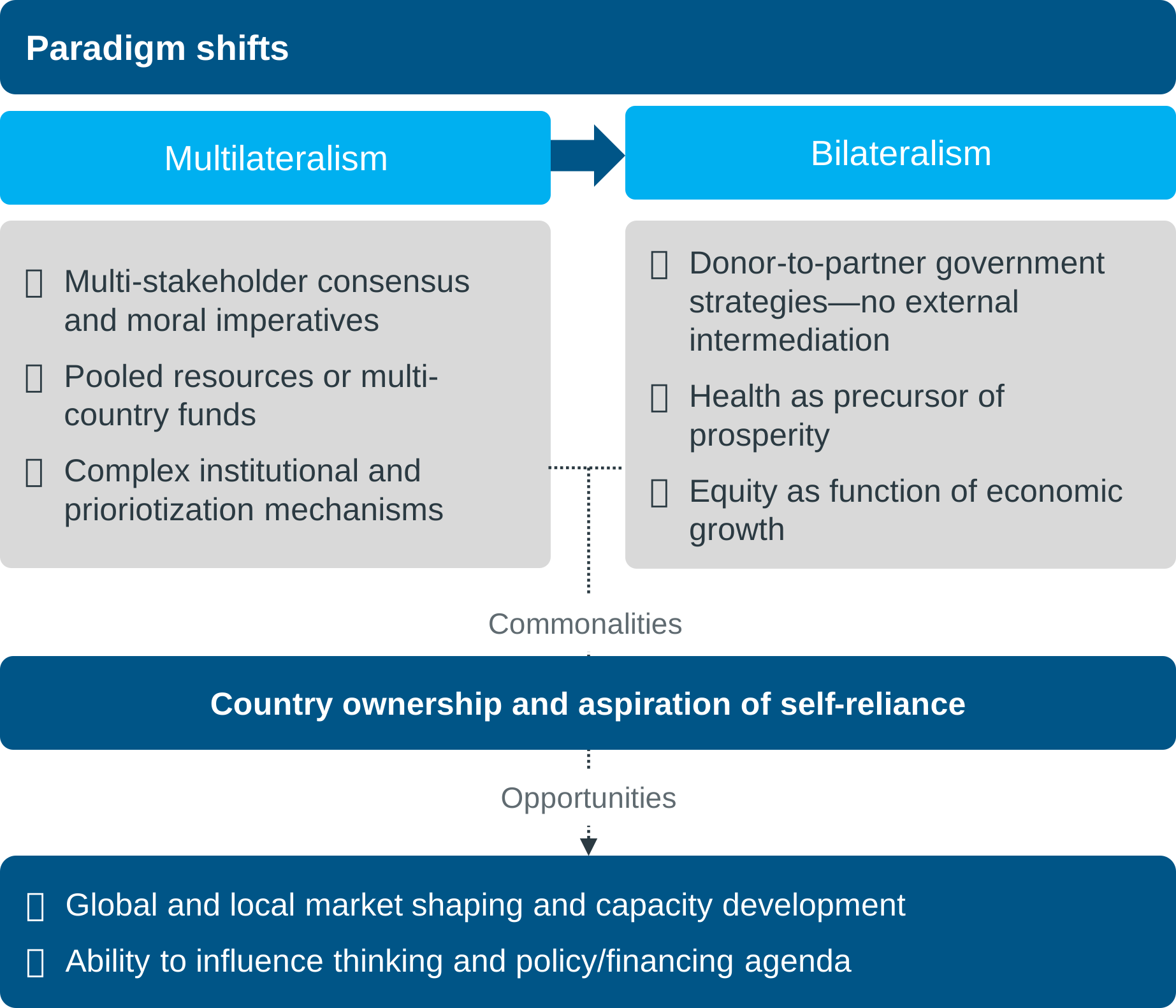
However, this situation presents health stakeholders at every level—national and local authorities, intergovernmental organizations, the private sector, civil society, and academia—with a unique and truly historical inflection point to take stock and rethink their approach not only to funding but to population health as a whole, bringing more efficiency, clarity, and coherence to both policy and care provision across the board. Changing strategic direction and achieving a successful transition in program delivery and business models involve, first and foremost, recognizing critical trends:
- Cooperation mechanisms are changing. The crisis in multilateralism has upended the traditional global health system. While multilateralism defined the post-World War II development assistance and humanitarian ecosystems and has driven widespread improvements in health, a growing movement towards highly targeted bilateral partnerships is gaining traction. The rationale behind these new dynamics is that many regional and global international institutions are failing to show value for money, operational efficiency, clear and sensible governance across mandates, and more harmonized and coherent programming. To survive and thrive, these bodies are being asked to actively address these structural gaps while simultaneously driving meaningful national ownership and financial sustainability through domestic co-investments. Pro-bilateralism proponents are also suggesting that the impact of international cooperation activities in LMICs should be predominantly framed as catalysts for national prosperity and productivity.
- Traditional public funding is no longer sufficient. The review and reset of priorities by sovereign donors are driving a steep decline in official development assistance (ODA), which the Organization for Economic Cooperation and Development (OECD) estimates will fall by between 10% and 18% from 2024 to 2025.9 This contraction places greater emphasis on innovative financing mechanisms and alternative sources to offset widening budgetary gaps. The decline in ODA is affecting global health in two ways. First, heavy reliance on traditional public donors has exposed sustainability risks, particularly where domestic co‑financing and transition arrangements have failed to deliver as intended, often due to prolonged fiscal pressures or the absence of predictable, multi‑year support. Second, the fragmentation of non‑traditional donor contributions and blended finance instruments complicates the scale‑up of sustainable approaches. Where financing ecosystems remain fragmented, private incentives diverge from national priorities, or markets are insufficiently de‑risked, mobilizing the critical mass of capital needed to replace public contributions becomes highly challenging, eroding the strategic coherence and efficiencies typically associated with larger, consolidated resource pools. At the same time, philanthropic actors, alongside public‑private funds, are assuming a more prominent role, with non‑traditional donors increasingly channeling resources toward health‑focused portfolios.
- The private sector is becoming even more relevant. It can catalyze innovation, broker investments, offer highly targeted solutions and specialized know-how, and optimize development operations at the local, national or international level. To maximize the private sector’s contributions, governments and international development stakeholders must strengthen trust and governance frameworks, enabling deeper engagement and drawing on the diversity of perspectives and capabilities these actors can bring to the table. Although the transformative potential of private sector initiatives is widely recognized, substantial gaps persist in defining collaboration schemes that deliver clear cross-sectoral value. Linked to this, public-private partnerships can indeed facilitate what participants in many policy fora have recently coined as “collaboraction.” The main idea behind this concept is that action-driven partnerships, if done well, can translate intelligence and policy into concrete initiatives that effectively address pressing societal issues. This theme was salient in conversations on the new iteration of public responses to noncommunicable diseases (NCDs) during the 80th session of the UN General Assembly in September of 2025.
- Calls for more and better data continue to be front and center. High-quality, standardized, efficiently collected, and interoperable data is not just a far-fetched aspiration but a rather vital component of solid policymaking and programmatic design and delivery. In a time of scarce resources, investing in a strong data infrastructure can support the rollout of more powerful and efficient solutions, from well-functioning and integrated digital health platforms and electronic health records to artificial intelligence (AI)-enabled systems. Robust data is also extremely valuable to secure funding: it can help implementers show efficiencies in the use of resources and provide impact evidence supporting requests for increased investment or underpinning innovative financing mechanisms. Research recently published by IQVIA and Sanofi elaborates on the benefits of using systematic data-driven approaches to identify global health priorities, examining variables such as disease burden and unmet need.10 By bringing more intelligence to the design and implementation of public health undertakings, national authorities and various other partners can achieve more sustainable and equitable access to care, maximizing resources where they matter most.
Figure 1. Most prominent paradigm shifts in international development
What will global health look like in 2026?
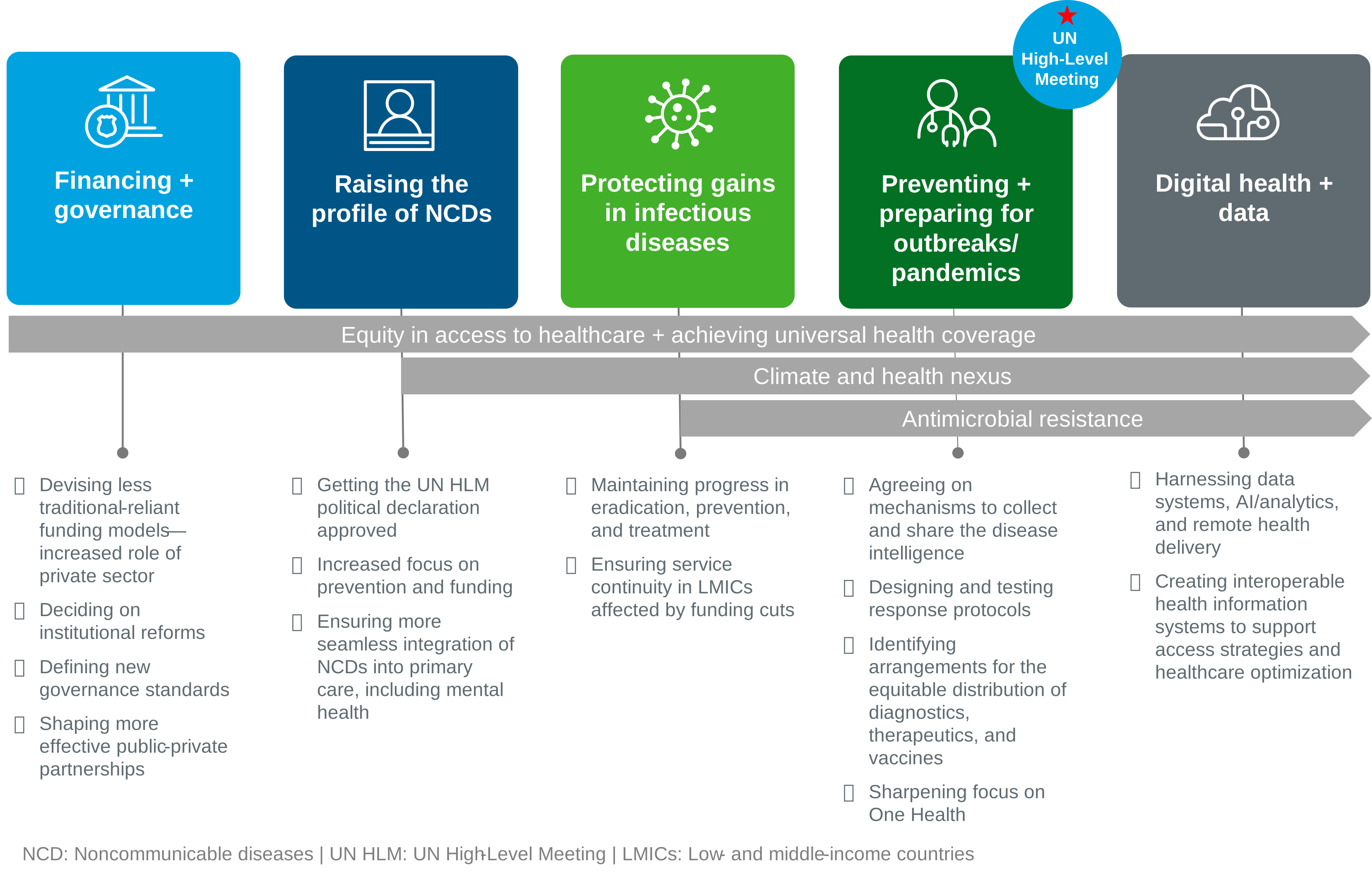
Keeping these trends in mind, global health in 2026 will fiercely compete for space and resources with other international development priorities. The agenda will be dominated by efforts to adapt to rapidly emerging changes, protect past investments and results achieved, and further advance equity and innovation amid shrinking foreign aid portfolios and reduced domestic capacity. It is expected that the following shifts will take over headlines in 2026:
- The push to reimagine governance and financing is real and urgent. The institutional reforms underway across global health organizations are likely to produce more sharply defined mandates, accompanied by leaner programmatic and operational budgets. Part of this shift may involve advancing the commitments articulated in the Lusaka Agenda (2023)11 and the Accra Reset (2025),12 ensuring that institutional interdependencies and coherent operational standards translate into health systems that are genuinely country-led, sustainable, and equitable. Securing new sources of financing and leveraging the potential of public-private partnerships will remain central themes. At the same time, a more diversified—and no longer exclusively Western—set of public donors, including China, India, Saudi Arabia, the United Arab Emirates, and South Korea, has already begun to play a more assertive role in financing, research, and pandemic preparedness and response.13 Donors from ‘middle powers,’ such as Canada, may likewise seek to expand their influence across many dimensions.14 Meanwhile, major philanthropic actors, including the Bill and Melinda Gates Foundation and the Wellcome Trust, are becoming crucial for the viability of global health initiatives, with the former now acting as the World Health Organization’s largest contributor.
- Priority-setting with a country-centric approach is the only way forward: Given the shifting epidemiological landscape, the evolving burden of disease, and the profound demographic and urban transitions underway across LMICs, governments will need to rethink how they define and order their health priorities to secure the greatest possible returns. Although much work is still required, increasingly rigorous estimates of disease burden—paired with stronger value for money analyses and health technology assessments—should sharpen country-owned priority setting and financing strategies, which global health institutions and bilateral partners can then reinforce. Without genuine country leadership in shaping both the strategic direction and the allocation of donor resources, governments risk sidelining essential issues in favor of opportunistic, ad hoc co-financing arrangements that may not serve long-term national needs.
- Raising the profile of noncommunicable diseases is essential. With the adoption of a long-anticipated political declaration in late 2025, the prevention and control of NCDs, in tandem with the promotion of mental health and wellbeing, will gain momentum in policymaking.15 Although tangible advances may be realized gradually, the declaration has the potential to catalyze concrete action on tobacco control, hypertension management, and expanded access to mental health services. It also opens the door to multisectoral national strategies, stronger NCD related policies and surveillance systems, and the introduction of regulatory and fiscal measures. Yet the pace and depth of implementation will hinge on financing and accountability. Historically, ministries of finance have viewed investment in NCD prevention and treatment as daunting, given the considerable long-term financial commitments associated with chronic conditions. Adequate resourcing of NCD care can nevertheless generate societal benefits that extend well beyond health, often outweighing perceived upfront expenditures. Public-private partnerships grounded in shared responsibility principles offer an alternative pathway, easing fiscal pressures on governments while supporting sustainable and equitable access to essential services, particularly when investments prioritize awareness, prevention, screening, and early action.
- Infectious diseases will remain a key topic. Despite the growing focus on NCDs and mental health, the persistent double burden of disease in some LMICs underscores the need to protect hard-won gains against infectious conditions, especially HIV, tuberculosis, and malaria. Global efforts in prevention and treatment are truly indispensable, a reality underscored by the disruptions to service delivery and progress caused by the COVID-19 pandemic and the 2025 funding retrenchment. In 2021, the Global Fund reported that the novel coronavirus caused a decline of 11% in people accessing HIV prevention programs and services. Similarly, the number of people treated for drug resistant and extensively drug-resistant TB dropped by 19% and 37%, respectively. Malaria was the least affected of these diseases but still suffered a setback with a decrease in testing of suspected cases by 4.3%.16 Against this backdrop, sustaining momentum in infectious disease control and elimination must be balanced with the expanding NCD landscape to ensure both areas receive the attention and resources they demand, fostering their integration across the primary healthcare continuum. In parallel, addressing antimicrobial resistance (AMR) through therapeutic innovation, advanced surveillance, and effective stewardship remains essential to preserving the efficacy and success of existing treatments and interventions.
- Global health security will require key agreements and actions. After many years of negotiations, the recently approved Pandemic Agreement has the potential to drive a more unified policy focus by prompting countries to align regulatory systems, increase preparedness funding, and expand regional manufacturing while advancing pathogen access and benefit-sharing negotiations.17 There are significant leverage points for many stakeholders, above all the private sector, to support resilient supply chains, coordinated research, and disease surveillance data-sharing. If proper alignment is achieved, the agreement has the potential of reinforcing global solidarity and equitable access to medical countermeasures. The UN High-Level Meeting on Pandemic Preparedness and Response in September 2026 could help translate this accord into a concrete roadmap. In terms of opportunities to recalibrate global leadership in this space, the expansion of defense and security spending in many countries and regional blocks—with the European Union, for example, increasing it by 19% between 2023 and 202418 —can serve as a conduit to better position the value of biosecurity as a national investment with all-encompassing positive outcomes.
- The digital enablement of health systems is no longer an aspiration but an imperative. In 2026, digital health reached a pivotal moment: generative AI is being embedded in clinical and operational workflows, accelerating the shift toward more integrated digital health ecosystems and raising the bar for governance. At the same time, multi-level initiatives—from the European Health Data Space’s push for cross-border exchange to the WHO’s digital health strategy through 2027, alongside national digital transformation strategies across many countries, including LMICs—reflect growing recognition that seamless data-sharing underpins early threat detection, stronger registries, more equitable access to care, more accurate forecasting, and better orchestrated crisis response. These shifts elevate the importance of privacy and cybersecurity, as the expansion of interoperable, data-driven care models increases the volume, sensitivity, and persistence of patient information that must be protected to maintain trust and system integrity. Where data remains fragmented or poorly standardized, digital tools, including AI, can strengthen dataset quality and help convert information into actionable evidence.
Across these specific topics, overarching themes such as equitable access to care, the achievement of universal health coverage, the monitoring of AMR, and the climate and health nexus, with particular attention to the principles of the One Health approach, will persist as guiding stars. Figure 2 summarizes these insights.
Figure 2. Priorities in global health for 2026
Regardless of what the most salient themes will be in 2026, optimizing population health and the role of global and regional institutions calls for a bold reinvention. The Lusaka Agenda and the Accra Reset offer two of many blueprints pushing for financial, operational, and programmatic harmonization across major global health actors. Real progress, nonetheless, is a direct function of stronger implementation at national level and a return to the fundamentals of primary care: empowering communities, devising creative solutions to persistent access issues, and making smarter use of technology—digital health, telemedicine and AI—to enhance delivery. Ideally, a new and balanced global health paradigm should be less dependent on traditional donors and more rooted in diversified financing, shared responsibility, and meaningful leadership from civil society, the private sector, and countries themselves. Multilateral institutions will retain strategic importance, as they should, but they too must evolve. After the dust settles, developments in 2026 will provide sufficient evidence to determine the concrete implications of changes in 2025 and set a more stable direction of travel.
Insights presented in this article stem from reflections on 2026’s most salient trends in healthcare globally, as presented in the “Nine for” series. Authors are co-chairs of IQVIA’s internal Global Health Policy Group.
References
1Girardet, E. (2025, August 15). International Geneva in crisis: Where do we go from here? Le News. https://lenews.ch/2025/08/15/international-geneva-in-crisis-where-do-we-go-from-here/
2World Health Organization (2025, November 3). WHO issues guidance to address drastic global health financing cuts. https://www.who.int/news/item/03-11-2025-who-issues-guidance-to-address-drastic-global-health-financing-cuts
3Barcelona Institute for Global Health (2023). Global aid cuts could reverse decades of progress in health and development. ISGlobal. https://www.isglobal.org/en/-/global-aid-cuts-could-reverse-decades-of-progress-in-health-and-development
4Health Policy Watch (2025). Exclusive: WHO cutting up to 28% of staff by June 2026, but shadow workforce of consultants is unreported. https://healthpolicy-watch.news/exclusive-who-cutting-up-to-28-of-staff-by-june-2026-but-shadow-workforce-of-consultants-is-unreported/
5Health Policy Watch (2025). Gavi cuts staff and support to WHO and UNICEF, gives more freedom to countries to decide vaccine priorities. https://healthpolicy-watch.news/gavi-cuts-staff-and-support-to-who-and-unicef-gives-more-freedom-to-countries-to-decide-vaccine-priorities/
6Farge, E. (2025, November 19). UN children’s agency to move jobs out of Geneva amidst global funding cuts. Reuters. https://www.reuters.com/world/un-childrens-agency-move-jobs-out-geneva-amidst-global-funding-cuts-2025-11-19/
7The Global Fund to Fight AIDS, Tuberculosis and Malaria (2025, November 4). Eighth replenishment. https://www.theglobalfund.org/en/replenishment/eighth-replenishment/
8Gavi, the Vaccine Alliance (n.d.). Protecting our future. https://www.gavi.org/investing-gavi/resource-mobilisation-process/protecting-our-future
9Organization for Economic Cooperation and Development (n.d.). Official development assistance (ODA). https://www.oecd.org/en/topics/policy-issues/official-development-assistance-oda.html
10Mora-Brito, D. and Bayley, H. (2025). Coming together to address global health priorities: A systematic approach for concerted action and shared responsibility. IQVIA. https://www.iqvia.com/-/media/iqvia/pdfs/emea/library/whitepaper/coming-together-to-address-global-health-priorities.pdf
11Future of Global Health Initiatives (2023). The Lusaka Agenda: Conclusions of the Future of Global Health Initiatives process. https://futureofghis.org/final-outputs/lusaka-agenda/
12Accra Reset (n.d.). Accra Reset. https://accrareset.org/
13Devex (n.d.). Emerging donors report. https://pages.devex.com/rs/685-KBL-765/images/Devex-Emerging-Donors-Report.pdf
14Goldin, N. (2026, February 10). Middle powers are no longer the supporting cast in global development. Devex. https://www.devex.com/news/middle-powers-are-no-longer-the-supporting-cast-in-global-development-111850
15United Nations General Assembly (2025, December 8). Political declaration of the fourth high-level meeting of the General Assembly on the prevention and control of noncommunicable diseases and the promotion of mental health and well-being (A/80/L.34). https://docs.un.org/en/A/80/L.34
16The Global Fund to Fight AIDS, Tuberculosis and Malaria (2021, September 8). Global Fund results report reveals COVID 19 devastating impact on HIV, TB and malaria programs. https://www.theglobalfund.org/en/news/2021/2021-09-08-global-fund-results-report-reveals-covid-19-devastating-impact-on-hiv-tb-and-malaria-programs/
17World Health Assembly (2025). WHO pandemic agreement (Resolution WHA78.1; document A78/R1). World Health Organization. https://apps.who.int/gb/ebwha/pdf_files/WHA78/A78_R1-en.pdf
18Council of the European Union (n.d.). EU defence in numbers. https://www.consilium.europa.eu/en/policies/defence-numbers