




.svg)











Stay ahead with the EMEA Thought Leadership insights: your source for industry-leading expertise and analysis
Blog
Unravelling obesity: The real‑world data tapestry needed to fully contextualise obesity
Feb 20, 2026
Introduction
With over 1 billion people living with obesity worldwide and growing, the disease is a global pandemic1,2. The reality of obesity is defined by diversity: multifactorial underlying causes, its clinical presentation, the multiple comorbidities that obesity underlies and accelerates, the diversity of the communities it impacts the most, and the management across different patients. Until recently, obesity management across health systems has largely focused on individual responsibility, often framed as “move more, eat less”. The advent of GLP‑1s offers the potential to transform how health systems think about and respond to the obesity pandemic. As evidence generated in clinical trial populations expands into real-world populations, we see the heterogeneity of obesity becoming increasingly visible, and increasingly important to understand. Real‑world data plays a pivotal role in capturing this complexity, providing a more complete, contextualised and representative view of obesity than is possible in clinical trials, which are often not representative of age, ethnicity and gender of actual populations of people living with obesity6. Across the obesity medication lifecycle, real‑world data can complement clinical trials by generating a broader range of insights , further looking at impact on cardiovascular, renal and metabolic events, impact on healthcare utilisation, mental health, co-morbid medication, treatment effectiveness, social and economic outcomes , and real‑world patient behaviour such as adherence, persistence, switching behaviours and maintenance of weight dosing.
The question is no longer, do obesity medications work3,4. The question is now what do their benefits look like in the real-world and how can health systems expand access and demonstrate return on the promise of the clinical trials (for example, STEP-113). Health systems, regulators and life sciences are therefore placing growing emphasis on real-world data to inform investment and clinical decision‑making for obesity prevention and management. Understanding the real‑world benefits of obesity medicines - who they reach, how they are used, and what wider outcomes they deliver beyond weight loss - requires evidence that reflects the real world.
To achieve this, no single real-world data source is sufficient. The obesity landscape spans diverse populations, reimbursed and out‑of‑pocket markets, public and private care pathways, and across care settings, with an expanding focus on cardiometabolic health and long‑term outcomes. Fully contextualising obesity needs a broad tapestry of real-world data, bringing together multiple sources to reflect the complexity of the disease and its treatment in practice. Only by weaving together this tapestry can stakeholders begin to understand the full dynamics of obesity and generate evidence that is fit for an increasingly complex and competitive market.
Understand the obesity market
The obesity market is segmentable across several dimensions, for example , reflecting differences in patient profile, weight management goals, the role of pharmacological intervention and funding5. As competition increases, with 193 obesity medications currently in the pipeline, these dimensions will give rise to an increasingly stratified market.
As the commercial obesity pipeline evolves, we will see many pharmaceutical companies adopt obesity asset portfolios rather than a single asset approach. Looking ahead to 2030, an expanded obesity pipeline (90 and 18 assets in phase 2 and 3, respectively) is expected, with new assets, mechanisms of action and formulations entering the market. Increasing competition will drive the need for differentiation, in what is becoming a crowded therapeutic area and achieving differentiation that is of value to health systems, clinicians and patients will require increasingly granular and dynamic data.
These dynamics are closely linked to how patients are segmented in the real world. Patients can be stratified across multiple dimensions, including age, gender, ethnicity, body mass index (BMI), overlap with obesity-related comorbidities, underlying risk factors and other phenotypes that influence response to therapy and tolerability.
As obesity medicines demonstrate benefits beyond weight loss, indications are beginning to expand into additional comorbidities. The focus is no longer just on weight loss in isolation, but on how treatment supports longer-term health journeys. Making sense of this shift requires data that follows patients across different settings and captures both clinical information and patient experience over time.
Access adds another layer of complexity. In most countries, reimbursement for obesity medicines remains limited, meaning a substantial proportion of patients are paying out of pocket - or simply not getting access. This has driven rapid growth in private and online prescribers, creating treatment routes that sit outside traditional healthcare systems. As a result, large parts of the treated population are missing, either wholly or in terms of the majority of their treatment related data, from familiar sources such as claims or electronic health records (EHRs), limiting visibility into who is being treated, how long they remain on therapy, and how patterns of use differ between reimbursed and private settings.
The real-world data tapestry
In a previous blog published by IQVIA, Obesity trials on trial, we examined how late phase clinical trials in obesity often do not reflect the true heterogeneity of obese populations, and therefore the case for real-world studies in building the evidence portfolio. We discussed the range of real-world data sources required to truly capture obesity and the strengths of these data types in capturing endpoints of interest in this population6. From EHRs capturing the delivery of clinical care including diagnoses, lab results, prescriptions and medical history, to direct-from-patient sources such as wearable devices and patient questionnaires capturing data including physical activity, diet, symptoms and indirect healthcare resource utilisation; real-world studies addressing these populations are becoming increasingly complex and nuanced, requiring novel mechanisms in their design and execution.
However, the challenge extends beyond the disease itself. The complexities surrounding access to innovative treatment, such as obesity medications, is driving a divergent market between those who are able to access these medications through public healthcare, with varying but typically restrictive criteria, versus those people living with obesity who are willing and able to pay out-of-pocket7,8. This divergent market is challenging the way we typically design real-world studies - following a typical patient pathway and selecting data sources that capture this along the way. The design must now be split; EHRs from physicians routinely only capture the reimbursed population which is not sufficient to generate evidence on the entire population of obesity medication users. Capture of the out-of-pocket market has so far been largely untouched and requires novel methodologies and partnerships to gather data on these individuals.
The private market for obesity agents is growing rapidly. In the UK, during 2025, over 2 million people have accessed GLP-1 medicines privately, largely through online digital healthcare providers who offer remote consultations, private prescriptions, and digital weight management support care outside of publicly reimbursed healthcare frameworks9. This channel represents an important and previously untapped source of data on patients, who have had to go through increasingly stringent consultations to verify that they qualify for these medications in terms of BMI and other medical need, who currently do not have access to these medications through public health systems.
Yet still, despite our growing understanding of these co-existing, reimbursed versus out-of-pocket, markets, we still fail to capture the entire obese population. The out-of-pocket market favours those who can afford the medication and either leaves those individuals from the most deprived areas in further financial crisis in an attempt to pay, or lacking access to treatment. It is vital that we look to wider sources of data that include these populations, for real-world studies, in order to fully evaluate and quantify the potential benefits, clinical, economic and social, of these medications and their ability to change the management of obesity and cardiometabolic health as we know it today.
Real-world obesity studies
As obesity medicines are increasingly used, real-world studies are becoming a central component of evidence generation. While randomised controlled trials have established that modern obesity medications work underclinical trial conditions, real-world studies are needed to understand how these treatments perform across more representative patient populations and over longer periods of time.
Real-world data backs up existing evidence on the effectiveness of GLP-1s for weight loss; however, weight reduction observed in real world clinical practice has been shown to be lower than that reported in randomised controlled trials10. This difference could be driven by multiple issues, including lower adherence and persistence, as well as the use of reduced doses in real-world settings10. This gap between trial efficacy and real-world outcomes has driven growing interest in real-world evidence, reflected in an increase in real-world obesity studies over recent years.
Figure 1: The number of obesity interventional real-world trials by registered completion year
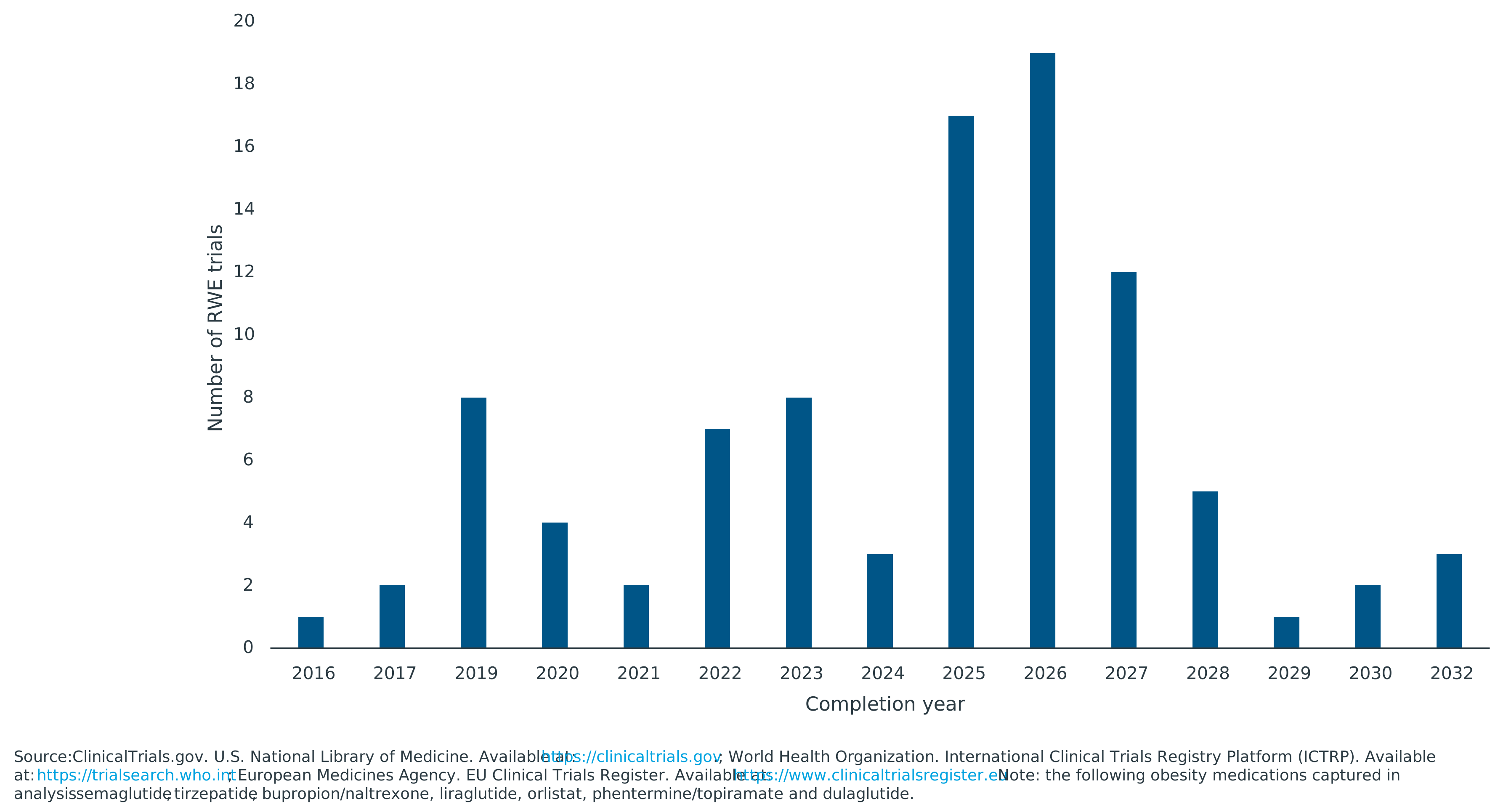
An analysis of interventional real-world obesity studies focusing on semaglutide, tirzepatide, bupropion/naltrexone, liraglutide, orlistat, phentermine/topiramate and dulaglutide shows that the number of real-world trials has increased steadily over time. Based on registered study completion dates, the largest number of current, ongoing studies are due to complete in 2026, representing the highest concentration of real-world obesity trials within the past decade.
Figure 2: Key real-world trials shaping the obesity landscape
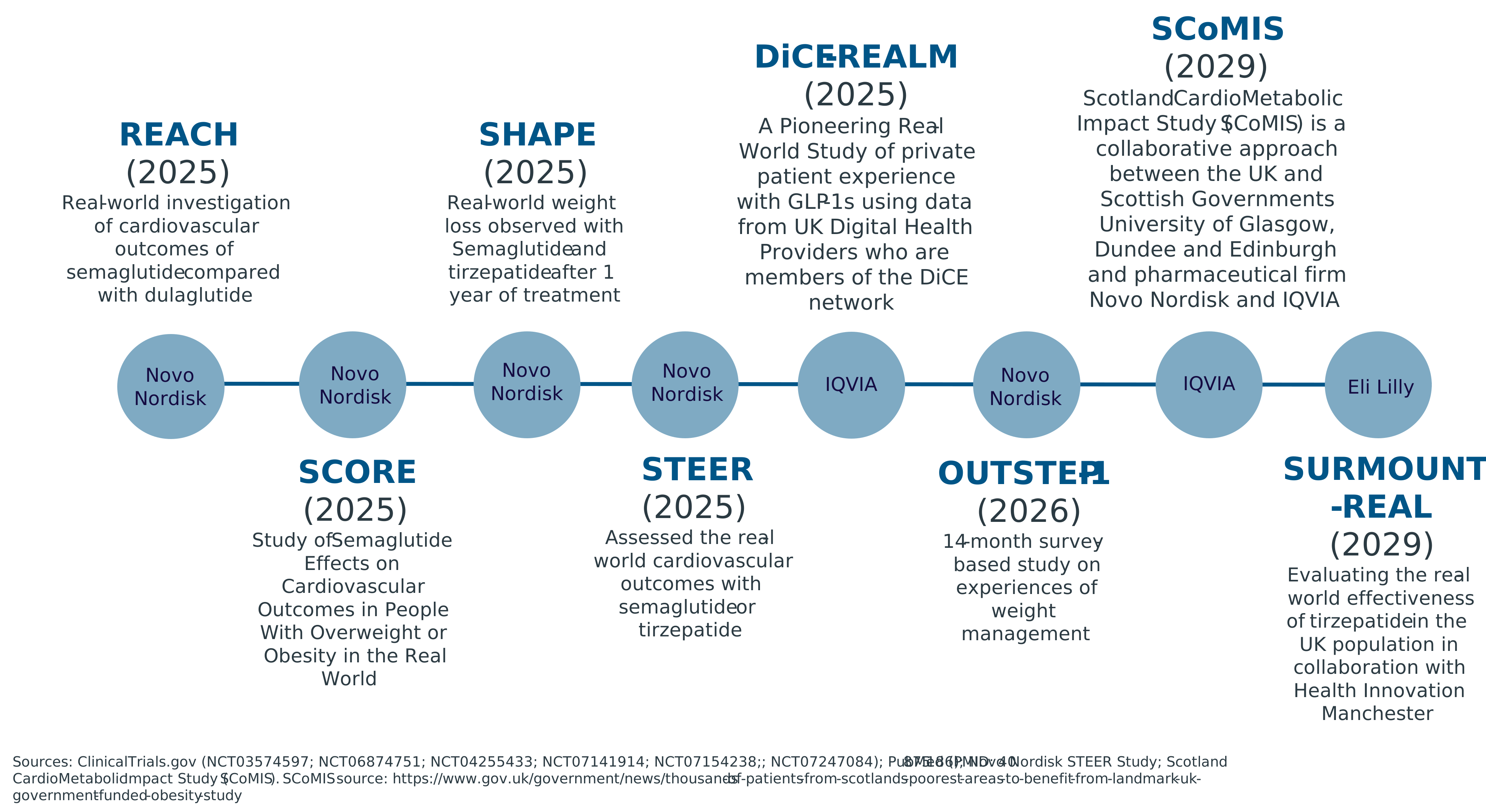
A number of large, pivotal real-world studies are now underway, or approaching readout, contributing to a more robust and practice-relevant obesity evidence base. These important real-world studies are pushing the boundaries of existing evidence generation to seek a richer, more representative understanding of the entirety of the obese population. The burden of disease is significant in the most deprived segments of many countries, and with restricted access to reimbursed treatment only driving a growing, private, out-of-pocket, market, there is risk of widening the current health inequalities12. Understanding both the co-existing, public and private, markets for these medications, as well as how this relates to socio-economic status, is essential to truly capturing the real-world obese population. Researchers are therefore seeking novel sources of data to provide these insights, often through public-private partnerships and multi-stakeholder engagement with clinical, government, academic and digital health.
Two such studies both in the United Kingdom, DiCE-REALM and SCoMIS, illustrate how this new generation of real-world research is designed to address distinct evidence gaps across different obesity care settings12.
DiCE-REALM
IQVIA is partnering with the United Kingdom’s Digital Clinical Excellence (DiCE) Network 11 to run a real-world study - DiCE-REALM (Real-world Evidence for Advancing Lifestyle and Medication-based Weight Management through digital providers), capturing data from 9 digital providers on the obese population privately accessing obesity medications through weight management programmes. The study is a first of its kind and will be transformative in enriching our understanding of a previously untapped market - those who are paying for these medications out-of-pocket - from the perspective of real-world insights and outcomes. As referenced, we know these medications work, but current restrictions mean NHS-funded treatment is often limited to the most severe, at-risk populations; this important study aims to contribute to the portfolio of evidence that will emphasise the need for wider access to improve preventative health strategies by demonstrating positive clinical outcomes in patients who aren’t yet considered eligible for these medications under existing controls.
SCoMIS
The Scotland Cardiometabolic Impact Study (SCoMIS) is a landmark initiative funded by the UK Government led by the NHS Scotland Chief Scientific Office and planned and delivered by a consortium of clinical leaders from the University of Glasgow, University of Dundee, University of Edinburgh and research and therapeutic experts from IQVIA, and Novo Nordisk designed to address the disproportionate burden of obesity in Scotland’s most deprived communities, where prevalence and downstream cardiometabolic risk are highest12. Central to SCoMIS is the recognition that generating meaningful evidence in these populations requires more than traditional clinical data alone. The study will combine NHS primary care records, community pharmacy data, and patient-reported information, supported by a digital “wraparound” to capture outcomes such as quality of life, healthcare utilisation, and broader societal impact. The study aims, with the help of these digital solutions, to support development of sustainable care delivery models in primary care for medicated weight management - with close collaboration between GPs and community pharmacies. By weaving together this data, SCoMIS aims to build a complete and representative picture of obesity and its consequences in deprived populations. The study will be pivotal in contributing evidence to NHS commissioning to support public health strategies for long-term health outcomes and reduced inequalities.
Final thoughts
Real-world data is essential to understanding true patient journeys, treatment benefits, and the evolving dynamics of obesity and obesity medicines beyond the confines of clinical trials. With the growth of the out-of-pocket market, driven by restrictive reimbursement driving self-directed treatment, new switching behaviours and competitive pressures are emerging, with important implications for evidence planning, pricing, and launch strategy - insights that can only be captured through understanding the entirety of the market and the full wealth of real-world data sources on offer.
At the same time, governments and payers increasingly require real-world evidence to inform strategies that move beyond the treatment of severe obesity alone, toward prevention and longer-term public health planning. Capturing outcomes associated with earlier intervention and broader patient populations is therefore critical, not only to demonstrate the clinical value of these medications, but also to quantify wider economic and social impact, as demonstrated with evidence from novel and pivotal real-world studies such as IQVIA’s DiCE-REALM and SCoMIS.
Looking ahead, it will be important to see the body of real-world evidence continue to expand to capture the potential of these medications on the entire population of people living with obesity. Replicating these landmark studies in other geographies, including lower- and middle-income countries, alongside long-term effectiveness and healthcare resource utilisation studies, will help to further inform national health and reimbursement strategies. Without additional real-world research to capture the long-term health impacts of these medications on the quality and sustainability of weight loss, and improvement, or prevention, of comorbidities, we will be unable to truly capture the full public health and economic benefits these medications can have in managing the disease. Addressing these evidence gaps as they emerge will be critical to building a real-world evidence base that fully reflects the complexity of obesity and supports informed decision‑making for the long‑term role of obesity medicines in weight management.
References
1. Global, regional, and national prevalence of adult overweight and obesity, 1990–2021, with forecasts to 2050: a forecasting study for the Global Burden of Disease Study 2021 Ng, Marie et al. The Lancet, Volume 405, Issue 10481, 813 – 838 https://www.thelancet.com/journals/lancet/article/PIIS0140-6736(25)00355-1/fulltext
2. Controlling the global obesity epidemic. 2026. World Health Organization. https://www.who.int/activities/controlling-the-global-obesity-epidemic
3. Iqbal J, Wu HX, Hu N, et al. Effect of GLP-1 receptor agonists on body weight in adults with obesity without diabetes mellitus: a systematic review and meta-analysis. Obes Rev. 2022;23(6):e13435.
4. Qin W, Yang J, Deng C, et al. Efficacy and safety of semaglutide 2.4 mg for weight loss in overweight or obese adults without diabetes: an updated systematic review and meta-analysis including the 2-year STEP 5 trial. Diabetes Obes Metab. 2024;26(3):911–23.
5. When the dust settles: The future shape of the obesity market; IQVIA blog, May 2024: https://www.iqvia.com/locations/emea/blogs/2024/10/when-the-dust-settles
6. Obesity trials on trial: How major late-phase clinical trials for anti-obesity medications reflect true obese populations- and what can be done when they don’t. IQVIA blog, March 2025: https://www.iqvia.com/locations/emea/blogs/2025/03/obesity-trials-on-trial
7. Interim commissioning guidance. NHS England. 2025. https://www.england.nhs.uk/wp-content/uploads/2025/03/PRN01879-interim-commissioning-guidance-implementation-of-the-nice-technology-appraisal-ta1026-and-the-NICE-fu.pdf
8. The Potential for the Private Prescription Market in Europe. IQVIA White Paper, October 2025: https://www.iqvia.com/-/media/iqvia/pdfs/emea/library/whitepaper/iqvia-2025_the-potential-for-the-private-prescription-market-in-europe.pdf
9. IQVIA Supply Chain Manager. 2025.
10. Thomsemn et al. Real-world evidence on the utilization, clinical and comparative effectiveness, and adverse effects of newer GLP-1RA-based weight-loss therapies. Diabetes, Obesity and Metabolism, 27(S2), pp. 66–88. https://dom-pubs.onlinelibrary.wiley.com/doi/full/10.1111/dom.16364
11. Digital Clinical Excellence (DiCE) Network: https://digitalclinicalexcellence.com/the-dice-network
12. Thousands of patients from Scotland’s poorest areas to benefit from landmark UK government-funded obesity study. Health and social care. 2025. https://www.gov.uk/government/news/thousands-of-patients-from-scotlands-poorest-areas-to-benefit-from-landmark-uk-government-funded-obesity-study
13. Wilding et al., Once-Weekly Semaglutide in Adults with Overweight or Obesity New England Journal of Medicine, 384(11), pp. 989–1002 https://www.nejm.org/doi/full/10.1056/NEJMoa2032183