






.svg)











Stay ahead with the EMEA Thought Leadership insights: your source for industry-leading expertise and analysis
Blog
Nine for 2026: Part 3
Nine issues that are new or trend-breaking in 2026 for global Life Sciences and healthcare (Part 3)
Jan 29, 2026
As we enter 2026, the global healthcare and life sciences sectors are set for another year of profound change. This blog is the third part in our “Nine for 2026” series, which explores IQVIA’s perspectives on the most significant trend-shaping issues impacting prescription medicine markets and global healthcare in 2026 and beyond. Our previous blogs examined macro and policy issues, followed by innovative and therapeutic trends redefining the healthcare landscape.
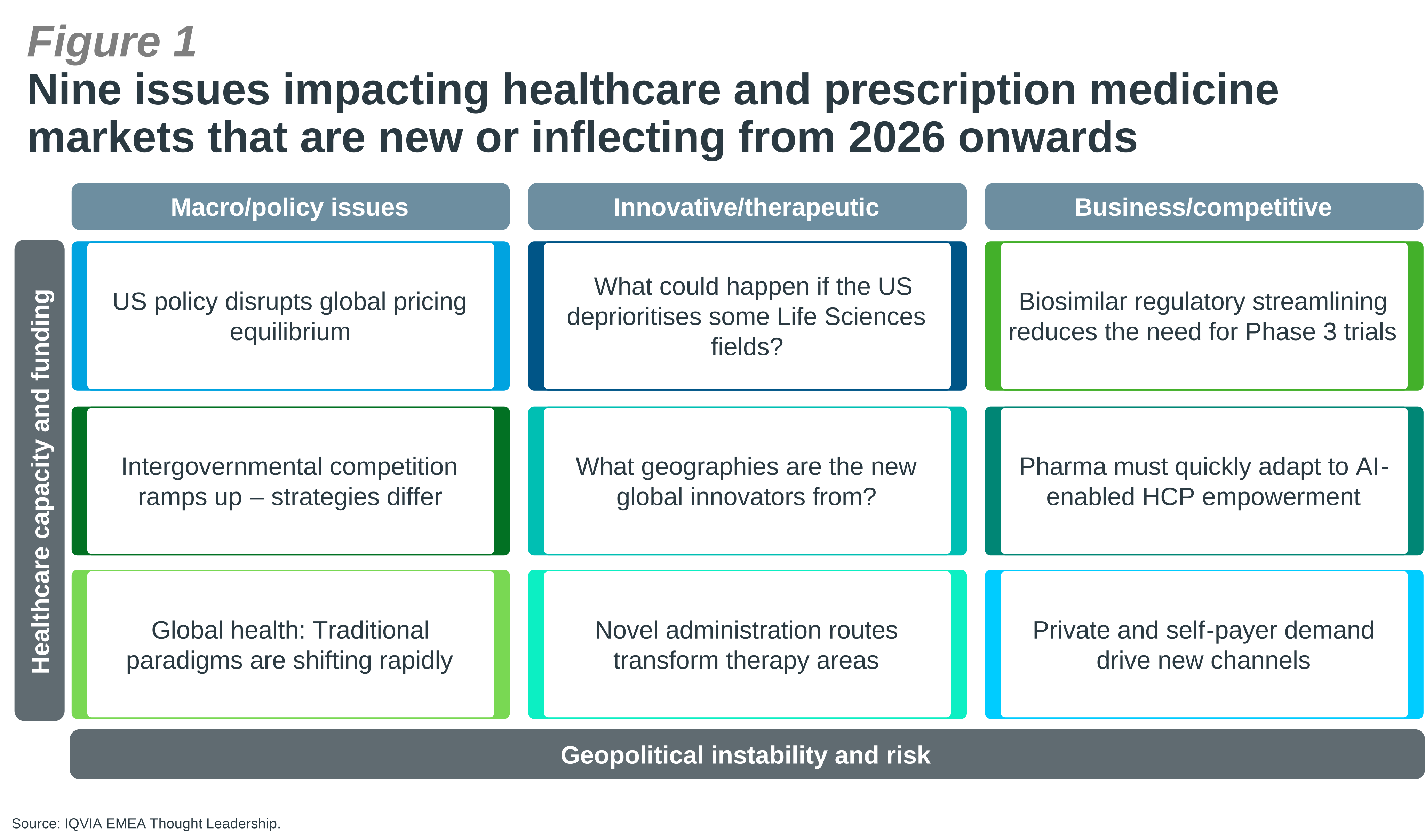
Now, in Part 3, we turn to business and competitive trends - issues that will reshape market strategies, commercial models, and competitive positioning in the year ahead (Figure 1). Against a backdrop of persistent challenges such as capacity constraints, funding pressures, geopolitical instability, and risk, these trends highlight how companies must adapt to a consumer-driven market, recalibrate go-to-market strategies, and respond to new competitive realities.
Biosimilar regulatory streamlining reduces the need for Phase 3 trials
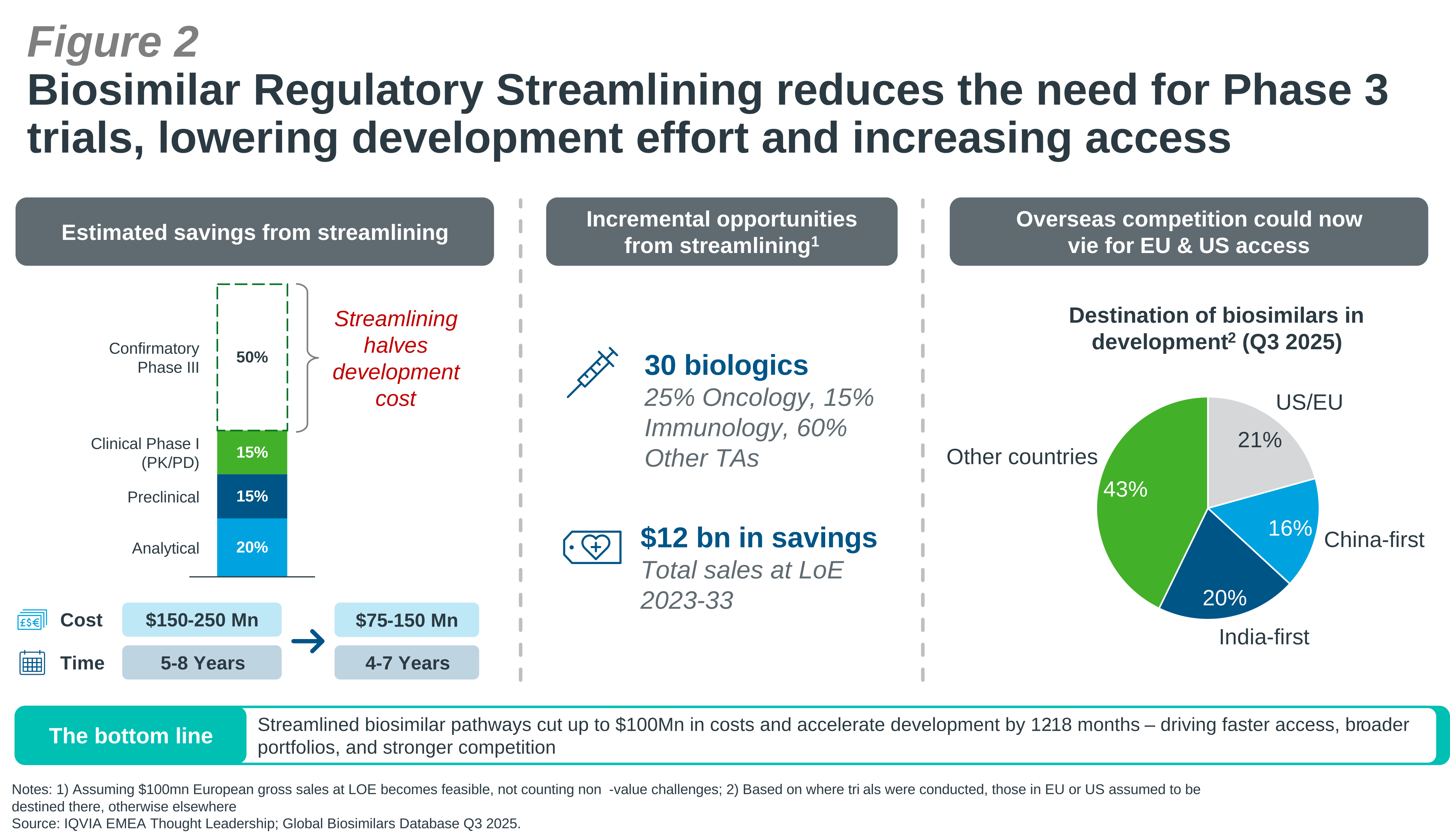
Global regulators are rewriting the rules for biosimilars, and the timing couldn’t be more critical (Figure 2). As the industry braces for a wave of blockbuster biologics losing exclusivity (especially in oncology and immunology), the EMA and FDA are hot on the heels of MHRA in rolling out streamlined approval pathways. The requirement for confirmatory phase 3 trials will be removed, halving development costs in a shift that could save up to $100 million and shave more than a year off the journey to market.
Why does this matter?
Healthcare systems are feeling the strain of aging populations, chronic disease, and the price of innovation has stretched budgets significantly. Biosimilars, offering comparable efficacy at a fraction of the cost, have become a lifeline but the revenue from smaller markets, such as rare diseases where over 90% were predicted not to have biosimilar competition, have not provided sufficient return to justify the high development costs.1,2 A large part of this cost, however, is now being removed and for pharma, the implications are profound. Lower barriers will attract new entrants and intensify competition. Smaller players, once deterred by high development costs, now see a viable route to market. In response to these changes, expect to see originators doubling down on innovation, launching next-generation therapies earlier, and investing in strategies such as patient engagement platforms to maintain loyalty.
Pharma must quickly adapt to AI-enabled HCP empowerment
Healthcare professionals are increasingly turning to generative AI as a source of scientific information. OpenEvidence (an AI powered medical search engine and clinical chatbot for U.S. physicians) has had striking adoption in the last year, growing from fielding 2.6 million monthly queries to nearly 18 million in December 2025, according to the latest numbers quoted at the JPM Healthcare Conference. Early 2026 has also already brought new patient focused innovations, including the launch of OpenAI’s ChatGPT Health, although there are serious concerns on the potential risks.
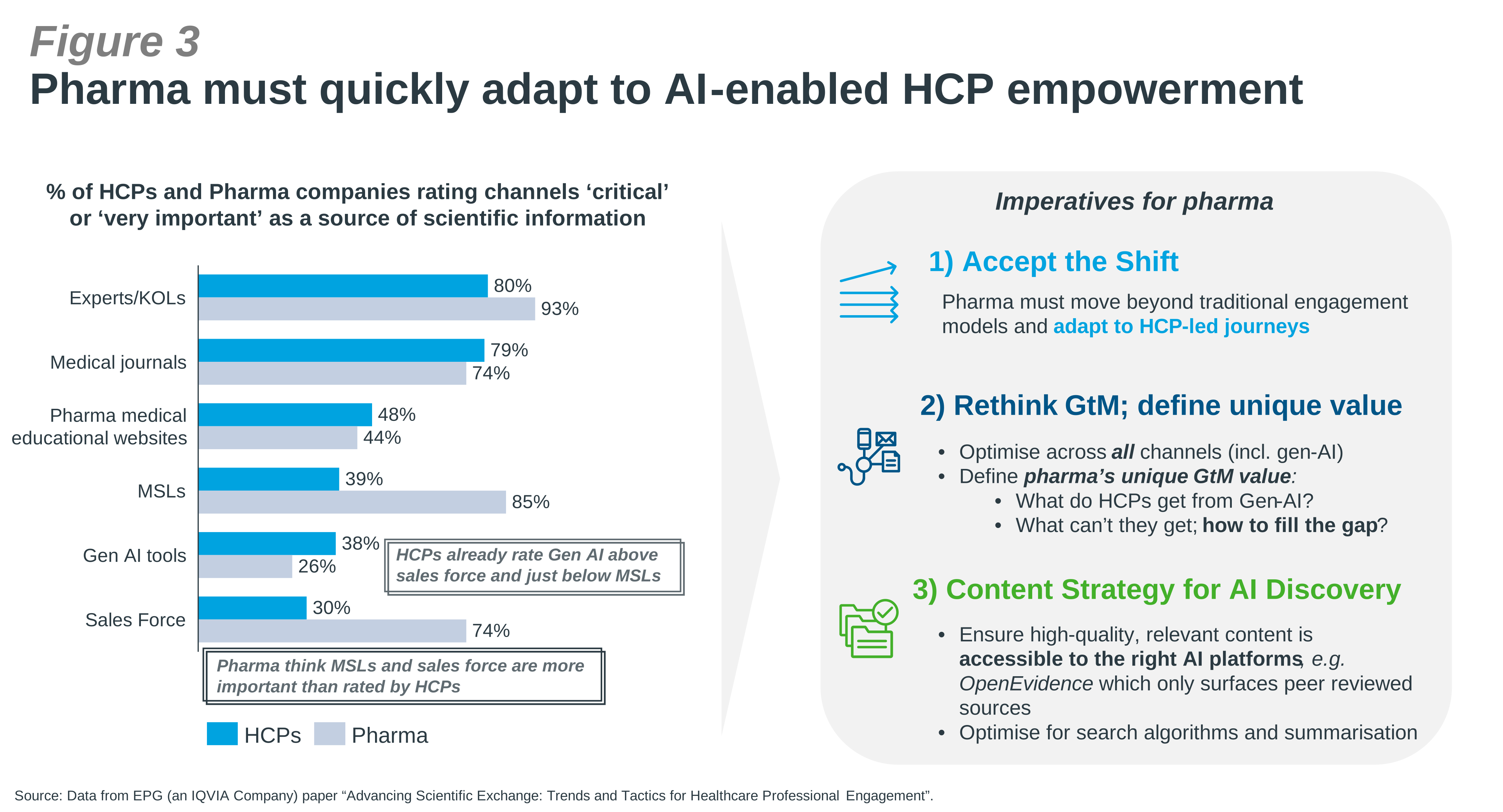
According to a recent survey by EPG (an IQVIA company), 38% of HCPs rate generative AI tools as ‘critical’ or ‘very important’ sources of scientific information, placing them above sales force representatives (30%) and just below medical science liaisons (MSLs) at 39% (Figure 3)3. This shift underscores a growing reliance on AI-driven channels to pull information. In contrast, pharma companies continue to prioritise traditional engagement models and overestimate the importance of sales reps and MSLs. The stark misalignment shown in figure 3 signals an urgent need for pharma to recalibrate engagement strategies, adapt to AI-enabled HCP empowerment and embrace three key imperatives:
- Accept the shift and move beyond traditional engagement models.
- Rethink go-to-market strategies; understand how HCPs are using AI tools, what information they are getting and importantly what information they are not getting, in order to identify gaps and define pharma’s unique value.
- Develop a content strategy for AI discovery, ensuring high-quality, peer-reviewed content is accessible to AI platforms like OpenEvidence, while optimizing for search algorithms and summarisation.
Private and self-payer demand drives new channels
Private funding of medicines is no longer marginal, it is accelerating rapidly, driven by high unmet need and the emergence of patient-consumer dynamics. Obesity treatments are creating the blueprint for this market, supported by self-administration options and simpler logistics, with pricing within reach for increasingly large consumer segments. Healthcare systems’ reluctance to pay and slow reimbursement processes are reinforcing this trend, creating fertile ground for self-pay markets. This accelerating shift towards private and self-payer channels are explored further in our recent white paper.4
Models for self-payer markets are also diversifying. Direct-to-consumer (DTC) platforms are gaining traction, particularly in the US, while buyers’ clubs - once associated with the early HIV treatment era - are re-emerging to source affordable alternatives. Full-service wraparound e-health platforms and online pharmacies are expanding rapidly, offering convenience and transparency. Wider healthcare trends, such as US MFN pricing and the rise of new therapies post-LoE and novel MoAs, could further favour self-payers, while healthcare systems remain slow to adapt.
For pharma, the implications are profound. Companies must investigate their portfolios for areas where these characteristics exist or can be created, recalibrate go-to-market and patient support strategies to treat patients as decision-makers, and engage in risk management as patients increasingly shape their own care pathways. In this consumerised healthcare environment, success will depend on visibility in digital channels, clarity of pricing, and seamless experiences from prescription to fulfilment. Those that fail to adapt risk being displaced by agile, tech-driven entrants offering faster, cheaper, and more user-friendly solutions.
Three key imperatives for 2026: new challenges drive new capabilities
In many ways, global pharma enters 2026 with far greater confidence and optimism than a year ago. The M&A market has resurged, with $133Bn of deals announced in 2025, and more to come in 2026.5 Many innovative pharmaceutical companies have now agreed deals with the US administration which are largely confidential but with the promise of protection from tariffs and some other policies. Eli Lilly became the first healthcare company with a $1Trn valuation in 2025, and the XBi, an indicator of US Biotech sentiment, grew by 40% in the last half of 2025.
However, 2026 promises to be a year where the very profound changes to the global pharmaceutical, healthcare and global health environments set in motion in 2025 continue, and solidify into clearer direction for the medium term. For global pharmaceutical and life sciences companies, strategy, agility and resilience will all be key focus areas to thrive.
- Global Reset: 2026 marks a turning point for pharma as the global map is redrawn. China’s rise as an R&D powerhouse and shifting US policies are fragmenting the landscape, while Europe’s influence is challenged. Policy is now front and centre—companies must sharpen their foresight and actively shape outcomes in emerging geographies.
- Future-Proof Go-to-Market: The rules of engagement are changing fast. Patients are stepping up as decision-makers in self-pay markets, and healthcare professionals are increasingly guided by AI. Success will depend on building consumer-focused capabilities—insight, engagement, and agility—across digital channels and therapy areas.
- Focus on Efficiency: Efficiency is the new competitive edge. As healthcare capacity gaps widen and patent expiries drive a wave of launches, enterprise-wide AI adoption will separate leaders from laggards. Those who embed AI into core processes will strip out inefficiencies and accelerate time to market.
Closing thoughts
As we wrap up the “Nine for 2026” series, it’s clear that these business and competitive forces will be instrumental in shaping the future of global life sciences and healthcare. Streamlined biosimilar regulations, AI-driven HCP empowerment, and the surge in private and self-pay demand are already transforming commercial strategies and competitive dynamics. Companies that proactively embrace regulatory change, harness AI, and engage emerging consumer channels will be best positioned to lead in a rapidly evolving market. This final blog builds on our earlier explorations of macro and policy issues, as well as innovative and therapeutic trends. Together, these perspectives offer a comprehensive view of the challenges and opportunities ahead in 2026 and beyond. For a deeper dive into these trend-breaking issues, watch our Nine for 2026 webinar on demand here.
Read Nine for 2026: Part 1 here and Nine for 2026: Part 2 here for the full outlook.
1 Assessing the Biosimilar Void; IQVIA Institute white paper, October 2023: https://www.iqvia.com/insights/the-iqvia-institute/reports-and-publications/reports/assessing-the-biosimilar-void
2 The Prospects for Biosimilars of Orphan Drugs in Europe; IQVIA Institute white paper, July 2020: https://www.iqvia.com/insights/the-iqvia-institute/reports-and-publications/reports/the-prospects-for-biosimilars-of-orphan-drugs-in-europe
3 Advancing Scientific Exchange: Trends and Tactics for Healthcare Professional Engagement; EPG report, 2025: https://secure.constellation.iqvia.com/2025HCPEngagementReport
4 The Potential for the Private Prescription Market in Europe; IQVIA white paper, October 2025: https://www.iqvia.com/locations/emea/library/white-papers/the-potential-for-the-private-prescription-market-in-europe
5 Biopharma M&A: Outlook for 2026; IQVIA blog, January 2026: https://www.iqvia.com/pt-pt/locations/emea/blogs/2026/01/biopharma-m-and-a-outlook-for-2026