




Generics Manufacturers
Generics is about competition












Biopharmaceutical innovation requires substantial investment years before a medicine earns revenue, and the economics of that investment have become more challenging.
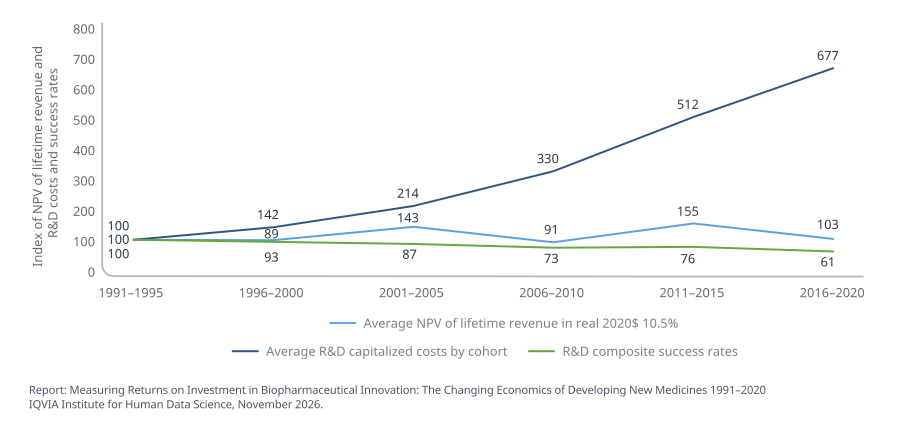
This report assesses global lifetime revenues, operating costs, taxes and capitalized R&D costs for 825 novel medicines launched in the United States between 1991 and 2020. It finds that commercial outcomes are highly uneven and increasingly heterogeneous and concentrated. At the same time, R&D costs have risen nearly ten-fold over thirty years and the percentage of drugs with a positive return has dropped to an all-time low.
Revenue has extreme heterogeneity and uncertainty: Across the three decades studied, 44% of medicines generated less than $1 billion in lifetime net present value revenue, while about 10% generated more than $10 billion and accounted for 56% of total revenue.
The cost of developing a new medicine has risen sharply. Base-case capitalized R&D cost increased from approximately $366 million for medicines launched in 1991 to more than $3.2 billion in 2020. These estimates are based on a novel combination of multiple peer-reviewed studies and represent the first time-series estimate of R&D costs, where previous academic estimates all refer to eras or decades.
Positive returns have fallen to 1 in 10 in the latest periods. Across all launches studied, only 28% are estimated to generate a positive lifetime economic return. The share fell from approximately half of medicines launched in the early 1990s to fewer than one in ten among medicines launched from 2016 to 2020.
An estimated 1% of drugs which enter human trials make a positive economic return. With fewer than 10% of compounds entering human trials reaching the market, and only about 10% of recent launches producing a positive return, only about 1% of compounds entering human trials ultimately generate a positive financial return.
These trends have important implications for policies affecting development costs, competition, commercial lifecycles and incentives for future research.
Exhibit 11: Share of medicines and lifetime revenue by revenue band, showing the concentration of value among a small number of medicines.
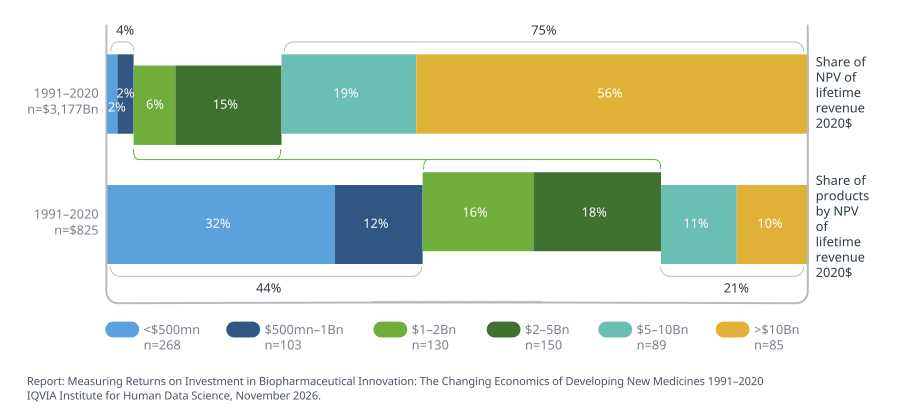
Exhibit 7: Capitalized R&D cost by launch year, showing the increase from $366 million in 1991 to more than $3.2 billion in 2020.
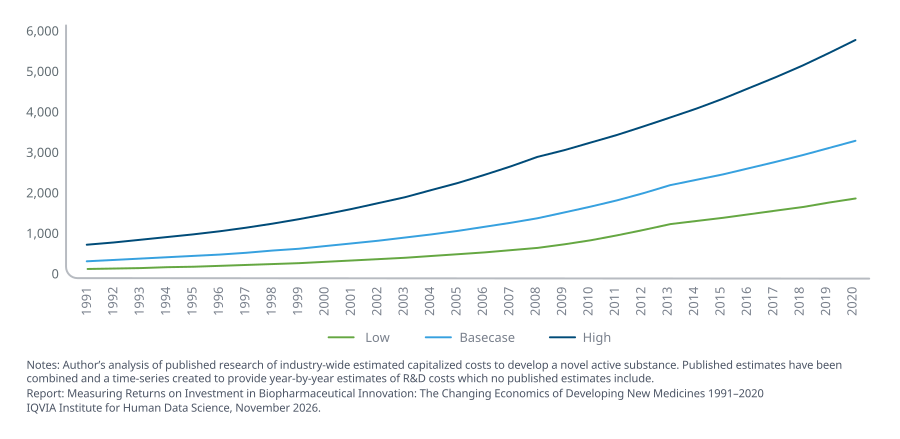
Exhibit 22: Lifetime returns by launch cohort and decile, showing the decline from five positive-return deciles in 1991-1995 to only the top decile in 2016-2020.
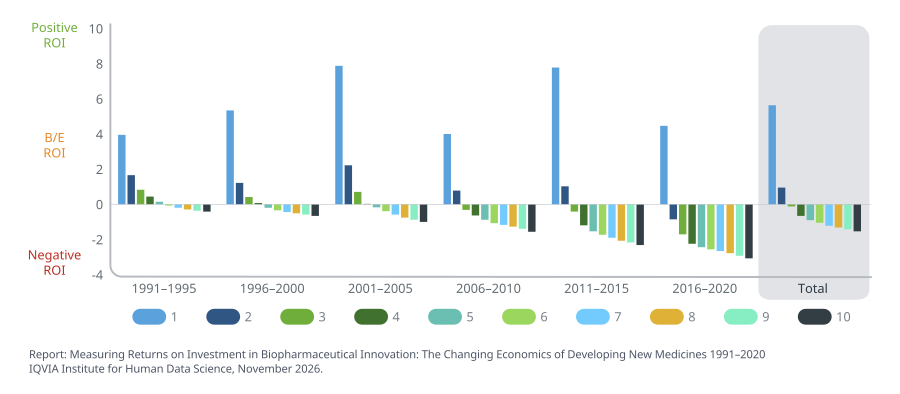
Exhibit 25: Index of Average net present value of lifetime revenue, costs and R&D success rates by launch cohort 1991-2020
Related solutions
Generics is about competition
Solutions for you to drive healthcare forward™