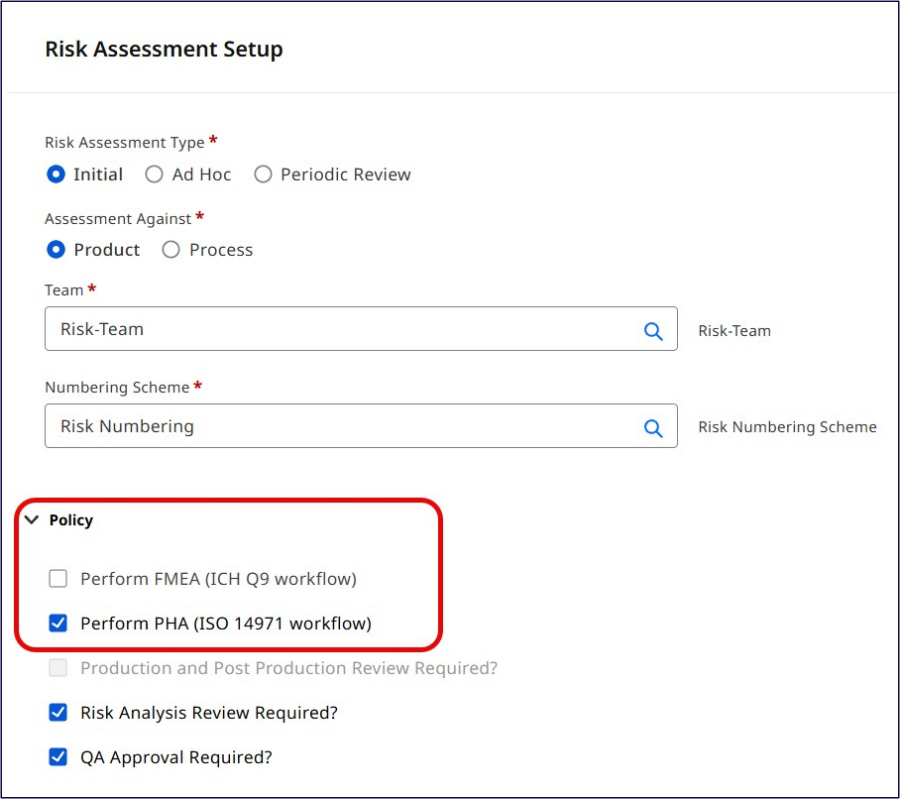
Risk assessments can follow different paths depending on the assessment type and methodology. Product- and process-based assessments have different requirements, and the selected Failure Mode Effects Analysis (FMEA) or Preliminary Hazard Analysis (PHA) methodology shapes how the assessment is carried out.
SmartSolve Risk Management introduces a guided, methodology-driven workflow that aligns activities, documentation, decisions, and reporting with the assessment type and selected methodology. This gives teams a clearer path through the risk assessment while maintaining connections to product risk files, risk registers, and reporting.
The Challenges with Traditional Risk Assessment Workflows
For many organizations, the challenge of risk management is not in performing the assessment itself, but in ensuring that every assessment follows both a consistent and distinguishable process. When users must interpret which steps, documentation, and decisions apply to a particular risk assessment, variability naturally increases. Important information can become fragmented, reviews can take longer, and maintaining clear traceability becomes even more difficult.
These challenges are particularly apparent when managing different assessment methodologies such as a FMEA and a PHA. Without workflow guidance and visibility into historical risk data, teams often rely on manual processes and disconnected documentation to complete their evaluations.
What's New in SmartSolve Risk Management
SmartSolve Risk Management introduces a guided, methodology-driven workflow that adapts to the assessment type and selected approach. Rather than requiring users to interpret a generic process, the system aligns activities, documentation, decisions, and reporting with product- and process-based assessments and the selected FMEA or PHA methodology. The result is a more guided and predictable assessment experience, from risk identification through evaluation, mitigation, acceptance, and reporting.
A More Guided Approach to Risk Management
Each workflow begins by establishing the assessment context and guiding users to the appropriate methodology. From there, teams can document hazards or failure modes, evaluate risks, address controls, and record residual risk decisions within a consistent framework.
As assessments progress, risk information, controls, CAPAs, and supporting rationale remain connected, providing a clearer view of how decisions were made for a product or process.
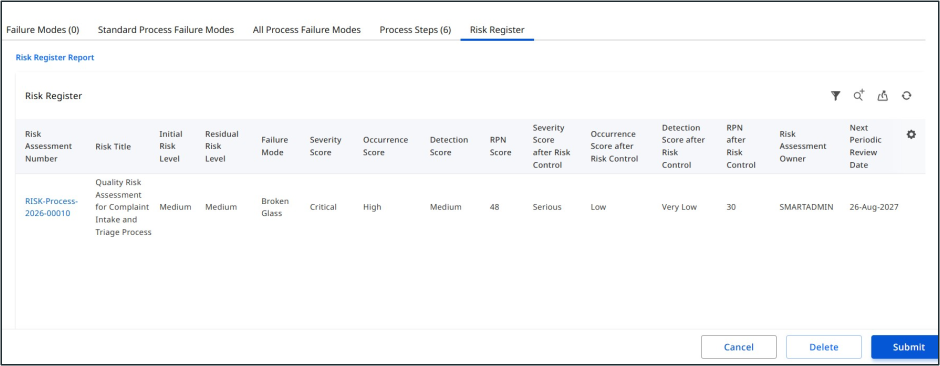
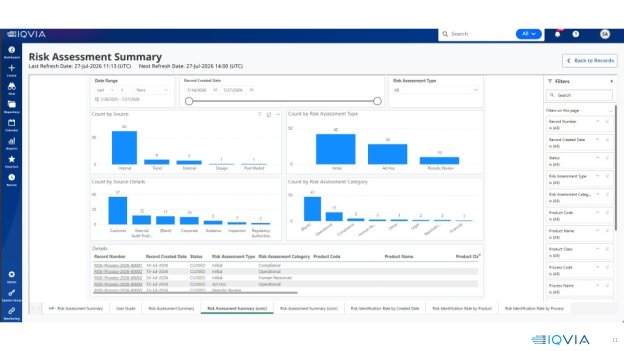
Reporting reflects the path taken through the assessment and can provide access to historical risk data through the Risk Register and Product Risk File, as well as creating stronger traceability from initiation through closure.
Why This Approach Matters
Effective risk management requires more than collecting information. Teams must be able to demonstrate how decisions were made, why controls were selected, and how residual risks were evaluated.
A methodology-driven workflow helps reduce manual interpretation while improving consistency across assessments. It also strengthens connections between risks, controls, CAPAs, products, and processes, creating a more complete and traceable record of decision-making.
Because reporting reflects the assessment context and methodology used, organizations can review assessments more efficiently, support audit readiness initiatives, and maintain greater confidence in risk-based decisions.
Who Benefits Most
This approach is particularly valuable for organizations that:
- Manage either product- or process-based risk assessments,
- Use FMEA or PHA methodologies,
- Require consistent documentation across teams, sites, or reviewers,
- Need strong traceability between risk assessments and follow-up actions,
- Prioritize audit readiness and well-documented risk decisions,
- Require structured, task-based assessments that guide users through defined activities, decisions, and documentation requirements.
Closing Thoughts
Helping teams follow the right process, apply the appropriate methodology, and clearly document how decisions are made is central to effective risk management.
By guiding users through the appropriate assessment path and connecting information throughout the evaluation process, SmartSolve Risk Management helps organizations improve consistency and maintain clear traceability from initiation through closure.
For organizations looking to improve product- and process-based assessments, SmartSolve Risk Management provides a guided, methodology-driven approach that keeps the assessment context, documentation, and decisions connected.
See how SmartSolve can simplify product- and process-based risk assessments. Download the Risk Management Fact Sheet today to learn more.