
.svg)




ChannelDynamics
Measure the performance of your sales force and marketing channels, adapt your commercial strategy and gain real world competitive insights.












Healthcare professional (HCP) engagement has become significantly more complex. The proliferation of digital channels, evolving physician expectations and increasing competition for attention have transformed how life sciences companies communicate with customers. While many organizations have adapted their engagement models, a large proportion still rely on segmentation frameworks designed for a far simpler commercial environment.
Traditional segmentation approaches based on factors such as geography, prescribing behavior or physician demographics remain valuable sources of context. However, on their own, they often fail to answer a fundamental commercial question: why do physicians who appear similar on paper respond so differently to the same engagement strategy?
To engage HCPs with greater precision and scale, life sciences organizations need a more dynamic understanding of physician behavior. Persona Intelligence addresses this challenge by moving beyond static classifications to provide a deeper, more actionable view of how HCPs engage, make decisions and adopt new therapies.
As the pharmaceutical industry continues to refine commercial strategies and optimize resource allocation, the customer landscape is constantly evolving. Innovative therapies and established brands alike are competing for limited HCP attention, each deploying a mix of engagement channels in pursuit of greater impact.
In this increasingly competitive environment, influencing treatment decisions requires approaches that are both sophisticated and scalable.
For global life sciences organizations operating across multiple countries, therapeutic areas and healthcare systems, the challenge is even greater. Success depends on understanding the needs of a highly diverse physician population while maintaining consistency across markets. Yet traditional segmentation models often lack the timeliness and behavioral depth needed to understand channel preferences, identify shifts in engagement behavior, or assess whether commercial efforts align with evolving physician expectations.
What is needed is a more nuanced and adaptive approach, one that reflects how physicians behave today, rather than how they were categorized in the past.
Persona intelligence builds on traditional segmentation by combining observed engagement behaviors with established physician attributes to create a richer, more current understanding of HCPs.
At the heart of this framework are two complementary dimensions: digital engagement behavior and innovation adoption behavior.
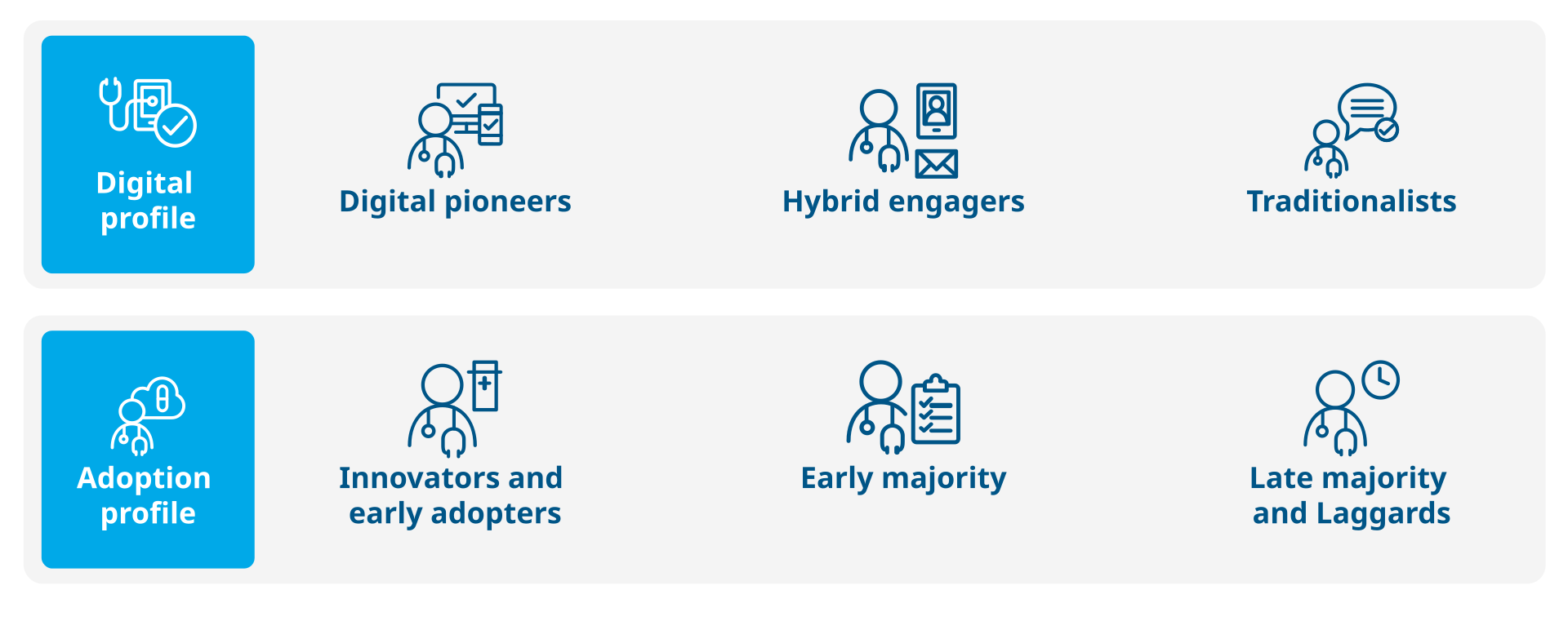
The first dimension explores how physicians prefer to interact with life sciences companies. Some actively seek digital content and virtual engagement, while others continue to place greater value on face-to-face interactions. Many operate within a hybrid model, shifting between channels depending on context, clinical need and convenience.
The second dimension examines physicians' propensity to adopt new therapies and innovations. Some are natural early adopters, embracing new evidence and treatment options quickly. Others require greater validation, clinical experience, or peer endorsement before altering prescribing habits, positioning them within later adoption groups.
Together, these dimensions provide a more complete view of physician preferences and decision-making patterns. Importantly, they demonstrate that engagement preferences and innovation adoption are related but distinct behaviors. A highly digital physician may remain cautious about prescribing a new therapy, while a physician who prefers traditional engagement channels may rapidly adopt innovations when supported by compelling evidence or trusted peer influence.
Commercial planning often relies on broad assumptions about market behavior. Certain countries are perceived as relationship-driven, others as digitally advanced and some as highly influenced by key opinion leaders. While these perceptions may contain elements of truth, they can mask significant variation within physician populations.
A persona-based approach reveals the diversity that exists within every market and specialty. Physicians working in the same country, specialty, or healthcare setting may exhibit markedly different engagement preferences and adoption profiles.
The example below highlights the differences that exist across persona groups. Not only do HCPs experience varying levels of exposure to individual engagement channels, but they also demonstrate significantly different likelihoods of conversion; whether through increased prescribing activity or sustained high prescribing following those interactions.
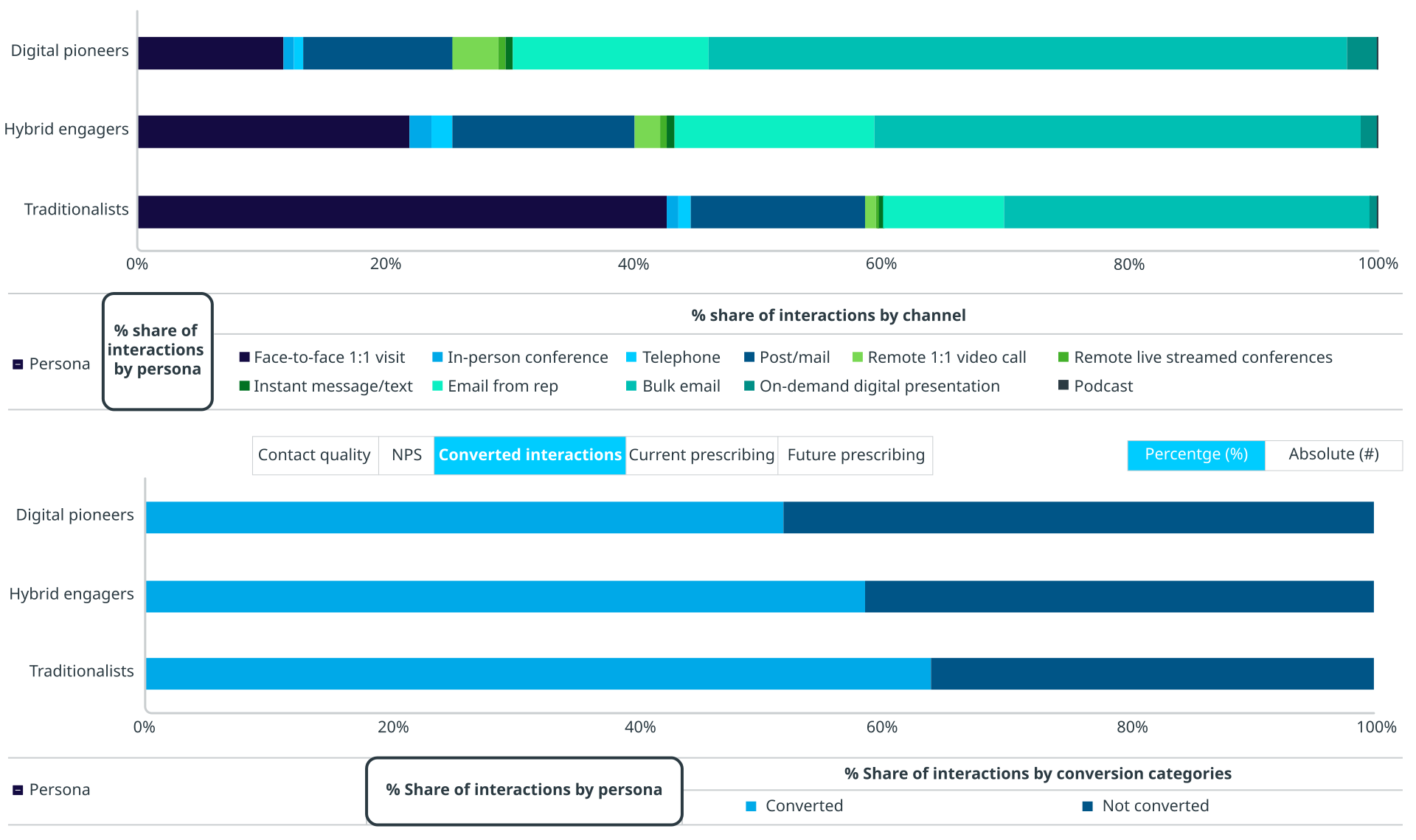
Understanding these differences enables organizations to move beyond one-size-fits-all assumptions and develop engagement strategies that more accurately reflect customer realities. As companies strive to deliver increasingly personalized customer experiences, this level of insight becomes essential for balancing local relevance with global consistency.
One of the most valuable contributions of persona intelligence is its ability to uncover the gap between what physicians say they prefer and how they actually engage.
Research consistently shows that physicians value personal interactions and often cite field representatives as a preferred source of information. However, observed engagement patterns frequently tell a more nuanced story. Channel effectiveness can vary considerably depending on timing, context, customer need and how each interaction fits within a broader engagement strategy.
For example, digital channels may be highly effective at maintaining established relationships and reinforcing key messages, even when physicians continue to express a preference for personal interactions. Similarly, channels that successfully capture attention do not always translate into therapeutic adoption or changes in clinical behavior. Analysis of the chart below shows an underuse of in-person and virtual conferences alongside an overuse of bulk emails with digital pioneers and hybrid engagers.
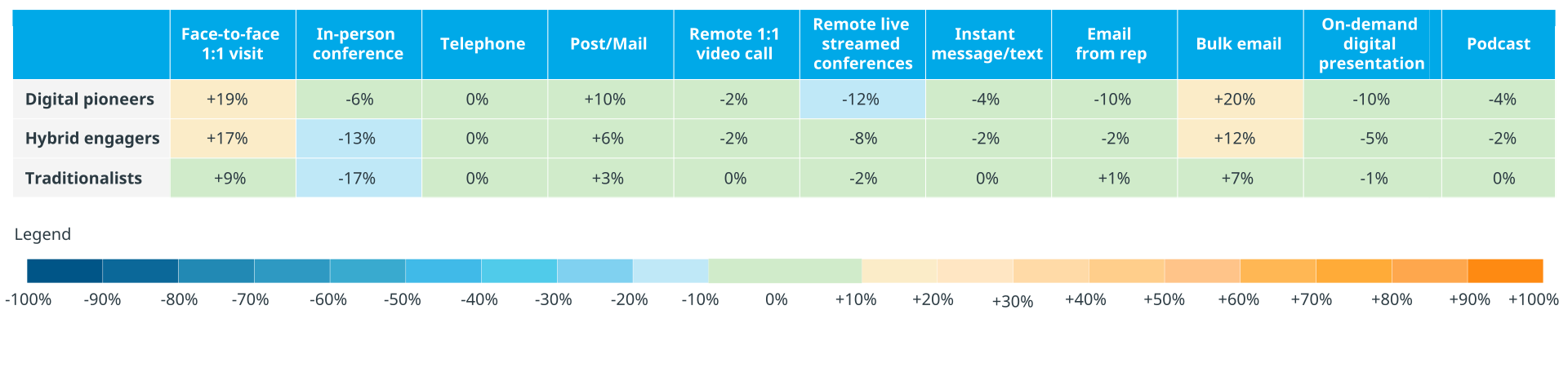
Understanding these distinctions is critical for organizations seeking to optimize a truly integrated omnichannel strategy, one that aligns engagement investments with measurable outcomes rather than assumptions alone.
The most effective commercial models are increasingly data-driven, leveraging real-world evidence and behavioral insights to continuously refine engagement strategies.
Persona-level insights help organizations enhance channel planning, customer engagement, brand launches and lifecycle management by providing a clearer understanding of how different physician groups respond to varying engagement approaches. This enables teams to identify where investments are likely to have the greatest impact while balancing customer needs with business objectives.
The value of this intelligence is amplified in global organizations. Comparable insights across countries, specialties and therapeutic areas enable teams to identify common patterns, benchmark performance and scale successful engagement strategies more effectively. The diagram below shows further persona-related variation across multiple metrics, helping with resource allocation decisions and informing the engagement approach.
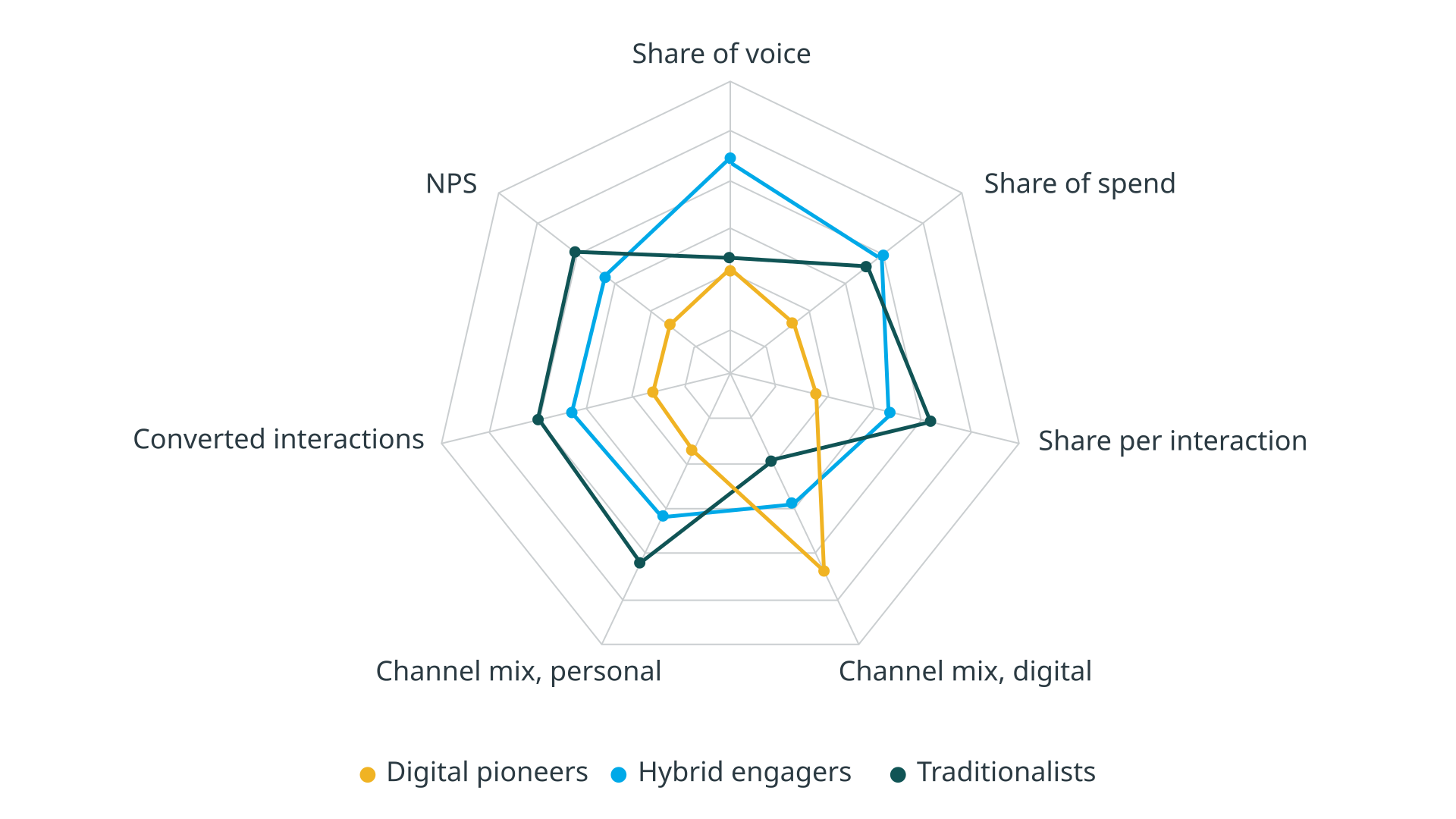
By understanding not only who their customers are, but also how they engage and adopt innovation, organizations can make more informed decisions about where to focus resources and how best to drive meaningful customer interactions.
Life sciences companies continue to pursue more evidence-based approaches to HCP engagement, recognizing that successful adoption of innovative treatments depends on a deeper understanding of physician needs and behaviours.
Achieving this requires more than demographic or prescribing data alone. It demands a multidimensional view that incorporates factors such as digital engagement preferences, prescribing behaviors and willingness to adopt new therapies.
Persona intelligence provides an important foundation for this evolution. By combining behavioral data with physician characteristics, organizations gain deeper insight into engagement trends, patterns of innovation adoption and the factors influencing treatment decisions.
No single framework can fully capture the complexity of physician behavior. However, persona-based approaches offer a powerful starting point for building more relevant, actionable and customer-centric engagement strategies.
As the industry continues to evolve, organizations that develop a deeper understanding of the diverse needs of physicians will be better positioned to deliver personalized experiences, strengthen customer relationships and generate greater value for patients, HCPs and the broader life sciences ecosystem.
Discover how IQVIA helps life sciences organizations better understand HCP engagement preferences, benchmark channel performance, and optimize commercial resource allocation across key global markets. Powered by multi-country persona intelligence, our insights reveal how engagement preferences and adoption tendencies vary across distinct HCP segments, enabling more informed, customer-centric engagement strategies at the company, therapy area, specialty, and brand levels.
With coverage across 30 countries, IQVIA helps organizations translate these insights into more effective omnichannel engagement and commercial decision-making. Contact us to learn more.
Measure the performance of your sales force and marketing channels, adapt your commercial strategy and gain real world competitive insights.