Introduction
Quality teams today are navigating increasing complexity: more data, more regulatory scrutiny, and higher expectations for speed and transparency. As organizations scale and quality processes expand across regions and functions, the ability to see what’s happening, understand trends, and act with confidence has never been more critical.
Analytics plays a central role in modern quality management. It’s no longer enough to capture quality data; teams must be able to interpret it quickly and reliably. With Quality Intelligence, SmartSolve continues to evolve its analytics experience to better support how quality teams monitor performance, identify risk, and drive continuous improvement across the enterprise.
Quality organizations have no shortage of data, yet turning that data into timely action remains a persistent challenge. The gap between insight and action is where risk often takes shape, especially as quality processes expand across products, regions, and regulatory environments. Static reports and disconnected analytics only widen that gap, slowing response and limiting visibility when it matters most.
SmartSolve Quality Intelligence takes a step toward closing that gap by bringing analytics closer to where quality decisions are made.
Overview
Embedded directly within the SmartSolve platform and powered by Microsoft Power BI, Quality Intelligence transforms quality data into meaningful, accessible insights without requiring users to leave their day to day workflows.
The solution supports an ongoing shift toward analytics that are easier to access, easier to understand, and more aligned with how quality teams actually work. At the same time, better access alone is not enough. The challenge remains knowing what requires attention and when to act.
A More Embedded Approach to Quality Analytics
As quality organizations evolve, analytics must evolve with them. In many environments, reporting still sits apart from execution. Teams step outside their workflows to review data, then return to take action. That separation introduces delay and makes it easier to miss early signals.
Quality Intelligence takes a different approach. Embedded within SmartSolve and powered by Microsoft Power BI, analytics are brought directly into the flow of quality work. Insights are available where decisions are being made, not in a separate environment that requires extra steps to navigate.
The shift is subtle but meaningful. By reducing friction and keeping context intact, teams can spend less time moving between systems and more time focusing on what the data is telling them.
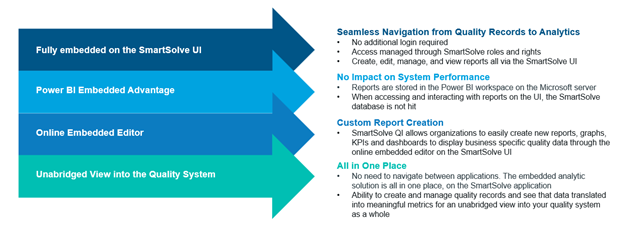
Delivering Immediate, Contextual Insight
From a user’s perspective, analytics feel more naturally connected to the quality processes they manage every day. Analytics have become more visible, more contextual, and more usable, supporting faster comprehension of trends and exceptions without overwhelming users with complexity. The result is an experience that feels more responsive to real-world quality needs, rather than a collection of static reports.
For many quality teams, the challenge is not producing reports. It is knowing what matters and when to act. Large volumes of data can make that harder, especially when key signals are buried in static or disconnected views.
Quality Intelligence addresses this by surfacing trends, exceptions, and patterns in a way that is easier to interpret in context. The goal is not to add more data, but to make the right information easier to see and understand.
Because analytics are aligned with day-to-day workflows, users can quickly assess performance, identify areas of concern, and focus their attention where it is needed most. There is no need to step outside the system or rely on separate tools. Insight becomes part of the work itself, which makes it easier to respond earlier and with greater confidence.
What This Means for Quality Teams
Quality Intelligence benefits a broad range of roles, from frontline quality practitioners to quality managers and executive leadership. For operational teams, analytics support faster identification of bottlenecks, recurring issues, or areas requiring attention. For leaders, analytics provide confidence that decisions are grounded in reliable, up to date data.
By improving visibility across quality processes, Quality Intelligence helps organizations strengthen oversight, reduce risk, and reinforce a culture of continuous improvement, without adding extra reporting burden on teams.
Quality Intelligence delivers value across roles, from frontline quality practitioners to quality managers and executive leadership.
At the operational level, recurring issues and root cause patterns are easier to spot. Teams can prioritize actions based on risk and systemic impact rather than reacting to isolated events. Trends across products, sites, or regions become clearer, making it easier to escalate and investigate earlier.
For leaders, access to current, reliable metrics brings greater confidence. Decisions are grounded in data that reflects what is happening now, not what was reported days or weeks ago. This improves oversight and supports stronger audit and inspection readiness.
Across both perspectives, the outcome is consistent. Teams spend less time searching for answers and more time acting on them. As insight becomes easier to access within existing workflows, organizations can strengthen oversight, reduce risk, and drive continuous improvement without adding extra reporting burden.
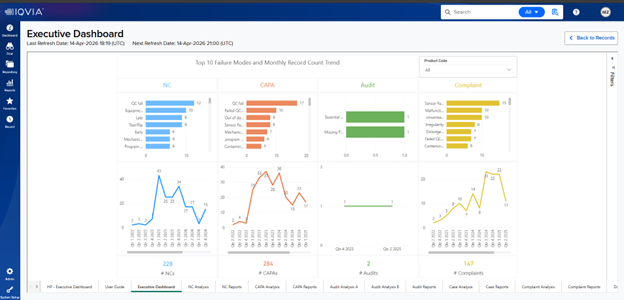
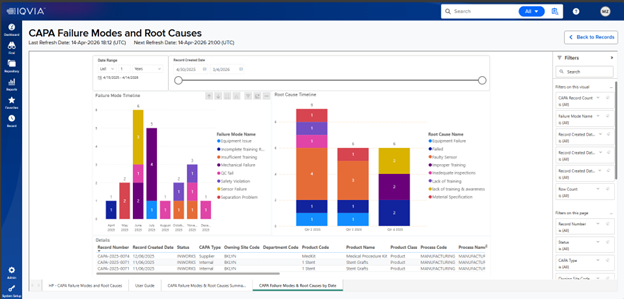
Connecting Insight to Action Across the Quality Lifecycle
Quality Intelligence works alongside core quality processes such as CAPA, complaints, audits, nonconformances, documents, training, and more, providing a unified view of quality performance across the lifecycle.
This integration ensures that insights are directly connected to action. Analytics inform decisions, and decisions flow naturally back into SmartSolve’s execution and compliance workflows, closing the loop between insight and impact.
One of the most important aspects of Quality Intelligence is how it connects analytics directly to core quality processes.
This integration provides a more unified view of quality performance across the lifecycle. For quality teams, it means insights are not disconnected from execution. Signals identified within analytics can be immediately explored and acted on within the same environment, reducing delays and minimizing the risk of misalignment between data and action.
For leaders, this level of integration provides greater confidence in the consistency and reliability of quality data. It also offers a clearer line of sight across processes, sites, and functions, making it easier to identify where attention is needed.
By bringing data, insight, and execution together, organizations can close the gap between identifying an issue and addressing it. In doing so, they improve responsiveness while reinforcing a more consistent and controlled approach to managing quality across the enterprise.
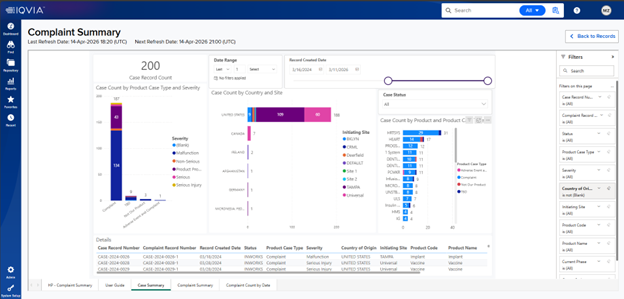
Building Toward Proactive Quality Management
As quality organizations continue to mature, analytics will play an even greater role in enabling proactive quality management, predictive insights, and smarter prioritization.
Quality Intelligence lays the groundwork for continued innovation, supporting more connected data, broader coverage across quality domains, and analytics that evolve alongside customer needs.
As expectations continue to rise, quality organizations are being asked to do more than assess past performance. The ability to anticipate risk and act earlier is becoming just as important as maintaining compliance.
This is where analytics are heading. Rather than supporting periodic review, they are becoming part of continuous decision-making. Teams engage with data as part of their daily work, using it to guide priorities and respond to emerging signals in real time.
Quality Intelligence represents an important step in this direction. As a distinct capability within the application, it expands visibility and delivers insights that support more proactive approaches to managing quality. Over time, it helps teams detect patterns earlier, focus on what matters most, and stay ahead of growing complexity.
Closing
Quality Intelligence brings analytics closer to where quality work happens, enabling teams to move from simply monitoring performance to taking informed action. By embedding insights directly within SmartSolve workflows, organizations can identify trends earlier, strengthen oversight, reduce risk, and make better decisions with confidence.
As quality management continues to evolve, the ability to connect data, insight, and execution will become increasingly critical. Quality Intelligence helps close that gap, empowering organizations to take a more proactive, data-driven approach to quality across the enterprise.
To learn more about Quality Intelligence and how SmartSolve can support your quality objectives, contact us.







.svg)