






.svg)











For years, pharmaceutical brand planning has relied on structured annual cycles, retrospective analysis, and carefully curated data. But as launch timelines compress, access pathways become more complex, and market conditions shift more quickly, that approach is becoming harder to sustain on its own. A more adaptive model is emerging — one that uses earlier signals and AI-enabled decision support to help commercial teams respond with greater speed and confidence.
Brand Agility Has Become a Commercial Imperative
Pharmaceutical brands now operate in an environment where commercial assumptions can shift much earlier and more often across the life cycle.
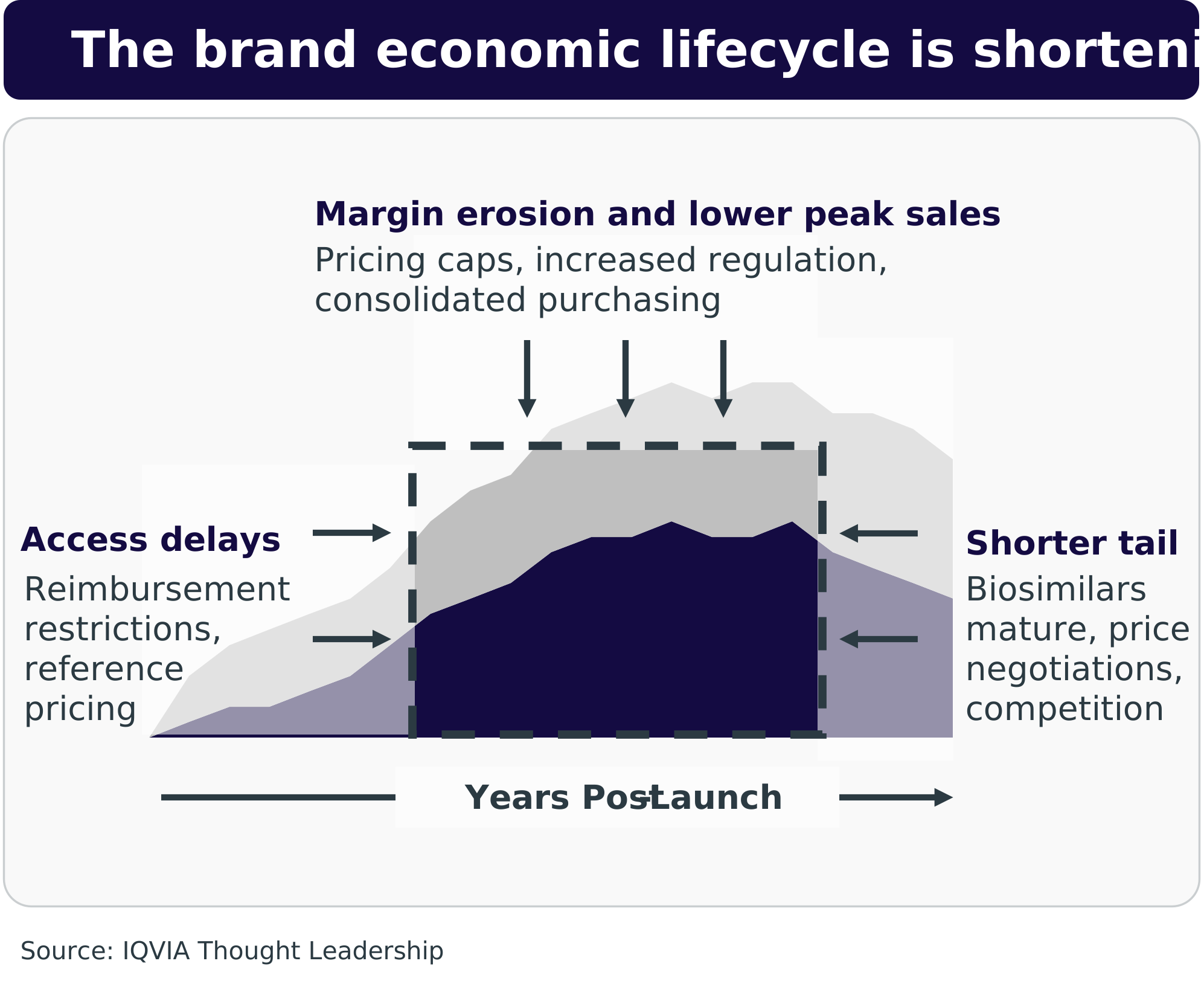
Launches are taking longer to execute because reimbursement decisions are continuously scrutinised, evidence requirements are rising, and access pathways are increasingly complex. At the same time, peak sales and lifecycle value are under pressure from competitive dynamics through the maturation of biosimilars, pricing negotiations, and policy change.
The implication is clear,if the commercial window is narrowing, then maximizing early trajectory becomes more important than ever. That can mean expanding into more markets sooner, accelerating the path to patient access, or rethinking how indications are sequenced. The strategic goal is no longer just to sustain performance over time, but to build momentum earlier because future conditions may shift faster than the annual planning cycle can absorb.
The Data Burden Is Growing Alongside the Strategic Pressure
This pressure on brand performance is compounded by a second reality: the amount of data required to understand the market has expanded dramatically. Characterizing patients, physicians, stakeholders, and channels now demands a broader and more connected view than before. Commercial teams are not simply asking who their patients are or which physicians matter most. They also need to understand prescribing context, digital engagement behaviors, reimbursement influences, and how stakeholders respond to promotional activity.
That level of complexity creates a practical challenge. Organizations may have access to more information than ever, but if the data remains fragmented, slow to interpret, or disconnected from decision-making, its value is limited. The challenge is shifting from generating and storing this large volume of information, to gaining the ability to translate that information into earlier action.
Why Leading Indicators Matter
One of the most important shifts is moving beyond simply measuring what has already happened. Traditional brand planning often depends on periodic reviews of past performance, but retrospective analysis alone does not provide enough time to react in a rapidly changing environment. Leading indicators offer something different: an earlier view of what may happen next, allowing teams to prepare for upcoming market shifts.
A recent example of the power of leading indicators is the Launch Adoption Index in the US. By analyzing a very large universe of prescribers, launches, and prescribing behavior over time, it becomes possible to identify patterns in how quickly different physicians adopt newly launched medicines. This transforms adoption from something observed only in hindsight into something that can be better anticipated and influenced throught targeted action.
Instead of treating adoption as a uniform market event, the analysis reveals distinct adoption waves. Some physicians move early because they are deeply engaged with the science, close to institutions, or already comfortable with emerging therapies. Others move later, often waiting for broader evidence, updated guidelines, or trusted external validation. Understanding those patterns creates a more useful foundation for action: not just knowing where a launch stands, but understanding which segments may need different support, confidence, or engagement at different moments.
This reflects a move away from rigid, deterministic decision models toward a more probabilistic and behavior-based approach. That shift matters because commercial reality is rarely clean or binary. Real-world decisions are shaped by patterns, signals, and likelihoods. By embracing that uncertainty rather than oversimplifying it, teams can make more nuanced and timely decisions.
Agentic AI as the Operational Layer for Faster Action
If leading indicators improve preparedness, the next question is how organizations act on those signals with enough speed to matter. This is where agentic AI becomes especially valuable. Its role is not as a standalone novelty, but as an operational layer that helps connect multiple commercial data sources and make them usable in practical, day-to-day decisions across the brand life cycle.
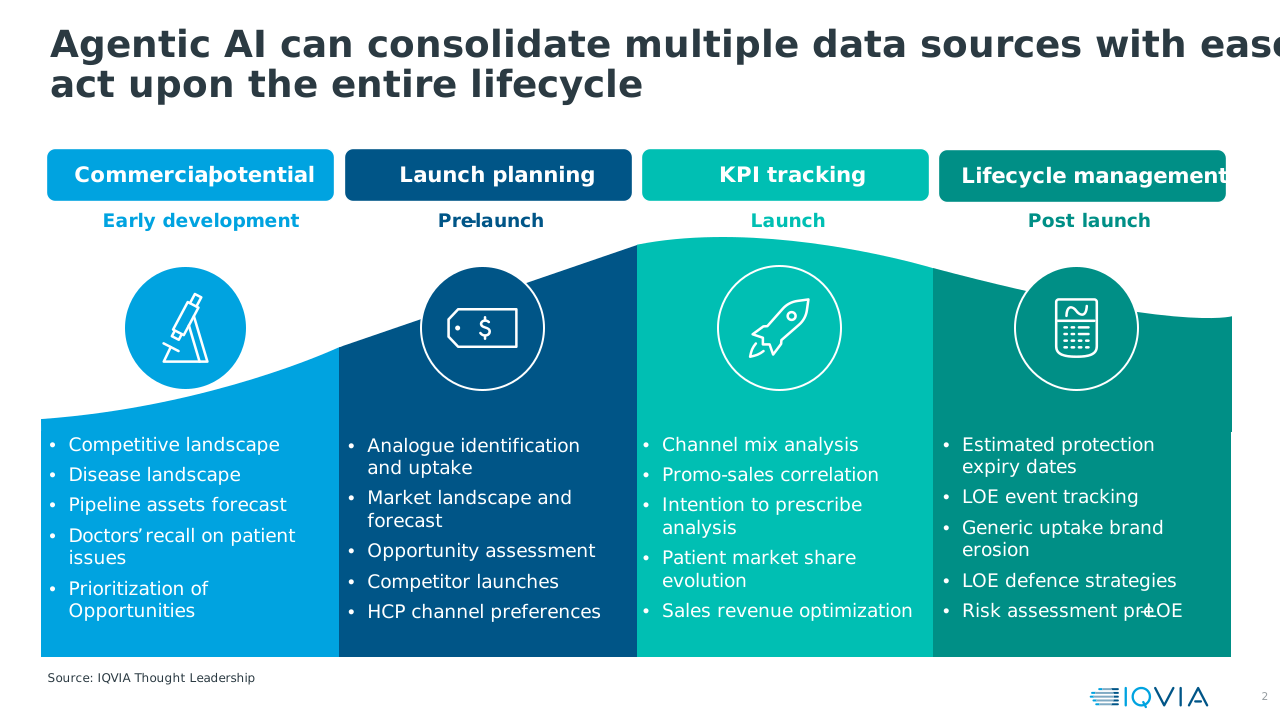
In that model, the same connected environment can support decisions from early development through launch planning, in-market execution, and post-launch sustainability. Instead of isolating data and analysis within separate teams or stages, agentic AI helps create continuity across the life cycle. That matters because the commercial questions may change from stage to stage, but the need for speed, relevance, and connected insight remains constant.
Usability is equally important. A system that depends on specialist interpretation alone will struggle to create organization-wide agility. By contrast, a natural-language interface lowers the barrier to insight, allowing more users to ask complex business questions and receive usable outputs quickly. The promise here is not just analytical sophistication, but accessibility: a simpler way for teams to move from question to answer without lengthy manual effort.
That acceleration is illustrated through practical prompt-based use cases, such as reviewing competitive landscapes, recent launches, or promotional effectiveness. In each case, the emphasis is on compressing work that might previously have required multiple people, multiple data sources, and several days into a much shorter cycle. The larger point is not simply efficiency for its own sake, but the ability to respond while the signal is still timely and strategically relevant.
From Annual Planning to Continuous Commercial Readiness
The most compelling takeaway is that agility is no longer a secondary capability. It is becoming central to commercial performance and drives differentiation from peers. Annual brand plans still matter, but they are no longer sufficient as the primary mechanism for navigating the market. Teams need a model that combines strategic direction with continuous readiness: the ability to detect change earlier, interpret it more intelligently, and act on it without delay.
That readiness rests on two linked capabilities. The first is the use of leading indicators to create foresight rather than hindsight. The second is the use of agentic AI to operationalize that foresight in ways that are scalable, accessible, and fast. Together, they form a more adaptive commercial model for a market where launch timing, access conditions, competitive pressure, and policy changes can all shift more quickly than before.
*Note: This article is adapted from a live presentation and was developed with AI-assisted support.
For a deeper dive into these topics, explore our webinar, "Elevating Commercial Agility with Agentic AI", and discover how connected insights, planning and engagement workflows can help commercial teams respond faster and make more confident decisions.