






.svg)











Explore how AI solutions can benefit your organization
Blog
Three Ways Agentic AI Sustains Alignment From Insight To Execution
May 06, 2026
Work in life sciences rarely moves in a straight line. Decisions evolve across R&D, medical, regulatory and commercial teams—often over long timelines and with shifting evidence.
That challenge is intensifying. IQVIA Institute’ report, Global Trends in R&D 2025, shows that while biopharma innovation has regained momentum, development programs remain long and complex, with inter‑trial delays, rising operational strain and increasing coordination demands across functions. In this environment, even well‑founded decisions can lose momentum as they pass through handoffs, approvals and competing priorities.
Unlike traditional automation, which follows predefined steps, Agentic AI helps teams stay coordinated by maintaining context, surfacing what’s changing and embedding governance directly (i.e. traceable decision paths and clear human accountability) into day‑to-day work. Together, these dynamics create three areas where agentic AI delivers meaningful, measurable value.
Agentic AI value #1: Reshaping operating models
Scaling efficiencies with AI agents remains challenging, not because value is limited, but because execution breaks down across functions. McKinsey research shows that 75–85% of pharma workflows and 70–80% of medtech workflows include tasks that can be automated or augmented by AI agents, yet most organizations struggle to move beyond isolated, function specific use cases. The constraint is no longer technical feasibility. It is sustaining alignment as decisions move across teams and functions1.
Cross functional execution often breaks down exactly at this point. Not because teams lack insight, but because intent, assumptions and dependencies drift as work moves from function to function. As development programs scale in complexity, that drift becomes harder to detect—and more costly to correct.
Agentic AI supports a more resilient operating model by restructuring how work is coordinated. Instead of relying on static deliverables, agentic systems help make decisions, constraints and rationale visible throughout execution. Assumptions are not simply documented; they are continuously tracked, challenged and updated as conditions change.
Recent IQVIA research describes this shift from task‑level automation to orchestrated, adaptive workflows—where autonomous agents manage defined activities, while humans retain oversight, judgment and accountability. The result is an operating model designed to absorb change without fragmenting alignment.
Agentic AI value #2: Elevating performance
This shift in the operating model becomes tangible through a continuous operating loop (Figure 1), the mechanism that keeps decisions moving, aligned and accountable across teams. Instead of waiting for the right moment—or the right person—to notice an issue, AI agents can monitor signals, surface what matters, and help keep work progressing, with people setting direction and retaining control. Put simply, the continuous operating loop is what turns agentic AI from a capability into a repeatable way of working.
|
The value of agentic AI is its ability to provide sustained continuity — keeping insight, action and oversight connected as work evolves. |
When organizations put the continuous operating loop into practice, agentic AI enables a more responsive way of working — improving visibility, decision quality, execution, governance and learning over time, and ultimately elevating performance. These benefits emerge through six interconnected stages.
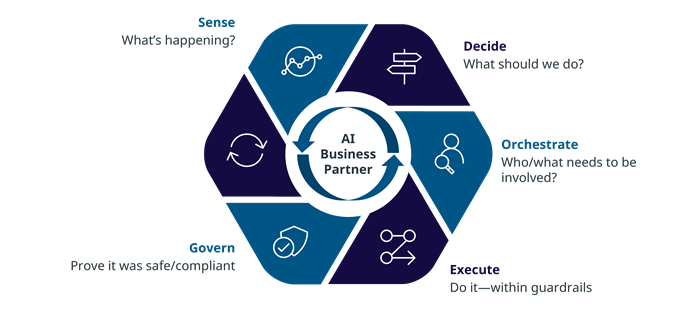
Figure 1. Agentic AI continuous operating loop
Each stage of the continuous operating loop serves a distinct purpose in translating signals into action and sustaining progress. Understanding what happens at each step—and why it matters—helps clarify how agentic AI supports coordinated execution, oversight and continuous improvement.
- Sense — AI agents maintain real-time visibility across scientific, operational, market and customer signals, monitoring change as it happens rather than relying on periodic reviews.
Why it matters: This clearer, real‑time view of change helps ensure emerging risks and opportunities aren’t missed and reduces reliance on manual monitoring. - Recommend — AI agents synthesize signals and propose prioritized actions (with rationale, urgency and confidence) to guide cross-functional decisions.
Why it matters: Recommendations support more consistent, strategy‑aligned decisions by focusing attention on what requires action and what can wait. - Orchestrate — AI agents translate selected actions into coordinated workflows by assigning owners, sequencing steps and routing tasks across systems and teams.
Why it matters: Orchestration helps prevent stalls at handoffs or bottlenecks, supporting momentum and alignment across interconnected teams. - Execute — AI agents support execution by triggering workflows, generating content, routing tasks and providing operational assistance within defined guardrails.
Why it matters: Execution ensures insights translate into progress, enabling faster response without sacrificing clarity or control. - Govern — AI agents embed compliance checks, quality controls and escalation paths directly into workflows as work progresses.
Why it matters: Built‑in governance supports oversight and auditability without slowing execution—particularly critical in regulated life sciences environments. - Learn — Outcomes, feedback and performance metrics are captured and used to refine models, workflows and decision rules over time.
Why it matters: Continuous learning strengthens decision quality and responsiveness, allowing the organization to adapt as conditions evolve.
Together, these stages create cohesion. People set direction and accountability — AI agents help sustain alignment, flow and clarity as work continues across the organization.
Agentic AI value #3: Creating new advantages
Agentic AI creates the greatest advantage where progress depends as much on confidence and coordination as on analytical output. In life sciences, the hard part is rarely generating recommendations—it’s aligning teams quickly enough to act on them.
Launch planning illustrates this challenge. Market assumptions, access dynamics and supply considerations can shift rapidly, yet plans often lag because change must be interpreted, validated and reconciled across multiple functions. Agentic workflows shorten that cycle by making the rationale for change explicit, routing issues to the right experts and supporting scenario evaluation before execution.
IQVIA’s research highlights how agentic approaches expand beyond automation to support higher‑order decision‑making—helping organizations move from insight generation to confident, coordinated action. Over time, these workflows create a compounding advantage as institutional knowledge, outcomes and expertise feed back into the system.
Preparing for what comes next
Agentic AI represents more than a new technology—it signals a new approach to how life sciences organizations operate. It enables a more connected, adaptive way to coordinate decisions, maintain alignment and respond to continuous change.
The long‑term advantage comes from how agentic workflows continuously absorb institutional learning. Instead of simply automating tasks, they strengthen the organization’s ability to augment people, scale expertise and improve decision‑making over time.
meet the experts
Pooja Chojar
Global Offering Lead, Primary Intelligence, IQVIA
Pooja has over 20 years of experience across R&D and commercial life sciences. At IQVIA, she has led AI driven go to market strategy for advanced analytics solutions, including the IQVIA AI Assistant, and has been a driving force behind Agentic AI innovation in qualitative and quantitative PMR. As Global Offering Lead for Primary Intelligence, she is leading the reinvention of primary market research through responsible AI—accelerating insight generation and helping life sciences organizations better serve patients.
Charles Rink
Senior Director of Technology, Applied AI Science, IQVIA
Charles Rink has over 20 years of experience in strategy consulting, technology, and analytics for the life sciences industry globally. Based in London, he brings extensive experience advising clients in commercial strategy, analytics automation, and omnichannel operations. He holds a BS degree in Molecular Biochemistry & Biophysics and Economics from Yale University.
REFERENCES
1. McKinsey. Reimagining life science enterprises with agentic AI. 2026.
https://www.mckinsey.com/industries/life-sciences/our-insights/reimagining-life-science-enterprises-with-agentic-ai