
.svg)




Drug Safety and Pharmacovigilance
Harness the power of automation to execute streamlined end-to-end safety solutions while reducing costs.
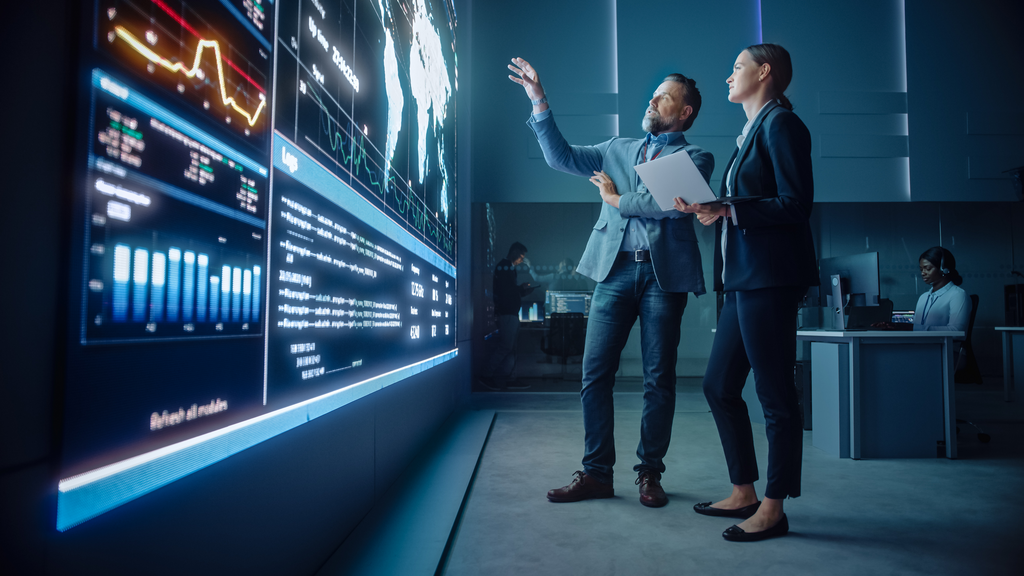







Safety, regulatory and medical information teams in the life sciences ecosystem are stepping into a new operating reality. Data volume is expanding, expectations for speed are increasing and advanced technologies are becoming part of daily work. What does not change is the centrality of human judgment. The next phase of progress will be led by experts who understand science, grasp how systems behave and know when to intervene. This is the foundation of a smart touch approach where human expertise remains primary and technology supports consistent, reliable execution.
The most effective safety and regulatory compliance professionals now combine scientific fluency with practical skill in guiding artificial intelligence (AI) supported tasks. This does not mean turning every specialist into a technologist. It means building confidence to:
In this model, professionals move fluidly between scientific reasoning and structured oversight of tools. That flexibility protects quality as processes evolve.
AI can accelerate drafting, summarize routine content, and highlight patterns. Yet patient safety and scientific integrity depend on decisions made by trained safety experts who can interpret nuance and context. Human-in-the-loop is not a slogan. It is an operating requirement that ensures:
Using a smart touch compliance workflow simply makes this reality explicit. Technology handles repeatable steps, but the expert remains responsible for the conclusion.
In safety and medical information, explainability must be practical. Teams need to see that when a system receives a given input, it produces a consistent and understandable output. Explainability in this sense is about observable behavior and documentation, not about revealing internal mechanics. When behavior is predictable, reviewers can:
This kind of explainability makes day-to-day safety work more efficient without sacrificing control.
Pharma and biotech organizations do not need generic training programs that sit apart from real work. Instead, they benefit from focused learning designed around actual safety and medical information tasks. Effective approaches often include:
The goal is confidence. Safety professionals should know what to expect from tools, how to spot irregularities, and how to document decisions.
The old pattern of technology teams building a tool that functional teams later adopt does not fit the current moment. Human-in-the-loop requires that safety and medical information experts help shape use cases, review behavior and refine validation steps. This collaboration produces solutions that reflect real workflows and scientific needs. It also reduces friction because safety experts see their priorities reflected in how systems operate.
Quality and speed are not opposing forces. With a smart touch approach, teams use technology to handle repeatable work while preserving expert time for high value interpretation. Outcomes improve when professionals are not consumed by tasks that can be supported by systems. The shift is not about replacing safety expertise, but about ensuring expertise is applied where it matters most.
To build a resilient workforce and a sound human-in the loop model, leaders can:
These steps respect the primacy of scientific judgment while making room for tools that improve consistency.
In the coming years, teams that cultivate hybrid skills and human-in the loop discipline will set the standard for safety and medical information excellence. This is not about adopting every new tool. It is about aligning technology with the way experts think and work. That alignment is the essence of smart touch and the most direct route to reliable results.
Related solutions
Harness the power of automation to execute streamlined end-to-end safety solutions while reducing costs.
Harness the power of global human expertise combined with automation, artificial intelligence (AI) and machine learning (ML) to design, build and execute end-to-end safety solutions.