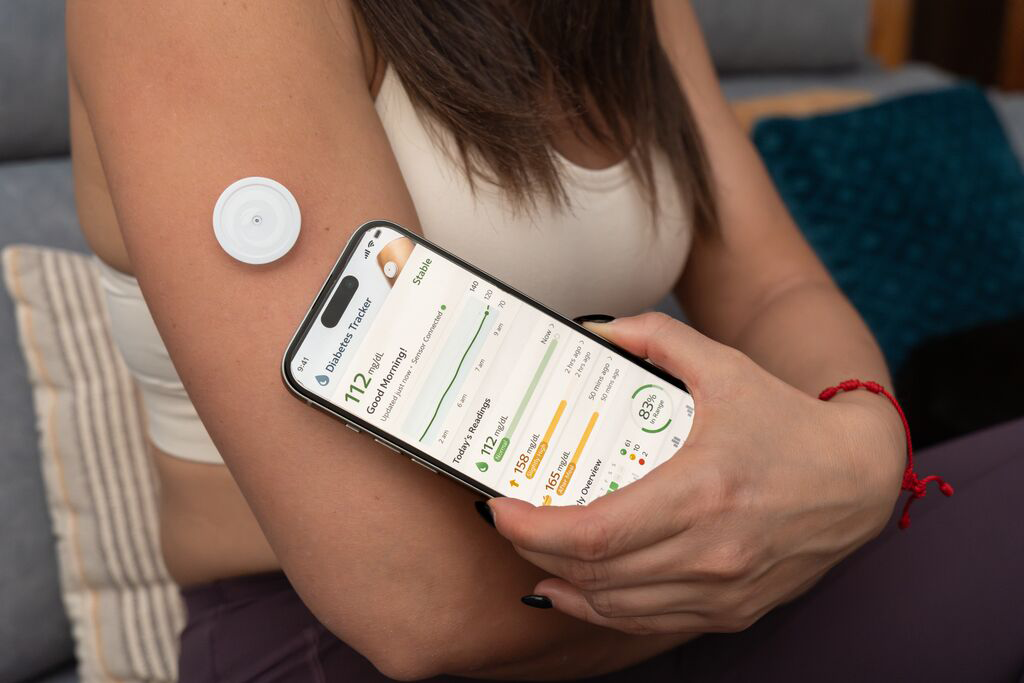
Digital health technologies are transforming healthcare delivery, creating new opportunities to improve patient engagement, enable earlier intervention, and generate insights that support better clinical decision-making. As the market continues to evolve, success increasingly depends on more than novel technology. Companies must demonstrate measurable clinical value, generate meaningful evidence, and prove their solutions can improve patient outcomes in real-world settings.
With nearly two decades of experience spanning basic science research, site-based clinical trials, and digital health innovation, Ken Rayl has focused his career on helping organizations generate the evidence needed to bring patient-centered technologies to market. Today, he works with digital health innovators to design clinical strategies that support regulatory, commercial, and adoption goals while maintaining a relentless focus on patient outcomes.
Q: You've spent nearly two decades spanning basic science research, site-level clinical trials, and digital health innovation. Looking back, what experiences most influenced your transition into digital health clinical affairs, and what keeps you excited about the field today?
My career has consistently been driven by a desire to improve patient care and clinical outcomes. While working in basic science and later in site-based clinical research, I saw firsthand both the promise of innovation and the challenges patients face in accessing timely, effective care. Those experiences reinforced the importance of generating high-quality clinical evidence that not only satisfies regulatory requirements but also demonstrates meaningful benefits for patients and healthcare providers.
My transition into digital health clinical affairs was motivated by the opportunity to bridge technology and healthcare. Digital health solutions can extend care beyond traditional clinical settings, improve patient engagement, enable earlier intervention, and provide clinicians with actionable insights.
What excites me most today is helping bring evidence-based innovations to market that improve access, personalize care, and enhance the quality and efficiency of healthcare delivery.
Q: Your career has involved working with both startups and established healthcare organizations. What lessons have you learned about successfully generating clinical evidence in resource-constrained environments?
One of the most important lessons I've learned is that strong clinical evidence does not always require large budgets. It does require clear objectives, thoughtful study design, and a focus on the questions that matter most to patients, clinicians, and regulators.
In resource-constrained environments, success comes from prioritizing studies that generate meaningful insights, leverage existing care pathways, and maintain close collaboration between clinical, regulatory, and product teams.
Organizations that clearly define success upfront are often able to generate more meaningful evidence with fewer resources than those that attempt to answer too many questions at once.
Q: As digital health solutions become increasingly sophisticated, how are expectations for clinical evidence evolving among regulators, providers, and payers?
Today, stakeholders are looking beyond whether a digital health solution works and asking whether it improves patient outcomes.
Good evidence demonstrates that a technology helps patients receive earlier diagnoses, achieve better disease management, reduce complications, improve quality of life, or avoid unnecessary hospitalizations. Clinical validation remains important, but demonstrating meaningful patient benefit and measurable impact on care delivery has become the primary expectation.
The conversation has shifted from technical performance alone to proving real-world clinical and economic value.

Q: Wearable technologies are generating vast amounts of patient data and are increasingly being used to support disease management, early detection, and remote monitoring. What trends are you seeing in clinical validation?
The focus has shifted from demonstrating sensor accuracy to proving that wearable-derived insights improve clinical decision-making and patient outcomes.
Successful validation programs increasingly include diverse populations, longitudinal studies, and comparisons against clinical gold standards. The strongest evidence demonstrates not only accuracy, but also the ability to drive earlier intervention, improve disease management, and reduce healthcare utilization.
As wearables become more integrated into care delivery, evidence expectations will continue to increase.
Q: Real-world evidence is playing a growing role in medical device development and evaluation. How do you see real-world data complementing traditional clinical trials?
Real-world evidence extends findings beyond controlled trial environments by demonstrating performance across broader patient populations and routine clinical settings.
For digital health and AI-enabled devices, it provides ongoing evidence of effectiveness, safety, user engagement, and algorithm performance while supporting post-market surveillance and continuous product improvement.
The future of evidence generation will rely on effectively combining traditional clinical studies with real-world insights to create a more complete picture of product performance.
Q: Many companies are exploring AI-enabled digital health products. What differentiates the solutions most likely to achieve both clinical and commercial success?
The most successful solutions address a clearly defined clinical need, integrate seamlessly into care pathways, and generate evidence tied to measurable patient outcomes.
Organizations that focus on clinical utility, regulatory strategy, provider adoption, and reimbursement planning from the outset are generally better positioned for success than those focused solely on innovative technology or AI capabilities.
Technology alone rarely drives adoption. Meaningful outcomes and demonstrated value do.
Q: If you could fast-forward five years, what do you think will be the most significant change in how digital health products are clinically evaluated and brought to market?
Evidence generation will become increasingly continuous rather than episodic.
Clinical trials, real-world evidence, remote monitoring, and post-market performance data will become part of a lifecycle evidence model that enables regulators, providers, and payers to evaluate products based on ongoing real-world performance rather than a single premarket study.
This shift will create a more dynamic and comprehensive approach to understanding product value throughout the product lifecycle.
Conclusion
Ken Rayl's career reflects the growing importance of clinical evidence in the digital health era. Throughout this conversation, he reinforces a consistent theme: meaningful innovation requires more than advanced technology. Companies must generate evidence that demonstrates real-world impact, improves patient outcomes, and supports adoption across the healthcare ecosystem.
As digital health, wearables, AI, and real-world evidence continue to reshape healthcare delivery, IQVIA MedTech helps innovators develop evidence strategies that accelerate development, demonstrate value, and bring transformative technologies to patients with confidence.