Medical device and diagnostic manufacturers are collecting more patient-level data than ever before. Wearables, implantable sensors, diagnostic monitors, companion apps, imaging systems, and advanced diagnostics can generate rich information about patients during product use.
What these data often cannot show is what happened before or afterwards: prior diagnoses and comorbidities, medications, treatment decisions, healthcare utilization, complications, and longer-term outcomes. Without that context, manufacturers may struggle to determine how their product influenced care or to generate the evidence regulators, payers, providers, and other stakeholders need.
The challenge, then, is often not collecting more data. It is securely connecting existing product data to the broader patient journey.
A data set in isolation isn't evidence
Consider a diagnostic company that collects data from patients using its product. They can see the results collected by the device, but what the data typically doesn't show is whether those patients went on to receive a diagnosis, started treatment, or experienced specific outcomes. That missing context can make it harder to demonstrate clinical utility or build the evidence base regulators, payers and providers expect.
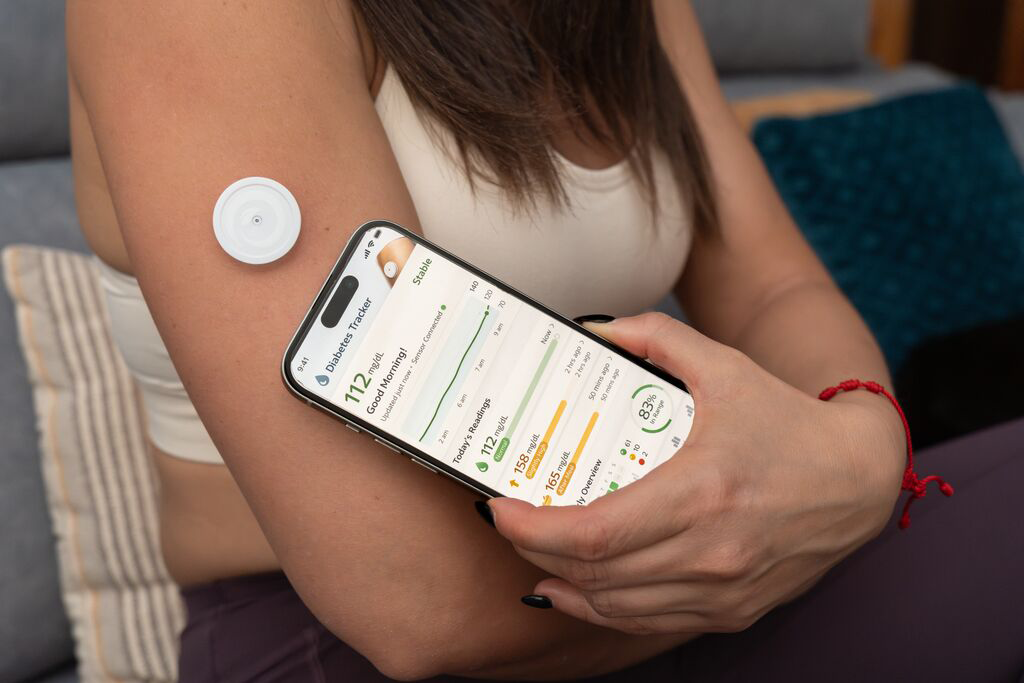
The same gap shows up across device categories. A continuous glucose monitor can capture glucose measurements, time in range and alerts, but the manufacturer usually can't see the patient's medications, comorbidities, complications or broader healthcare utilization.
Device data alone rarely tells the full evidence story. Connecting it to longitudinal healthcare information can reveal how a product fits into real-world care.
Connecting existing data to the full patient journey
That's the problem IQVIA Data Device Link (DDL) is built to solve. DDL connects data generated by medical devices and diagnostics with IQVIA's healthcare and outcomes data. By linking those sources at the patient level, DDL provides a broader, de-identified view of what happened before and after a device or test was used.
Medical device and diagnostic manufacturers are already collecting data that could help answer important clinical and commercial questions, but much of it remains disconnected from the broader real-world care pathway.
Depending on the business need, manufacturer data can be linked to sources such as medical and pharmacy claims, prescription information, laboratory results, electronic medical records and other patient-level real-world data assets. The connected data moves manufacturers beyond understanding what their product recorded, to better understanding the longitudinal patient experience.
DDL can support a broad range of MedTech and in vitro diagnostic companies, including manufacturers of wearables, implantable devices, monitors, sensors, diagnostic tests, companion apps, imaging systems, and surgical robotics.
How the linkage works
The DDL platform sits across multiple touchpoints to provide a comprehensive resource that:
-
Protects. Patient identifiers are anonymized and encrypted through tokenization, allowing corresponding records to be matched without disclosing identifiable information. IQVIA privacy specialists support de-identification and management of re-identification risk.
-
Connects. Manufacturer-generated device or diagnostic data is linked to IQVIA and other data sources at the patient level.
-
Analyzes. The connected data can then be analyzed to support a variety of use cases.
IQVIA MedTech experts can also support study design, analysis and evidence generation, with delivery ranging from full-service analysis to one-time data files or updating feeds.
By connecting data using DDL, manufacturers have the ability to support operational and patient needs in several key areas:
-
Generate stronger real-world evidence. Connect device measurements or diagnostic findings with treatment decisions, healthcare utilization and patient outcomes.
-
Support regulatory and market-access needs. Connected, de-identified data can support representativeness assessments, post-market follow-up, safety and effectiveness studies, regulatory submissions and payer discussions. DDL supports these activities but does not guarantee approval, coverage or reimbursement.
-
Improve products, tests and algorithms. Longitudinal data can support model training, validation and algorithm improvement.
Real world example: Supporting AI development in cataract surgery
A global eye-health MedTech company needed additional EHR and device data to train and validate an AI model used to select intraocular lens power during cataract surgery. IQVIA MedTech helped collect, prepare, link and de-identify preoperative, perioperative and postoperative data while establishing a compliant pipeline for continued model development.
Model accuracy was expected to reach 85%, compared with a 70–75% benchmark for select patient populations, while the engagement also established scalable data pipelines for continued AI and digital-health development.
Additional impact examples
Additional IQVIA MedTech engagements demonstrate how these capabilities can support regulatory evidence and long-term post-market follow-up.
Enriching data for an FDA representativeness assessment. A cardiology-focused MedTech company used tokenization and linkage to supplement missing demographics; 89% of client data matched to IQVIA patient data and 50% to third-party demographic data.
Supporting long-term post-market follow-up. For an interventional oncology company, IQVIA designed a post-market registry linking prospectively collected data with Medicare and commercial claims, with outcomes monitored over five years.
Why this matters now
Medical devices and diagnostics are generating increasingly rich and granular patient-level data. At the same time, AI-enabled products, advanced molecular diagnostics, remote monitoring technologies and other digital health tools are creating new demands for real-world evidence across the product lifecycle.
Manufacturers increasingly need to understand not only how a product performs, but how its use relates to treatment decisions, clinical outcomes, healthcare utilization and longer-term patient trajectories. Those insights can support activities ranging from algorithm development and validation to post-market monitoring, regulatory evidence generation and market access. As evidence expectations evolve, the ability to connect product-generated data with longitudinal healthcare information can become an important capability for demonstrating value and supporting continued innovation.
Why IQVIA MedTech’s approach is different
Other organizations may provide tokenization or access to real-world data. IQVIA MedTech brings those capabilities together with a broad portfolio of in-house real-world data assets, dedicated privacy and de-identification expertise, and experience translating connected data into evidence and analytics. This gives manufacturers a more streamlined path from isolated product data to actionable evidence through a privacy-preserving approach.
Where to start
Manufacturers rarely set out looking for a data-linkage solution. They start with a question: Can we demonstrate clinical utility? Understand long-term outcomes? Meet an evidence requirement? Improve an algorithm? The answer often begins with data they already have. IQVIA Data Device Link can help turn an isolated source of information into a reusable asset for evidence generation, product development, market access and analytics.