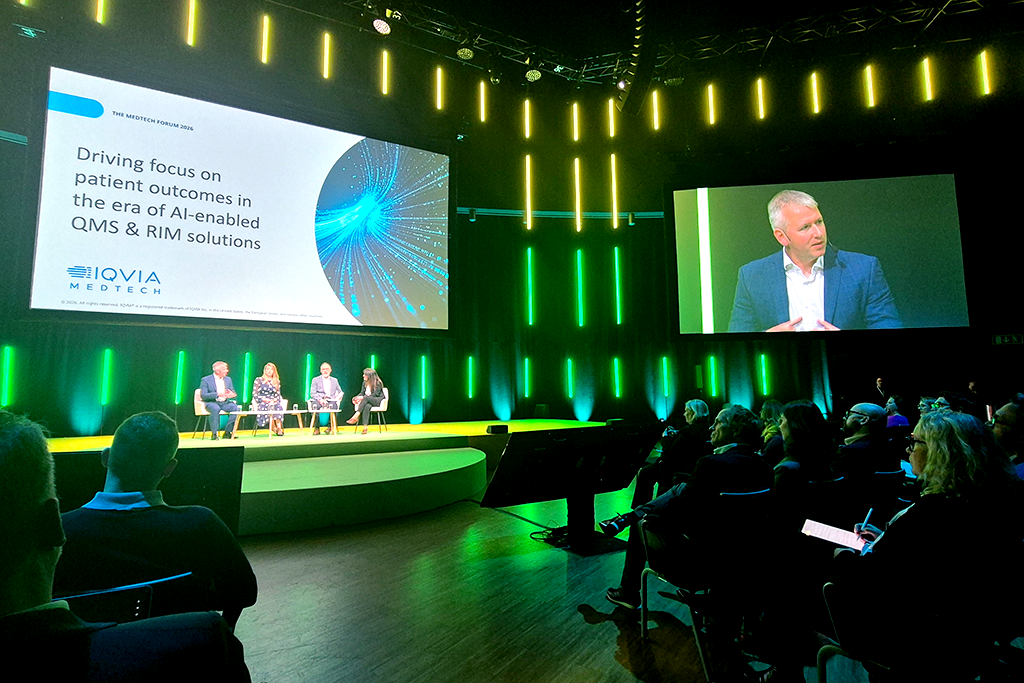
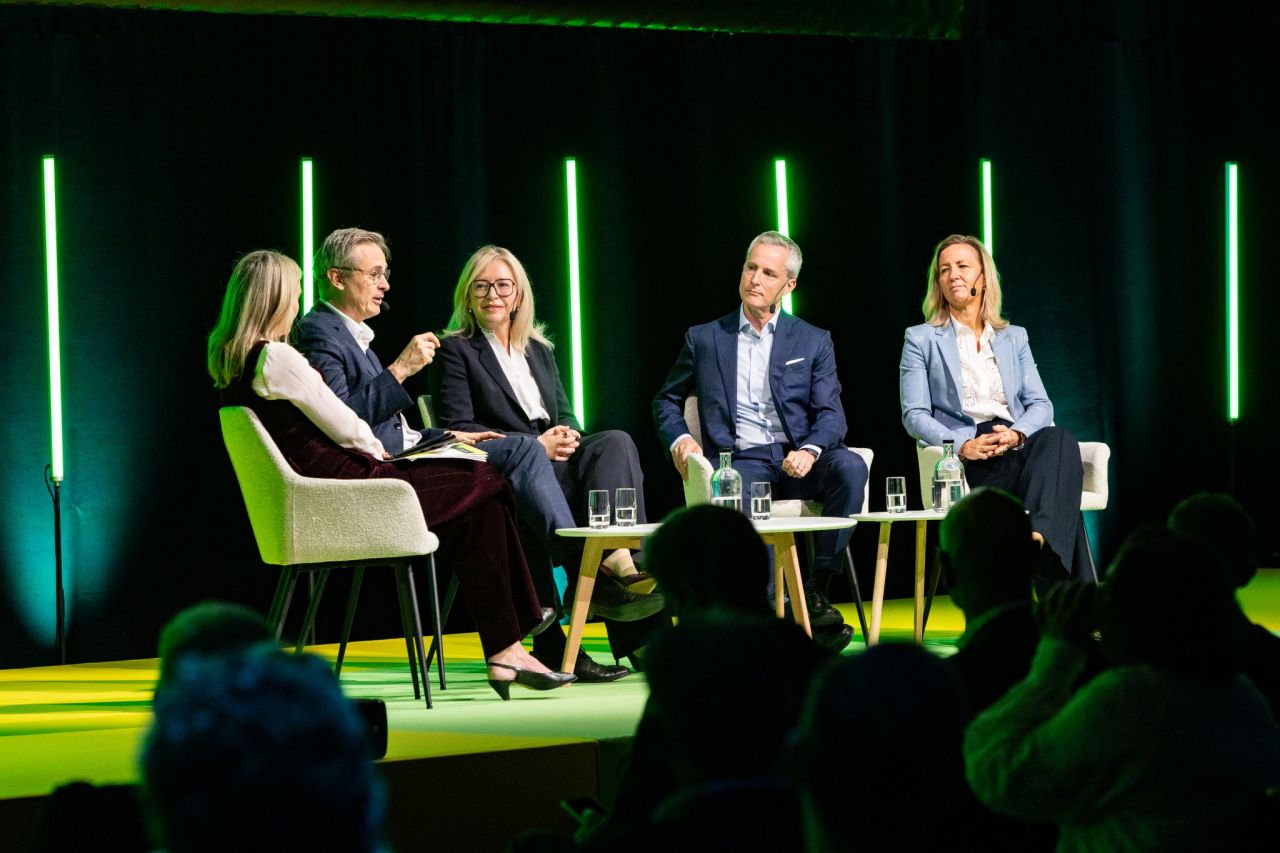
At the opening of the final day of the MedTech Forum on May 13 in Stockholm, Sweden, the “CEO#nofilter” session brought together four industry leaders for a candid discussion on Europe’s competitiveness, innovation ecosystem, and role in the rapidly evolving global healthcare landscape.
Moderated by Shona Murray, European Affairs Correspondent at Euronews the panel featured:
- Pierre Boulud, Chief Executive Officer, bioMérieux
- Bronwyn Brophy, Chief Executive Officer, Vitrolife Group
- Britt Meelby Jensen, Chief Executive Officer, Ambu A/S
- Dave Marver, CEO, ONWARD Medical
What emerged was not a conversation defined by pessimism, but one grounded in realism, urgency, and ultimately optimism. Across topics ranging from AI and regulation to supply chain resilience and access to capital, the CEOs delivered a consistent message: Europe has the talent, scientific capability, and healthcare infrastructure to lead globally in MedTech — but only if it can move faster, simplify complexity, and act more cohesively.
Europe’s Biggest Challenge Isn’t Innovation — It’s Fragmentation
One of the strongest themes throughout the discussion was the need for Europe to function more like a unified market.
While Europe continues to produce world-class medical innovation, panelists argued that fragmented regulatory pathways, reimbursement systems, and market access requirements are slowing the ability of companies — particularly scale-ups and SMEs — to commercialize innovations efficiently.
Dave Marver described the challenge directly: Europe has extraordinary innovation capability, but companies often hit structural barriers when trying to scale. Regulatory approvals, reimbursement negotiations, and market access still happen country-by-country, creating delays and uncertainty that discourage investment.
Bronwyn Brophy reinforced the point, noting that Europe’s diversity is one of its greatest strengths culturally, but that fragmentation weakens its competitiveness economically. If Europe wants to compete effectively with the US and China, it must increasingly operate as a cohesive bloc.
The discussion repeatedly returned to two priorities:
- A more harmonized regulatory framework
- A simplified, pan-European approach to market access and reimbursement
The panel agreed that these changes would not only accelerate patient access to innovation but also improve Europe’s attractiveness for investors.
The Global Competitive Landscape Is Changing Fast
The conversation also reflected a growing awareness that geopolitical shifts are reshaping MedTech competition.
Panelists highlighted how both the US and China are taking increasingly strategic approaches to industrial policy and healthcare innovation. China was described as moving at extraordinary speed — with significant investment in manufacturing, R&D, and healthcare technology.
Pierre Boulud pointed to measures in China that increasingly favor domestic solutions, while noting that Europe has not responded with the same level of coordinated industrial strategy. Other panellists emphasized that this is less about protectionism and more about ensuring a level playing field.
At the same time, the uncertainty created by evolving US trade and tariff policies has prompted many companies to rethink supply chains, manufacturing footprints, and geopolitical risk exposure.
Britt Meelby Jensen explained that scenario planning has become central to leadership decision-making. Companies are no longer optimizing solely for efficiency; they are building for resilience and adaptability.
Pierre Boulud echoed this shift, noting that MedTech companies increasingly recognize that overly concentrated supply chains create vulnerabilities in a volatile world. Robustness, not just efficiency, is becoming a strategic priority.
AI Is No Longer “Coming” — It’s Here
Artificial intelligence emerged as another major theme throughout the session.
Rather than discussing AI as a future possibility, the CEOs framed it as an immediate operational and clinical reality.
Bronwyn Brophy shared how AI is already being integrated into IVF technologies, including embryo selection solutions developed through partnerships with major IVF clinic networks. She stressed that collaboration between industry, healthcare providers, and academic ecosystems is critical to accelerating meaningful innovation.
At the same time, panellists acknowledged that regulatory frameworks for AI-enabled healthcare technologies are still evolving globally. Companies are navigating different pathways across Europe, Asia, and the US, including complex FDA de novo submissions.
Still, the broader message was clear: Europe cannot afford to fall behind in AI adoption.
As Bronwyn Brophy put it, “AI is not coming — it’s already here.”
There is an opportunity for Europe to combine its strong clinical ecosystems, digital health infrastructure, and healthcare data capabilities to lead responsibly in AI-enabled healthcare innovation.
Innovation Must Remain the Core Strategy
Despite concerns around trade policy, competitiveness, and regulation, the panel consistently argued against protectionism as the primary answer.
Instead, innovation was repeatedly positioned as Europe’s true competitive advantage.
Dave Marver emphasized that Europe already has a remarkable legacy of MedTech breakthroughs — from deep brain stimulation to transcatheter technologies. The issue is not a lack of ideas, but the inability to scale them efficiently within Europe’s current system.
Britt Meelby Jensen added that combining hardware, software, and AI-enabled solutions will be critical to addressing future healthcare demands, particularly as aging populations and workforce shortages intensify pressure on healthcare systems.
The panel also discussed the growing importance of demonstrating economic value alongside clinical value. Hospitals and healthcare systems are increasingly asking not only whether a technology improves outcomes, but also whether it reduces costs, improves efficiency, or optimizes resource utilization.
Pierre Boulud acknowledged that MedTech companies must do more to generate robust health economic evidence that supports adoption and reimbursement decisions.
At the same time, Dave Marver cautioned that excessive evidence requirements can unintentionally create barriers for smaller innovators that lack the resources to fund large-scale clinical and economic studies early in their growth journey.
The balance between enabling innovation and ensuring value-based healthcare remains one of Europe’s defining challenges.
Europe’s Talent Advantage Remains a Powerful Asset
While much of the discussion focused on systems and policy, the session ended on a notably optimistic note: Europe’s talent base.
Pierre Boulud stated plainly that Europe possesses some of the best scientific and engineering talent in the world. The panel agreed that Europe’s universities, healthcare institutions, and research ecosystems remain major strategic advantages.
The challenge now is creating the environment that allows that talent to thrive — through:
- Faster pathways to commercialization
- Better access to growth capital
- Stronger public-private partnerships
- Simplified regulation
- Greater European coordination
A Defining Moment for European MedTech