














Commercial Solutions
Data, AI, and expertise empower Commercial Solutions to optimize strategy, accelerate market access, and maximize brand performance.
This blog is part of an ongoing series, A Brave New World: Therapeutic Area Deep Dives.
Over the past decade, oncology has been biopharma’s most consistent growth engine. Breakthrough science, accelerated approvals, and rapid indication expansion turned targeted therapies and immune-oncology into durable commercial franchises, reinforcing expectations of premium pricing and long post-approval value creation.
Now, oncology economics are being re-written on two fronts. Policy-driven pricing reform and an unprecedented concentration of upcoming loss of exclusivity events (LoE) are converging to reset the market. Pricing pressure is arriving earlier in the product lifecycle, often well before traditional patent cliffs, while cornerstone therapies approach competitive erosion at scale. This compresses the window for revenue realization and makes the historical reliance on long revenue tails and sequential expansion less predictable. For manufacturers, this is a commercial inflection point that demands earlier value creation, sharper portfolio choices, and more intentional launch and access strategies to sustain growth in oncology’s next phase.
The 2022 Inflation Reduction Act (IRA) represents the most consequential pricing reform the oncology market has faced to date, introducing earlier and more definitive price pressure on high-spend cancer therapies within Medicare. By accelerating the timing of price intervention, particularly for small molecules, the IRA effectively shortens the commercial window that has historically underpinned oncology return on investment assumptions. For many products, negotiated pricing now arrives before traditional LoE, creating a new two-step economic erosion curve: an initial price step-down associated with IRA negotiated Maximum Fair Pricing (MFP), followed later by generic competition at LOE.
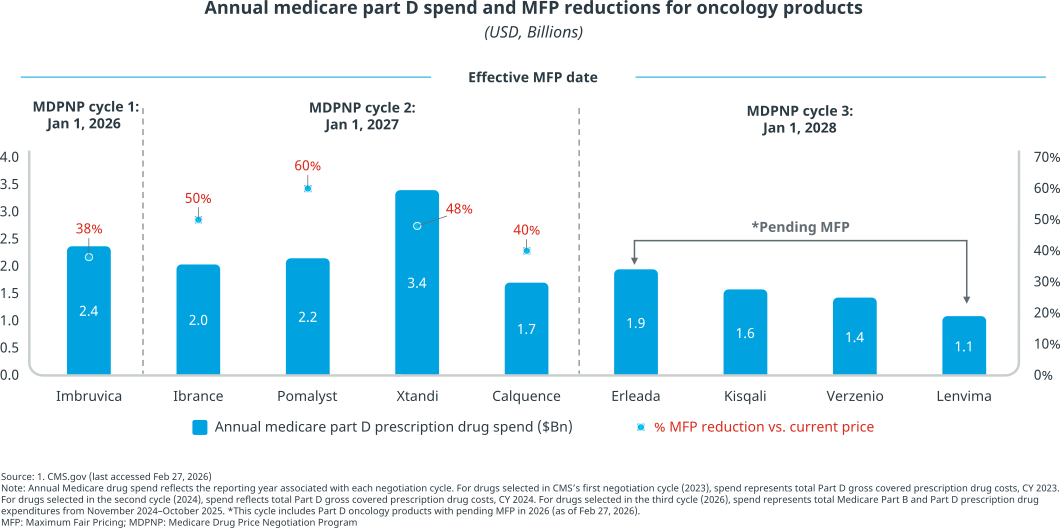
Commercially, this creates a new reality for oncology manufacturers. Value erosion is no longer a single end-of-life event, but a two-step curve governed by policy-driven price resets and competitive erosion. The historical reliance on long post-approval tails, sequential indication expansion, and incremental lifecycle extensions is becoming less predictable and, in some cases, economically untenable. As a result, oncology strategy is shifting upstream. Portfolio prioritization, earlier evidence generation, tighter launch sequencing, and access planning must now account for a compressed value horizon, raising the stakes on early differentiation and forcing sharper tradeoffs in how, where, and when companies invest to sustain growth under increasing pricing pressure. Although the IRA introduces meaningful affordability benefits for Medicare beneficiaries, these gains coincide with operational, financial, and strategic strain across manufacturers, payers, and healthcare providers.
The IRA reshapes oncology economics by changing how pricing, reimbursement, and affordability interact across the care ecosystem. These shifts alter incentives for every stakeholder, creating downstream implications that manufacturers must anticipate as pricing pressure increasingly impacts the chain of payers, providers, and patients.
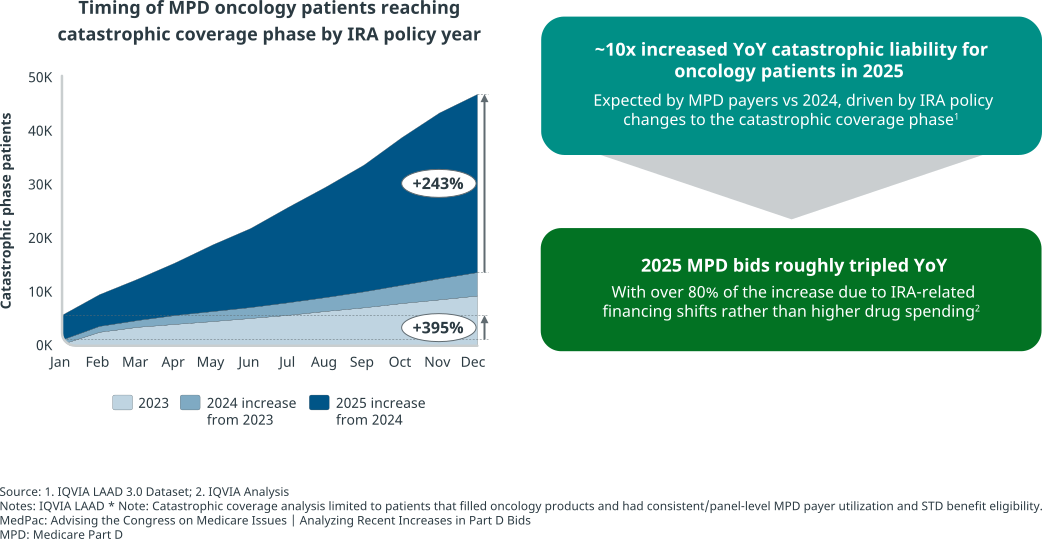
Collectively, these dynamics create a more interconnected and constrained oncology market, where pricing, access and adoption are tightly linked, and commercial advantage depends on navigating the full ecosystem rather than any single stakeholder in isolation.
The oncology market is approaching one of the most significant LoE-driven patent cliffs in its history, with a concentrated set of high revenue therapies expected to face generic or biosimilar competition over a relatively short period. This convergence reflects the rapid approval and uptake of targeted therapies and immune-oncology agents in the mid-2010s, which, while accelerating patient access, also aligned exclusivity timelines across many of today’s largest oncology brands. As a result, products that have anchored oncology growth for the past decade are now approaching competitive erosion nearly simultaneously.
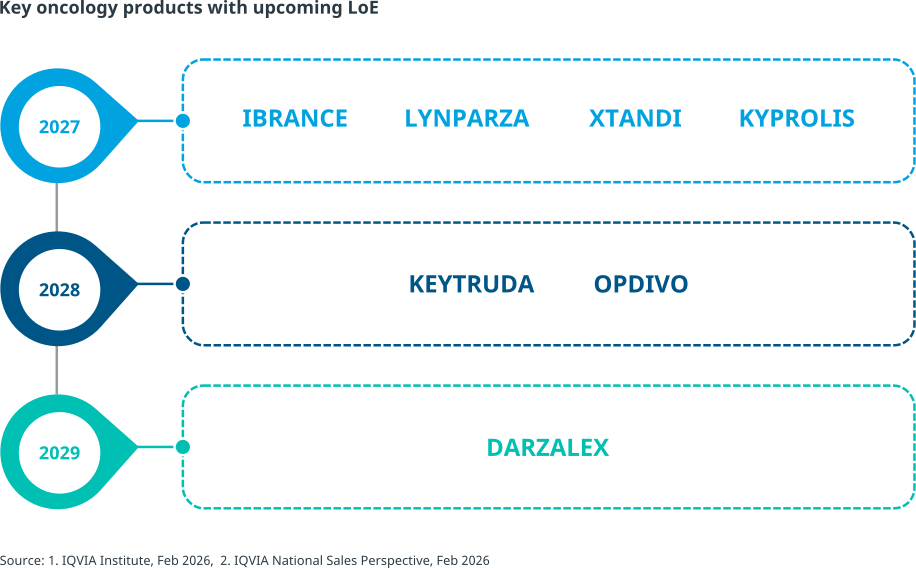
The scale and timing of this LoE wave have heightened both revenue risk and competitive intensity. Historically, major oncology blockbusters have experienced sharp and rapid erosion following loss of exclusivity, and the breadth of today’s portfolios suggests the upcoming cliff may be even more disruptive. Companies with diversified pipelines and multiple growth drivers are better positioned to absorb this impact, while those reliant on a small number of flagship assets face disproportionate exposure as pricing power diminishes and competition accelerates.
Critically, this LoE wave does not occur in isolation. When layered on top of earlier policy-driven pricing pressure, loss of exclusivity transforms from a late lifecycle event into part of a broader, multi-stage erosion curve. For oncology manufacturers, this compresses the window for revenue realization and heightens the need for broader portfolio balance, proactive lifecycle management, and earlier strategic investment as major immunotherapy backbones approach exclusivity loss.
The impending LoE for anti-programmed cell death protein 1 (PD-1) therapies represents a defining inflection point for oncology economics. Few drug classes have reshaped cancer care as profoundly or achieved comparable scale. Broad tumor applicability, extensive line of therapy use, and rapid indication expansion established PD-1s programmed death-ligand 1 (PD-L1s) as foundational backbones across oncology, anchoring both treatment paradigms and revenue growth for much of the past decade.
Despite an increasingly crowded space, the market is dominated by the duopoly of Keytruda and Opdivo, capturing ~80% of PD-1/PD-L1 sales volume since 2020. As these therapies approach LoE in 2028, the impact extends far beyond revenue erosion for individual brands. PD-1 commoditization fundamentally alters the economic architecture of oncology treatment, shifting value away from the backbone itself and towards combination partners, add-on agents, and differentiated mechanisms.
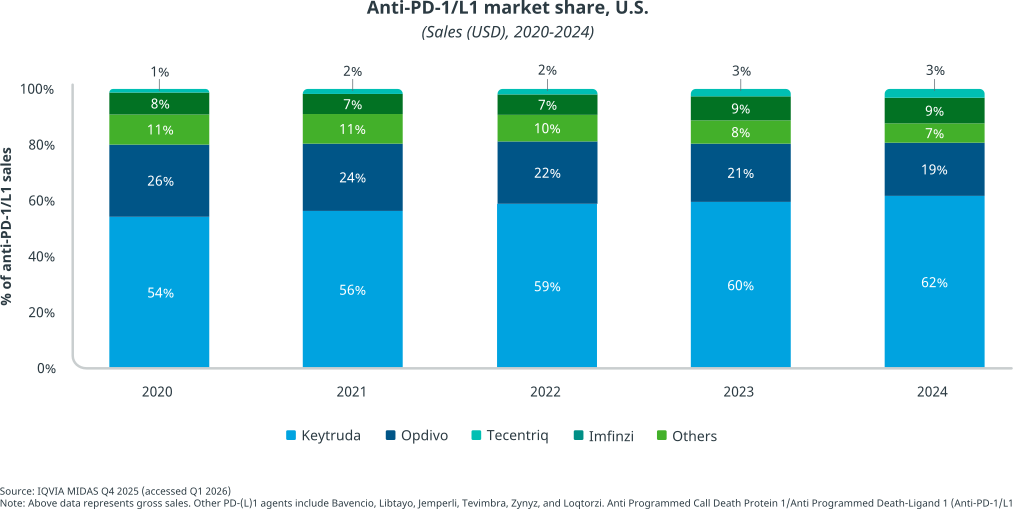
Lower cost anti-PD-1s may expand access and utilization, but they do not necessarily reduce the total cost of care. As PD‑1s increasingly function as baseline components of multi‑drug regimens, overall regimen costs will be driven by the incremental therapies layered on top, often novel, premium‑priced agents. In this environment, payer scrutiny is likely to intensify, with greater emphasis on whether combination regimens deliver meaningful incremental benefit relative to their added cost. The perceived “value of innovation” will depend less on the backbone and more on the clinical contribution, durability of response, and system‑level impact of the new therapy itself.
As a result, relying on association with an anti-PD-1 backbone to justify premium positioning becomes more difficult. Even in a post-exclusivity landscape, new agents will still be required to clearly demonstrate their value, both clinically and economically, within increasingly complex treatment regimens. For originators and competitors alike, this moment accelerates the need for portfolio diversification, sharper lifecycle optimization, and a redefinition of how value is created and sustained in a post PD-1 oncology market.
Oncology’s commercial model is undergoing a structural reset. Earlier pricing intervention, a concentrated loss of exclusivity wave, and the impending commoditization of foundational therapies are collectively compressing value horizons and raising the bar for sustained growth. Responding to this shift will require tighter alignment across R&D, access, commercial, and portfolio governance to enable earlier, more coordinated decisions and greater precision in how value is created and protected. The historical playbook of premium pricing supported by long post-approval expansion is giving way to a market where value must be established earlier, defended more deliberately, and extended through portfolio-level strategy rather than individual assets alone. Strategic imperatives for pharma leaders to consider include:
Ultimately, the next phase of oncology will reward companies that adapt early, align strategy across the full ecosystem, and treat access, evidence, and portfolio design as integrated levers of long-term commercial advantage—not downstream considerations. Contact IQVIA to learn more about how to accelerate value creation and build access strategies in an era of economic compression for the oncology market.

Data, AI, and expertise empower Commercial Solutions to optimize strategy, accelerate market access, and maximize brand performance.
Grow your brand, now and through patent expiry
Gain high value access and increase the profitability of your brands